Germany
Last Updated: April 26, 2026
NEED THE ESSENTIALS FOR BACKPACKING GERMANY NOW?
WHERE TO VISIT | BEST STUFF TO DO | SUGGESTED ITINERARIES | GERMANY BLOGS

Heads up: We sometimes work with companies to provide affiliate links and reviews - here's what that means. If it's here, we use it. We don't plug shit for profit.
Backpacking Germany In 2026
With unique, intriguing and beautiful 'Instagram' sights such as the Devils Bridge and Bastei Bridge being uncovered across Germany almost daily, the backpacking scene is kicking off. However, backpacking Germany isn't just about getting your Insta loaded. It's about invigorating all the senses: taste, smell, sight, sound and, of course, touch.
Germany has everything from the lively, energetic delights of the Christmas Markets to the passionate roar of a fan-packed stadium on game day. Cities bring history, architecture and beautiful foods unlike anywhere else. Whilst the countryside brings beauty, peace and tranquillity into your backpacking life.
In contrast to this incredible, almost perfectly engineered way of life, there is a chaotic, mad loose undertone coursing throughout the country, and you won't have to look too hard to find it.
Furthermore, backpacking Germany is as easy as it gets. Public transport is slick, comfy and clean, not to mention cheap.
Yet, the number one draw for those of us wanting the authentic backpacking experience is the food and drink. If you can think of something to do with a sausage, the Germans have done it. And probably with a beer in hand.
Enough writing, get out here and introduce yourself to the party that is Germany.

Why Germany?
Welcome to the land of the festival, food and beer!
Parties and celebrations range from the extraordinary to the darn right mad. But if you're game, Germany will seduce you and never let you leave. Then, if you're still standing, it will throw you a party that will surely see you to your deathbed. They call it Oktoberfest.
Likewise, if nature, engineering, passion, flavour, smell, history and culture excite you, backpacking Germany will tickle all those tastebuds too. Just don't expect anything to be normal or as you'd expect. The sounds and smells are intense, and you cannot help but follow them. Food and drink play a massive role in German culture, and this is something you have to jump straight into. You will not regret it.
Within a country the size of Germany, there is something for everyone.
Nature runs supreme, and you'll find everything from the shimmering golden beaches of Norderney and Spiekeroog to the lakes and snow-capped mountains of the northern Alpes. Glorious rivers run like blood vessels through the body, piercing almost every major city in the country.
Similarly, history and stories of World Wars and Mad kings give way to some of the most beautiful architecture in Europe.
So why Germany? Well, because it's fucking bonkers. I love it. Enter at your own risk!

Quick Stats
Currency
Euro (EUR)
Religion
Christian: 44%
Population
83.27 million
Language
Official: German
When to Go
High Season: May - Sept
Low Season: Oct - April
Price of Beer
£2.15 a Pint
Our German Stories
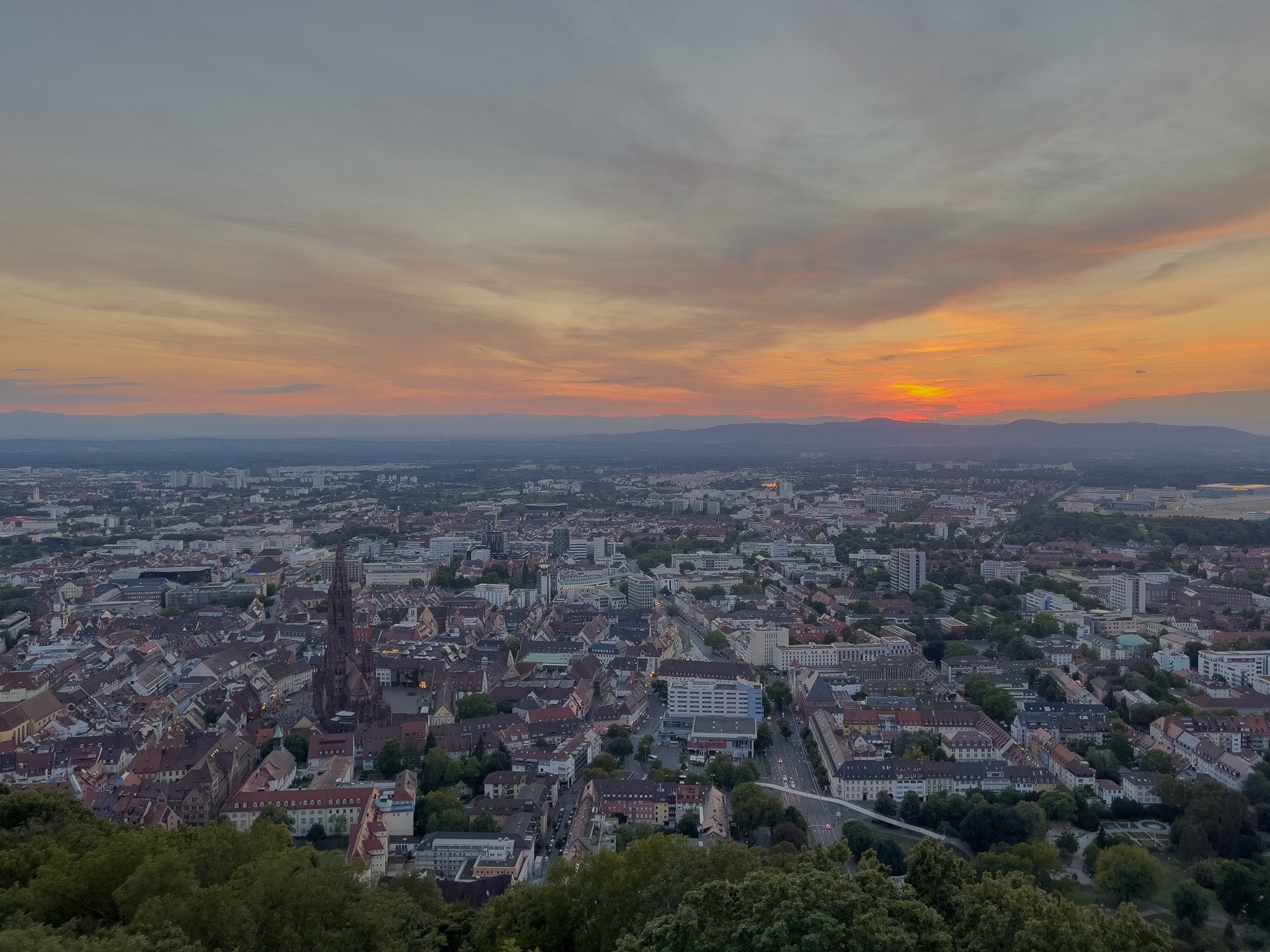
What to do on a fun-packed weekend in Freiburg, Germany
They don’t call it the Jewel of the Black Forest for nothing!

Karlsruhe, Germany – A Travel Guide
Join me as I look into a sinister story and enter the gateway to the Black Forest.

Munich, Germany – A Travel Guide
… And for breakfast, how about a nibble on a bit of sausage and a couple of pints.
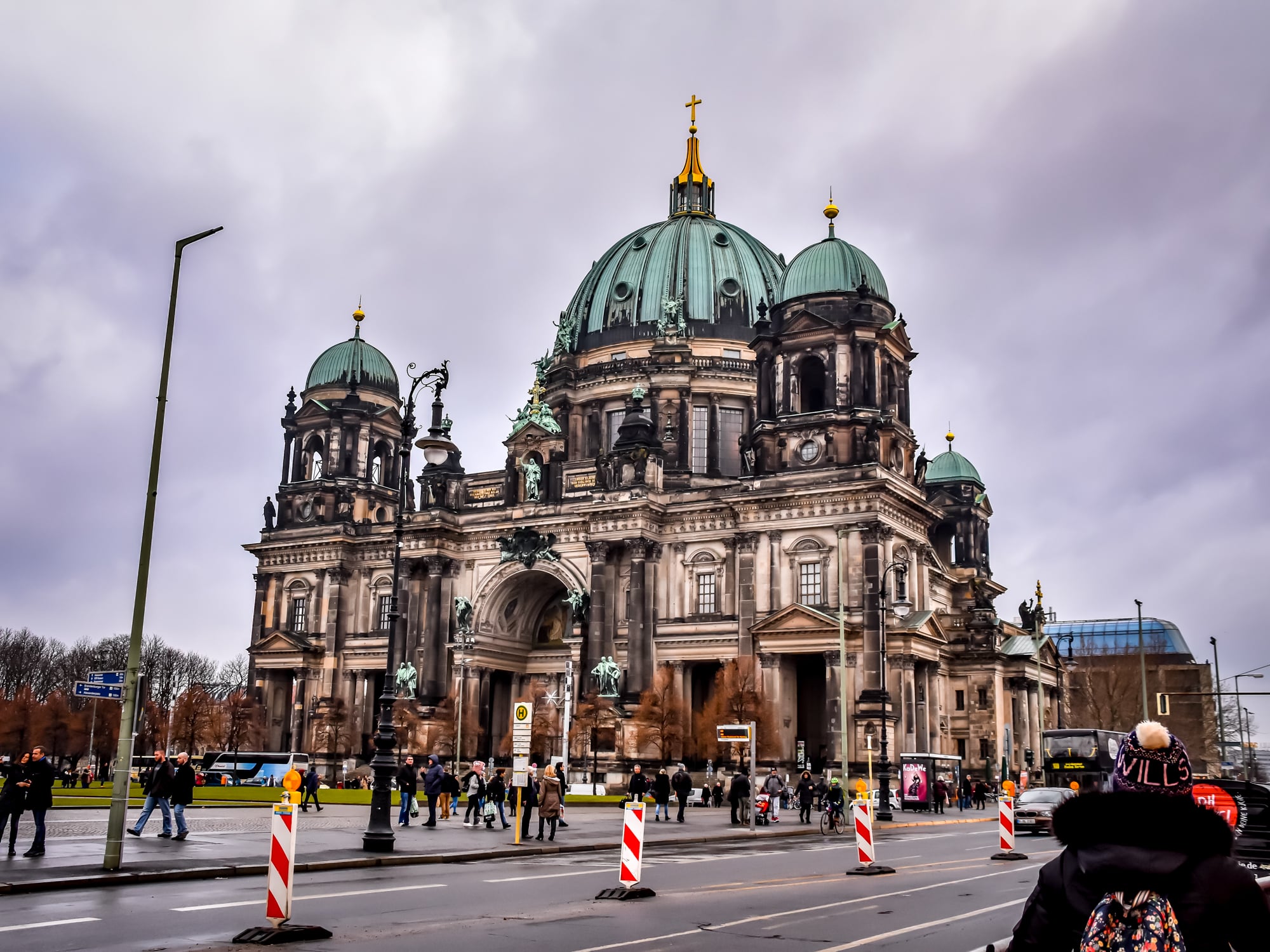
Berlin, Germany – A Travel Guide
Join me for wild nights and sobering mornings in the electric city of Berlin.
Contents
Where To Visit
Berlin
Not only is Berlin the capital, but it is the largest and most populated city in Germany.
Straddling the river Spree, Berlin is a shining light demonstrating how a city can look to the future whilst respectfully keeping hold of its past.
After all, the city is the epicentre of all things historical in Germany, such as the Reichstag, the Berlin Wall, Brandenburg Gate, the Jewish Memorial and Checkpoint Charlie.
Similarly, Berlin is home to quirky traditional Christmas Markets, sports venues and, of course, sublime foods.
However, if you dig a little deeper, there is far more to discover in this magic of Berlin.
For more, please read our complete guide to backpacking Berlin here.

Munich
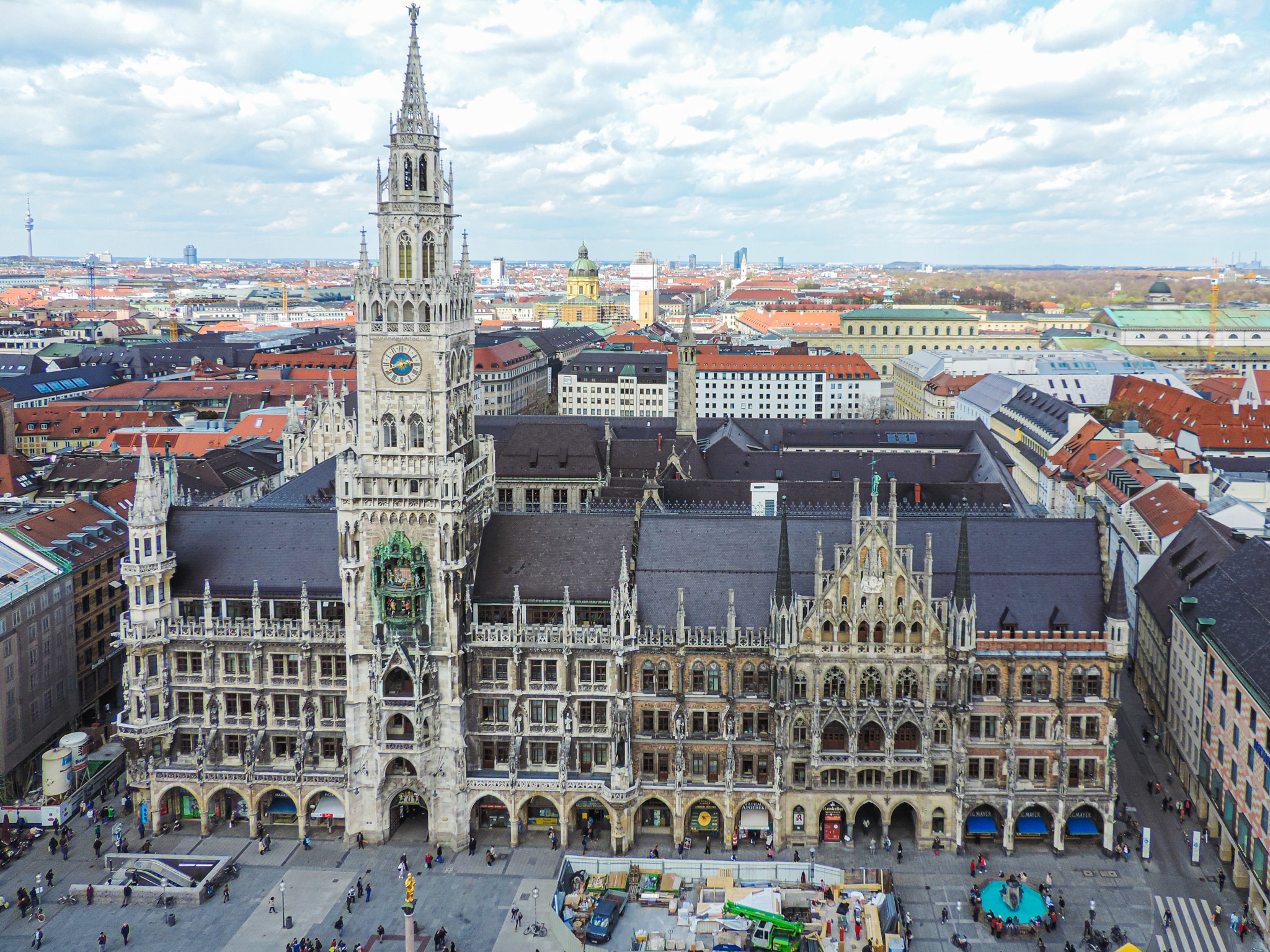
Home of the world-renowned Oktoberfest, this lively, slightly wacky city is the beating heart of Bavaria.
Equally important are the world-class beers, the religion of football and, of course, the white sausage. And who can't resist a bit of that, hey?
In addition, Munich is surrounded by phenomenal countryside, including the northern fringes of the snowcapped Alps. There is true beauty in all directions.
Finally, Munich is only a short train ride from the insanity of Neuschwanstein Castle, one of my favourite places in Germany.
Frankly, nothing about the castle, or Munich, for that matter, is normal, and that is why it's so special. No trip to Germany is complete with a visit to Munich.
For more, please read our complete guide to backpacking Munich here.
Karlsruhe
Karlsruhe may not be in your top ten places to visit whilst backpacking Germany. However, it is considered the northern gateway to the Black Forest. And for that reason, Karlsruhe is worth visiting before entering the woodlands.
In addition to the Black Forest, numerous nearby smaller towns and cities, such as Ettlingen and Malsch, offer contrasting beauty through nature and typical colourful German architecture.
The highlight of Karlsruhe itself is, without doubt, Karlsruhe Palace and its Gardens. The 18th-century castle-turned-museum is elegant, stylish and peaceful. Now, it's also informative and worthy of an hour of your time.
For more, please read our complete guide to backpacking Karlsruhe here.

Freiburg
Freiburg is a small university city that thrives on a perfect blend of greenery, nature, class, history, infectious architecture and that lively raucous nights out.
Whilst students claim the nights, the traditions of the old town possess the daylight hours.
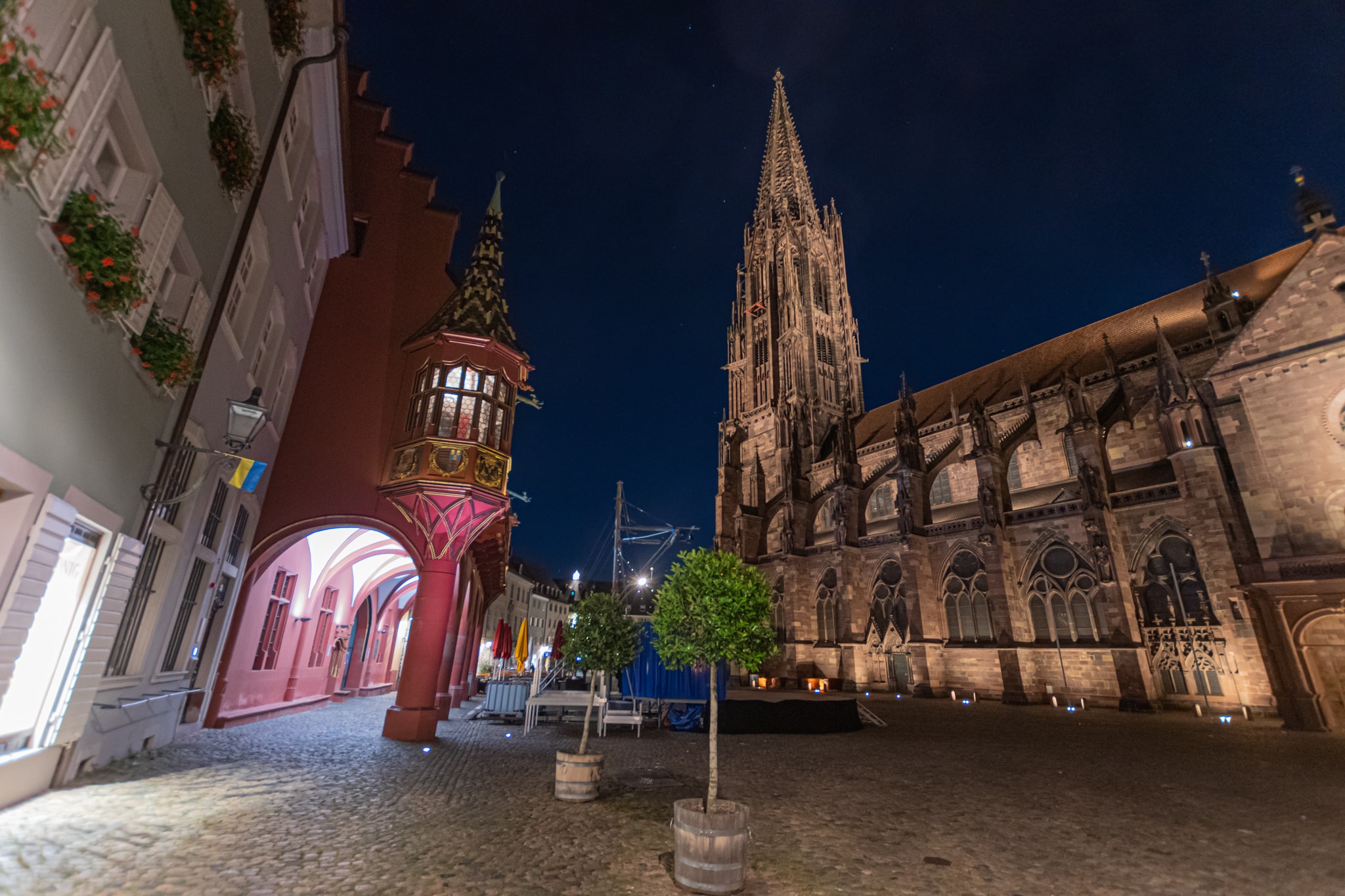
At its epicentre of the old town is Freiburg Münster, an 18th-century Gothic cathedral where the sounds of the bells ring out above the hustle and bustle of the market square. Fresh foods and vibrant flowers take over until the night starts to creep back in.
Now, the city reveals its true beauty from the beaming Aussichtsturm Schlossberg. Having climbed the hill and the 153 steps to the top of the tower, you can revel in one of the prettiest sunsets over Freiburg and the encroaching Black Forest beyond.
Nighttime takes back its control of the city, and the sounds of bells and markets give way to the clinking of steins and the smell of traditional German dishes.
It's typically German - it's magnificent, it's Freiburg.
For more, please read our complete guide to backpacking Freiburg here.
What's It Like Backpacking Germany?
Without sounding too much like a cliche, backpacking Germany is as smooth and irresistible as you would imagine.
Public transport is clean and tidy and even runs on time.
Order, reason and logic make travelling around this large country a breeze.
Don't get me wrong, some moments will have you second-guessing your life choices as you run between a crazy night of whips, dancing, and a plate of meat at the Hofbräuhaus in Munich to the firey heavy metal band Rammstein.
Nothing about exploring Germany is normal, but isn't that why we travel?
We're on the lookout for crazy, funny, entertaining, stunning places, and Germany is full of them.
With this in mind, let's look into each aspect of backpacking Germany and what it will mean for you.
The Accommodation
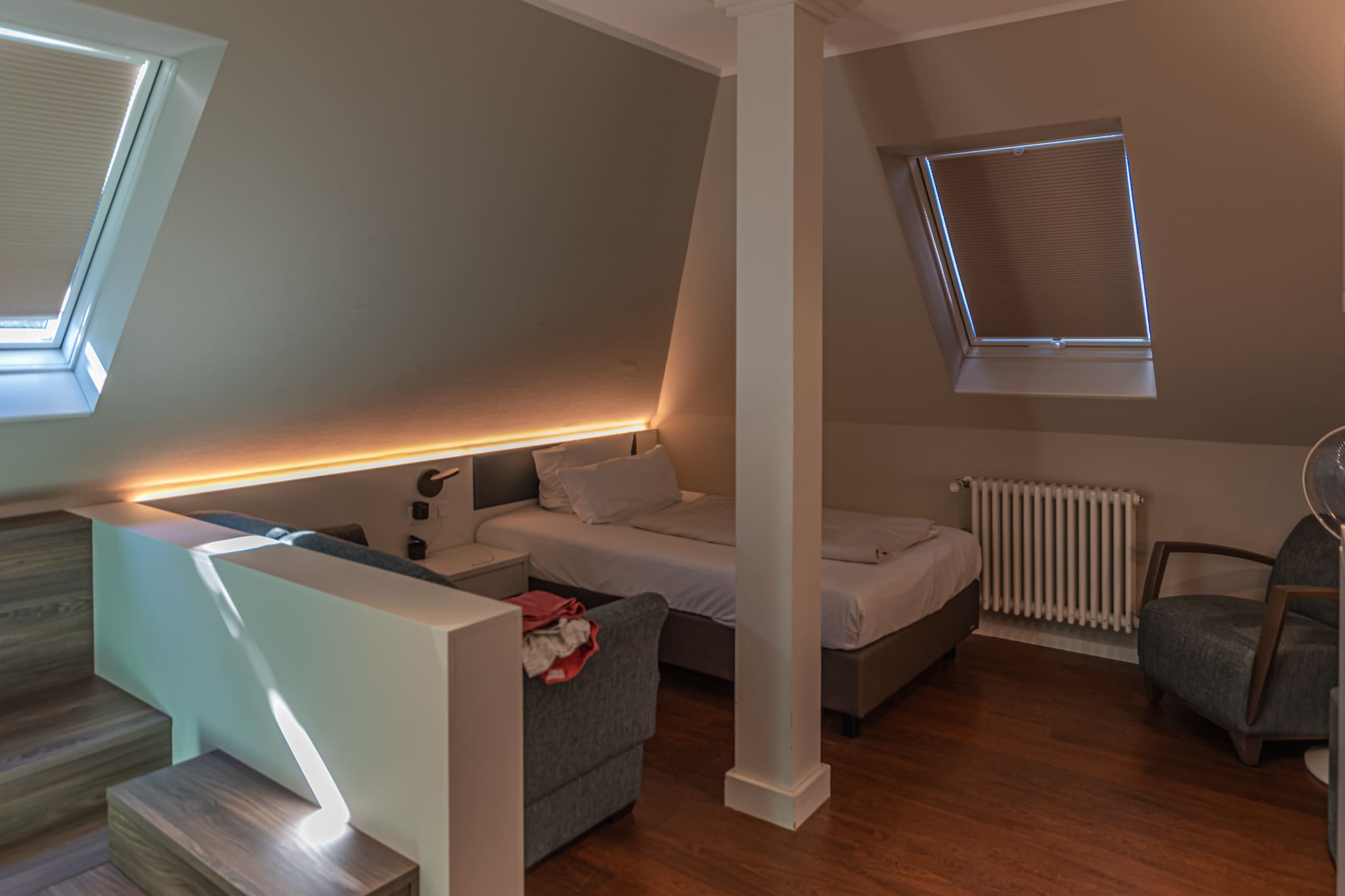
Firstly, I typically have a carefree attitude to booking accommodation. However, here in Germany, places get booked up pretty quickly, especially in the cities on weekends and even more so in the high season (May to September).
If you leave it to the last minute, you may find prices quickly double, or the rooms get snapped up. Get in early. Take the deals and secure your booking.
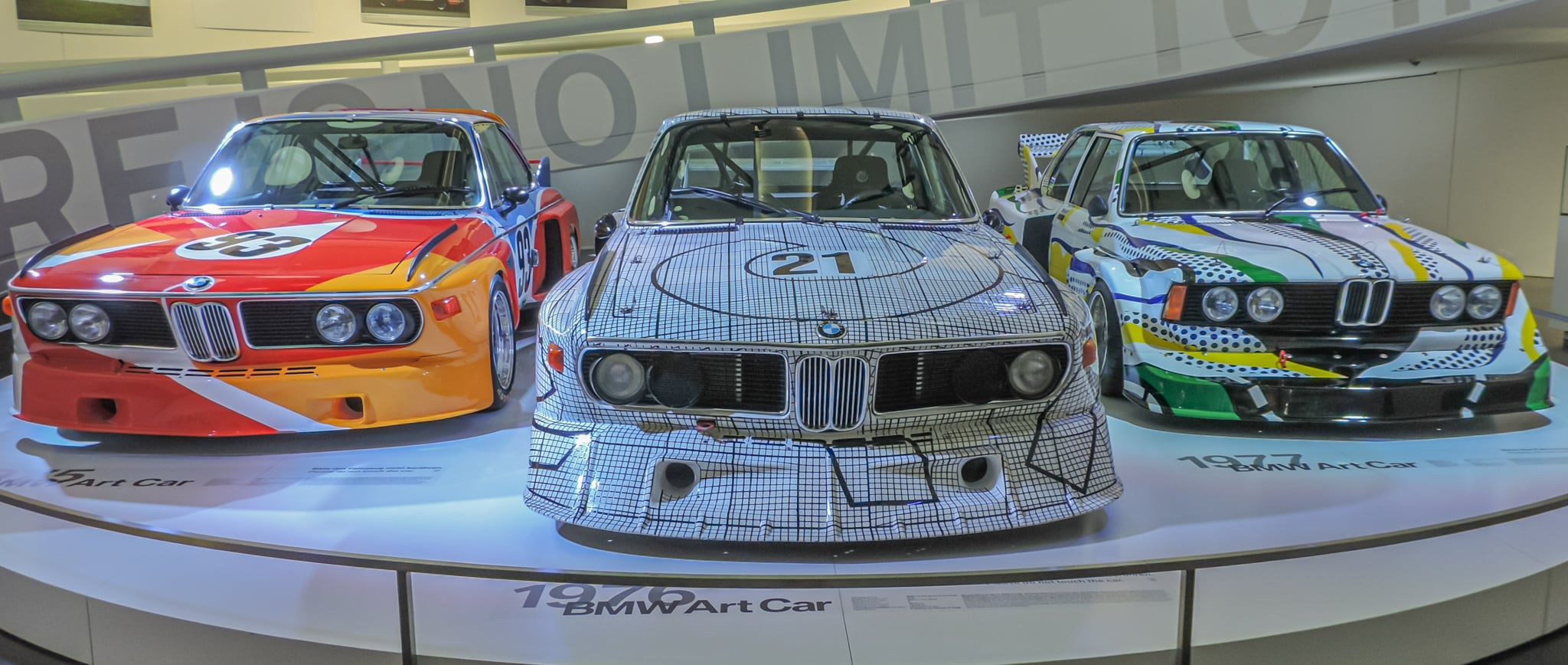
In general, no matter your style, price or level of comfort, accommodation in Germany is pretty sound. You'll get that ruthless German efficiency with the cosiness and innovation you'd expect in a top-of-the-range Merc or BMW. The main thing to look out for is location. Base yourself in the middle of where you want to be, and you'll have a grand old time.
As with most countries, I have always found that my holy trinity of Hostelworld, Airbnb and Booking.com cover just about every eventuality when booking accommodation in Germany.
Although, don't forget that there are many other sites out there. So if you still cannot find what you're looking for, drop us a DM on Insta, and I'll sort you out.
Being a solo backpacker, I try to keep things cheap yet still be in the heart of the action, surrounded by like-minded, fun and friendly backpackers. Therefore, if you're like me, I suggest starting with Hostelworld. If nothing takes your fancy, Booking.com should have you covered.
For more about accommodation in the cities, I've been to, check my detailed accommodation guides for:
The Food
Germany has an affiliation with foods, and, in truth, most of them are enough to blow a vegan's brains out.
Seriously, vegans and veggies beware!
However, I know most of you are thinking, "oh yes, beer and sausage". Yet, there is far more to German delicacies than just the sausage.
Yes, almost every meal involves some form of meat. The south tends to run with Pork, beef and deer, whilst the north dines on a mix of fish and seafood followed by pork or chicken.
And frankly, I'm ok with that.
So, before I start drooling over the keyboard, I'm going to run through four or five of my favourite German dishes that I think you need to try whilst backpacking Germany.
Mains
- Schweinshaxe - A tender, succulent fall off the bone, melt-in-the-mouth lump of pork. Delicious.
- Schnitzel - A thin layer of meat, often chicken, breaded and fried.
- Bratwurst - One of many styles of German sausage. Often eaten in market places or BBQ's in a bun with onion and sauce.
- Sauerbraten - A rich roasted beef stew.
Side dishes
- Spätzle - Germany's answer to pasta, made with flour, wheat and egg topped with cheese and roasted onions. Banging!
- Sauerkraut - Sour, fermented, finely cut cabbage.
- Schwabischer Kartoffelsalat - A very different take on potato salad. Often prepared and served differently in every home.
- Kartoffelknödel - Soft, gooey potato dumplings.
Aside from these tasty treats, Germany is also famed the world over for its Markets, and I'm not just talking about the Christmas Markets. Wherever you can squeeze a few stalls, some fresh produce and a guy screaming like someone has kicked him in his left testicle, Germany will throw an open-air market.
Get yourself to these as often as you can. You'll never want to leave. The smells are second only to the taste of each delicious mouthful. Oh, and the atmosphere is buzzing. Honestly, this is where you'll find me when I'm hungry in Germany.

The Culture
German culture is an explosive mix of precision and perfection. Yet, there are times when this efficient machine forgets who it is, drops a bollock, and reveals its true identity.
Then, and only then, does the real side of German culture shine through.
Festivities such as the excitable and whacky Christmas Markets, events like Oktoberfest and all-night raves run riot through the country. And that's before we have even covered the traditional rapture that is lederhosen and the dirndl.
However, first up, preparation!
Whilst a slight stereotype, everything in Germany is planned, prepped and executed with meticulous precision.
Timing is key, as is having all the necessary equipment prepared and in working order, ready to use at your disposal when you need it. Similarly, you'll never hear of a BBQ where someone has forgotten the burgers. It just doesn't happen. The same can be said for public transport, opening hours and gigs, well, anything. Be on time, and be prepared.
Secondly, we have Religion and family time.
The primary faith in Germany is Christianity, and despite the slow decline, Christianity still plays a much broader role in German traditions than it first appears. After all, there wouldn't be the famous Christmas markets, which would suck, because they are fantastic.
If you get the chance to visit one, do it. I speak more about that below.
Likewise, other pivotal religious celebrations such as Three Kings Day and Ascension Day wouldn't be a thing.
Christianity is also at the forefront of another German tradition, Sundays with the family. Often, Sundays are spent with family, playing cards or board games, eating and catching up with the week's news.
Thirdly comes one of our favourite German Traditions, German beers, parties and festivals.
The Germans love an excuse to let their hair down, pop on the traditional clothing, down copious amounts of beer, swallow lots of sausage and have a good laugh. Honestly, count me in.
We have all heard about Oktoberfest. However, the Karneval, also known as Fastnacht or Fasching, is about as big as it gets in Germany. The people go mad about it. Everyone dons the Traditional clothing or fancy dress outfits, face paints get smothered across the crowds, and more beer and german foods pass the lips of the people than at any other time of the year.

The Transport
Having used planes, trains, taxis, trams and buses across four or five towns, cities and the countryside, I feel I've gained a good understanding of the German transport system. So, let me pass on what I've found.
As you'd expect, the German transport system runs like clockwork. Well, at least it has during my tours of Germany. In some instances, it has surpassed even my high expectations.
So let's start with that.
The €49 Deutschlandticket
During a trip to Germany in July 2022, I discovered the immense €9 ticket, which allowed unlimited use of all local and regional transport across Germany. The only caveat was that you cannot use the ICE.
Why? Firstly, to combat the rise in energy costs for its people. Secondly, to make Germany less polluting by bringing people back to public transport, meaning fewer vehicles on the road. Thirdly, making it affordable for all to travel, which in turn means fewer people are likely to try to ride for free. Finally, to reduce the reliance on Russian fuels.
Whilst this was undoubtedly a success, the government did foot the bill, which was mightily high.
Therefore, the German government have introduced a replacement for the €9 ticket.
The €49 Deutschlandticket allows any travel on all local public transport for €49 a month. Imagine backpacking Germany for a month and only spending €49 on transport. What a bargain.
Best of the Rest
Outside the €49 Deutschlandticket, Germany continues to be a world leader in public transport and its broader transportation systems.
Whilst the national system runs smoother than a baby's bum, several regional apps make your life even more straightforward. For example, in Berlin, there is BVG. In Munich, there is MVG Fahrinfo or MVV.
Roads
There isn't much to say about Germany's roads. They're generally well-maintained, free-flowing and fast. Unlike Italy to the south, Germany seems to be more tight with maintaining road laws, standards of driving, and safety. It's all very similar to the UK, apart from driving on the right.
When we look at buses or taxis, they are broadly speaking, clean, tidy and safe. They also run on time and have the technology to tap your Revolut Card as you get on. Therefore, no waiting around at bus stops or payment machines.
Remember, Uber is banned here in Germany. However, there are other ride-hailing apps such as Drive-now and BlaBlaCar.
Trains
Much like the roads, German trains are phenomenal.
The main thing you need to be aware of is what train you're going to take.
The general rule of thumb is the Intercity and local trains are called IC (intercity) whilst the EC (Eurocity) trains connect German towns and cities to neighbouring counties.
Although, by far the best trains in Europe are Germany's ICE (intercity express) which connects the country with high-speed and precision timing. The ICE trains also travel to neighbouring countries, such as Switzerland, Belgium, Holland and Austria. These trains are not included in the €9 ticket and are best to reserve before boarding, especially during busy periods.
Plane
The national airline of Germany is Lufthansa, and they fly across the world, including the Americas, Africa and Asia. Whilst they may be the national airline, they are not necessarily the cheapest. Therefore, if you're backpacking Germany on a budget, you may want to look at other low-budget European airlines such as Easyjet or Ryanair.
Although, I'd save time and money and grab a train.
The Budget
People often think backpacking Germany will blow your year-long travel budget in a week, and honestly, it could. However, as those in the know will tell you, it doesn't have to. In fact, backpacking in Germany can be surprisingly cheap, very cheap.
With the introduction of the €49 Deutschlandticket, backpackers can view Germany as a more affordable country to visit.
Frankly, every country in Europe should be looking into this.
Anyway, I'm getting sidetracked.
So without further ado, our three Far Out budgets are;
The 'Backpacker' Budget
Your only objective is to keep travelling. The secret? Keeping costs at an all-time low. This is the budget for you.
Accommodation - There is good and bad news. Firstly, the good news. Nothing in Germany is half-hearted, so even the cheapest accommodation is fantastic. It's the german way, isn't it - Precision engineering and perfection. So booking into the lower-end accommodation doesn't mean sleeping with the rats.
The bad news is that you are unlikely to find anywhere for under a tenner a night as in Indonesia, Thailand or India.
Honestly, you guys will be looking to hostels. You'll be doing well to stick to €13.50 (£12) a night.
Foods -Luckily, Germany loves a market, and you'll find them all over the main squares. Not only are they super cheap, but they are authentic and delicious. In addition to the markets, you'll have to shop in stores to buy your food cheaply and eat within the hostels.
When you combine those two options with the app Too Good to Go you should easily sneak in at under €15 (£13) per day.
Transportation - Unless you need to move cities, you'll be walking, which, I think, is the best way to explore a city anyway. Despite walking being the best way to explore, there are days when you cannot face another 30,000+ steps.
Therefore, if Germany's amazing €9 ticket comes back, I'd suggest even on your budget, that's a complete no-brainer. Consequently, if you're backpacking Germany during the €9 period, get one, and you won't need to spend any money on transport for said month.
Total transportation costs are €0.30 (£0.26) per day.
Drinks - Beers in Germany are extremely well priced, and whilst that's good for all, it can mean you buy more than you need. Yet, if you're disciplined and stick to a couple a night, you can get away with spending around €6 (£5.30) per night, more if you buy in bulk at the store.
Overall - Your daily backpacker budget for Germany, including three meals, will come to a grand total of €34.80(£30.56) per day.
The 'Travellers' Budget
You've saved for this trip, and you want the ultimate bang for your buck. Money is tight, but you want the best experience. We've got you covered.
Accommodation - Again, you should aim for hostels rather than living it up in the likes of Airbnb. That is unless you have a large group of you all looking to stay for a week or more. However, you can splash the cash and look for the higher-end hostels in better locations with more going on.
Aim for around €18 (£16) a night. You will notice the difference.
Restaurants - Do you know what! I would still advise eating at the markets - they are that good. All the products are fresh, authentic, and so flavorful that you should try them.
Nonetheless, your budget will allow for an evening meal in a fair to good restaurant. You can easily find a top-tasting meal in a restaurant in Germany for around €15 per person.
Therefore, if you spend a fiver at the markets and fifteen euros on an evening meal, you can bring in a daily traveller's food budget of about €20 (£17.50).
Transportation - Much like the backpacker budget, I'd suggest you look no further than the €9 ticket. You're not in a rush, so don't waste money on the faster inter-city trains. Take your time, walk or make your way around Germany using the transport available via the €9 ticket.
Total transportation costs are €0.30 (£0.26) per day.
Drinks - This is where you make the best gains over the backpacker budget. Splash the cash and have a lunchtime beer. Let your hair down in the evening and hit a couple of bars. Let's face it, you want to experience the real Germany, and that involves as much beer as your body can take.
Treat yourself to four or five steins a day. Shall we budget €20 (£17) a day?
Overall - Your traveller's daily budget for Germany, including three meals, will come to a grand total of €58.30 (£50.76).
The 'Daddies Credit Card' Budget
Your trust fund is finally available, and your Instagram followers need to see where you are in the world this week. You farted the other day, and a private jet came out. We haven't forgotten you.
Hotels - Welcome back my little Instagram travel icons. I do hope the flight over in the private jet was to your liking. Welcome to Germany. I have done the leg work for you and think you'll love the Fontenay Suite at Hamburg's five-star luxury Fontenay Hotel.
This suite will only set you back €9,000 (£7,933) a night. Mere pocket change, hey? But, don't worry, that includes breakfast, so you're all good.
Restaurants - After that, you'll only need two more meals, and both will be shrouded in luxury, ready to make your real friends back home very jealous.
So, it's off to Berlin's Lorenz Adlon Esszimmer now, where fine dining is taken to an entirely new level. You will not see anyone on the other two budgets here. Six courses will set you back €230, seven-course €250 and eight, well, that's €270. That's lunch sorted.
For your dinner, may I suggest the Rutz where you can pick up "The full experience", aka eight courses for €295, or maybe seven courses for €275? Both include water. More if you want alcohol, a lot more!
That's a daily food budget of €565 (£498). You animal.
Transportation - Of course, you don't want to be backpacking Germany with the rest of us, so I've found something a little posher. With hubs across Germany, Schneider Chauffeur Service will have you arriving on time and in style. However, I do not have any prices for you, but check out their website if you're interested.
I'm going to guess that they aren't cheap. I'm going to budget €200 (£176) a day.
Drinks - Ok, so you wanted drinks with those meals, sorry! My Bad.
Well, I'll add on another €180 a meal for a paired wine. Then, I expect you'll want to visit a couple of cocktail bars. Can I make another suggestion? How does Geist Im Glas sound? Here you can do brunch too. Or if you're all fooded out, try Würgeengel. Cocktails start around €11, so get drinking you little richies.
Overall, I'll give you €250 (£220) a day. That should keep you well-oiled.
Overall - Your daddies' credit card daily budget for Germany, including three meals, will come to a grand total of €10,015 (£8,827) a day.
The Best Things To Do When Backpacking Germany
Get Festive at the Magical Christmas Markets in Berlin
No matter the location in Germany, December means Christmas markets.
It makes little odds as to which one you visit, but the bigger the city, the bigger the markets. Berlin has, by far, the most on offer, each with a different vibe. So, for a first-timer, I'd head there.
So what to expect?
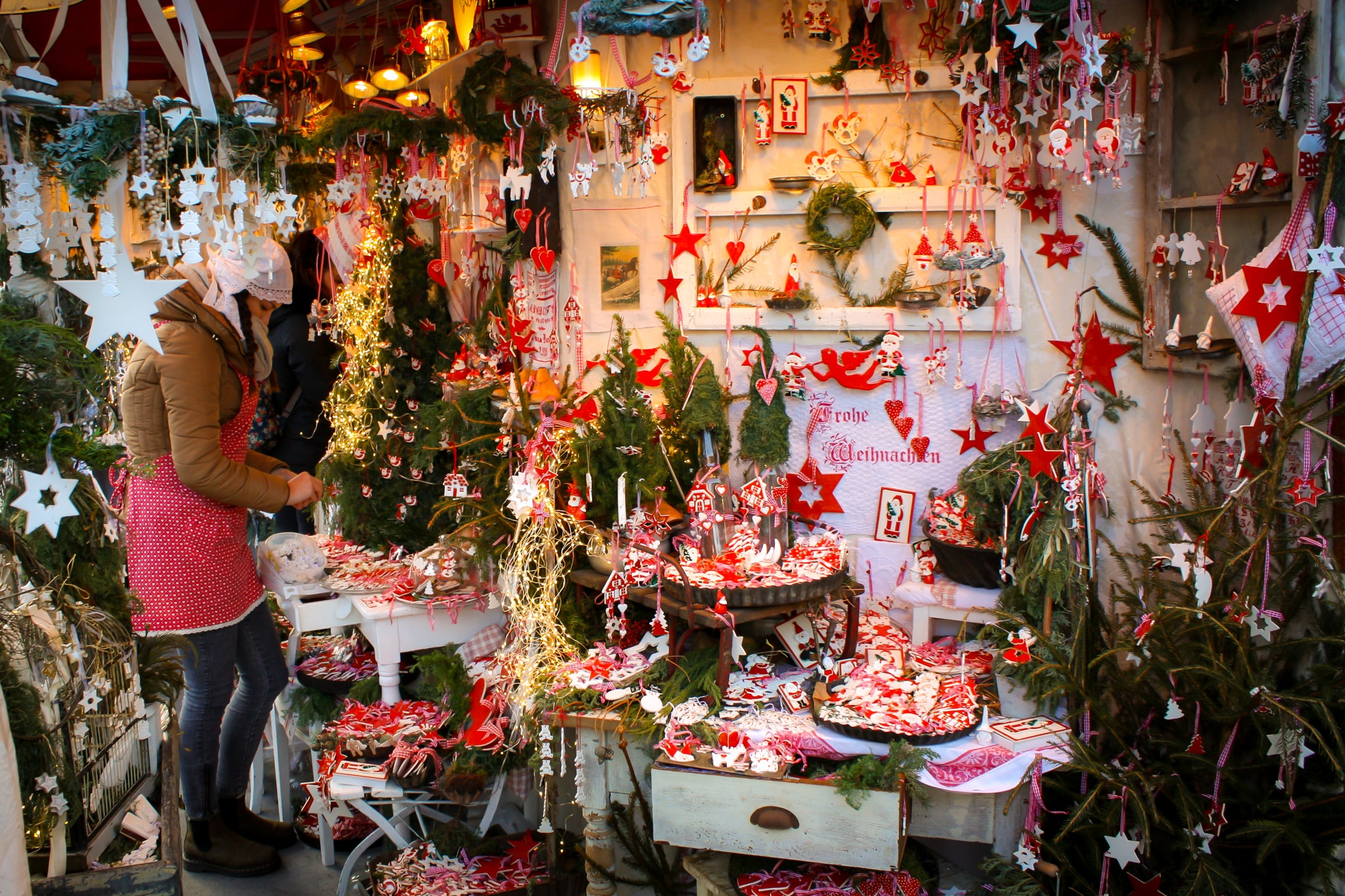
As the morning sun rises above the smell of roasting chestnuts, warm gluhwein and the fresh aroma of wooden huts, the buzz and excitement levels rise. The small homely wooden cabins open their doors where the trinkets, edibles and drinks burst out with the same energy as the expectant crowds.
The sensation of a Christmas market is unrivalled as you weave from beers to gluhwein, currywurst to bratwurst and from hot choccie to a toasty tea.
Crowds descend in their thousands, all on the lookout for a bargain, the ice skating rink or the thunderous circus rides. It's exciting on a whole new level.
The best way to get the most out of a proper German Christmas market is by throwing yourself into the experience, and of course, you have to do it here, in Germany.
Visit Neuschwanstein Castle
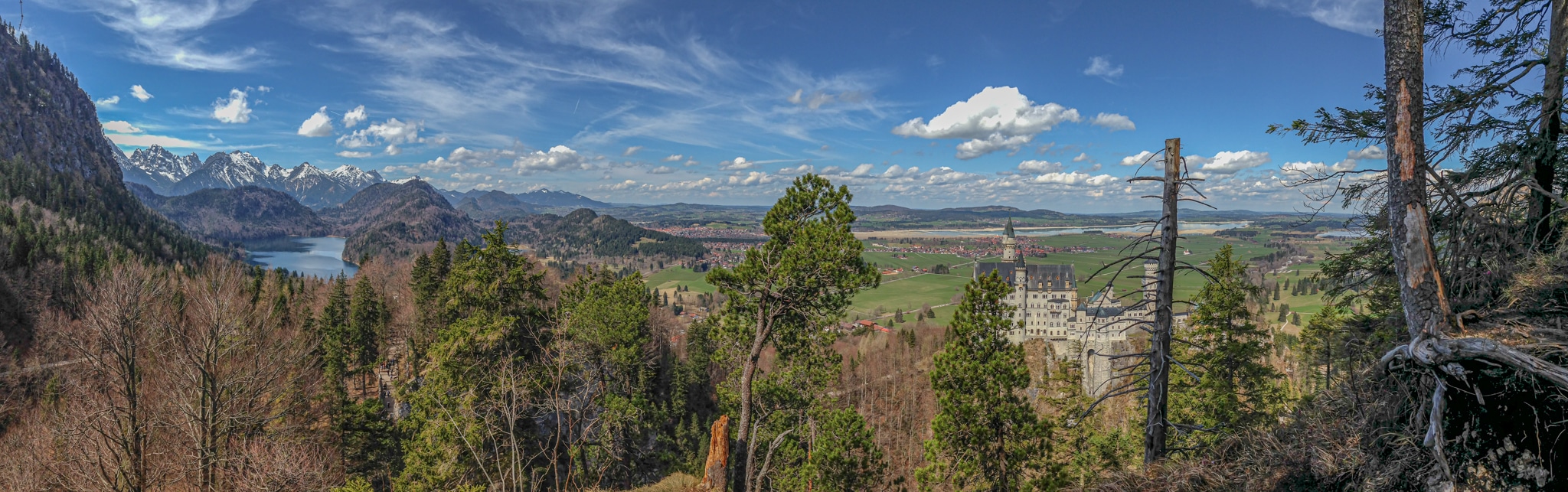
When the Mad King, Ludwig II proposed to build a castle of this size and scale, it was no wonder people thought he was mad. Surely, this location, its size and prowess were impossible.
Well, it wasn't, and it's bloody fantastic. Cudos to the mad king.
Construction started in 1869 with the intention that the mad king would use the castle as a private residence. Nevertheless, the mad king died in 1886. So, instead, it was opened to the public.
The views from behind the castle are some of the best I have ever seen. With one turn of the head, you'll see snow-capped mountains, crystal clear dark blue lakes and roaming green fields as far as the eye can see. What more could you want?
However, the castle itself is the rising star of the show. The design, the sheer size, and its beauty cannot be compared to anywhere else. It truly is unique. It's no wonder Disney took the design from here for Cinderella's castle.
Sadly, no photos are allowed inside, so to see the incredible and intercut design, you'll have to see it with your own eyes. You will need to book a tour, and secondly, it's worth every penny.

Enjoy an Entertaining Evening at The Hofbrauhaus Munchen
I have been to some extremely odd places for drinks and or food over the years, but this one is unlike anywhere else.
It is so entertaining, thrilling and exciting that I'm saying "if you've not experienced the Hofbrauhaus, you haven't been to Munich".
The Hofbrauhaus is a large, lavish building where gigantic wooden tables line the floor in rows upon rows. Bandstands don the remaining floor space, whilst the main stage heads the building as a focal point against the back wall. It's like an 18th castle, where the kings and queens of old threw rampant and extravagant banquets.
Waiters and waitresses continually roll from the kitchen with plate upon plate of meat and potato on a scale that only Rubeus Hagrid can handle.
The entertainment is second to none, with traditional clothing, dance and song accompanying every bite. It's spectacular in every way.
And let me tell you, the food and drink aren't half bad too.
It's exquisite.

Paddleboard on the Rhine
Disclaimer - Other rivers are available!
The Rhine carves its way from the Dutch border through western Germany down to the Swiss city of Basel, where it breaks east and becomes the border of Germany of Switzerland.
And it's here on the German-Swiss border where I took the paddle board out and suggest you do too. With miles and miles of free-flowing, traffic-free river, you can choose to lay back and let the current take you with a beer in hand or build up a sweat paddling downstream, discovering skills as you muster all you can to fight the current.
On a hot summers day, there is no better feeling that exploring one of Europe's largest, most beautiful rivers with the only sounds coming from the rustling of the trees, the splash of the jumping fish, and the squawking birds as they make an emergency landing on or next your board.
Just remember to take supplies. And by this, I mean a bottle opener, beers, suncream and swimming gear.
It's paradise!
I will be back for more adventures on the Rhine. I'll see you there.

Preparing To Backpack Germany
Suggested Itineraries
Coming soon!
Itinerary one
8 Days
Coming Soon
Day 1 - Coming Soon
Itinerary two
10 Days
Coming Soon
Day 1 - Coming Soon
Speaking German
Now, back in school, we could either learn German or French. It is safe to say that, back then, younger me couldn't really speak English, so trying to add another string to my linguistical bow simply didn't work.
Furthermore, I got thrown to the French teachers, so I'd like to first apologise to them, and secondly to all of you looking for help with your German. I am not your man!
But, I have thrown together a few little phrases and hope they get you started on your tongue-twisting, mind-blowing adventures of the German language.
Enjoy!
| English | German | Greg's Pronunciation Breakdown™ |
|---|---|---|
| hello | hallo | ha-lo |
| bye | wiedersehen | vee-da-zin |
| my name is... | mein Name ist... | mi nam i'st |
| yes | jawohl | yabol |
| no | nein | nine |
| ok | ok | ok |
| please | bitte | bitta |
| thank you | danke | danka |
| sorry | verzeihung | fur-tail |
| how much? | wie viel | wie fear |
| excuse me | verzeihung | fur-tail |
| what? | was | vass |
Visas and Borders
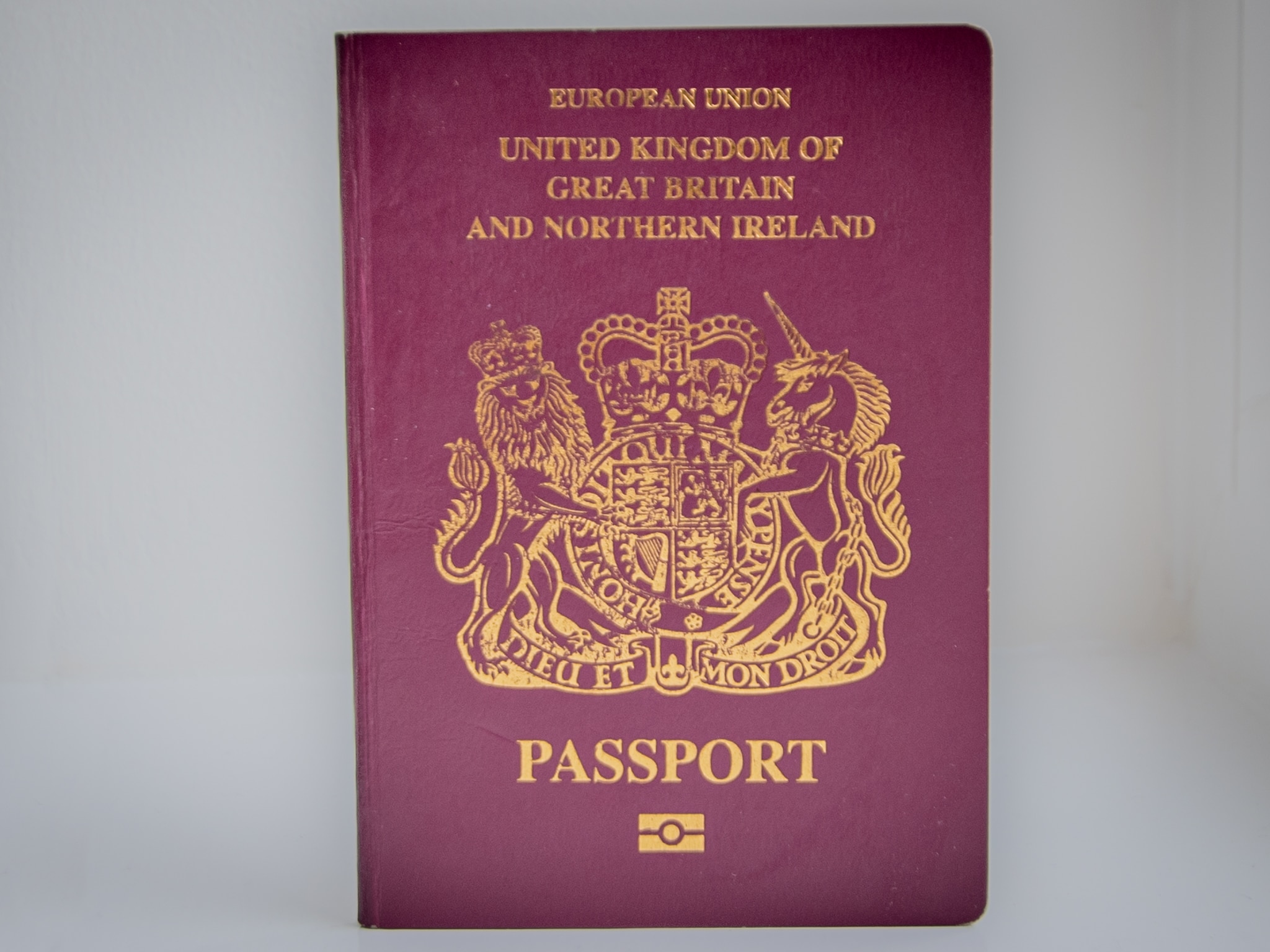
The good news is that Germany is a fundamental member of the Schengen agreement along with 25 other nations in Europe. What does this mean? Well, once you enter one of these countries you have the freedom to move between all of them, cost and worry-free.
Therefore, if you are a national of any of the following countries, you are free to enter Germany as often as you like.
Austria, Belgium, Czech Republic, Denmark, Estonia, Finland, France, Germany, Greece, Hungary, Iceland, Italy, Latvia, Liechtenstein, Lithuania, Luxembourg, Malta, Netherlands, Norway, Poland, Portugal, Slovakia, Slovenia, Spain, Sweden, and Switzerland.
Similarly, if you are from a Schengen country, which is also part of the EU, you can work and study in Germany without a visa. Anyone outside of the EU will require a work visa to work in Germany.
At the end of 2022, Shengen Counties will introduce an ETIAS Visa Waiver form. It stands for European Travel Information and Authorisation System and will cost €7. Free if you're under 18 or over 70. Everyone outside of the Schengen agreement will have to apply. However, it will be valid for three years.
Although, for now, nationals of the following countries can travel to Germany for up to 90 days visa-free within a180 day period:
Albania, Andorra, Antigua and Barbuda, Argentina, Australia, Austria, Bahamas, Barbados, Belgium, Bosnia and Herzegovina, Brazil, Brunei Darussalam, Bulgaria, Canada, Chile, Colombia, Costa Rica, Croatia, Czech Republic, Denmark, Dominica, El Salvador, Estonia, Federated States of Micronesia, Finland, France, Georgia, Greece, Grenada, Guatemala, Honduras, Hong Kong, Hungary, Iceland, Ireland, Israel, Italy, Japan, Kiribati, Latvia, Liechtenstein, Lithuania Luxembourg, Macau, Macedonia, Malaysia, Malta, Marshall Islands, Mauritius, Mexico, Moldova, Monaco, Montenegro, Netherlands, New Zealand, Nicaragua, Norway, Palau, Panama, Paraguay, Peru, Poland, Portugal, Republic of Cyprus, Romania, Saint Kitts and Nevis, Saint Lucia, Saint Vincent and the Grenadines, Samoa, San Marino, Serbia, Seychelles, Singapore, Slovakia, Slovenia, Solomon Islands, South Korea, Spain, Sweden, Switzerland, Taiwan, Timor-Leste, Tonga, Trinidad and Tobago, Tuvalu, Ukraine, United Arab Emirates, United Kingdom, United States, Uruguay, Vanuatu, Vatican City, Venezuela
Outside the countries I have mentioned, I'm afraid you will have to apply for a visa to enter Germany.
Borders
Germany has land borders with nine other countries, making it the most connected country in Europe. These neighbouring countries are Denmark, Poland, Czech Republic, Austria, Switzerland, France, Luxembourg, Belgium and The Netherlands.
Guess what? All of those are in the Schengen agreement. There for, all the borders are simple and easy to cross.
Despite not having a vast coastline, Germany is sliced open by numerous major European rivers, bringing goods and passengers into the heart of the country. Therefore, there are, surprisingly, a myriad of notable ports. None more so than Hamburg.
I'm not going to list all the ports and airports, as, let's face it, I would be here all day. You know where you're going. Simply look for the nearest one.
What to Pack
It's always tricky knowing what to pack, and backpacking Germany is no different. In short, it depends on where you're planning to visit and at what time of year.
If you're heading for the south during the summer months, expect long, hot and dry days, whilst in the north, especially during the winter, expect cold, rain and possible even some snow. That said, the south can be carpeted in the white stuff during the winter months thanks to those pesky Alps.
Below are a few essentials I have found useful or stupidly forgot and thought would have been helpful during my trips to Germany.
For a complete packing list, don't forget to check out our What to Pack blog.
Our Top Pick for Backpacking Germany is...

iBlockCube
The iBlockCube is essential for travelling the world, especially with the modern era of everything electrical.
It becomes even more critical when another country, such as Germany, doesn't have the same electrical sockets as back home.
Therefore, if you're like me and travel with your phone and those best backpacking apps, cameras and other kick-ass tech items, you'll need to charge them. After all, you'll have plenty of epic places to snap away at whilst backpacking Germany.
Therefore, for me, there is nothing more essential to pack than the iBlockCube.
It's small, lightweight, durable and packs a punch like Mike Tyson. This little beast will charge more than six items at once. All whilst blow drying your hair.
Best of the Rest
Toiletries ∼
The advice is simple for what toiletries to pack for Germany. Pack whatever you'd typically use at home, but don't worry about packing extra. If you run out, you can buy it all here.
Furthermore, if you're short on bag space, you could only pack the essential items you'll need when you arrive and buy all the rest out here.
There will be stores that cater for your every need, such as Rossmann's.
Again, due to Germany's sanitary, health and safety etc., there is no need to waste space in your bag on those sorts of meds.
Clothing and Shoes ∼
As I've mentioned, Germans love a reason to dress up, party and have a beer. So, the best items of clothing to take are those that you feel comfortable in on a night out. Something that allows you to blend in at a posh cocktail bar or restaurant and Munich's beer-guzzling, wild Hofbräuhaus.
Honestly, Germany is a modern-day country, don't listen to all the blogs that tell you what you need to buy. Just wear what you'd wear at home. There aren't any special clothing requirements for Germany, it's not like Morocco or Bali where you need to cover up or wear certain items at temples etc...
Nonetheless, I do always pack, as with any trip to Europe, my pair of Karrimor's, which are comfy and suit both a footstall at a bar and the blades of grass on top of a mountain.
Electronics ∼
As I have already mentioned the incredible and durable iBlockCube, you are now going to need something for it to charge.
Without trying to pass the buck, it's over to you. You know what you like and what you want from Germany. If you're looking for peace, quiet, and some time to yourself, you'll need a kindle or a pair of epic noise-cancelling headphones.
However, you may be looking to snap the incredible landscapes or historic city centres with groups of people from your hostel. In that case, you'll need a decent camera and lens. I use the Nikon D500 and love it. I usually also carry the versatile sigma 17 to 50 2.8f lens. Unless you're a wildlife photographer for Natural Plant or Frozen Planet, that should be more than enough.
Outside of that, you don't need anything special for Germany. Germany is impressive. Therefore, you should spend less time looking at phones and gadgets. Just enjoy it. Although, if using roaming data is too expensive, you may want to consider a pre-paid German sim Card.
Bags ∼
I know there's a lot of advice about the best travel backpacks and bags. However, it genuinely depends on you and your situation. Are you going for a couple of nights or a month? Are you only backpacking Germany or visiting as part of a world tour? What feels comfortable, and what do you need to carry?
If I am visiting Germany, I tend to go carry on only. Nevertheless, no matter what I am doing, be it a small almost-day bag or a gigantic seventy-litre rucksack, I can never stray too far from Berghaus or Osprey. They are market leaders for a reason. I find them super comfy, and that's the main reason to go with a bag. When you try it on, you will know it's the bag for you.
Always try a bag on before you buy and... then see if you can find the exact bag cheaper online or via the links above. Cheeky, but it's vital to get your bag right.
Female Travellers ∼
In Truth, whatever you can buy at home, you can buy in Germany. I have spoken to many of my female travel friends, and no one has reported any issues getting hold of products or toiletries that they've required.
Although, they have mentioned having a comfortable pair of flat slip on's for after a night out. (Me being me and the least fashionable person on the planet, I had no idea what that meant).
Other items include something comfortable for nights out in the bigger cities and a stylish, warm trench coat, which I also had to google, for the winter months.
Travel Insurance
Backpacking Germany is in itself safe. In fact, it is one of the safest counties in the world, and in my experience, not a lot goes wrong here.
However, as I always suggest, get travel insurance for any visits to Germany.
After all, due to Germany being so safe, travel insurance is gonna be super cheap.
My advice, if you want it, take out multi-trip year-long insurance covering all of Europe, Morocco and the UK. That allows you to move carefree within the EU should you wish.
Make sure it covers everything you need including gadgets to health and financial security.
Another good way to cover all your travel insurance needs is to get a Revolut travel card. If you opt for their top-level service, your account comes with travel insurance included.

Backpacking Germany Ethically
As a leading member of the EU, Germany has to abide by strict measures when it comes to a vast number of ethical and welfare issues.
Since 2021, the newly formed government have delved into numerous social, political and economic issues.
Firstly, the coalition government have pledged to meet the Paris agreement in tackling climate change, as well as dealing with animal welfare, sustainable agriculture and food sources. There are numerous solutions for these matters, and the future is looking brighter.
Secondly, the newly formed coalition in 2021 has made progressive new laws covering hate crimes against members of the LGBTQ+ community. Whilst these new laws and the government are making progress in equality, Germany still suffers from systemic abuse regarding race, beliefs, and sexual orientation.
Nevertheless, whilst German attitudes are slowly moving in the right direction, there are still issues across the country, especially within sports. Furthermore, in 2020 there was an increase in politically motivated crimes by right-wing extremists and a 70% increase in racist incidents.
That said, major and progressive cities across Germany, such as Berlin, have made tremendous strides towards equality for all human beings.
Overall, since the new coalition, Germany appears to be leading the way on human rights and social and economic reform and is a shining light in Europe concerning ethical living.
Safety
For me, Europe has always been one of the safest continents to don my backpack. And within that, Germany probably tops the table as the safest country to explore.
So, it will be no surprise when I say backpacking Germany is safe. In fact, according to the 2022 Global Peace Index, Germany is the 16th safest country in the world.
Yet, Germany, like everywhere else, has its issues. However, as a tourist, they aren't something that should affect your decision to go to Germany or impact your visit.
So let's look at what to expect whilst visiting Germany.
Crime
The most common crime tourists encounter in Germany is pickpocketing. Violent or high-level crimes committed against tourists are rare. Frankly, if you are mindful of your surroundings and keep your valuables securely about your person, you should be absolutely fine.
In recent years there have been steady increases in the larger cities of reports of sexual harassment towards women and abuse of the LGBTQ+ community, especially during the hours of darkness, more so on weekends.
If you fall victim to any crime, report it as soon as possible at the nearest police station, making sure you get a crime number for your insurance claim.
Terrorism
Germany is one of the more outspoken nations within Europe and has had an increased threat of terrorism compared to some of its neighbours, such as Italy, Poland, the Netherlands etc. However, the chances of being caught up in an event are low and shouldn't affect your decision whether to visit Germany or not.
The last terror attack was in Dresden, where one person died in October 2020. Therefore, making it much safer than the likes of the UK, Spain and France.
The chances are you're more likely to get caught up in a domestic incident where a protest, rally or march gets a bit tasty.
Natural disasters
In regards to natural disasters, Germany tends to escape the more horrific incidents that Indonesia and the Americas get.
Randomly, there are a surprising amount of Earthquakes, and I experienced one on my last trip in 2022. However, it was a minor shake, and most people wouldn't have even noticed it. In reality, Germany's most significant issue is flooding, which isn't unsurprising with its vast water network. Again, there is nothing that should stop you from coming to Germany.
Frankly, that's all that needs mentioning. Get your ass out to Germany and enjoy yourself.
Brief History
It's fair to say that Germany has an almighty association with war and unrest. Only recently, and by that, I mean the late 20th Century onwards, has Germany become at peace with itself and its neighbours.
From a time before Christ, the area we know as modern-day Germany lived divided. Hundreds of regions existed, each following its own unique and particular rules and rulers, kings, queens, lords and ladies. These Germanic tribes battled almost daily with their bordering rivals and foreign invaders, most famously, the Roman Empire.
Religion, beliefs, land, money and power were just some of the issues these tribes lived and died for. In fact, it wasn't until the Prussian victory in the Franco-Prussian War in 1871 that Germany unified for the first time.
The unification led to the German Empire in 1871, which lasted until the end of 1918 when the November revolution returned Germany to a republic.
We all know what happened to the last four years of the German Empire. Yep, World War I, which took place between 1914 -1918. I'm not going to details as you can learn about this in your own time. Remember, this is a brief history.
Shortly after WWI, Hitler became a prominent figure in the German government, and in 1933 he became chancellor.
The Nazi Party ruled through fear, money and violence. Those that couldn't leave had to follow. In turn, this led to World War II, which took place between 1939 - 1945. Again, I'm not going into details about the war, as you can learn that yourself. There's plenty of literature on it.
Since the fall of the Nazis and the end of World War II, Germany split into four areas, controlled by the British, the French, the Americans and the east by the Soviets. The western allies allowed their respective regions to develop and grow. They even joined what is now the EU and NATO, allowing West Germany to make huge gains economically and socially, whilst the eastern parts of Germany suffered under the rule of the Soviets who used the area to strengthen their positions back home in Russia.
The country officially split. The world recognised Germany as two separate counties, East Germany and West Germany. In 1961 the Berlin Wall was built, which is the most defiant show of that split.
After the destruction of the Berlin Wall in 1989 and the subsequent fall of East Germany, the reunification happened on the 3rd of October 1990.
Since 1990 Germany has grown in strength in all aspects of life and is now a leader in the EU and world affairs. It is now, despite the odd riot here and there, one of the most stable counties in the world.
Now, you can relax, kick back and enjoy your time backpacking Germany.
Our German Stories
What to do on a fun-packed weekend in Freiburg, Germany
They don’t call it the Jewel of the Black Forest for nothing!
Karlsruhe, Germany – A Travel Guide
Join me as I look into a sinister story and enter the gateway to the Black Forest.
Munich, Germany – A Travel Guide
… And for breakfast, how about a nibble on a bit of sausage and a couple of pints.
Berlin, Germany – A Travel Guide
Join me for wild nights and sobering mornings in the electric city of Berlin.