Indonesia
Last Updated: September 20, 2026
NEED THE ESSENTIALS FOR BACKPACKING INDONESIA NOW?
WHERE TO VISIT | BEST STUFF TO DO | SUGGESTED ITINERARIES | INDONESIA BLOGS

Heads up: We sometimes work with companies to provide affiliate links and reviews - here's what that means. If it's here, we use it. We don't plug shit for profit.
Backpacking Indonesia In 2026
Backpacking Indonesia has been on many bucket lists for decades, and the backpacking scene isn't going anywhere. Not even COVID-19 stopped it back in the early 2020's. With dream destinations like Lombok, Bali and the party island of Gili T, Indonesia will always be a firm favourite, especially for our friends Down Under.
In recent years, Indonesia has been hit with multiple earthquakes and volcanic eruptions, which have been well documented. Whilst this is a consideration, there are still many reasons to grab your backpack and head out here.
The more popular tourist islands are a hive of activity and are well accustomed to catering for backpackers and travellers alike. However, dig a little deeper and you'll find those 'off the beaten track' locations that people talk so fondly about from their time backpacking Indonesia. Undiscovered gems lie in wait amid the smallest of islands that jut from the sea, creating some of the most wonderful scenes and hiding many unknown, untold stories.
I was a tour guide in Bali for 7 months and was voted TruTravel's top tour guide worldwide. And now, I'm giving you the down-low on top locations, hidden gems, and, importantly, where to avoid in this comprehensive guide to Indonesia, including Bali and its beautiful neighbours in Nusa, Lombok and the Gili's.
Indonesia has it all, and that's why you need to backpack Indonesia in 2026.

Why Indonesia?
Firstly, you need to backpack Indonesia to experience its vast, ever-changing landscapes, dispersed across the crystal waters between the Indian and Pacific Oceans. It's not called the Land of a Thousand Islands for nothing.
You'll find that when backpacking in Indonesia, every island is different. This includes the culture, the scenery, the wildlife, the people, and even the language. You can experience so much variety within one country. And that excites me. Indonesia provides every traveller with something different, but we all will leave with memories and stories that will last a lifetime.
The Land of a Thousand Islands is exceptional, as are the people. For me, the varying cultures and dramatic scenery make backpacking Indonesia so memorable. Towering and powerful volcanoes, impressive rice terraces, vast jungles, deep craters, incredible waterfalls, and miles of award-winning beaches are the norm. Faith and culture combine as one and heavily influence the surrounding area. There is so much to see and learn within Indonesia.
When it comes to backpacking in 2026, Indonesia should be near the top of the list. You'll want to be part of that crowd. Trust me!
Quick Stats
Currency
Indonesian Rupiah (IDR)
Religion
Muslim: 87.1%
Population
279.8 million
Language
Official: Bahasa
Also: English and thousands of localised languages
When to Go
High Season: July - August
Low Season: March - May
Price of Beer
£2.00 a Pint
Our Indonesian Stories

Backpacking Lombok, Indonesia – Travel Guide
If you’re looking for Bali before it got popular, then…

Backpacking Kuta and Seminyak, Bali – One Bintang At A Time
One Bintang, Two Bintang, Three Bintang, floor. Weclome to Bali’s party zone.
The Budget Guide To Backpacking Canggu, Bali
It’s Bali’s most hipster, most pretentious town. Welcome to the ‘Gu.

Backpacking Uluwatu, Bali… In Two Days
Where traditional fire-dancers meet dude-bros with surfboards. You’ll love it.
Backpacking Bedugul, Bali in 24 Hours – Lakes, Temples and Waterfalls
Leave the crowds behind and dive headfirst into the ‘real’ Bali!

Backpacking the Gili Islands, Indonesia – The Ultimate Travel Guide
You’re here for the sesh, but there’s far more than just booze on offer…
Contents
Where To Visit
Indonesia is a huge, sprawling archipelago of islands, many of which are uninhabited. You could spend a lifetime exploring here.
I spent my time in Bali, which is only a tiny part of this country - but also its most popular destination. It looks like this:
Canggu
Canggu, home of the hipster surfers.
Most of these guys and girls are not backpacking Indonesia, but have set up home here.
To cater for this bohemian vibe, each street comes complete with unique and bespoke bars, boutiques, restaurants and cafes serving Insta-worthy food, and crazy beach-front clubs. The days are about relaxing and looking your best, whilst the nights are all about mayhem, drunkenness and, of course, looking your best.
Everyone can ride motorbikes, and surf the 'killer wave', with their ripped bodies covered in tattoos. Who knew? It really is unique to be unique. Except everyone is doing the same thing here.
Canggu is where a lot of Western tourists tend to congregate, so don't expect an authentic Indonesian experience. That said, it is a great place to base yourself for exploring other destinations around Bali.
Please read our complete guide to backpacking Canggu here.
Ubud
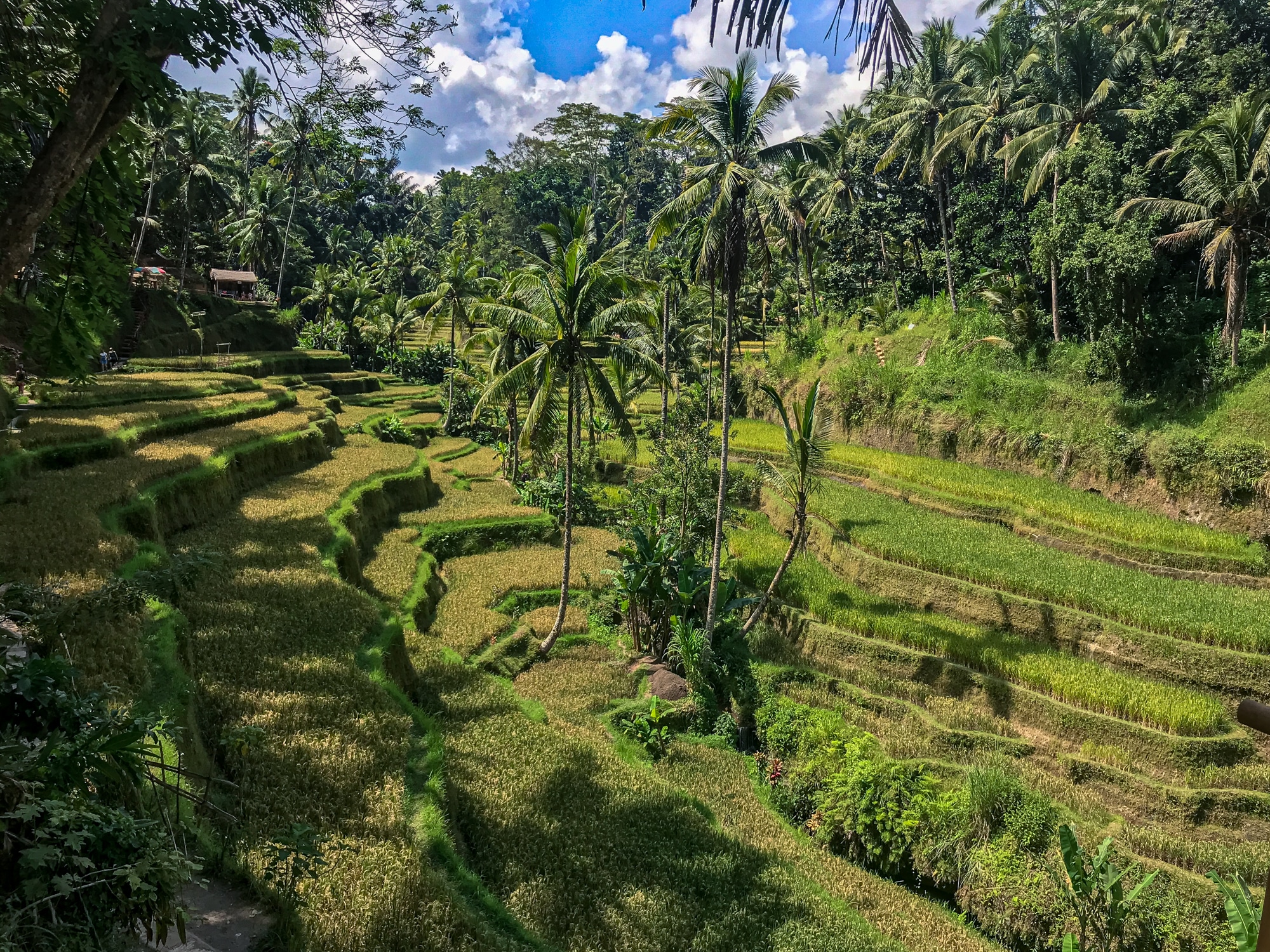
Ubud: the place to be for a truly Indonesian experience.
The town of Ubud nestles within the famed rice terraces and rainforests in the heart of Bali. It's an authentic jungle town with rich colours, smells and vibrance everywhere. It's a sensational experience.
If you couldn't tell, Ubud is one of my favourites.
Ubud is the arts and crafts capital on the island, as well as being home to the best markets. Delving into the markets provides an experience unlike any other. Stalls selling the freshest food, jewellery, woven baskets, leather sandals and more. If you want to do your shopping in Bali, do it here.
The list of activities in and around Ubud is impressive. A few that tend to top the list when backpacking Indonesia include the 'Bali Swing', Tegalalang Rice Terrace, and the Sacred Monkey Forest.
Ubud also boasts some of the best foods in Bali, with countless traditional dishes throughout the town. The way of life in Ubud is slower than in the more touristy towns. Life focuses less on drinking and more on culture and a traditional way of life. Massages, yoga and wellbeing are the names of the game in Ubud, not hangovers.
Please read our complete guide to backpacking Ubud here.
Uluwatu
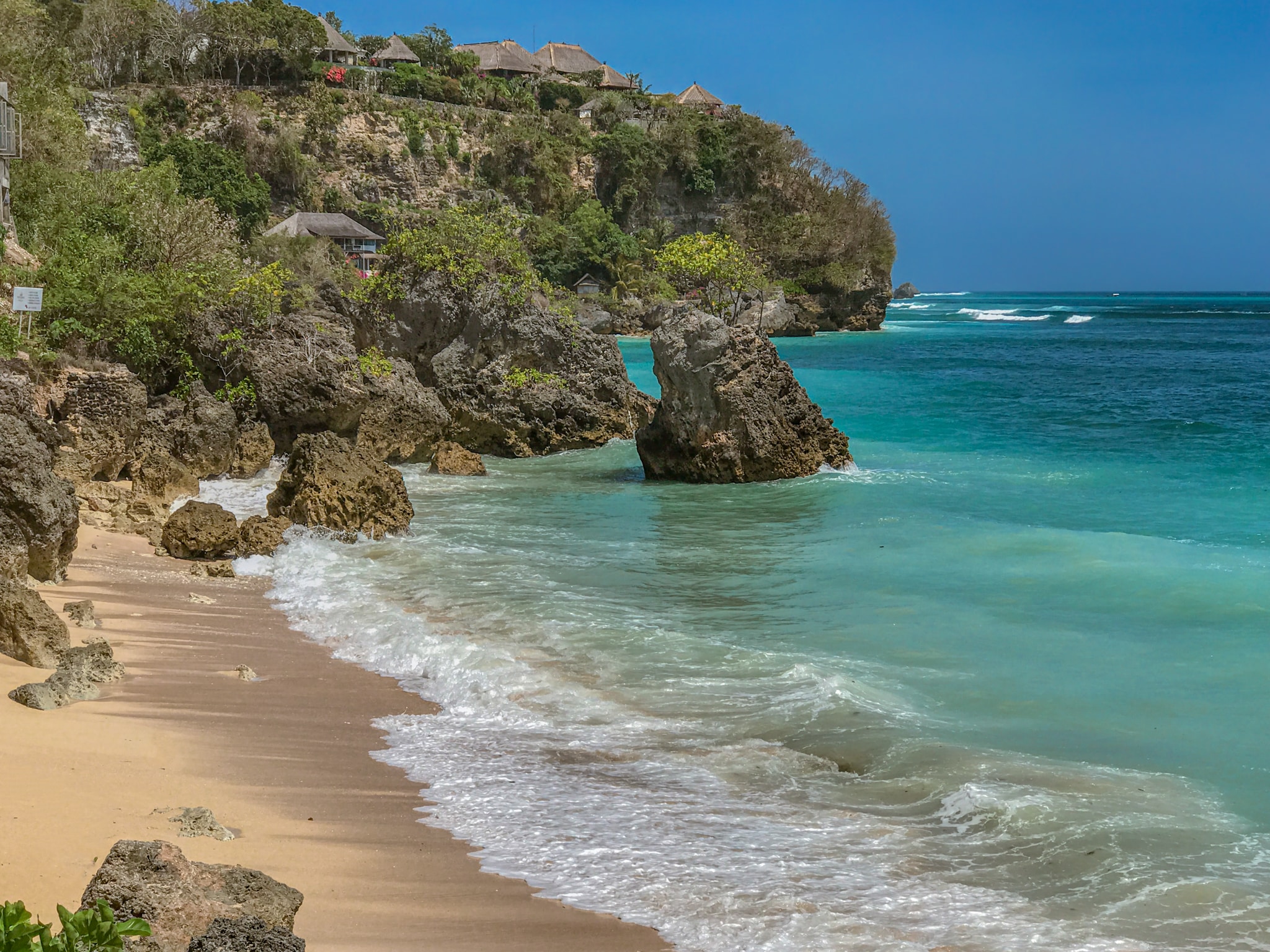
Uluwatu is a small area that hugs the gigantic cliffs on Bali's south coast.
The area has become synonymous with its aptly named Uluwatu Temple, but there is far more to Uluwatu than only a temple. The area boasts some of Bali's best beaches and great surfing spots and is home to the enchanting Kekac Fire Dance.
Uluwatu has always been a popular destination for those backpacking Indonesia. However, in recent years, this popularity has led to the small community becoming overdeveloped and westernised. Therefore, whilst beautiful, Uluwatu is losing some of its original charms. It's still 'Insta-worthy', which is why it's still so popular, but it's a bit like Canggu 2.0.
Despite this, its rugged coast, stunning scenery and warm culture mean I'd return in a heartbeat.
Please read our complete guide to backpacking Uluwatu here.
The Gili Islands
The Gili Islands consist of three small islands off the northwest shores of Lombok and are only accessible by sea.
Small speedboats glide across the water from Lombok at regular intervals to get you here. While larger 'fast boats' run frequent trips between Bali, Nusa, Lombok, and the Gilis daily.
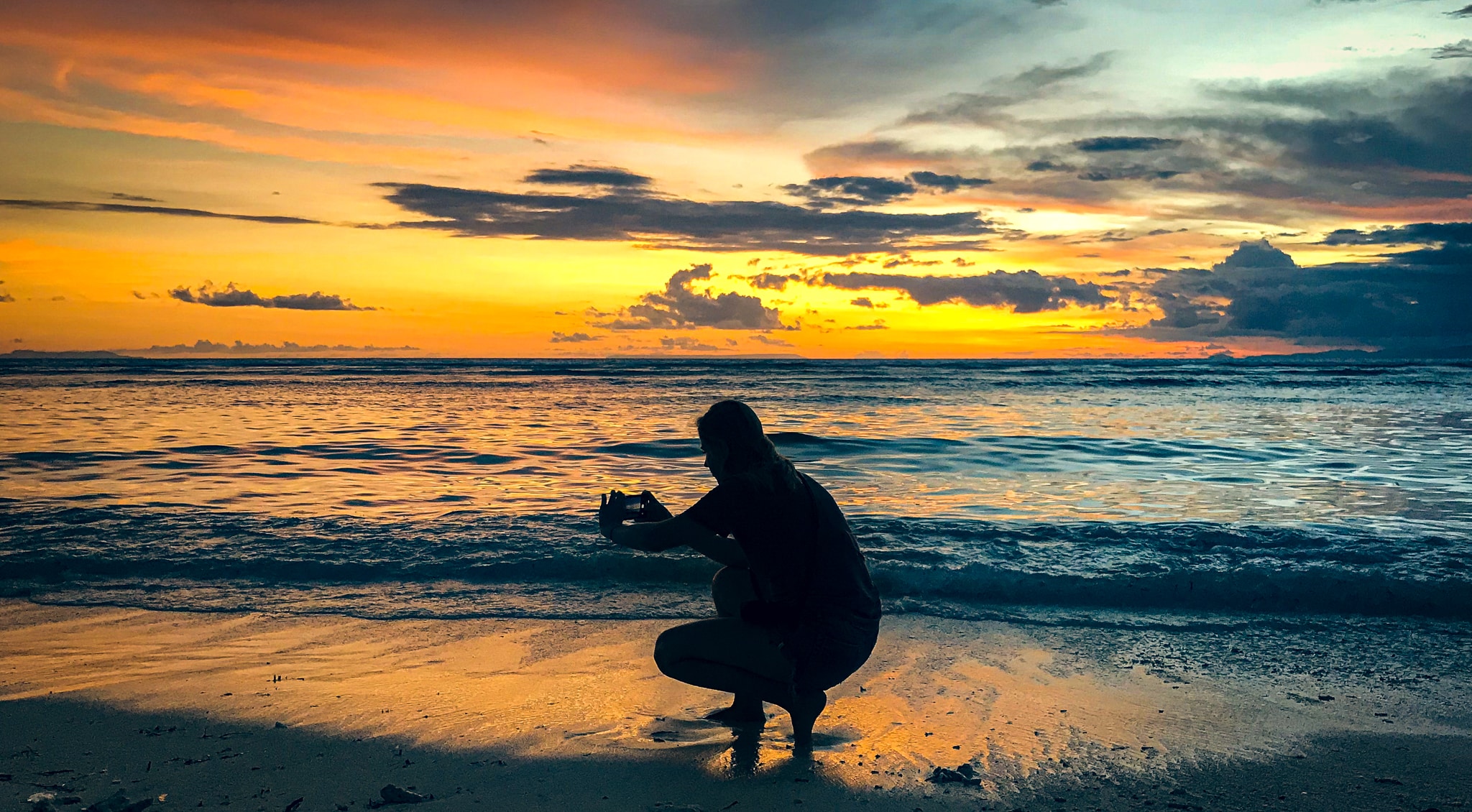
The three islands are a paradise for many. Gili Air and Gili Meno, the two smallest islands, are famed for their white sandy circumferences and clear waters brimming with exotic sea life. The waters are perfect for diving and come complete with coral reefs, sea turtles and wonderful colours.
Meanwhile, Gili Trawangan, affectionately known as Gili T, is the largest of the three islands and is Indonesia's answer to Magaluf and Ibiza.
Days on Gili T are about relaxation, with idyllic scenery and miles of perfect beaches. Nevertheless, as night falls, the island turns to levels of craziness unmatched by any other party island. If you want to let your hair down, get drunk tattoos and party on a beach until dawn, this is the place to do it.
Gili T will take something from you. You will not leave whole.
Please read our complete guide to backpacking The Gili Islands here.
Lombok
Ahhhh Lombok. The island offers you a view of what Bali once was.
Vast amounts of Lombok lay untouched by humans. Wildlife and Mother Nature have a firm grip on the island, and its unspoilt beauty feels endless.
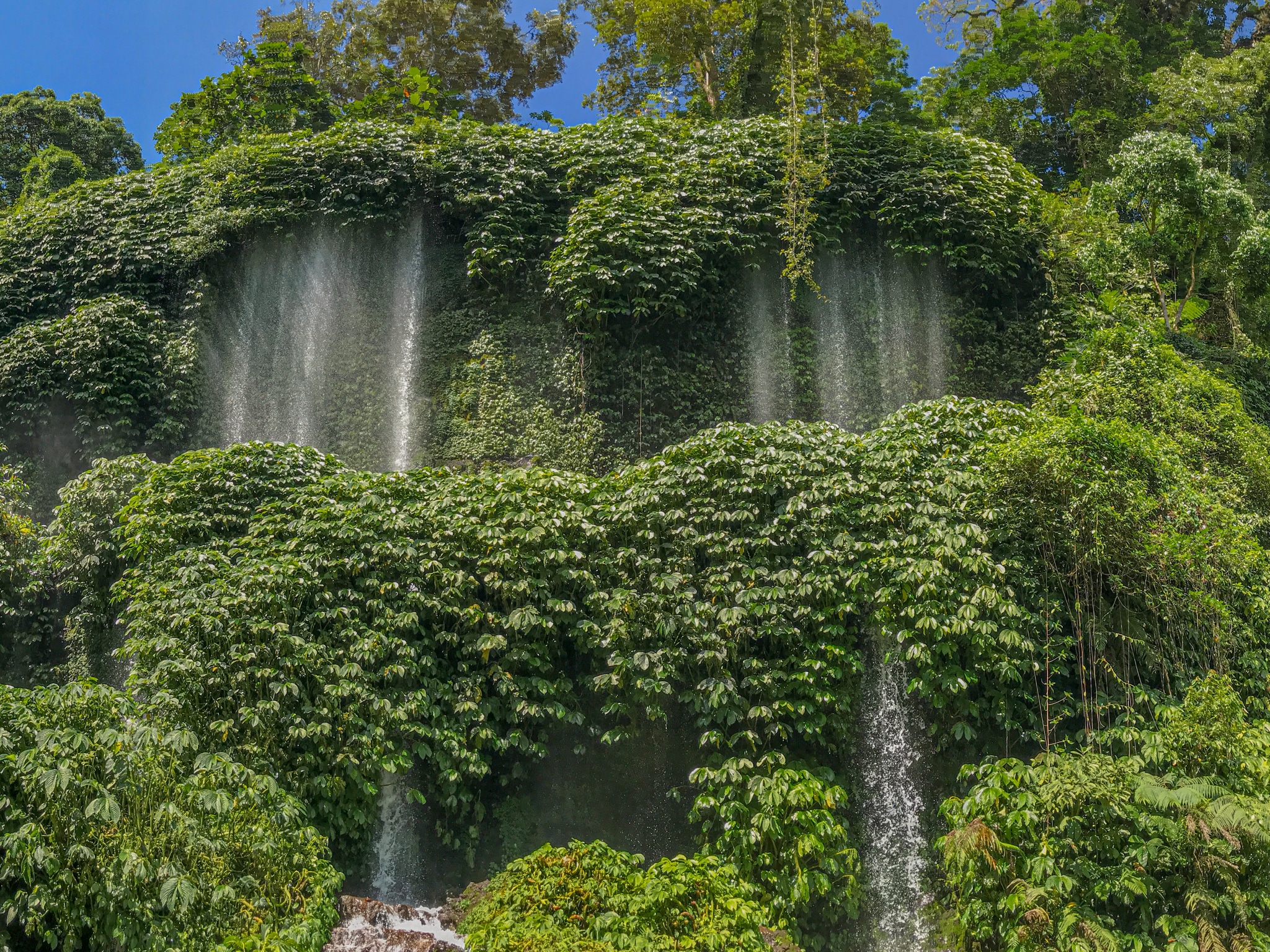
The northern realms of the island are engulfed with vast, lush green jungles and is home to one of the most impressive volcanoes: Mount Rinjani. Meanwhile, the south coast is an endless reem of untouched, sun-kissed beaches. Each slowly permits the seas to rise and fall.
Lombok differs from its neighbour Bali in many ways and not solely due to the landscape. As religion and culture change, so do the people. Life tends to be much slower and simpler here, and you owe it to yourself to experience it when backpacking Indonesia. After days in Bali, Lombok feels like a true tropical wilderness.
Here, you'll experience Lombok's traditions within the Sasak Villages, relax on the best beaches the world has to offer, and see some of Indonesia's most beautiful waterfalls. Even the roads connecting each town are picturesque.
It's a land before humans and one you will cherish forever.
Please read our complete guide to backpacking Lombok here.
Kuta and Seminyak
Back on the island of Bali, we are visiting the two tourist hotspots of Kuta and Seminyak. This is the only place I'd not rave about on this otherwise marvellous island.
The reason is due to the over-westernised ways of getting off-your-tits drunk. Plus, it's super touristy. The whole reason for backpacking Indonesia is to experience something new, meet locals, and sample a way of life you've not touched before. This is not that.
The reason these grouping Kuta and Seminyak in one write-up is because, after 7 months here, I still can't tell where one ends and the other begins. I'm sure the locals can, but how they do it seems to be a closely guarded secret.
That said, I cannot fault its location. Minutes from the only airport in Bali, it is a good place to start your Indonesia tour. With cheap markets and wild nights, you can pick up everything you need for the trip, or last-minute souvenirs. After all, that shit shelf needs filling.
If you must, use the areas to get in and out of the real Indonesia. Spend no more than two nights here.
Please read our complete guide to backpacking Kuta and Seminyak here.
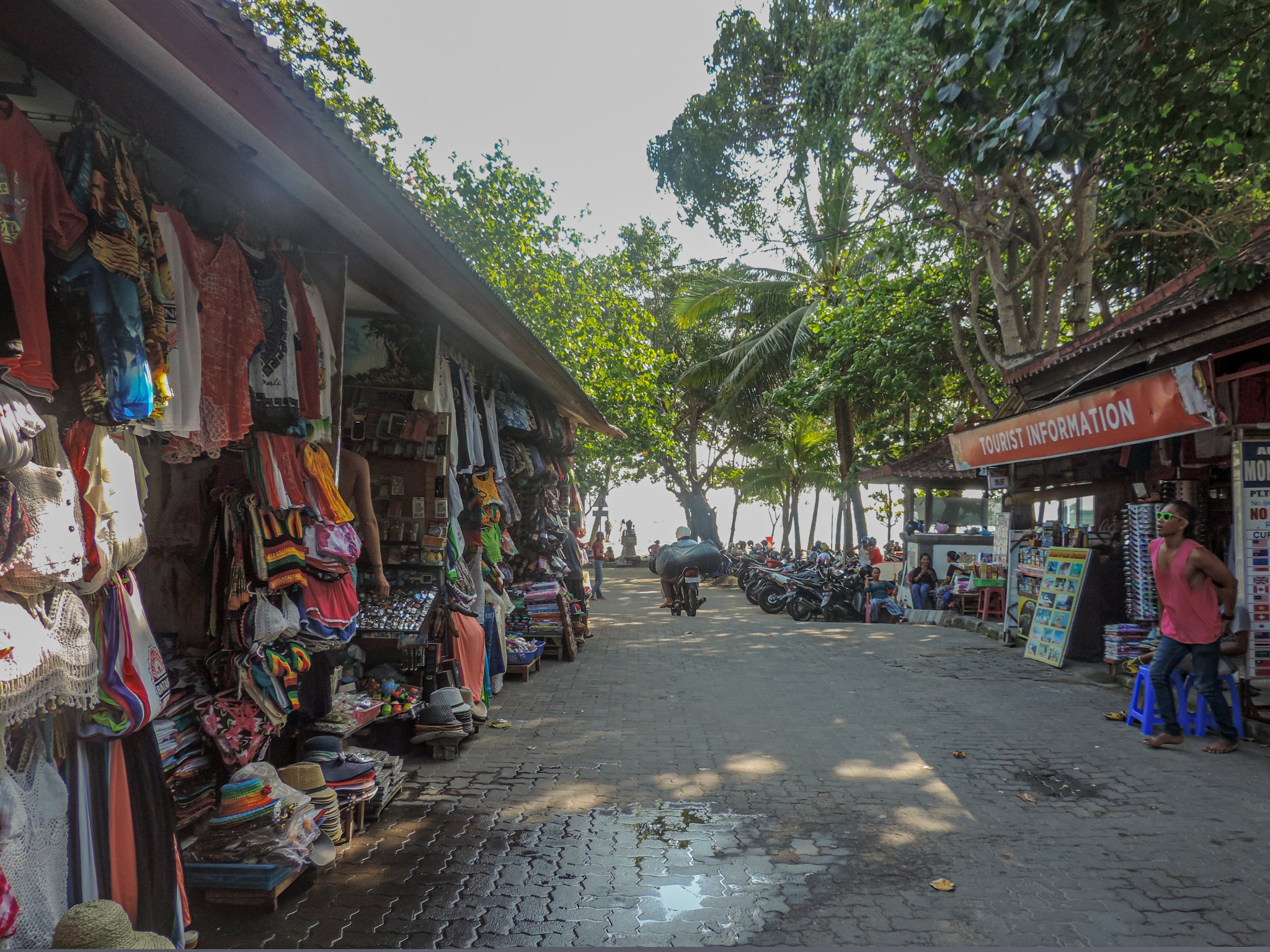
Bedugul
Snuggled around the picturesque Danau lakes, this green and leafy region of north Bali is, luckily, much forgotten by tourists.
Bedugul is quiet and relaxing, a world away from the southern party towns of Canggu and Kuta. It is, in part, thanks to its distance from these towns, that the area remains so beautiful.
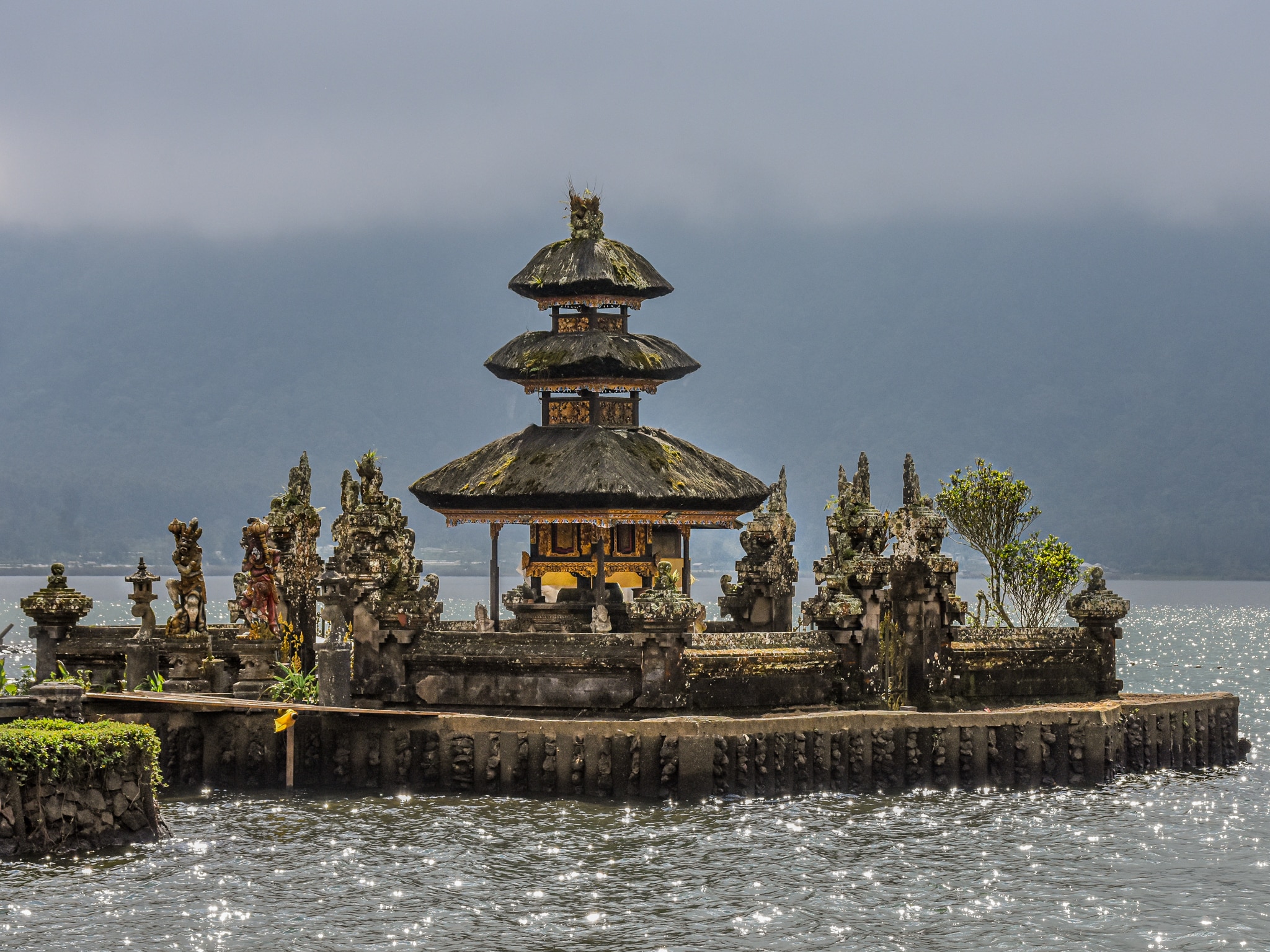
If you are a keen photographer or interested in getting to know the local way of life in Bali, this is the place for you. Nature and culture mix with a myriad of beautiful temples, including one of Bali's most important: Ulun Danu Beratan.
Aside from the exquisite temples, Bedugul claims some of Bali's best waterfalls, epic views and picturesque rice terraces.
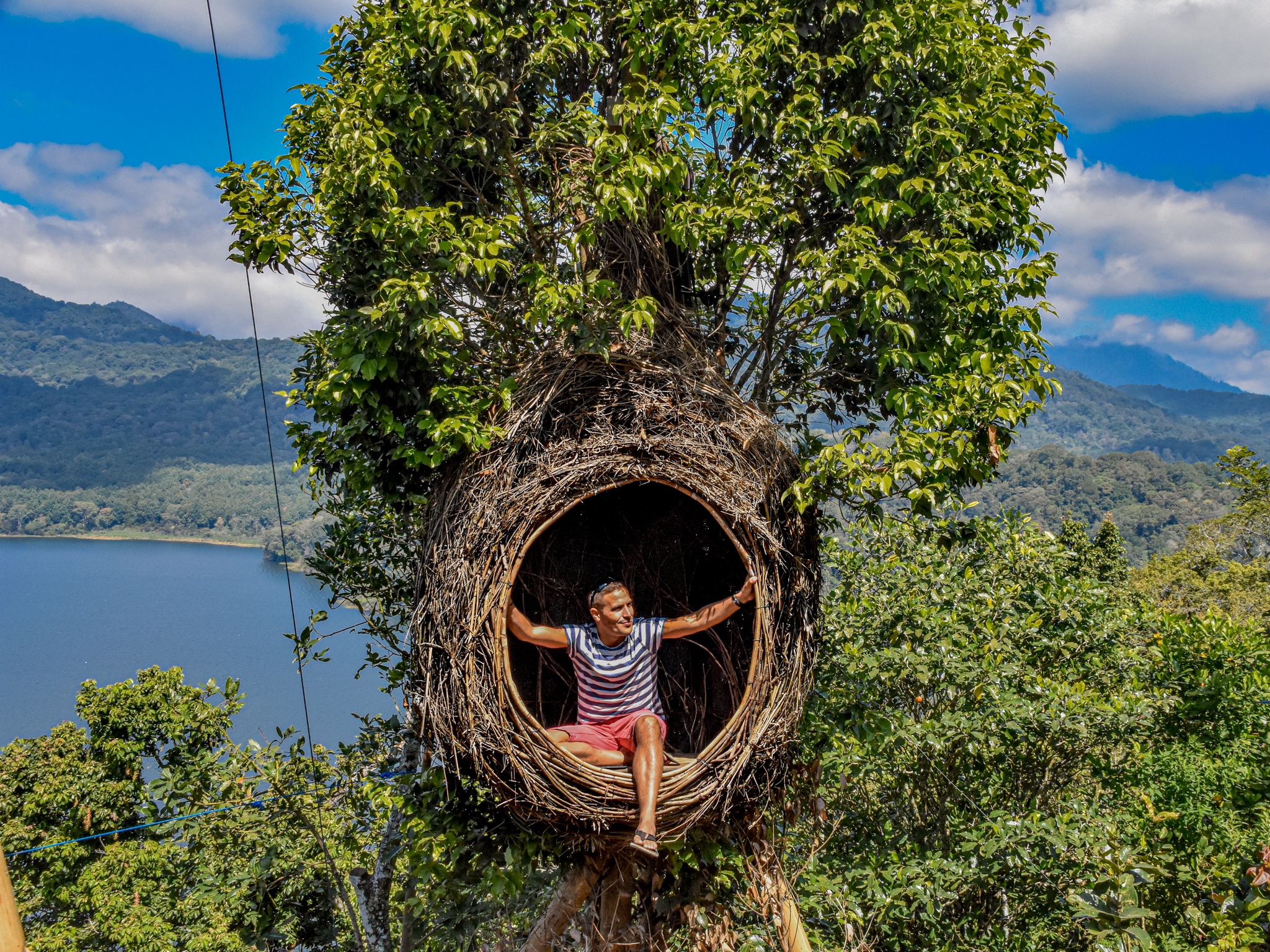
Make sure you head up to the hideouts of Hidden Hills, where you can sit in handcrafted wooden pods and look over the lakes. Despite looking like Instagram dynamite, it's not overly busy and still feels like a hidden gem.
Please read our complete guide to backpacking Bedugul here.
Nusa Islands
Possibly the most amazing islands I've encountered whilst backpacking Indonesia.
Three islands make up the Nusas. They are Nusa Lembongan, Nusa Ceningan and Nusa Penida. Lembongan and Ceningan are the smaller siblings, connected by a large bright yellow suspension bridge. However, the dominant, more prestigious brother, Nusa Penida, lies a few meters south, keeping a careful watch.
Life on both Nusa Lembongan and Ceningan is honestly island living at its best.
Due to the lack of cars, peace and serenity reign supreme on the island. Specific modes of transport on Nusa are not allowed. Firstly, the law doesn't allow cars. Secondly, Nusa's unduly narrow, bumpy 'streets' would happily destroy a car in seconds.
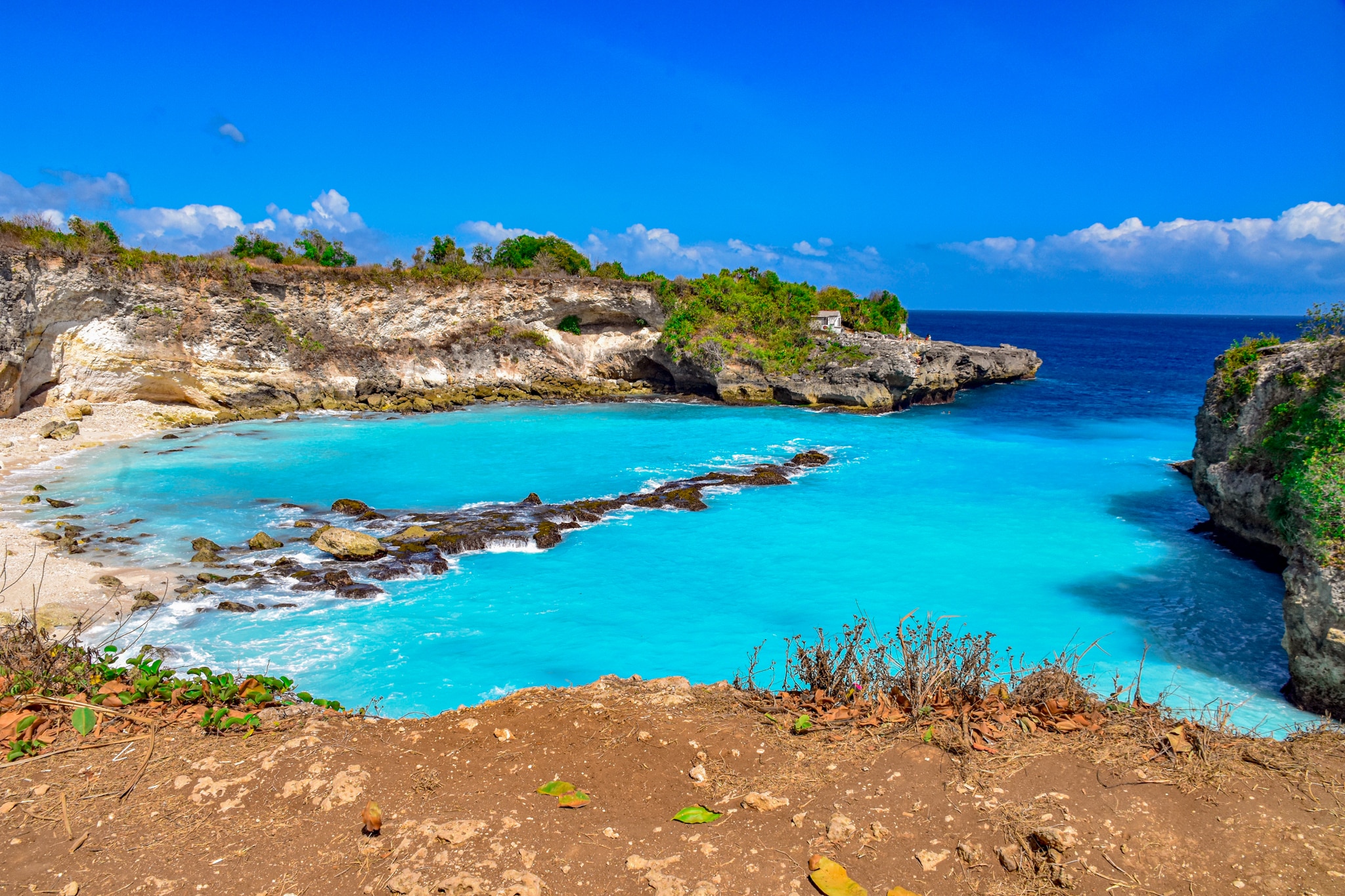
Thankfully, the beauty of the island is preserved wherever possible. Which, of course, leads to some of the most jaw-dropping and breathtaking scenery, for example, the Blue Lagoon. This beauty is best enjoyed from the many beachfront bars, sampling fresh cocktails and tasty treats whilst watching the magical offshore sunsets.
It's not all about the scenery and sunsets on Nusa. Alongside the beachside restaurants and bars, it's the perfect place to tick something off your bucket list. One such event is snorkelling with manta ray and sea turtles in their natural habitat amid one of the most colourful and busy reefs I've ever seen. The Nusas are peaceful, picturesque, and relaxing, and I urge you to see them for yourself.
This place is my paradise, and I want to share it with you.
Please read our complete guide to backpacking Nusa Lembongan and Nusa Ceningan here.
Jakarta
The capital of Jakarta is a vast expanse of homes, offices, temples, parks, shops, and much, much more. It is, to all intents and purposes, a bloody big, affluent, modern-day city in a very poor country.
Jakarta is located on the northwest shores of Java and, like most large southwest Asian cities, is a melting pot of religions and cultures living side by side. This isn't at all surprising when you consider that nearly 10.8 million people are crammed into the city. Being the largest and most populous city in Indonesia, it is the key hub of trade, movement and the commercial and financial centre of the country.
I never went and it's not somewhere that interests me if I'm honest, but do your research as I am sure there is a hell of a lot to do and see.
Komodo Islands
Sadly, this is somewhere I never got to see during my time in Indonesia. I had planned on a trip, but the 2018 August earthquake put a stop to that.
The island is home to the prehistoric Komodo Dragons - the largest lizards on the planet. These bastards are 3 metres long, carnivorous, and are perfectly-evolved killing machines. Even if they bite you and you somehow escape, they'll follow you and wait for you to die of septicaemia.
I want one.
The Komodo National Park encompasses three islands and numerous smaller outcrops, plus the colourful seas that surround the islands. The land is almost as prehistoric-looking as the dragons, with unspoilt beaches, volcanic mounds and stunning forests.
Next time I'm backpacking Indonesia, I'm coming for you Komodo. That is a must.
What's It Like Backpacking Indonesia?
Put simply, backpacking Indonesia is engaging, eye-opening, affordable and very easy to do. It's a well-trodden route that gives you every chance to step off the track and see something new. The people are kind, friendly, fun-loving and there to help whenever you need them, and all this makes backpacking Indonesia totally accessible, no matter your backpacking experience.
No matter your reason for travelling Indonesia, I'm willing to bet you will find yourself falling in love with the country, its people and its way of life before the end of your first week.
The Accommodation
You'll find that accommodation varies wildly in style, comfort, and amenities as you backpack Indonesia. As always, everything depends on your budget and expected levels of comfort. You can travel on a tight budget, or you can spend big and enjoy luxury and a spot of pampering.
One of the main concerns backpackers may have when it comes to accommodation in Indonesia is being stuck in a country you don't know, where you can't communicate, and without a roof over your head.
Let me put these thoughts to rest.
That is not going to happen, even in high season. Throughout the many islands, towns, and cities I explored in my many months here, there was more accommodation than could be filled.
The key three websites you'll need for accommodation are, as always, Hostelworld, Booking.com and Airbnb. Between the three, you'll be well serviced throughout Indonesia.
First thing you'll notice is that, unlike a lot of cities and towns across Asia, you can arrive without being swarmed by people advising you to stay at their friend/brother/dog's hotel/villa/mansion, all for a special price. Which is a nice change.
Although at this point, I will give you a heads up - the owners of the accommodation will name their property with the 'poshest name' they think they can get away with. Often you will turn up to a 'resort' and think, 'Ummm, this looks like a homestay'. Whilst in other places, you'll turn up to a homestay, and think, 'Ummm this looks awfully like a hostel'. Other names to look out for include 'villa', 'bungalow', 'guest house', and the always popular 'lodge'. In reality, it's a lucky dip.
Those on a tight budget; you should be looking for homestays, of which there are plenty and you can find just by wandering around a town. A homestay is very much like a hostel with only private rooms, giving you that hostel vibe for socialising, but your own space when you want it. Because of the success of homestays, you won't find many traditional shared-dorm hostels when backpacking Indonesia.
In homestays, you'll generally have a basic private room with an ensuite, a shared communal space, plus a shared kitchen - not that you'll use it much, as eating out is so cheap. As normal, the longer you book, the better the rate you'll be offered.
Those with a larger budget, there are hotels, which, as you may have guessed, come with breakfast, more style, gadgets, and maybe even a cheeky pool. You will be looked after with typical Indonesian panache and hospitality, and that's a good thing. For these, check Booking.com.
Lifting the budget further, and lacing you in complete luxury and style, the options are spas or one of many private villas, complete with self-contained pools. If you fancy the splurge on this, check Airbnb.
All options have pros and cons, and come with more than what you may expect on your budget.
Check our detailed accommodation guides for:
The Food
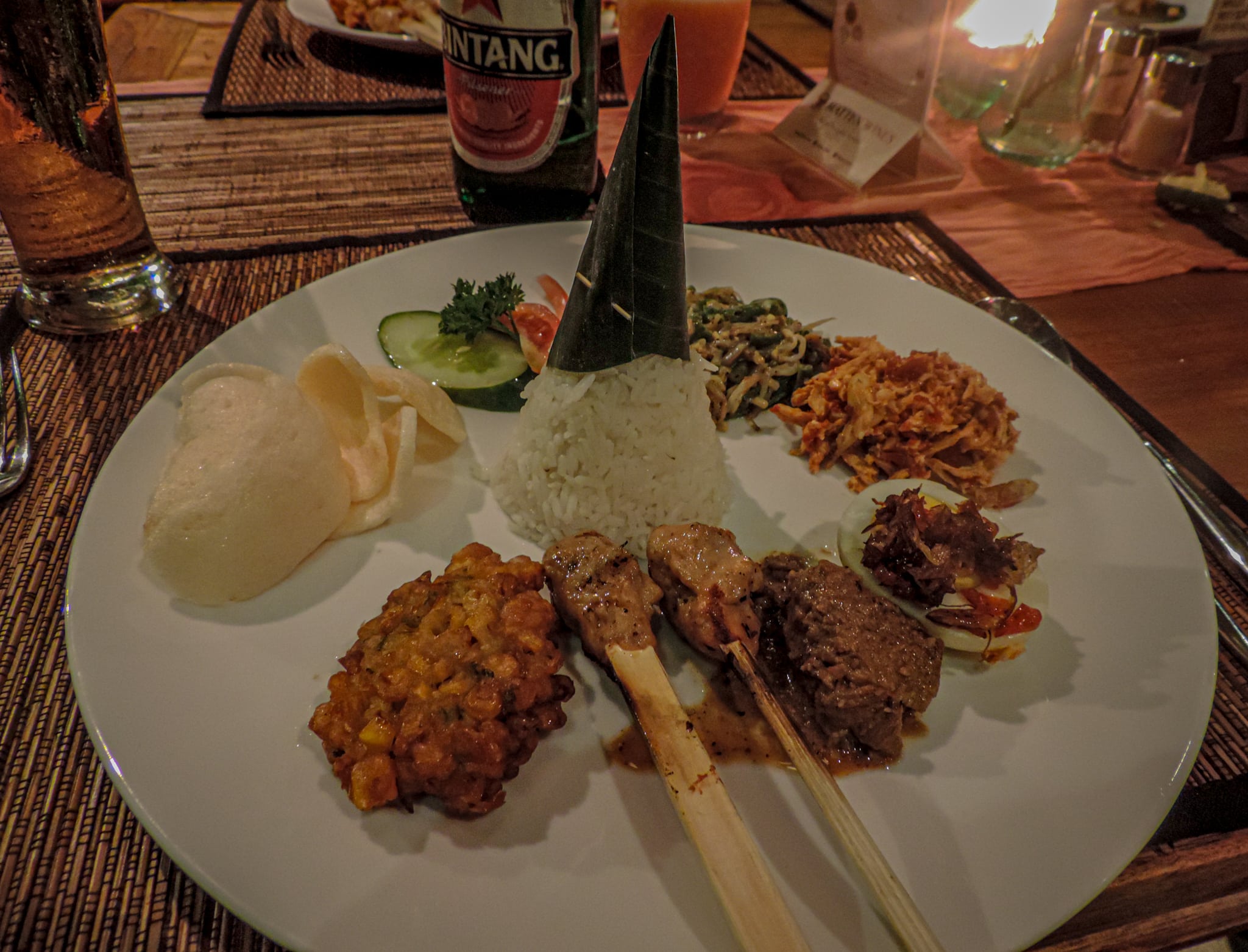
Now we are talking about my favourite subject: food. And whilst backpacking Indonesia, this subject can be pretty spectacular.
As hinted at above, food in Indonesia can be super cheap, especially if you eat local, which you should. Prices tend to quadruple when you start eating in tourist restaurants or opt for westernised food, such as steak and burgers.
I'm the first to admit that after so long eating rice and noodle-based meals, there is nothing better than a burger and chips. But until that point, I highly suggest you find the cheapest roadside Indonesian places. You'll grab a large meal for under 40,000IDR (£2).
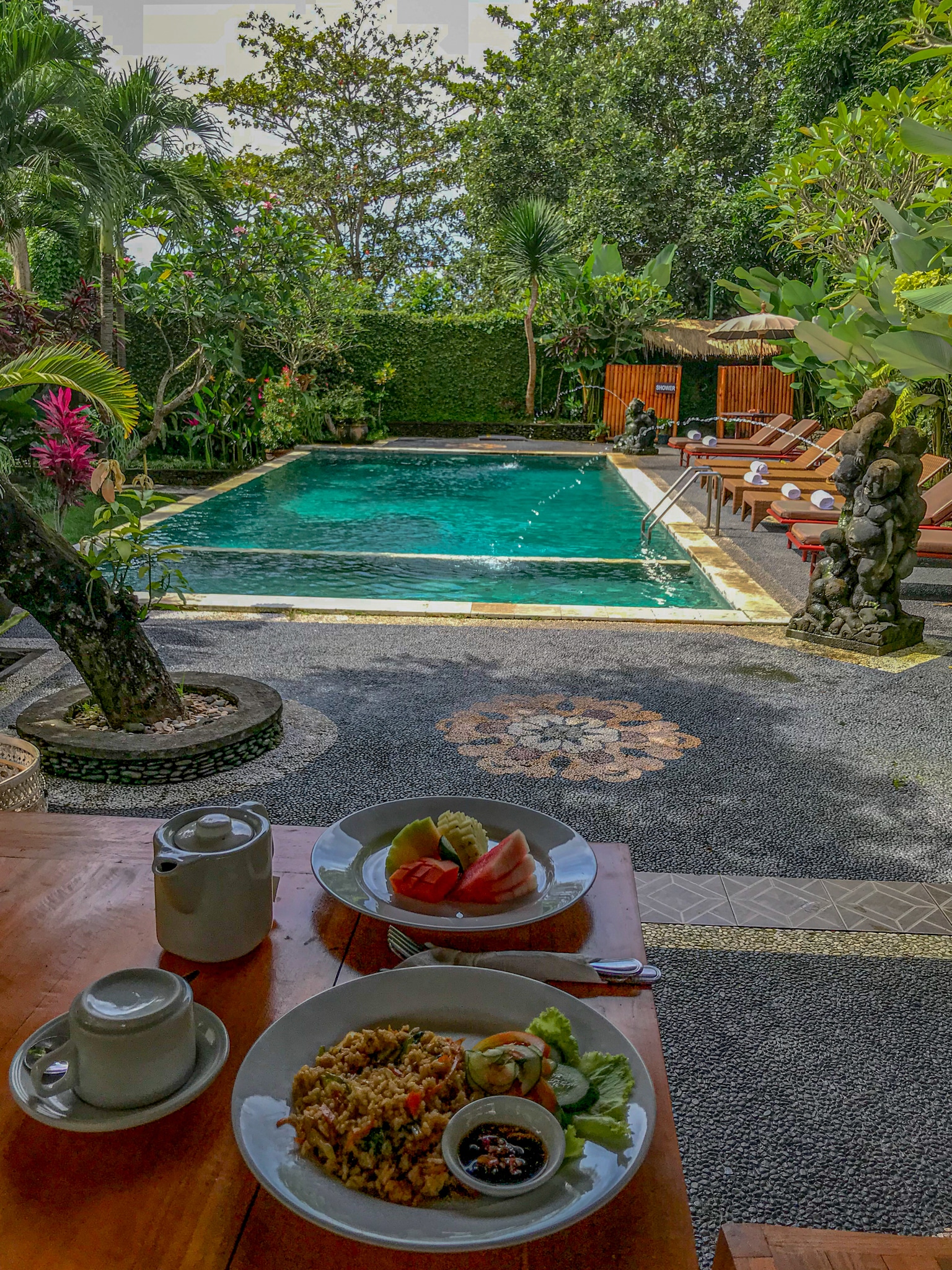
Local favourites include nasi goreng (fried rice with egg) and mie goreng, noodles with egg. One of my favourites is the beef rendang, a chunky beef dish cooked in coconut and spices for a rich, intense flavour.
As well as beautiful main meals, numerous delights are growing fresh around you in the form of fruit - particularly coconuts. Some fresh fruits worth trying (from a long list) are dragon fruit, mango, snake fruit and passion fruit. If you haven't tried it before, ripe, fruit fresh from the tree is one of the most incredible taste experiences you can have travelling anywhere. It beats anything you'll have tried at home, guaranteed. I will advise staying away from the horrendously smelly 'durian' though. Many people will attempt to tease you into trying it, just say no. It's like eating a dry, stringy old sock.
As amazing as they are, Indonesia is not just about rice, noodles and fresh fruits. Different islands and regions each have epic local delicacies. Ubud, for example, has nailed the green pancake, which is sweet and not like anything I've tasted before.
I love the food in Indonesia. There's just incredible smell, textures and taste to each dish. Personally, I'd highly recommend taking a cookery school whilst backpacking Indonesia. The skills and recipes are authentic and something you can enjoy years later, maybe to impress friends, family, or - who knows? - future partners. It's an art, and one that is an absolute win.
The Culture
When it comes to summarising the culture within Indonesia, things start to get a little complicated.
With over 17,500 islands, 600-plus of which are inhabited; culture, religion, and the way of life changes as you meander through the country.
Whilst all the islands I visited or lived on felt safe and everyone was super chilled and friendly, there were noticeable differences in the atmosphere. Within the lesser travelled islands, people tend to, at least at first, be a little uneasy around travellers, and no one knows the protocols. Once that on-edge, uneasy atmosphere dies back, everyone relaxes into the conversation nicely.
The culture in Bali is something I loved, and miss greatly. People will go out of their way to help you, and show so much love and respect its unreal.
Religion
Overall, Indonesia is 87% Muslim. However, there are islands such as Bali, which turns the figures on their heads, with 82% of the population following Hinduism.
There are different 'ranks' of temple in Bali, from family up to Sad Khayangan temple, and there are laws on who can enter each temple and when. You should also be mindful of the Canang Saris, which are offerings to the gods. Balinese religion is complex, so I've put together a detailed guide to religion in Bali so you can get your bearings before backpacking Indonesia.
Names
Whilst there are numerous names in Bali and the surrounding islands, you will hear a few crop up time after time. The Balinese have four names, no matter male or female. The firstborn will be called Wayan, the second-born is Made, and the third child will be named Nyoman. On the occasion a fourth child is born, they will be called Ketut.
There are a couple of other names that crop up from time to time, such as Putu or Gede. These might sound new, but it turns out they're just alternatives for Wayan. Kadek is an alternative to Made, and Komang is an alternative to Nyoman.
Homes
Traditional Balinese homes are set out in a particular way. The family temples are placed in the corner of of the plot that is nearest the highest part of the island (Mount Agung), as it is considered the holiest point. The remaining buildings are then placed in accordance with the compass directions, meaning a lot of traditional homes will feel similar.
These homes also play host to a number of major life ceremonies, including the burying of the placenta, weddings, deaths and anniversaries.
Festivals
There are numerous fascinating festivals and celebrations throughout Indonesia, all of which are taken very seriously by the locals. Something that all those travelling or backpacking Indonesia should be aware of is the Indonesian New Year, called Nyepi. Whilst the New Year is celebrated across the country, it is taken to a whole new level in Bali.
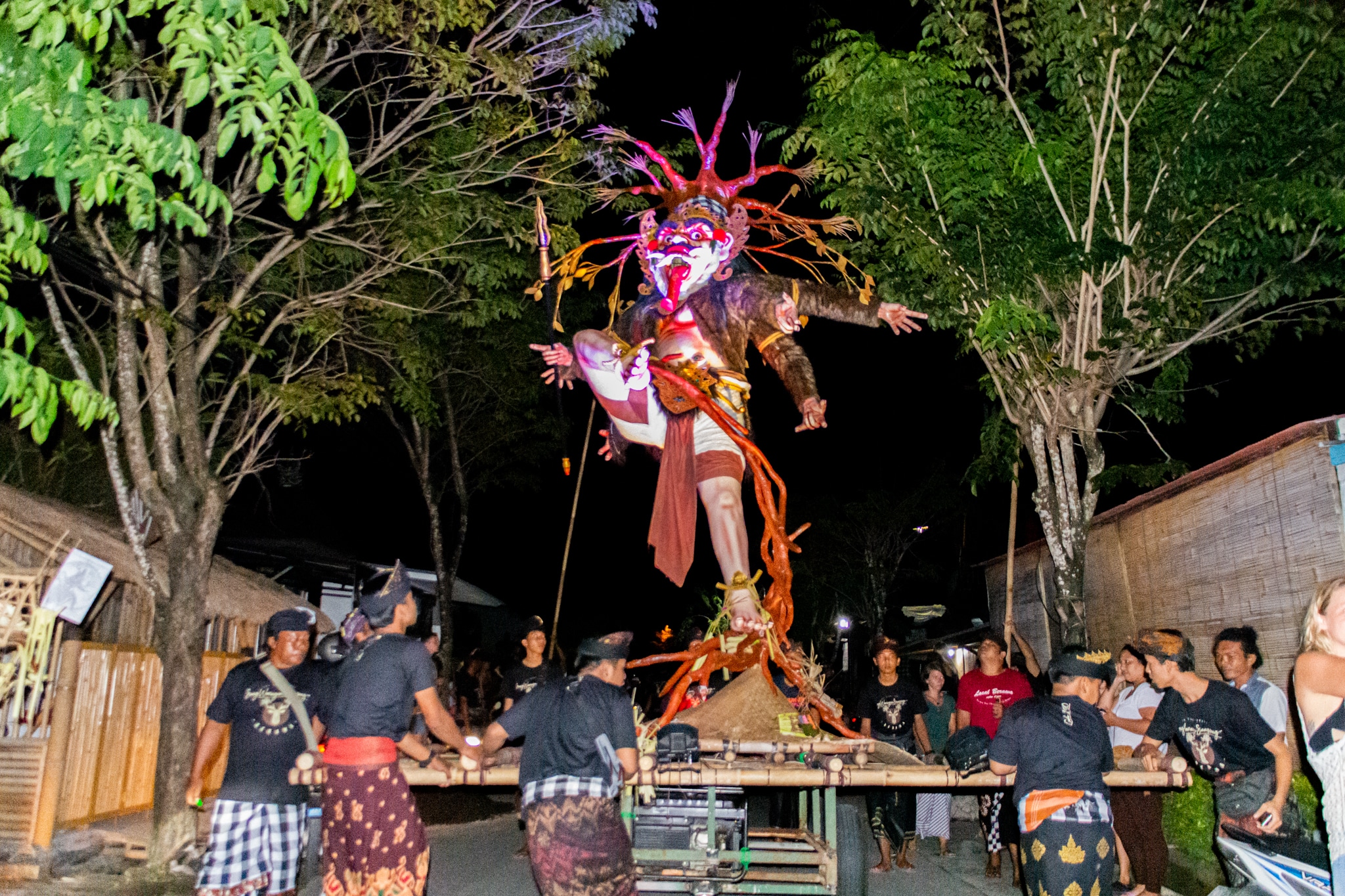
On New Year's Eve, villagers parade an Ogoh-Ogoh (the demon or devil) through the streets, and there is a real carnival atmosphere. They drive these giant figures from the towns and burn them. This symbolises all the demons and negative energy leaving you, allowing you to start the New Year fresh and clean. It's a mass of noise, celebration, light and entertainment, and is something magical to witness.
However, the following day (New Year's Day, aka Nyepi) is a complete contrast. The streets fall silent, as no one is allowed to leave their houses, work, entertain themselves, or even make any noise. Only the emergency services work and are strict on how they enforce this rule. 'Foreigners' will likely be imprisoned and or have a large fine, should they be caught disobeying these important rituals. Even the airport closes down. That's how serious Nyepi is.
There are many other very important celebrations across Indonesia, including, but not limited to, Independence Day (17th Aug), the Chinese New Year, and Maulid Nabi - the birth of the Prophet Mohammed.
There are numerous localised festivals, celebrations and rituals throughout the islands, the largest of which are usually weddings, funeral parades and births. No matter the celebration, the whole village will be involved. It's a beautiful way of life. Try and get an invite to a wedding ceremony, they are fantastic.
The Transport
Travelling around Indonesia is extremely easy. Although, due to its vast size and the sheer number of islands, it can be slow. Never expect to be backpacking Indonesia overly quickly or in style. It might not be pretty, but eventually you will get to where thou want to be.
Bear in mind that some of the islands are very small and do not have vehicles, so pushbikes and good old-fashioned walking is the name of the game.
Roads
In all honestly, the roads are chaos, but if you've travelled Asia before, you won't have expected anything less.
Whilst the roads are chaos, I will also say I saw fewer crashes and incidents here than in almost all other Asian countries that I've travelled.
This doesn't mean it's safe, though. People still drive at you from all directions, pavements are seen as an additional lane, and when it comes to crossing a road... well, good luck my friend, good luck.
That said, it works. At least until you add our western, uniformed approach to driving.
Seriously, the only issues tend to arrive when non-Indonesian people take to the roads on bikes. They think they can drive and they just can't, at least not in the way they need to here. Add to this the fact that Indonesia has no drink-drive law, and the result is pissed-up travellers who think they can just take to the roads on motorbikes after a night on the lash. Fucking stupid. Don't be that person.
Speaking of which, motorbikes are easy to find. Bikes are the way of life in most of Indonesia because they are cheap to buy, cheap to maintain, and you can squeeze through smaller gaps, so most of the vehicles you see on the roads are bikes.
Unless you're confident and sober, my advice is to allow the locals to drive you around. It's a lot safer and easier, as they know and understand the roads. Luckily, it seems everyone in Indonesia is either a driver or knows someone that is, so getting about is easy. If you ever get stuck in Bali or Lombok, drop us a quick Instagram message, and I'll send someone to get you.
Taxis
Before you head over to Indonesia, download both the Grab and Go-Jek apps. They are the two main sources of moving around a town, providing quick and efficient taxis, similar to Uber. In the main, they are on the back of motorbikes, but cars are available. They are cheap, fun, and by far the quickest way around.
Buses
You'll find buses and public transport across the country both a doddle and very cheap. Most of the islands have decent and regular services, of which there are three classes, Economy, Express, and Luxury. You may want to avoid the economy as they can 'go around the houses' and take forever, not to mention they are very uncomfortable and crowded. Personally, the Express would be my choice, they are quick and comfortable, often going directly to the location.
I can't say I ever used Luxury. I'm a backpacker, not a millionaire, but I'm sure they are very good. When it comes to costs, you can expect to pay around double the price for Express, and triple for Luxury. Each island differs on price per journey, so it would be no good me even giving a ballpark price.
Trains
Trains don't deal well with water, and Indonesia is an archipelago of over 17500 islands separated by... water.
The only rail networks are on the islands of Java and Sumatra, and, having not visited either, I can't recommend them in any way whatsoever. Sorry!
Boats
With a nickname like 'Land of a Thousand Islands', it's no surprise to hear that boats are going to be the best way of backpacking Indonesia.
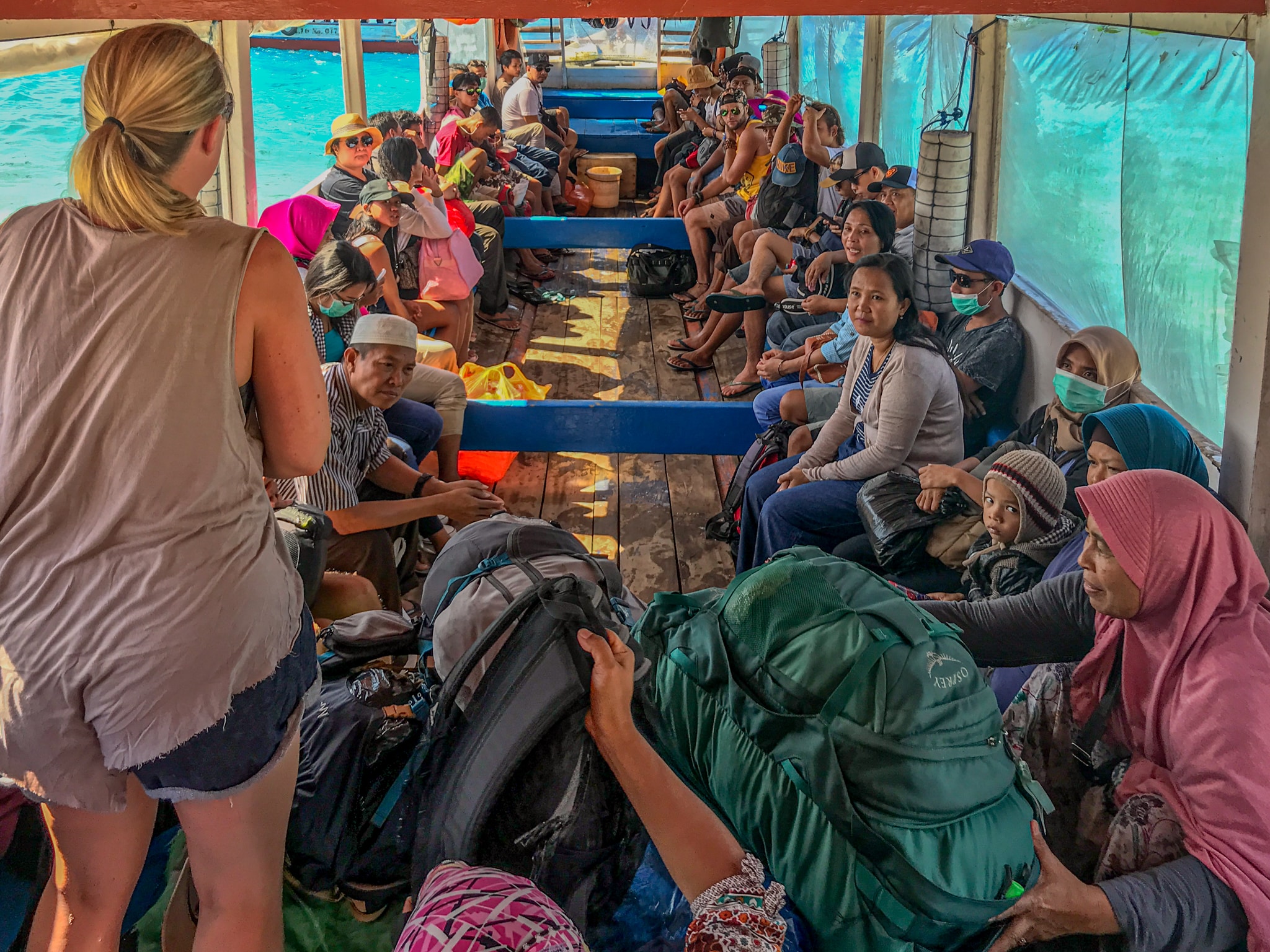
There are numerous companies out there, all of which offer a wide range of boats, with a wide range of seaworthiness. These include the slow car ferries, the quicker, passenger-only 'fast boats', or the smaller speed boats. Again, like everything when you're travelling, it depends on your budget.
If you have all the time in the world but no funds, you will likely be looking at the car ferries. And good luck you dirty sea dogs, because they are awful in every way.
If you're backpacking Indonesia in a car, you're doing it wrong. And so if your budget can stretch just a little, I'd recommend upgrading to the passenger-carrying fast boats. Cost-wise, Bali to Lombok or the Gili's will set you back around 350,000IDR (£18). A good name to be going with is Eka Jaya.
If, however, you have short hops between islands (less than 20 minutes), its advisable to jump on a small speed boat or ask a local to drop you.
Plane
Air travel, much like the boats, is key to backpacking Indonesia, due to the vast number of islands.
Luckily, prices are relatively good, although a lot more expensive than a boat. Flights between Lombok and Bali (direct) will set you back around 460,000IDR (£23), which for the time and hassle of boating, may well be worth it.
Indonesia's national airline is Garuda Indonesia, and having used it a few times, it was clean, pleasant, and flew through the air as a plane should. It's certainly no-frills, but it did the job. Basically, its the Ryanair or Easyjet equivalent of Indonesia.
The Budget
The bottom line is this: no matter the budget, you'll have a blast backpacking Indonesia.
Of course, if you have the money, kudos to you, you'll travel in more style than most. But you can travel on a shoestring too and not miss much.
Every island is different. Some are more suited to the backpacker budget, whilst others cater to the lifestyle of the rich and famous. The rule of thumb is: the more touristy and developed the island, the higher the prices.
Whether you're travelling with thousands or a tenner, we got you.
The 'Backpacker' Budget
Your only objective is to keep travelling. The secret? Keeping costs at an all-time low. This is the budget for you.
Accommodation - Right, cheap as chips time. It's hostels and homestays for you. You can get away with as little as 58,000IDR (£3) a night across much of Indonesia. It won't always be comfy, or clean for that matter, but it will provide a roof, bed and possibly a cold shower. Although that's the worst-case scenario, the chances are it will be clean and you'll get hot water. Of course, you also have the option of Couchsurfing, which is free.
Foods - Luckily for you guys, the best food is the cheapest. Street food and local restaurants where you can plate up your own meals are, unsurprisingly, my favourites. Admittedly, in some of the less touristy islands, some of the street foods are not great. I once ate a chicken thrown over some rice. The only issue is it was as thin as my little finger and came complete with neck, head and beak.
That said, I got a solid meal at a roadside stall on several occasions for 10-15,000IDR (50p).
Transportation -This really depends on how far you are travelling. If you're staying within an island, the cheapest form of travel will be a bus, and unfortunately, it's the economy class for you. If it's inter-island travel, the slow and uncomfortable car ferries are waiting for you. Overall, due to the vast size of the country, you will be spending a fair bit on travel, be it go-jek or flights. Ultimately, you'll get where you need to. I'm going to throw in a larger than normal budget of 100,000IDR a day (£5).
Drinks - The local beer is not only delicious, but cheap. The sweet, sweet taste of Bintang will kiss your lips, no matter your budget. You can buy a 6 pack at a supermarket for as little as 10,000IDR (50p) a bottle, whereas bar prices start from 15,000IDR (75p). You can have a couple of them a night. I'll throw 4 beers at a bar in for you at 60,000IDR (£3)
Overall - Your backpacker daily budget for Indonesia, including three meals, will come to a grand total of 228,000IDR (£11.50)
The 'Travellers' Budget
You've saved for this trip, and you want the ultimate bang for your buck. Money is tight, but you want the best experience. We've got you covered.
Accommodation - You have a number of options open to you here and let me tell you, they're all great. You can, of course, head with the backpackers, and spend a few pounds a night, which is perfectly acceptable in the majority of locations. However, I'd suggest you upgrade to a homestay which guarantees comfort, amenities and hot water, all for a reasonable 235,500IDR (£12) per room per night, and if there's two of you, that's a bargain. You also have great options for hotels which come in style for 353,00IDR (£18) a night.
Your final option is this: if there is a good size group of you, club together and hire a private villa. Again slightly more pricey, but can work out to be as little as 400,00IDR each a night (£20).
For the sake of this budget, you're in a homestay. 235,500IDR (£12) a day.
Restaurants - Again, the best of foods in Indonesia are the cheaper, more localised restaurants. Often food will cost less here than if you had to buy the ingredients at the supermarkets. I'd advise only use the supermarkets for things you want at the time, don't bother with meal prep.
Whilst I'd stick at the same restaurants and roadside shacks as the backpackers, you could just pile that plate a little higher. Again, you shouldn't need to find any more than 40,000 (£2) a meal, unless you go for the occasional western dish, where you can expect western prices. In total, your three meals could easily come in at under 160,000IDR (£8) a day, and that's allowing a slightly all out three-course meal in the evening.
Transportation - Again, you have great options throughout Indonesia. Whilst you may not have that private chauffeur the "daddies credit card" holders may have, you can, in general, afford a bit of comfort and speed. There is no waiting for the economy bus for you. Fast boats and taxis are the name of the game, and for getting around a town or city, it's Go-jek.
At times, you can and will need to spend over £20 for boats, planes and private drivers. However, there will be a number of days where you won't spend anything on travel, which evens out the costs. On average I'd say you could easily get away with 200,000IDR (£10) a day.
Drinks - Again, it's all about the Bintang in Indonesia, and it's dead cheap. On the whole, you'll be looking at the same as the backpackers, cheap bars where you can pick up a few beers for 60,000, however, you will want the occasional night out at some random beach bar. Jiggy's on Gili T does an all you can drink for 150,000 (£7.50). Let's average it out and say 100,000IDR (£5) a night for alcohol.
Overall - Your travellers daily budget for Indonesia, including three meals, will come to a grand total of 695,500IDR (£35.50)
The 'Daddies Credit Card' Budget
Your trust fund is finally available, and your Instagram followers need to see where you are in the world this week. You farted the other day, and a private jet came out. We haven't forgotten you.
Hotels - Mummy and daddies little kings and queens, do not fret. Here at Far Out, we have you at our heart. You can always rely on us to rip you off help you show the world how rich you are.
I have found a couple of world-class places that quite frankly, should just about get you through a trip. You need to be looking at the top hotels such as the Luxury Resort Bvlgari. Prices come in at a measly 28,471,300IDR (£1,419) a night for two.
But don't worry, it comes with free breakfast, so that's a win. If this isn't to your liking, there are a lot of very similar places out there, such as the Nihi Sumba, at a comfortable 21,450,000IDR (£1,080) a night. Bloody bargain.
Restaurants - Once again we have your gold-plated, diamond-studded back. A couple of places to look out for whilst swanking it around the capital (Jakarta) is Kokoro, a stylish Japanese restaurant where the average meal comes in at around 3,000,000IDR (£152) per head. Or, you might wish to dine at Sushi Ichi where a minimum price for a meal will be 2,800,00IDR (£142) per person. That should keep the poor off your red carpet.
Transportation - Well, you've escaped the poor so far, why stop now? It's privacy all the way, be it by roads, flights or over the glistening waters. I've found a lovely company for you called Jacada, who provides luxury travel and private tours around Indonesia.
Prices range from 74,600,000 up to 245,400,000 IDR (£3,800 - £12,500).
Whilst I do take the piss out of you rich buggers, seeing this company makes me really want to be you. They look epic, check them out on the link above. They do tours all over Indonesia and show you some of the highlights of this great country. I'm jealous. Take us with you as stowaways? Please. Tricky to put a daily price, but I'll work on around 10,000,000 a day per person.
Drinks - Drinks across the board are relatively good value in Indonesia, so it's difficult to spend big, that is, unless you drink at the top hotels and fancy bars, which, of course, you do. Wine is the more pricey option as it is not something often drunk in Indonesia. A standard £6 bottle of yellowtail would set you back around 400,000IDR (£20), and that's shop prices. In a top restaurant, you could pay that per glass. I'll budget a couple of glasses for you at 800,000IDR (£40) for the day. You baller.
Overall - Your daddies credit card daily budget for Indonesia, including three meals, will come to a grand total of 106,871,000IDR (£5,327) a day. Just for reference, that kept me going for nine months.
The Best Things To Do When Backpacking Indonesia
Party Hard on the Gili T
Gili T is Indonesia's party central and makes 'Maga' look like a school disco.
Nights out here will provide stories of mayhem and madness, if you're lucky enough to remember them. The main strip to the east of the island is full of beachfront bars, clubs, and restaurants. Excitement fills the air, music fills your soul, and drinks fill your brain with wonderful ideas, leaving you to sort out the night's conquests.
Sama Sama is one of the best places to start the night, with live reggae music, cheap drinks and great vibes. It is one of my favourite places on the island, and some of the best live Reggae in Indonesia. Once the drinks start flowing and the live music starts to cool down, head next door to Evolution, where beer pong and cocktails take centre stage.
As the morning kicks in its all about Jungle Bar or Jiggy's, and This is where the word of insanity kicks in. Free booze rains from above, and the night gets lost into a haze of carnage until sunrise.
It's magical and will be the heaviest night out during your time backpacking Indonesia.

Volcano Sunrise Hikes
Indonesia is awash with volcanic islands, and many of these are still active - such as Mt. Rinjani, Mt. Agung and Mt. Bromo. Whilst they may be eye-catching from a distance, head closer and there are further pleasures to be found.
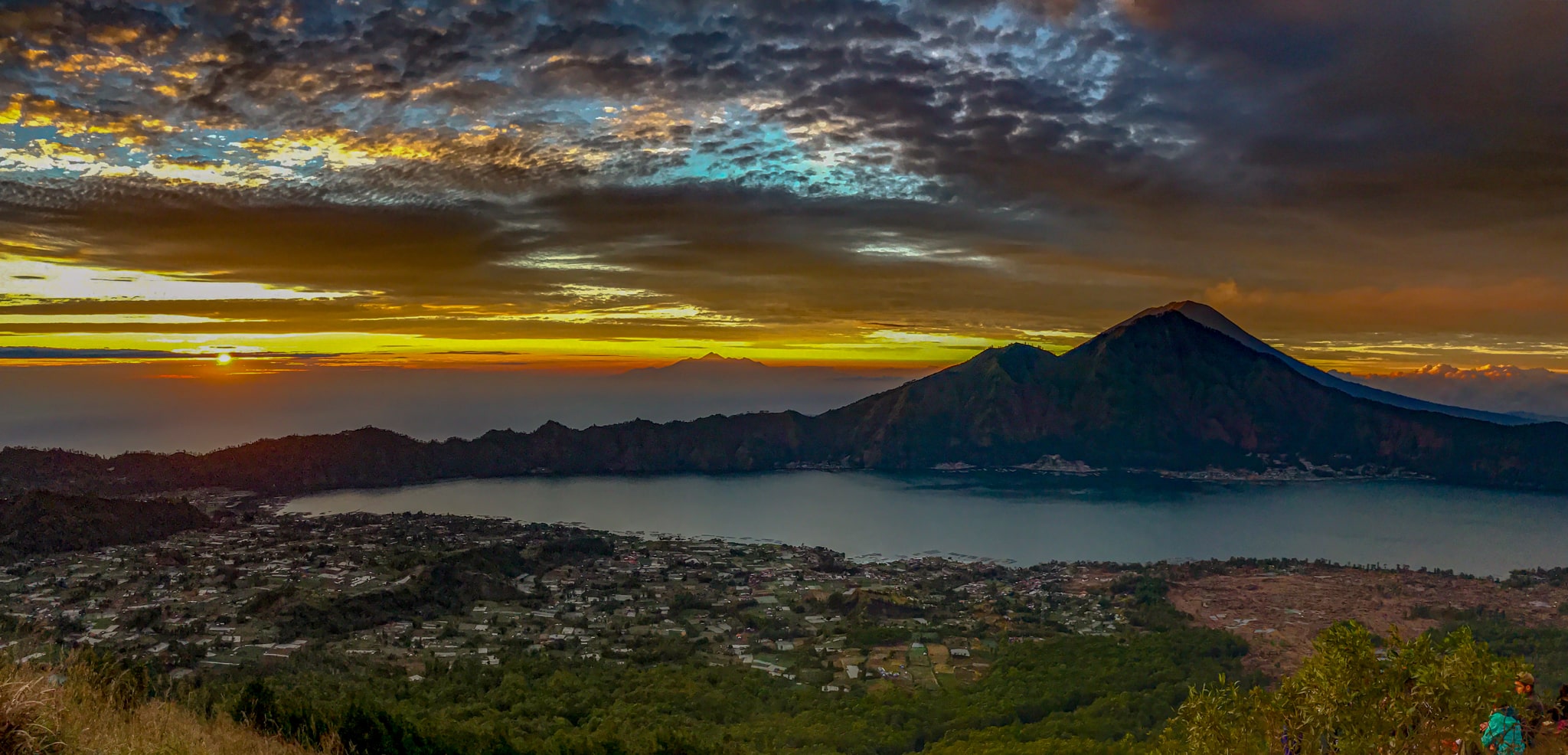
A vast number of Indonesia's large volcanoes can be climbed, and several companies have cashed in on the idea of a superb sunrise hike. I hiked Mount Batur, and have to recommend the aptly-named Mount Batur Sunrise Trekking.
Whilst the hike was tricky in places, and I did have to use my hands to pull myself up on a couple of occasions, it was by no means the hardest hike ever. In fact, it was more enjoyable than exhausting, and the amount of effort versus the reward is totally worth it - so much so that this easily makes it into my top things to do in Indonesia.
The views from the top are spectacular, and watching the mist fade as the sun rises from behind the horizon is something special. I loved every second of it, and deserves a spot on your backpacking Indonesia itinerary. It's super rewarding, fun, and, for me, a wonderful memory of a beautiful morning.
Other volcanoes are available - so do a bit of research and chose the one that suits you.
Cookery School
Indonesian food is some of the most scrumptious food out there, and hits that magical point of being healthy, whilst also full of banging flavour and goodness.
So many times whilst backpacking Indonesia, I took a bite of something local and wished I could eat it forever.
So, if the opportunity presented itself to learn to cook these tasty treats, you take it right?
Well, I did. On many occasions. It's a wonderful skill to take with you where ever you go, and something to impress your friends and family back home.
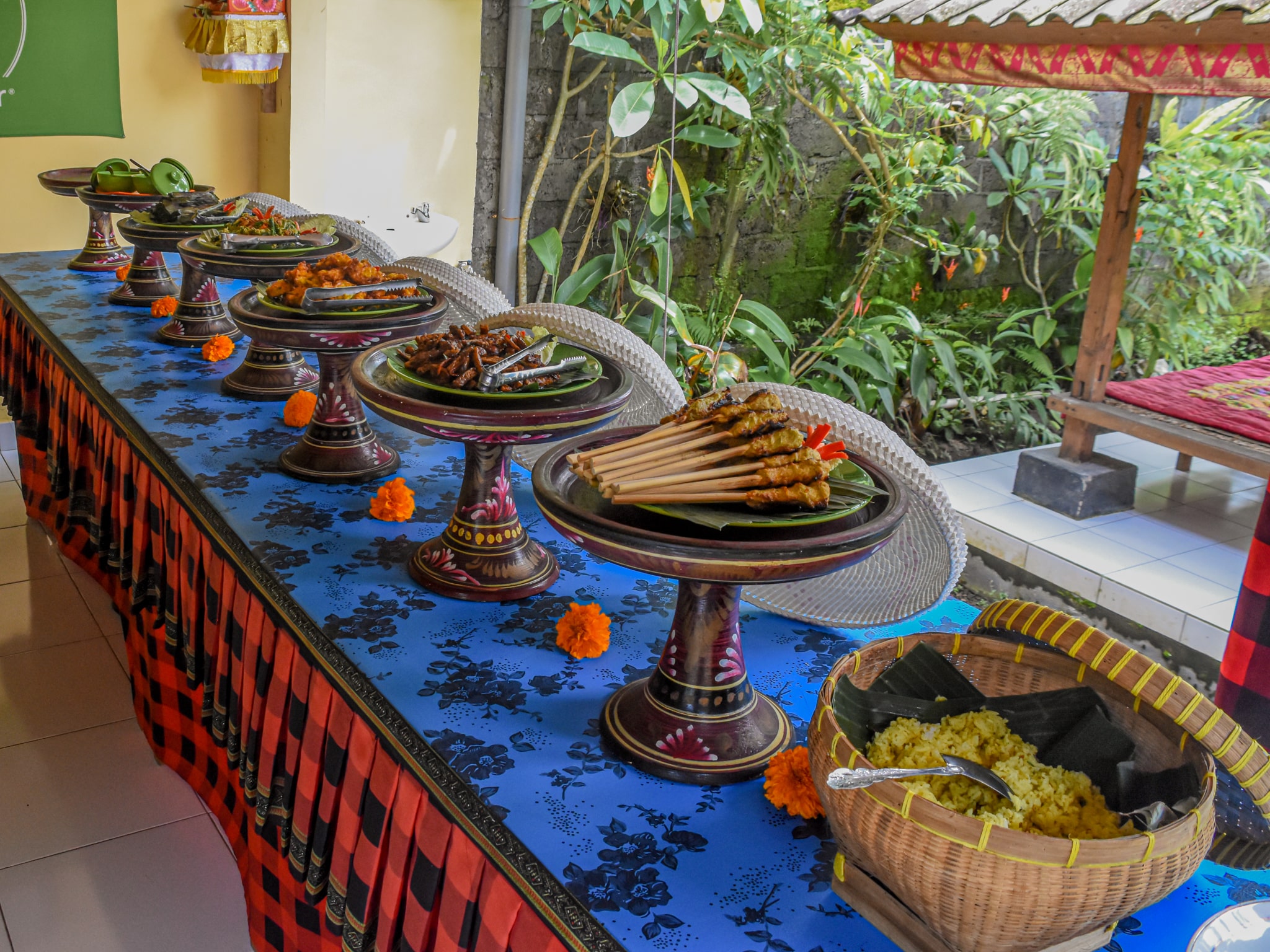
The islands throughout Indonesia all have a differing approach to cooking, and what makes for a top dish. There is nowhere better to learn traditional cooking than in the heartlands of an island, and, in Bali, that just has to be Ubud. My friends at Jeding Cookery School are about as good as it gets when it comes to Balinese cooking.
The family-run team at Jeding are hilarious and make the whole experience brilliant. If there is something they don't know about Balinese foods, culture and religion, it's not worth knowing. They're the experts in every sense.
The team will first show you around the local food markets, where earlier that morning they collected the foods you'll be cooking and enjoying. You can then cook with the family in their home, learning about the compound house and Balinese foods. The special moments come when you get to taste your home-cooked foods, and you realise just how special fresh Indonesian flavours are.
Snorkelling and Diving
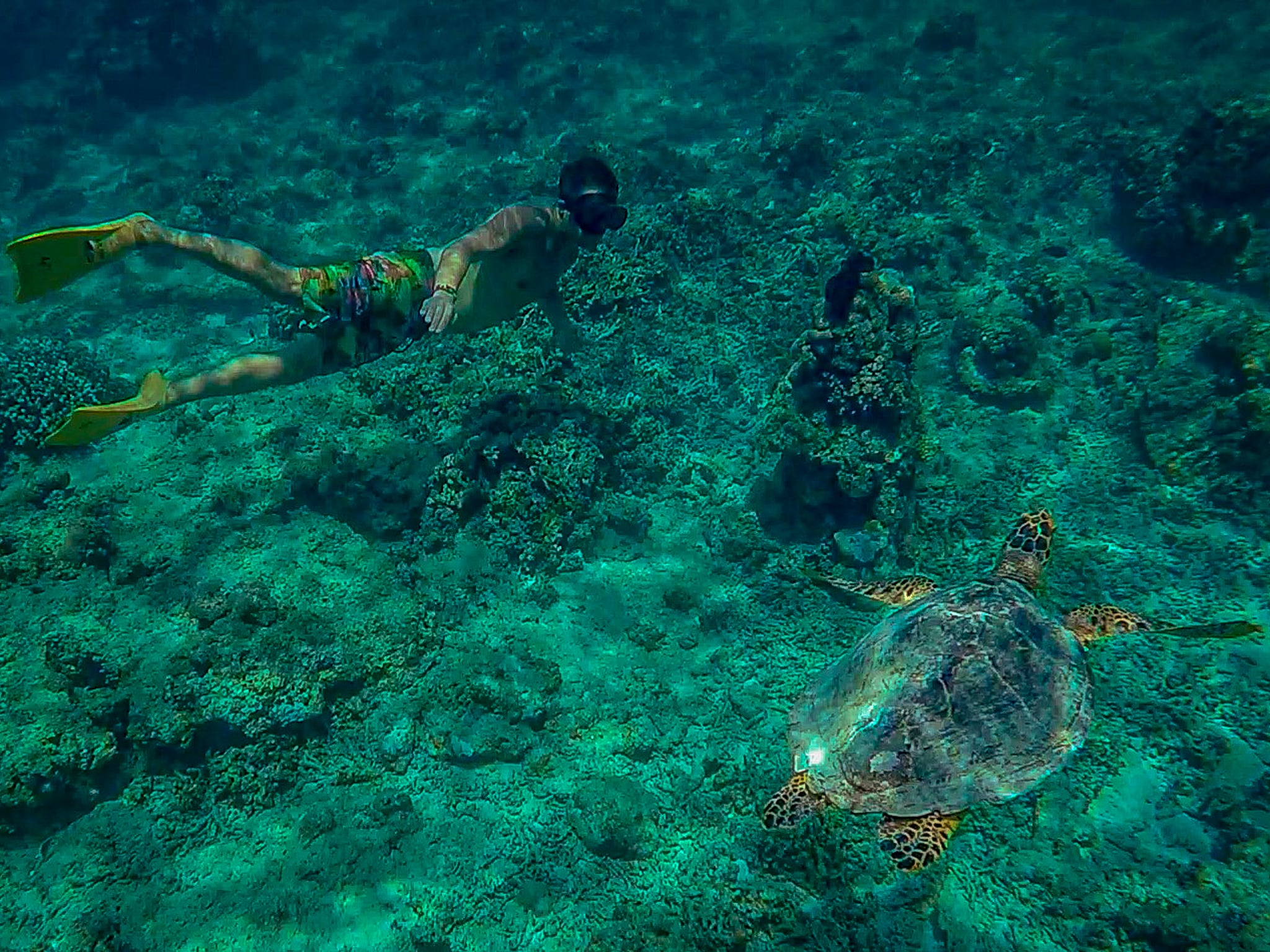
Indonesia is blessed with world-class dive and snorkel sites, and seeing these for yourself is a highlight of any Indonesia itinerary - so much so that I will put this as my number one thing to do whilst backpacking Indonesia.
Having experienced Indonesia's natural beauty off the coast of the Gilis, the Nusa islands, Lombok and Bali, let me tell you: the perfect, crystal clear 'blue-ass' waters of Indonesia are some of the best in the world.
The sheer range of fish, mammals, coral and crustaceans is phenomenal. The coral beds off the coast of Nusa Penida are as good as any I saw when chilling in the Great Barrier Reef. If anything, they're better.
Whilst no dive could guarantee or promise success with spotting wild sea turtles or manta ray, it felt like it was going to happen every time. Swimming with the mantas was a bucket list item for me, and seeing turtles larger than people became the norm. For those who enjoy a spot of SCUBA diving, you can get the adrenaline hit of swimming with sharks at places like Shark Point, just off Gili T.
To swim with mantas, get yourself to the Nusa Islands, or for turtles and sharks get over to Gili and speak to my mate Ben at Manta Dive. This is about as good as it gets for dive schools - particularly for beginners. Not only that, but they have great accommodation too, right in the thick of the action.
Preparing To Backpack Indonesia
Suggested Itineraries
As always, we will only give you itineraries that we have explored, loved and recommend from our own experience of backpacking Indonesia. Therefore, most of the below are very much Bali-based.
I know there are many other tours across this vast wilderness, and one day I will be there.
But for now, the below three are a few ideas I have come up with for you. I have tried to mix in a range of ideas, time scales and factored in time spent travelling.
It's a fairly in-depth itinerary, but hopefully, you'll find the links useful for, hostels, hostels, transport, activities and everything you need to help you enjoy your Indonesian experience. If I've missed anything, I'm always happy to help further, so feel free to comment at the bottom of the page or Instagram us. Let us know what you want, and how long you have, and I'll personalise a tour specifically for you.
Bali's Banging Culture Tour
8 Days
You may have heard all about Bali, but you'll never experience it unless you go. This relaxed week will give you a true taste of Balinese living as you tour this magical island, and the culture within.
Day 1 - Today, you start your dream tour of Bali. Make sure you're booked ahead of time at one of two places; either Bakung Beach Resort, as you can walk the 10 minutes from the airport with your bags, or the cheap and cheerful Gora Beach Inn to be in the melee of the clubs and bars.
You'll land at the island's only airport in Kuta, and head to your homestay to drop off your stuff and get changed for the warm weather. I'll be honest, there's not much cultural about Kuta aside from the markets, so head out and explore those. If you really want to get stuck in here, head to the massive ball of chaos that is the Sky Garden.
Day 2 - A trip down the coast to Uluwatu is the best way to start your cultural tour. Hire some motorbikes (you'll find them everywhere) or get a driver (ask at your accommodation or use the Grab or Go-jek apps), and hit the road. Head to the beautiful Uluwatu temple, perched high on the clifftop and looking over the Indian Ocean, which is home to not only Hindu monks, but also troops of monkeys that live alongside them.
In Uluwatu, there is only one way to end the day, and that's watching the Kecak Fire Dance, telling a theatrical story of the Hindu epic Ramayana as the sun sinks below the horizon.
That night, I'd suggest staying somewhere around the wonderful Bingin Beach, such as Bale@bingin.
Day 3 - Waking up alongside Uluwatu's beautiful beaches is something special - Bingham and Suluban beaches in particular are amazing. Spend the morning enjoying them. For the afternoon, head to GWK Culture Park. Here you will learn all about Bali's culture and music, as well as seeing Indonesia's largest statue. It's a fantastic experience and one hell of a way to wrap up Uluwatu, before making the hour's scoot up to Canggu for the night. Head to the Koa D Surfer Hotel, which comes complete with rooftop pool and bar, and is only a few minutes walk from the beach.
Day 4 - Another day in paradise.
Your first day in Canggu can start with a relaxing morning on the beach watching the surfers, or you can make a trip out to one of the local ethical Luwak coffee (Kopi) farms to see how the world's most expensive coffee is produced.
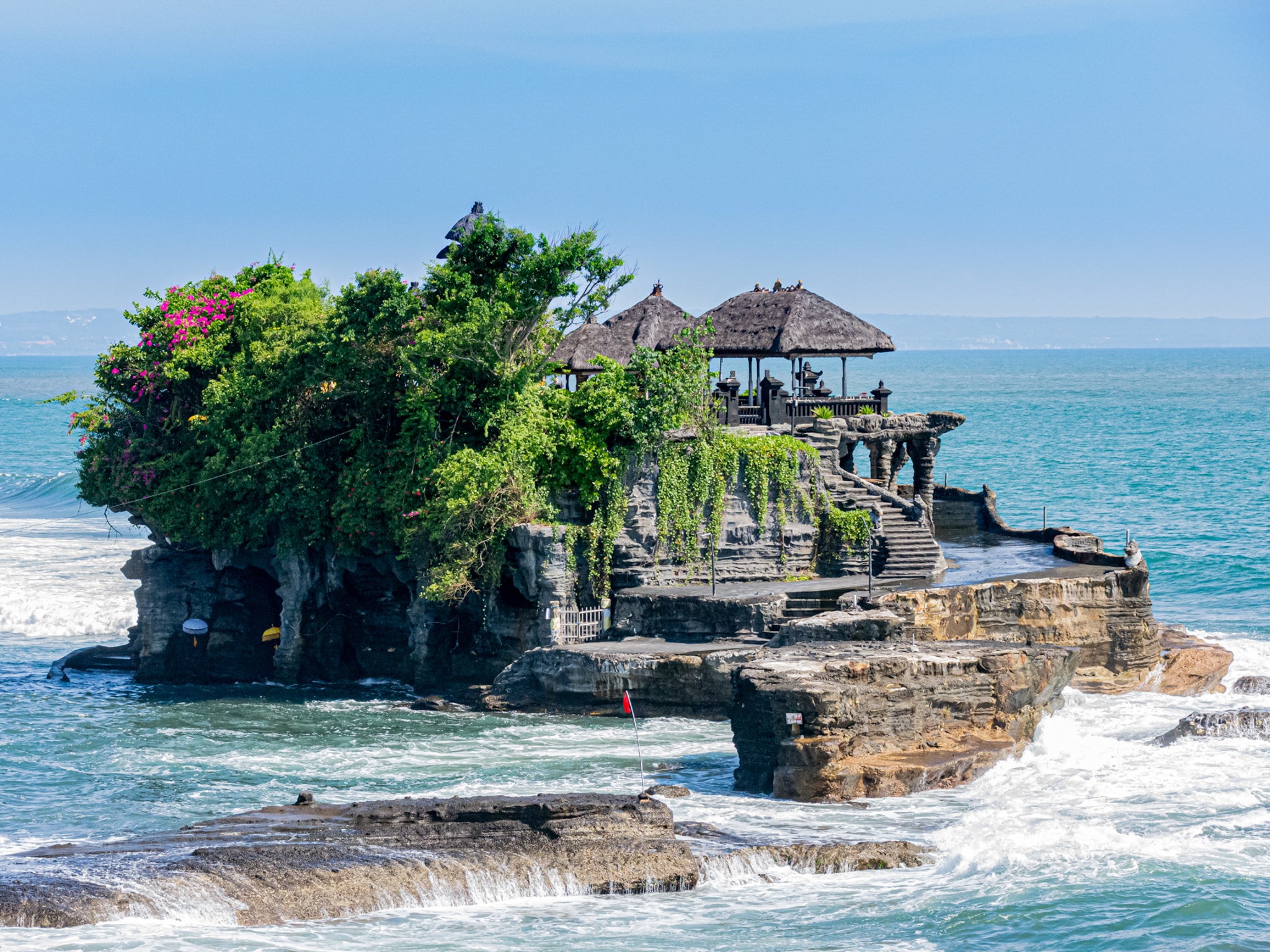
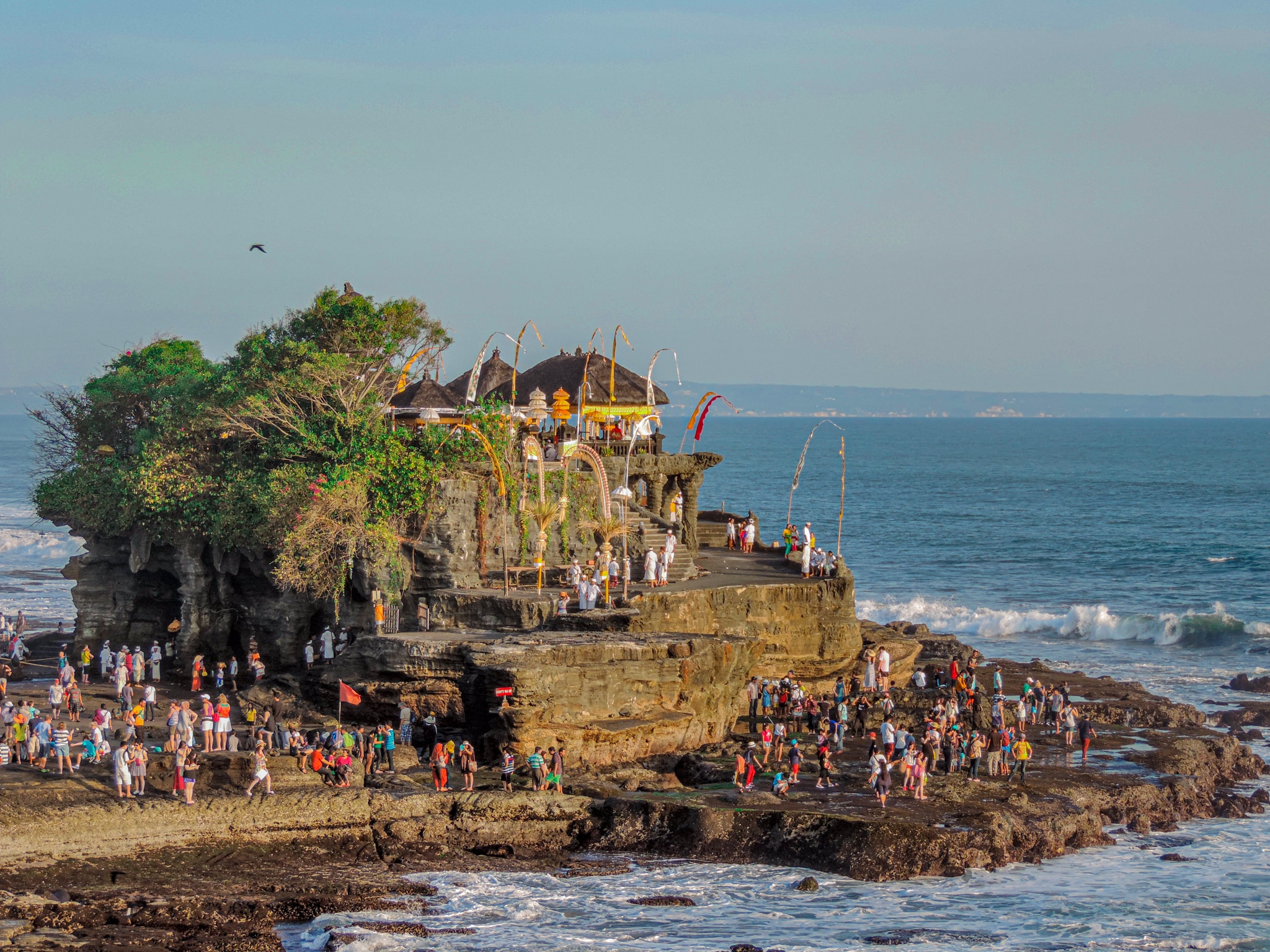
As lunchtime comes knocking, head to the magic of Tanah Lot Temple - the temple of the sea - and, before exploring, go straight to eat at the Dewi Sinta Restaurant. It's within the temple grounds amid the markets, and it's beautiful.
Once you've bought enough little trinkets and gorged on the delicious Indonesian delights, it's time to visit the temple itself. You'll have the opportunity to enjoy wading through the waves under the temple, where you can get a blessing from the monks and learn about their way of life.
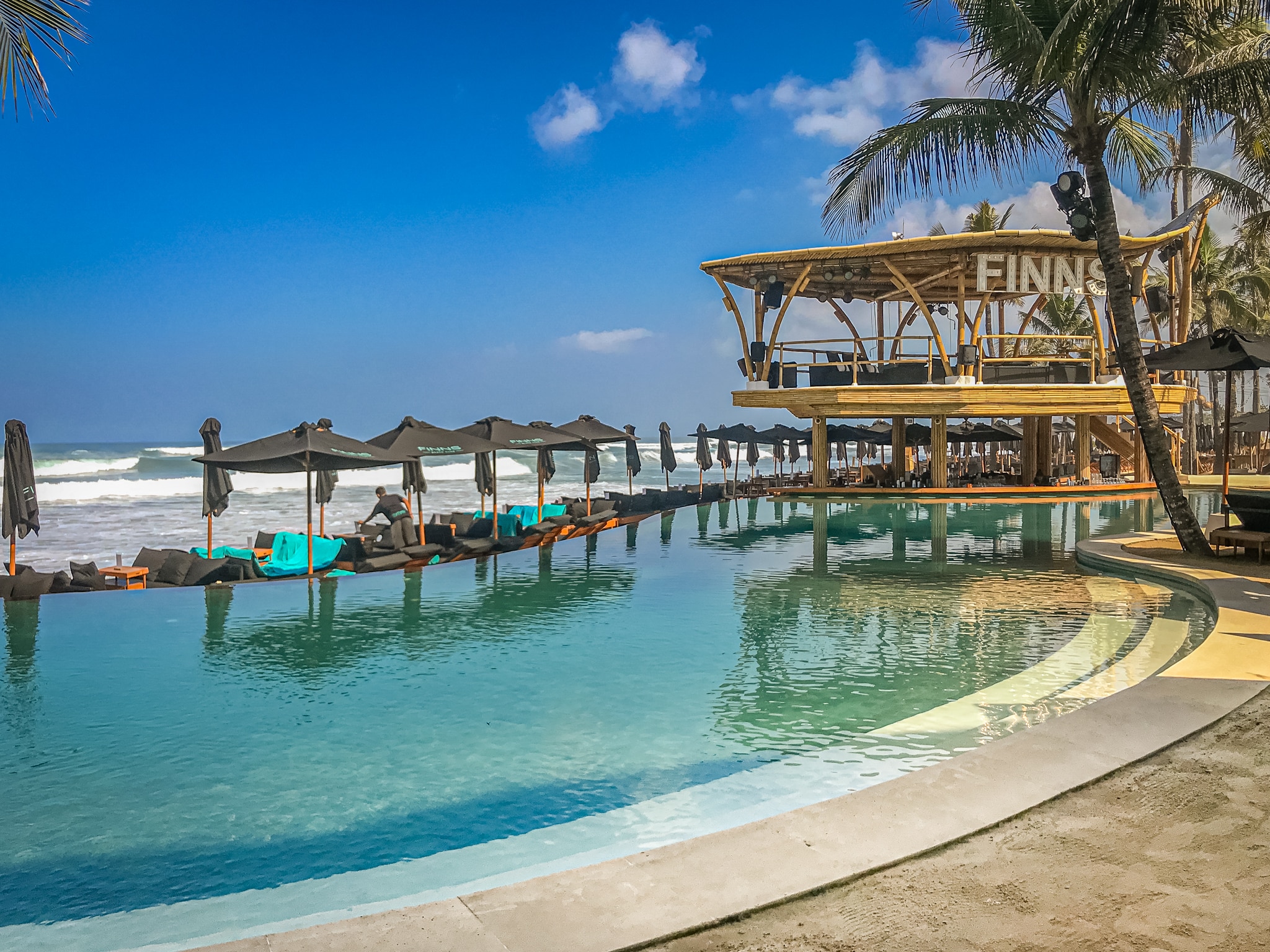
The night can end as you wish. For a chilled evening head down to Serenity on the beachfront for a yoga class, or there's beach parties into the night at Finns, Oldmans, or The Lawn.
Day 5 - Leaving Canggu, you have a delightful drive to Bali's cultural capital of Ubud ahead. If you're looking to save a bit of money, but want to be in the heart of the city stay at the Nirwa Homestay, near the rice fields. If money isn't so tight, try the slightly more comfortable MaxOne just out the centre, but still in easy walking distance.
Drop off your bags and settle in. Take an afternoon cookery school with my mate Nyoman at Jeding Cooking School. You can learn all about the authentic foods, herbs and spices before learning how to combine the flavours to create traditional Balinese cuisine. After enjoying your fine handiwork with a drink of the local 'arak', head to one of the many bars playing live music, and relax for the evening.
Day 6 - A morning around the fantastic markets of Ubud is the perfect way to start your first whole day in the crafts capital. Pick up the most beautiful bespoke gifts and handmade trinkets.
With your delightful new purchases safely back in your accommodation, it's time to explore the enchanting Sacred Monkey Forest. The many temples within the forest are exquisite but it is, however, the monkeys that take centre stage here.
If your legs are still in working order, you should spend the afternoon at the delightful Tegalalang Rice terraces learning all there is to know about rice, productions and the rituals. Some of the facts are truly fascinating and you'll soon understand why rice is so important to Indonesia and its people.
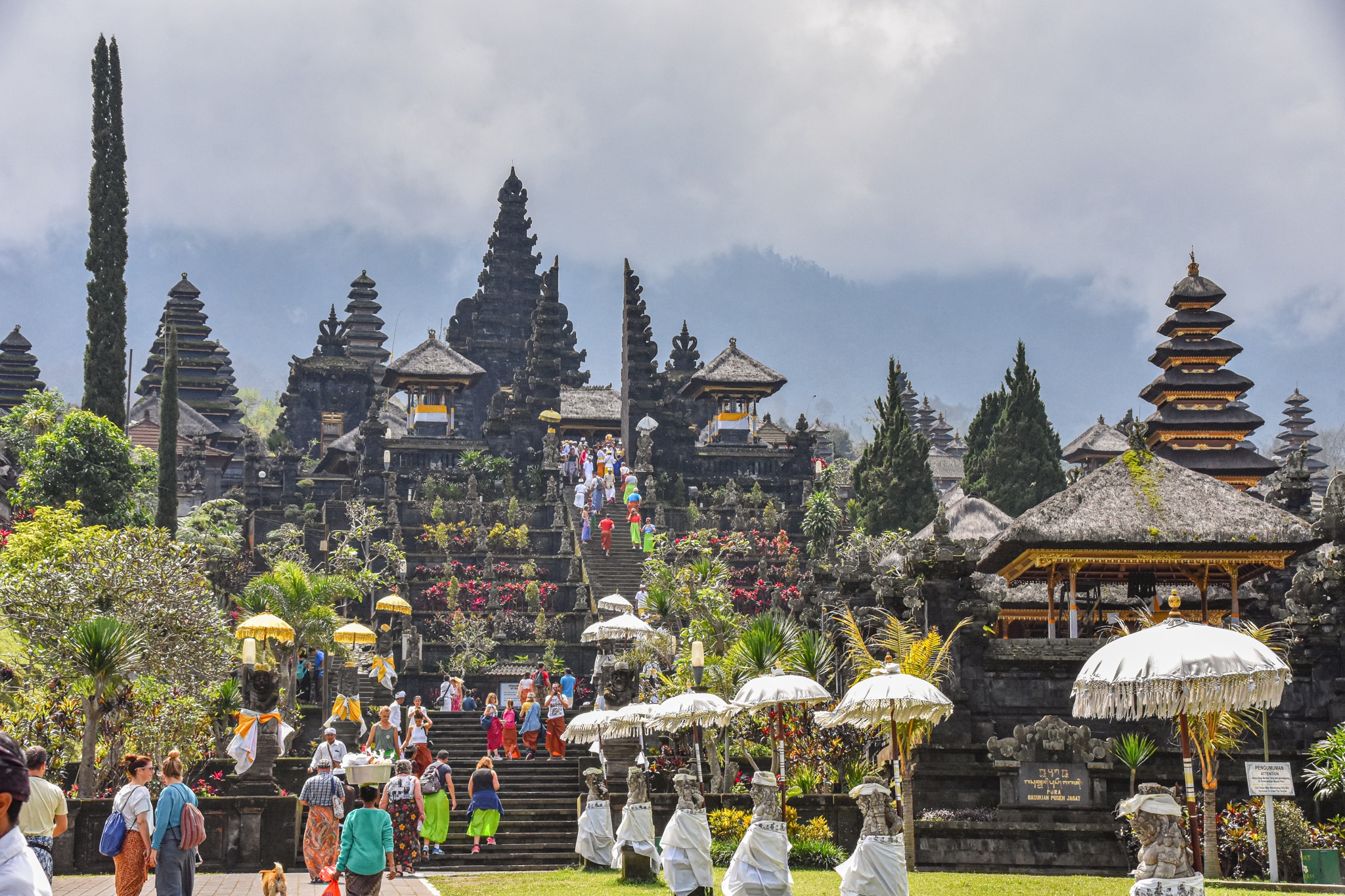
Day 7 - Today, the grand Mother Temple is our destination. It is the most revered, respected and holy temple on Bali: Pura Besakih.
The temple itself is a network of 23 smaller temples over six levels, and is the most sacred point on Bali. It's high in the mountains, and the architecture is just spectacular. You cannot help but leave Besakih a better person. It's wonderful.
As the afternoon glides into focus, an hour's drive around Mount Agung will lead you to the powerful sight of Pura Lempuyang Luhur - another of Bali's most holy sites.
Here you can walk the fantastic mountainside with uninterrupted views of the volcanic Mount Agung. You can also get that famous shot above the clouds at Muhammad's Gate with the stoic volcano as your backdrop.
As the evening draws in, you'll enjoy your last night on the island amid song and dance in Ubud's beautiful live music venues. Your final night can only be at one restaurant: it is my favourite on the island, and that is the fabulous Laughing Buddha.
Day 8 - Sadly, it's a taxi or bus back to where it began at Kuta, for a last smash and grab. Gifts and souvenirs can be bought for next to nothing here, before heading to the airport and travelling onwards.
Indonesia's natural wonders
10 Days
This tour will take you on a ride through the wild side of both Bali and Lombok. Rice terraces, volcanoes and waterfalls await you on this 10-day backpacking Indonesia experience through paradise
Day 1 - Landing in Bali's party town of Kuta is a crazy start to your tour in Indonesia. Check either the bustling and wonderfully cheap Gora Beach Inn in the heart of the action, or the Bakung Beach Resort, a short 10-minute walk from the airport with your bags.
Head out and experience an afternoon's surf on the famous Kuta Beach, which is perfectly suited for beginners. Enjoy a stroll around the many, many bars, and check out the town's large market area. It is here you'll find all the cheap tat, as well as all you'll need for your backpacking Indonesia experience.
Day 2 - Whack your swim gear on and head north from Kuta, leaving behind the crowds and dive into a world of waterfalls. Your first stop should be the tourists favourite, Tegenungan. Here you'll experience unrivalled power as the water thunders over the fall. Not only that, but there are plenty of picture opportunities to be had, with colourful signs and love hearts scattered around the fall.
Once you've taken in Tegenungan continue north, and (contrary to the song) continue chasing waterfalls. Slide down into Air Tibumana which is a lot less touristy, more natural, and very tranquil. It is the perfect place for a little picnic.
Once the sun starts to dip, head into Ubud and settle down for the night after a big day of epic waterfalls. Again there's plenty of accommodation, I should imagine you'd want to check out something special like the Nirwa Homestay, surrounded by paddy fields.
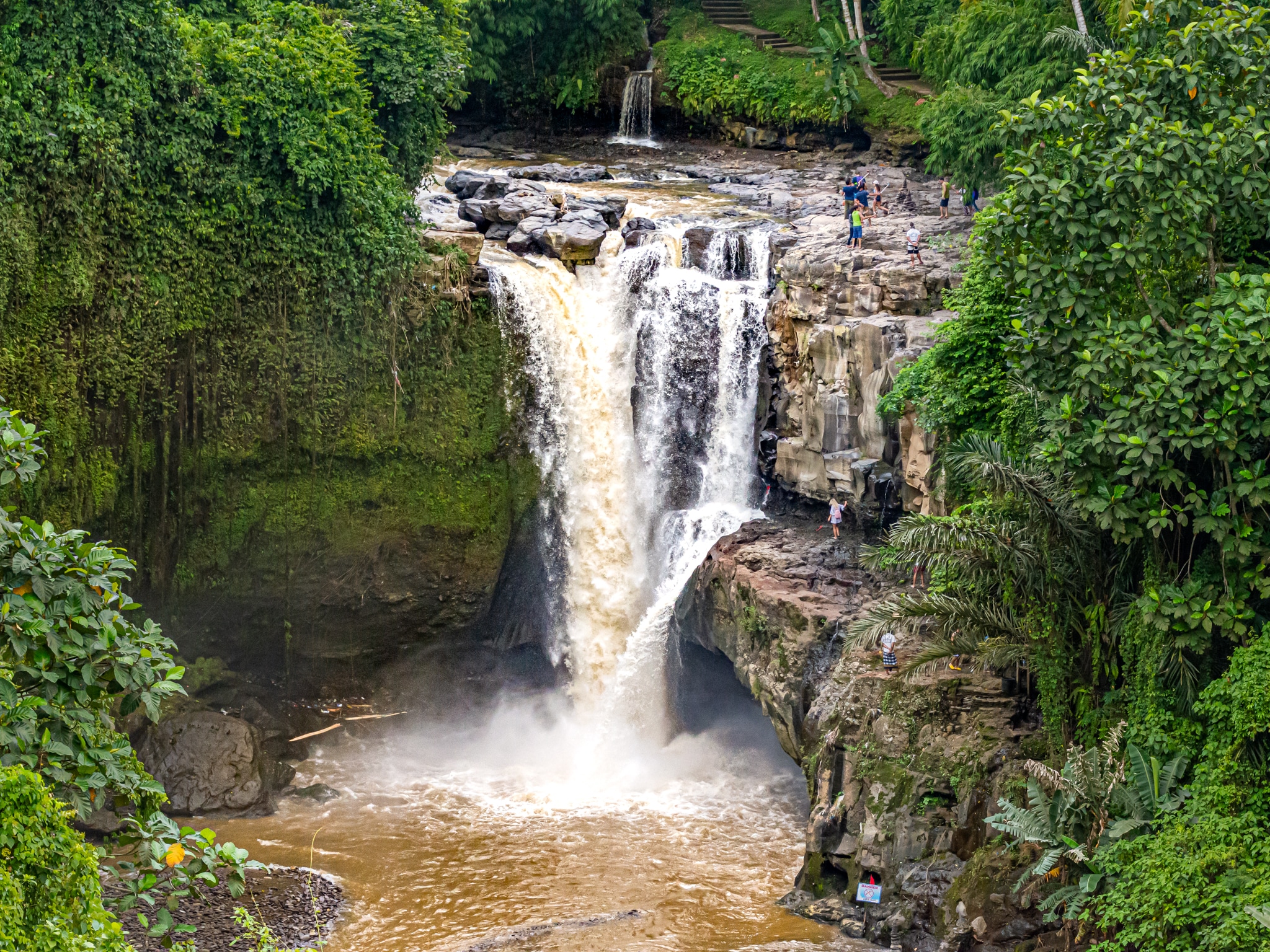
Day 3 - Today is a dry day away from the waterfalls you enjoyed yesterday, but do not fear, they'll be back. That doesn't mean the fun stops. Today it's time to enjoy the cheeky monkeys in the Sacred Monkey Forest. Explore beneath the canopy at your leisure, and delve into the world of the promiscuous primates (and yes, I did just say that). Take in the culture of the people who live in the forest and learn about the monkeys themselves. Hopefully, you'll be able to feed them, but it entirely depends on the time of year.
Once out of the forest, head north to the stunning Tegalalang Rice Terraces. Walk amongst the rice, learning about how and why it's grown, and how it made Indonesia what it is today. It is also a great chance to have a go on swings and make your Instagram friends extremely jealous.
Day 4 - Wake up for an early assault on Mount Batur, and experience a sunrise atop Bali. The views are superb and, on a good day, you'll see the three volcanic peaks soaring above the fading morning mist. Once again you'll encounter the cheeky monkeys at the peak, so be careful if you've got food and drink with you. This is one of the magical moments of backpacking Indonesia, so don't let that put you off.
Once you're back in Ubud, you may want an hour relaxing and recuperating. I do, however, suggest fighting through the tiredness and exploring the captivating markets. They are, in my opinion, the best on the island. Here, you can find all the homemade crafts, unique gifts and, of course, something to remind you of your time in Ubud. Don't get on it too hard tonight, because we're on another early start tomorrow.
Day 5 - Up before sunrise again, but another worthy sunrise walks. This time, the starting point is only a short walk from Nirwa Homestay as you take on the Campuhan Ridge Walk. This fantastic hill ridge will lead you over stunning rice fields, forests, and on to unique cafes and even a spa, the ones you may have seen on Instagram with the large flower baths. I'd recommend a massage, before moving on to your next destination; Bedugul.
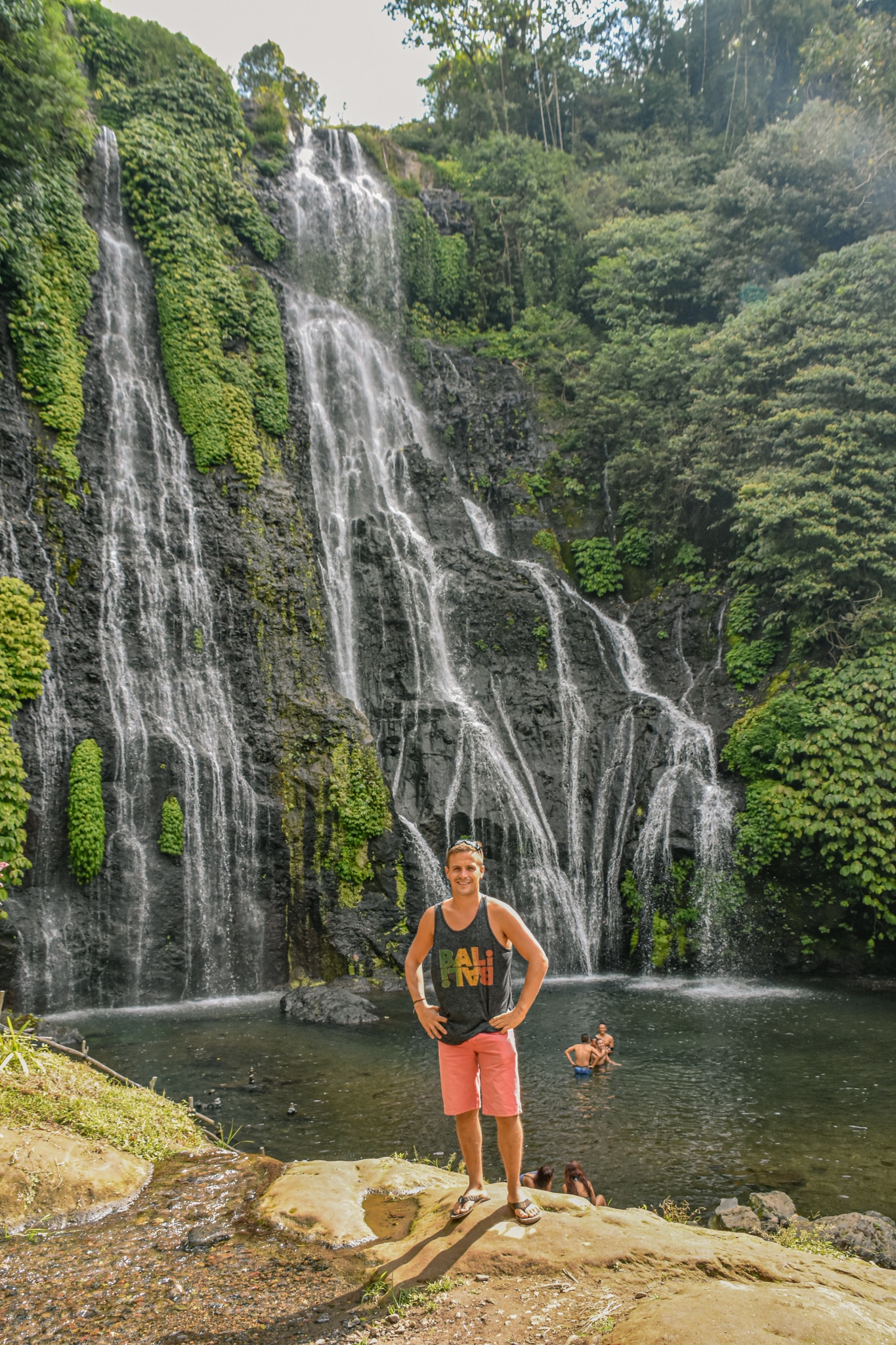
Day 6 - Take in even more Balinese beauty today as you explore the beautiful Danau Beratan Lakes, with the famous and picturesque temple that seemingly floats offshore. An afternoon of fun awaits in Wanagiri Hidden Hills, relaxing amid the woven structures overlooking the epic blue lakes below. After you've captured the moment, my favourite waterfall in Bali awaits - Banyumala Twin Waterfalls. These twins will provide the perfect afternoon to enjoy chilling in the tepid waters at the bottom of this powerful, picturesque waterfall.

Day 7 - Today, travel south to the port of Padang Bai on Bali's east coast, and grab a fast boat with the likes of Eka Jaya, which will take a couple of hours to the lost lands of Lombok. You do also have the cheaper option of the car ferry, but it will take anywhere between 4-6 hours. During the journey, you may get lucky - not like that - and see a pod of dolphins. I was lucky enough to witness a super-pod of thousands of them.
Set up base in or near Singigi on the staggering west coast for the night. If I may, can I suggest you splash out on a bit of luxury with the charming and graceful Chandi Boutique resort and Spa? You will need it after a long day of travelling, especially if you have opted for the car ferry. That night, enjoy a beachfront restaurant and a glass of wine.
Day 8 - You'll experience another masterful series of waterfalls as you head east to the foot of the gigantic beast that is Mount Rinjani. The main event within this series of epic waterfalls is the mystical Air Terjun Benang Kelambu. Whilst you cannot swim or jump in as you can with the others on this epic jungle walk, it will blow your socks off with its beauty. Spend a few hours here enjoying the five waterfalls on offer, and lap up the beauty of where you are, and the nature that surrounds you.
As the afternoon draws in, make your way south to Kuta Beach (not to be mistaken with Kuta in Bali). Check-in at one of many possible accommodation options. The place I stayed has, thanks to Covid, permanently closed, which is a shame. However, it appears to be under renovation, and new ownership and now goes by the name of Mad Monkey.
You should experience yet another fantastic sunset from a beach bar stall on Lombok's south coast.
Day 9 - Your last whole day on tour, and it's spent amid the best beaches in Lombok. Slowly meander west across the south coast spending time on the outrageously beautiful and natural beaches. The first of which is Tanjung Aan Beach, and, do you know what, I wouldn't blame you for staying. It will easily jump into your top 5 beaches of all time, and leaving will not be something you'll ever think of doing.
If you decide to stay for the day, I salute you, as I'd do the same. However, other wonderful beaches await should you wish. Mawun and Tampah are further examples of said beaches. Whichever one you end up at, you'll be in paradise.
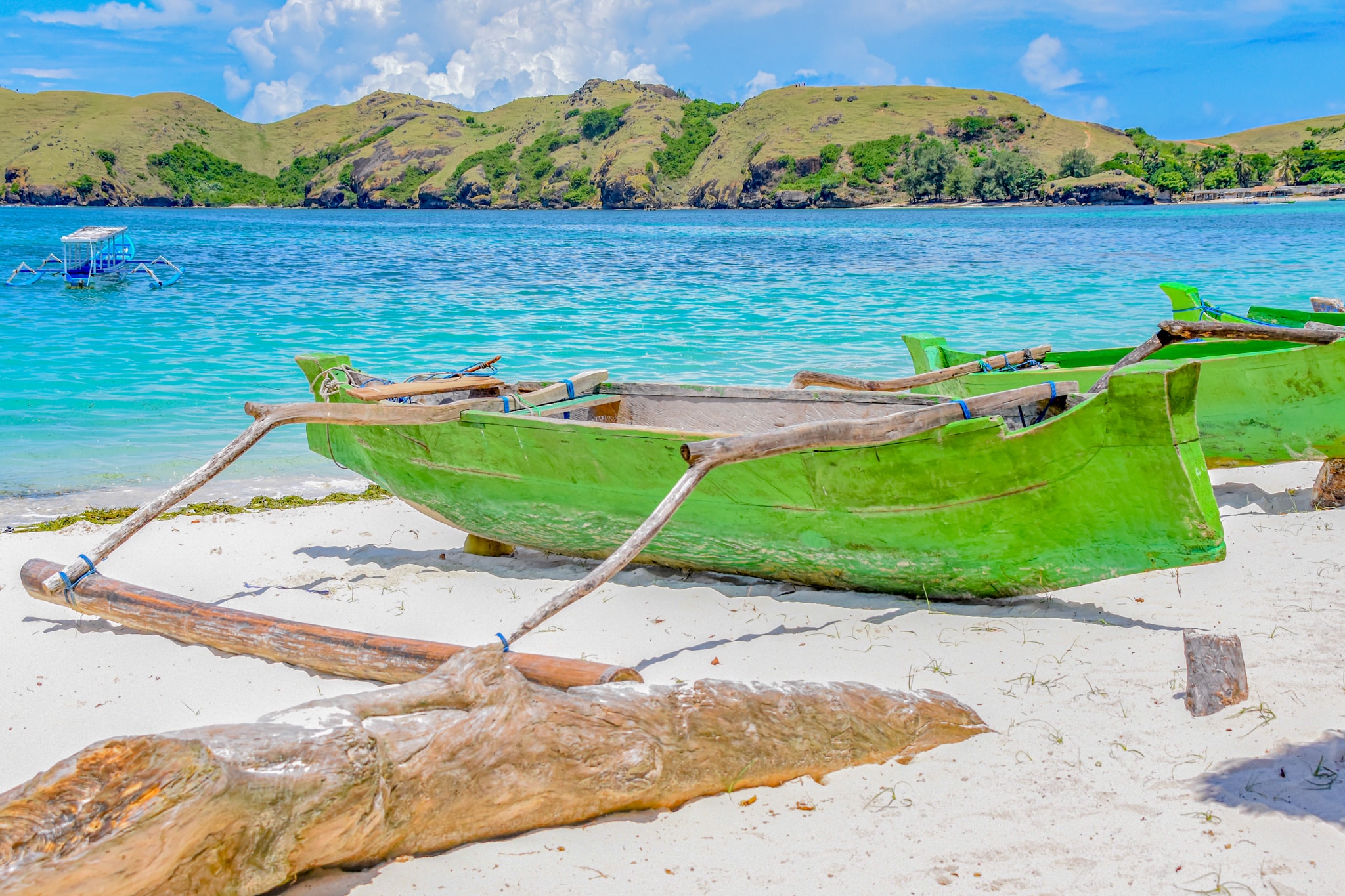
Day 10 - You will not want to, but today you'll be jumping back on the boat back to Bali, and onto your connection to the airport. So, I suggest you use Eka Jaya, because if you book they will sort not only the boat back to Bali, but also your transfer to the airport.
Indonesian Island Hoppers
14 Days
This tour will take you through the unbelievable sights of four of Indonesia's delightful islands, including Bali, Nusa Lembongan, Nusa Ceningan, and the party capital that is Gili T.
Day 1 - Land at Bali's only international airport near the party town of Kuta. Check-in at either Bakung Beach Resort, as you can walk the 10 minutes from the airport with your bags, or the cheap and cheerful Gora Beach Inn. Enjoy a day in the markets and lapping up the sun's rays on Kuta Beach, before experiencing a night out at the (in)famous Sky Garden. Make sure you partake in the all-you-can-eat-and-drink deal to kick your backpacking Indonesia experience off in style.
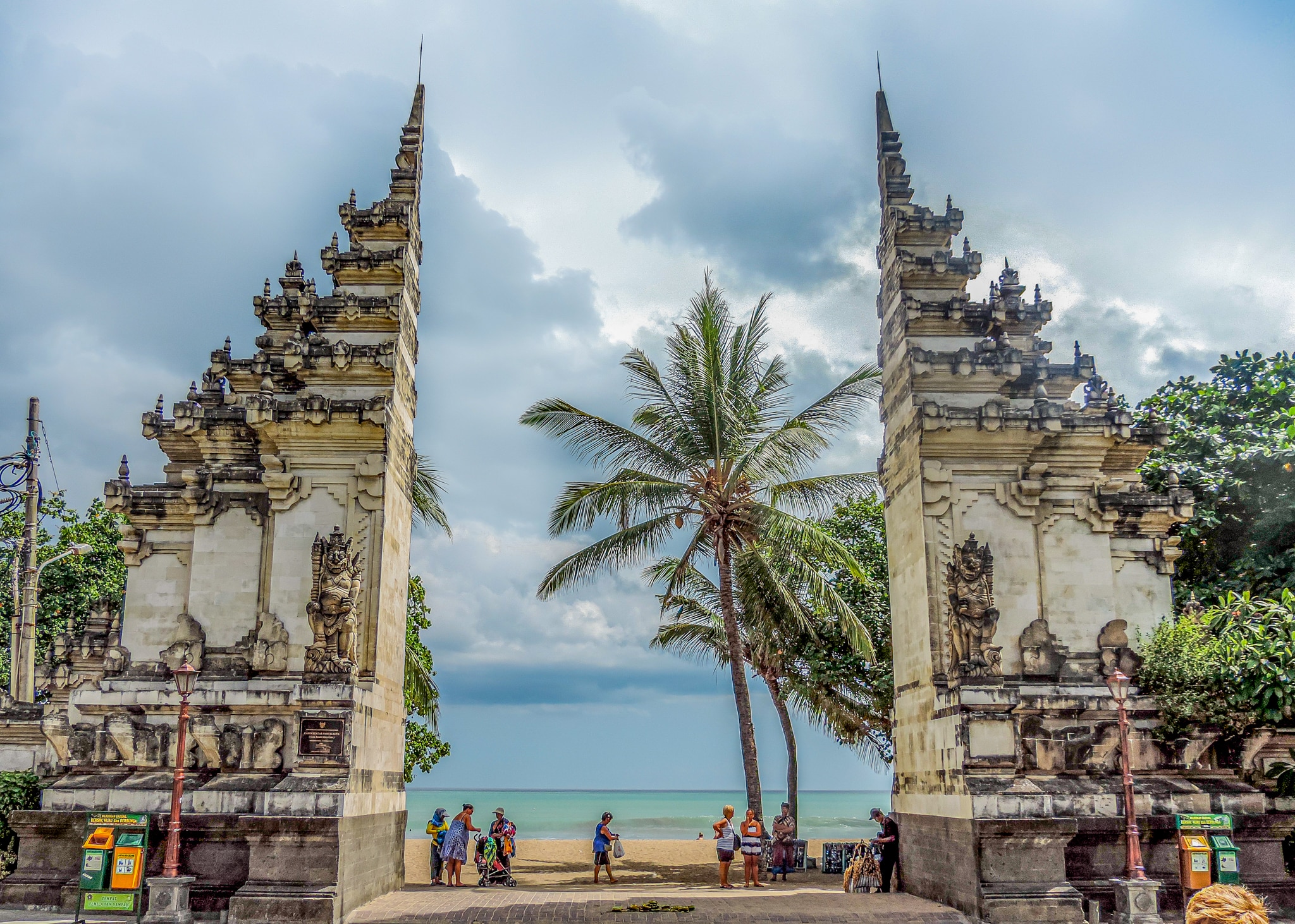
Day 2 - Once the hangover subsides hire some motorbikes (or get a taxi if you don't fancy bikes) and hit the road, aiming for the magical Tanah Lot Temple. It is said no trip to Bali is complete with a visit. It's also a chance to get blessed by the temple's holy men, before learning about the local and ethical 'poo' coffee and diving into the temple's markets.
Once you've bought half the market jump back on the bikes and head back to Kuta for a sunset drink and the night that follows.
Day 3 - The morning of day three is all about chilling on Kuta Beach for some well-deserved of sun, sea and surf. Obviously, the surf is optional. If you did want to learn, check out the wonderful people at Dekom Surf School. Once you've been bruised and battered by the waves, you should be treated to a pampering session. Thus, a relaxing afternoon in the exquisite resort of Potato Heads is called for. Swim-up bars, cocktails, and infinity pools will guide you to the most wonderful front-row views of yet another perfect sunset. This is a hangout of the rich and famous, so those on a backpackers budget, just enjoy the free entry to the pool.
Day 4 - Today I suggest you leave the mayhem of Kuta, and head north to the cultural home of Bali: Ubud. However, on the way, you'll pass several amazing waterfalls, set amid stunning tropical backdrops. If you're stopping at one I'd suggest Tibumana Falls, but any would be worth a welcome break. Tegenungan will be busy and is very touristy, but is also very much worth the stop.
Once you arrive in Ubud take onboard the slower pace of life, and the cultural overload. There are many places to say in Ubud, it's simply a case of what's your budget: Homestays, apartments or lavish hotels?
Day 5 - Day five takes us to our next temple. But this isn't just any temple; it's within striking distance of the gigantic Mount Agung, and today you'll experience the love and grandeur of Pura Lempuyag Luhur.
The temple is set amid vast grounds, but most only know it for that famed photo between Muhammad's Gate with Mt. Agung in the background. Either way, it's a spectacular place to enjoy and get some epic travel photos.
Day 6 - Another day in the cultural capital Ubud, and there is nothing like a meander through the intense Monkey Forest. There are fascinating trees, plants, temples, people and, of course, monkeys. Throughout most of the year, you can feed these intelligent primates, but it's not something I'd recommend during the breeding season. They are vicious when they want to be, and I've seen numerous attacks. Read the rules, and you'll be safe.
Your second stop of the day is a perfect way to learn about something that is key to Indonesia's success. A short ride north will take you to the breathtaking Tegalalang Rice Terraces. The terraces are packed with fun swings, market stalls and restaurants, all of which make this experience unforgettable. I think it is important to learn about rice production across Indonesia, because without it, Indonesia wouldn't be what it is today.
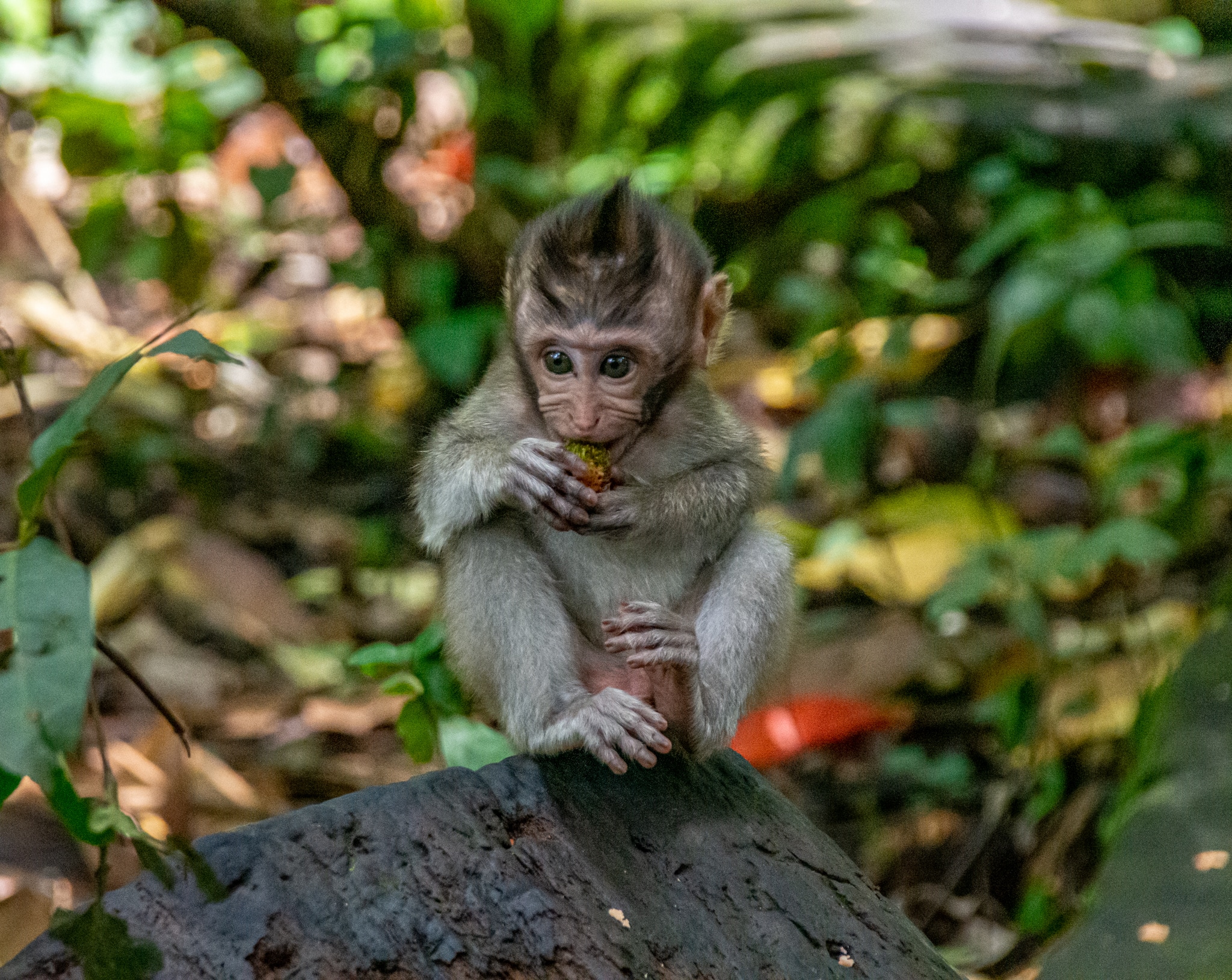
Day 7 - Start the day before the birds begin to sing with a sunrise volcano hike up Mount Batur. This is a 3 am wake-up call worth getting up for. The hike is not the most difficult ever, but is not for those with injuries or if you consider yourself unfit. Wait for the sun to rise over the mountains, spiralling colour across the sky before most of Bali has even stepped out of bed. On a good day, you can see across the lake and over two more of Indonesia's volcanos.
In the afternoon you'll have the perfect chance to further delve into Balinese culture with a cookery class. Learn to cook authentic recipes with fresh local ingredients before enjoying the fruits of your labour for dinner. I think you're then due a well-earned pamper or massage in one of the many spas.
Day 8 - Day trip to Bedugul. Today head further afield and encounter the magic of Ulun Danu Beratan, the excellent water temple. You'll recognise the temples instantly from all the books and pamphlets about backpacking Indonesia. The temple has wonderful colourful grounds embedded around the western shores of the lake, with a little cafe and a peaceful atmosphere. A short jaunt around the lakes and you'll arrive at the Wanagiri Hidden Hills. Relax in woven structures such as coconuts, swings and boats, all of which overlook the jaw-dropping lakes.
From there, explore the most spectacular waterfall on the island of Bali; Banyumala. Swim and relax in the crystal clear and cooling pool at the foot of the fall before making your way back to Ubud for a well earned night's sleep.
Day 9 - Today is your chance to grab a fast boat from the southern beaches of Bali over to the most enchanting islands of Nusa Lembongan and Nusa Ceningan. Once you've settled into your accommodation (I recommend Dream Beach Cottages) and recovered from the journey, head out to the Devil's Tear to splash around the crashing waves and enjoy one of the most fierce sunsets of your lives. That's about all you'll have time for after that mammoth journey. That said, you could enjoy a night-cap at a beach bar on Mushroom Bay Beach.
Day 10 - Today will be spent on foot, but not to worry, you'll see the most elegant of islands in its purest form. A trip over the yellow bridge from Nusa Lembongan to Nusa Ceningan will lead you to follow the coast all the way to the bluest of waters you'll ever see.
You may have visited a few 'Blue Lagoons' on your travels, and they're often very disappointing. Not here. Here the waters are perfect in every way. I could have stayed for hours just watching the ripples glisten in the sunlight. This may sound like a slow day, but the walk will take longer than you think, and I've banked on you stopping at least one beach bar.
Day 11 - Today is a highlight of your tour. Many companies offer unreal snorkelling tours around the coast of Nusa Penida. Here you can snorkel with the majestic giants of the sea: the manta rays, as well as turtles and some of the most colourful corals ever. A half-day excursion will set you back about £25, which is cheap as chips for what you get. I'm not going to be brave enough to recommend one company over another, just in case you don't see anything. I'm not taking that hit.
Nothing beats this experience, and there is no better way to finish the day than a fresh, cold beer on the beach, reliving the magical moments from the day.
Day 12 - Enjoy an early morning crossing on the fast boats (Eka Jaya or Blue Water Express) from your Nusa paradise to your last stop on this backpacking tour of Indonesia; the small party island of Gili T. That journey isn't the cheapest, so bear that in mind.
Be prepared, once you land on Gili T, there are, once again, no cars or motorbikes. The only option for carrying your bags are walking, or horse and cart. I will not condone and do not recommend using the horse and cart, as they are very badly treated. That leaves you with carrying your own bags over very worn/bumpy sandy paths. It's not fun or easy. That may mean you'll want to think about where your accommodation is. The boats dock to the southeast of the island.
Settle into your new surroundings having found your accommodation. I'd suggest that you stick to dive schools like Manta Dive or hotels, such as Nirvana and the fantastic Trawangan Oasis. Of course, a luxury villa for groups is another option, so check out Airbnb too.
Once that's all done, relax with a spot of paddleboarding, catching the sun's rays from the gorgeous beaches, or simply grab a snorkel and explore the shimmering waters off the shore, which are brimming with life.
As evening strikes, head to the west coast of the island, and once again, watch the sunset on the horizon over these magical Balinese volcanos. After a couple of beers on the beach, head to the east coast for a night out unlike any other.
Day 13 - A nice early start is worth the pain of the hangover as you once again take to the seas. Enjoy a snorkel around the Gili Islands, where you'll find statues, coral beds, fish, sea turtles the size of you, and much more. The fresh seas soon wash away that hangover and again provide you with memories that most will only dream of.
Tonight will be your last night in the Land of a Thousand Islands, so make it a big one. Watch your final sunset from the famous swings throughout the shallows on the West coast. Check out The Exile, or the Window Bar for the best swings. Once showered off, give everything you have for one last big night out on the east coast on the strip. It's bloody paradise.
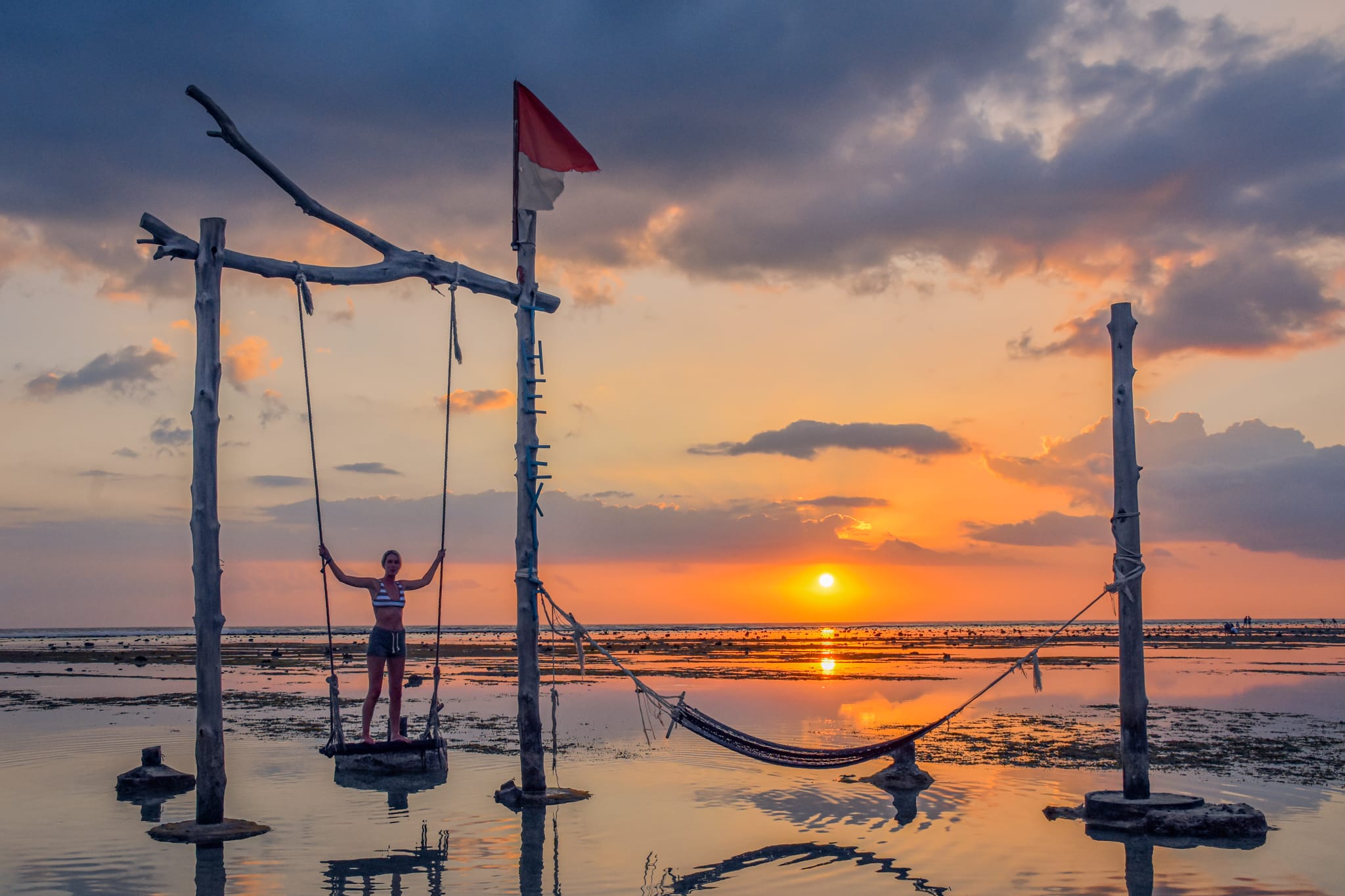
Day 14 - A short trip back to Bali and onto the airport today, where you'll catch your flight back home, ending this leg of your backpacking Indonesia experience. Again, most of the fast boat companies do supply onward connections to the airport. I suggest you use Eka Jaya, as I know they will ensure you get from the port in Bali and onto the airport if you've booked the connection.
Speaking Bahasa (Indonesian)
Having lived in Indonesia for several months I managed to pick up a fair bit of the language. Which for me was a result, as I'm terrible at languages. I only knew how much I'd picked up when I was in a taxi in Kuala Lumpur and understood what the radio was talking about. This leads me on to this: if you can speak Malay, you'll smash it in Indonesia, as the two languages are very similar. If you can't, we've got you covered with the basics here.
| English | Bahasa (Indonesian) | Greg's Pronunciation Breakdown™ |
|---|---|---|
| hello | Halo | Haalo |
| bye | Selamat tinggal | Cell-a-mat ting-gal |
| my name is... | Nama saya ialah | Na-ma-say-a iell-ah |
| yes | Iya | Ya |
| no | Tidak | Ti-dak |
| ok | Okey | biieeee |
| please | Tolonglah | Two-long |
| thank you | Terima kasih | Terri-maka-see |
| sorry | Maaf | Ma-af |
| how much? | Berapa banyak? | Berr-appa ban-ya? |
| excuse me | Permisi | Per-missy |
| what? | Apa? | Ap-pa? |
Visas and Borders
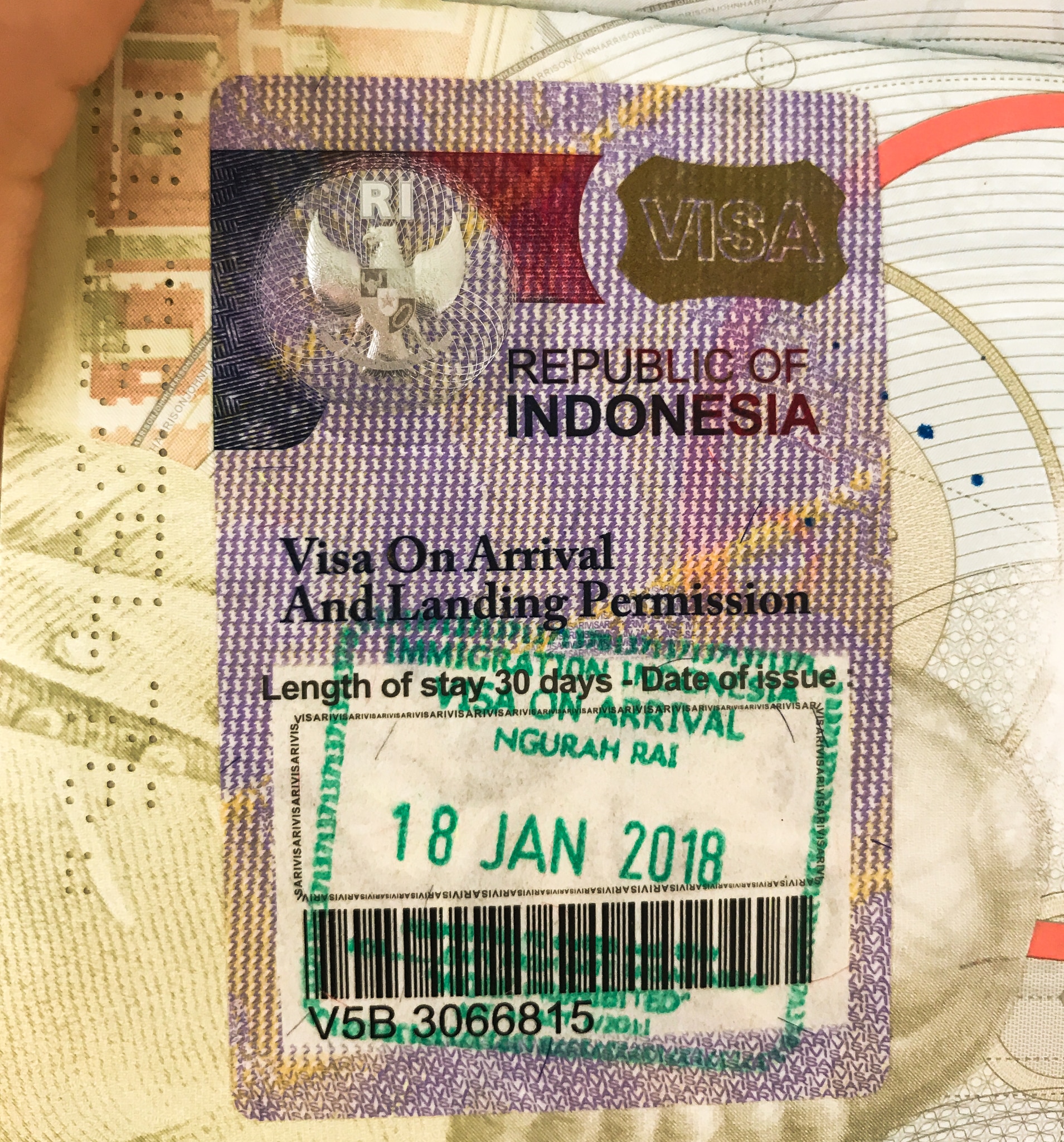
Good news, citizens of a vast number of foreign countries are not required to gain a visa prior to entering Indonesia. That is, however, as long as you don't plan to stay longer than 30 days, including date of entry and departure. These visas cannot be extended.
If you wanted to keep the backpacking Indonesia dream alive for longer than 30 days, you will have to apply for a visa before arrival. Upon arriving in Indonesia you then pay £26 for the 30-day visa with a possible 30-day extension. I highly recommend this option, as it gives you flexibility. Once you pay your money, you will have to visit a designated visa extension location. Ideally, the earlier the better.
*Nationals who this applies to; European Nationals (excluding Montenegro), British, Russian, USA, Canadian, South American Nationals (excluding Colombia), Oceania nationals, Chinese, Indian and South-East Asian countries, various African countries including South African, Madagascan, Egyptian and Moroccan. If you fall outside this list, please check on your government website.
Passports - You will need a valid passport with a minimum of 6 months validity left. There will be certain exemptions to this, as there always are, but take that as given.
There are over a hundred entry points into Indonesia, and that's helpful for us travellers. No matter the island, there will be a way in and out. There are 29 airports, 88 seaports and a handful of land borders.
What to Pack
It's always difficult knowing what to pack. So when it comes to backpacking Indonesia, we've thrown together a quick guide to get you going. There's a few essentials below that we found useful, or stupidly forgot, or thought would have been helpful.
There's also a few ideas that have been thrown in by some female friends of Far Out, and that leads us onto this:
Our Top Pick for Backpacking Indonesia is...

Sanitary Products
Being two blokes, this is a difficult one for us to recommend first-hand. But when we asked around for the top things to pack, so many of the women we've spoken to said the same thing:
You can't find tampons in Indonesia.
So this particular shout is well and truly one for the ladies. The number one response for backpacking Indonesia is a tampon. Apparently, Indonesia doesn't seem to do them. Bring them with you. Otherwise you'll end up with pads, which is what is sold here instead.
Clothing and Shoes
Luckily, when it comes to what clothes to pack when backpacking Indonesia, the answer is as little as possible. I stupidly stuffed my bag full, only to find that after the first week I only wore what I had bought cheap in the markets: vests, shorts and swim gear. Thereafter I didn't touch the stuff I had brought with me.
Nevertheless, you have to bring something. So I'd recommend a couple of pairs of swim shorts, three pairs of shorts and a cosy pair of loose trousers for a relaxing, cooler evening.
Having mentioned trousers, they are also a good idea for entering temples and religious sites. Guys and girls, if trousers aren't for you, either bring a sarong or buy one out here. They are perfect for covering your knees. It is also advisable to keep a sarong in your day bag for any impromptu visits.
Due to the weather, you won't need excessively warm clothes. However, I suggest a warm jacket, a single hoody and a waterproof coat. They should cover you for every eventuality, from a snuggled evening in, to a Balinese storm, to an early morning ascent of Mt. Batur. The storms come from nowhere, and whilst mightily impressive, they can drench you in seconds.
Thus, I recommend if you're going to spend your cash on 'stuff to take' it is here, I love my Regatta lightweight jacket and it copes well in all weathers. Even a freezing day at sea in Scotland.
In regards to tops, you will spend most of your time in Bintang-vests and other random market purchases, so only bring a handful with you. Four t-shirts or singlets should be more than sufficient.
When it comes to footwear, a decent pair of flipflops (thongs to the Aussie readers) is a must. Don't buy cheap, as they will break, and trust me, there is nothing worse than a broken thong when you're trying to get places. You will find that you'll live in them. Alongside your flipflops, a sturdy pair of walking boots are a must for any hikes or offroading you may do. If you have room, but it is not essential, pack a lightweight pair of breathable shoes as a backup.
Electronics
Backpacking Indonesia is full of the most magical travel moments, and you'll want to capture each one of them. Many of you will get by with your phone camera, but if you're considering an upgrade, now is the time.
Alongside a decent waterproof layer, the other place I'd splash some cash for Indonesia is on a decent camera and a top lens. Both Charlie and I use a Nikon D500 and would recommend them to anyone. Pretty much all the photos on this site are taken with that camera. Grab yourself a decent lightweight lens, such as the Sigma 17-50 F2.8 and a couple of memory cards with lots of space, ideally 128GB or more. Alternatively, couple a small memory card or two with a lightweight portable hard drive. Mine is a Seagate 2TB, and I haven't filled it yet. That way, you can empty your photos daily onto that and keep your memory cards free.
You will also need a travel adapter, ideally with as many USB ports as possible. We recommend this iBlockCube, because it's got tons of sockets and is nigh-on indestructible. There will be a time when you'll need to charge your camera, laptop and phone, and it's a case of more is better.
Toiletries
Due to Indonesia's location on the equator, the average daytime temperatures are somewhere between 28-30 degrees. The nights get a little cooler, but still average around the early to mid-20s. Therefore, the sun is extremely powerful and can burn easily, make sure you carry sunscreen with you in your day bag and apply regularly. I always suggest a minimum of SPF 30, although ideally, it should be SPF 50, and of course, it should be waterproof.
I tend to go for a named brand I trust such as Nivea, as not only will it protect, but it won't leave you feeling sticky or leave those annoying white marks on your clothes.
If you have any toiletries that you use and are used to, the advice is to bring them with you. Products are not the same worldwide. Do be careful with medicines though, as some we use back home are illegal in Indonesia. If you are on prescription meds, CHECK BEFORE you get here, because Indonesian customs do not have a sense of humour about this stuff.
Bags
When it comes to backpacks, both Charlie and I always recommend either Berghaus or Osprey. You should aim to buy anything 65 litres or over for your main bag, and something in the region of 20 litres for a day dag. These sizes do differ depending on height and strength.
Female Travellers
We understand that as two 'average guys' we cannot talk for you, and nor shall we. However, having spoken to a number of our female traveller friends about their thoughts on Indonesia, we can but pass on some advice from those who have been before.
Obviously, number one is as above, tampons. You will only find pads out here. Bring an adequate supply with you.
I have already mentioned sunscreen, however, whilst not something I have personally noticed, but a number of my female friends have is that sunscreen in Indonesia has skin whitening pigment in it to prevent any tanning at all. This is not ideal if you want to stay protected, but get that glowing tan.
Other products with this pigment in include moisturiser, and the occasional shampoos & shower gels. Again, if bronzing is something you want to do during your backpacking Indonesia experience, bring moisturiser with you.
Other
Along with many other Asian countries, Indonesia struggles with the sheer volume of single-use plastics. Waterbottles play a large part in this problem. Therefore, we at Far Out, recommend reusable bottles. Yes, they are more expensive, but there will be no need for money once the planet has been destroyed. Be ethical and cough up a little cash, buy a reusable bottle.
Charlie is the Far Out reusable bottles advisor and is always recommends his Lifestraw. He insists that water from a dirty stream can, and will be drinkable once filtered through the Lifestraw bottle.
Travel Insurance
Travel insurance is key when backpacking Indonesia. Whilst the advancements in medicines have brought Indonesia up to the 21st century, it is still a way behind countries such as the UK and Australia. That said, they are fantastic and have incredible skills and standards within the Indonesian medical profession.
That's the good news. What I haven't told you about is the costs. It's stupidly expensive for any medical procedure here, and your insurance will have paid for itself after one visit to the hospital, and then some. It's worth every penny. So get the insurance.
Keep in mind that if you plan to use things such as motorbikes, and don't;
1) Tell your insurance you plan to ride a bike, or
2) Don't have a bike licence
You may well be out in the cold, covering the expenses yourself. Answer any and all questions they ask truthfully. You're better off paying an extra few pounds now rather than hundreds later.
Backpacking Indonesia Ethically
Ethical travelling can be achieved whilst backpacking Indonesia, more so than in a number of other Asian countries. The Indonesian people, especially those on the more touristy islands, are very up to date with plastics and protecting the seas, and their beautiful islands. This doesn't mean this isn't still an issue, because it is.
Around February, plastics wash up on Bali's southern beaches by the bucket load. We're talking tonnes of it, including needles. The majority of this comes from Java, as people dump plastics into the waterways which inherently lead out to the oceans. Teams are deployed to clean up the beaches, teach people about the dangers of plastic, and protect the environment, which is the start of Indonesia's fight back. So, when travelling, cut down on your use of plastics, particularly single-use, and, for fuck sake, please dispose of them properly.
In terms of carbon footprint, just be aware and follow the usual rules. When backpacking Indonesia in particular, it's simply a case of walking where possible, and use sailing boats rather than motorboats or aeroplanes to move between islands.
Getting more specific, you may have heard of something called Kopi Luwak, more commonly known as poo coffee. It is made using the coffee beans that have been eaten by the cute little Palm Civet, partially digested to give a new, unique flavour... and then shat out. Whilst it may sound rather out there, it is considered a delicacy and is sold to the western world for huge profits. It has been known in the US to sell for between $100-$500 a pound, which is mega-money for a drink.
Due to its potential profits, the animals are often captured, held in cages not much bigger than themselves, and force-fed coffee beans. This is not always the case, and I do recommend you try the coffee, but please research the farm you go to, and/or the shop you buy it from. Make sure it is ethically sourced - you want to be looking for coffee that is foraged.
Last mention here is the horse-drawn carriages on some of the islands that don't have cars or bikes, notably the Gili Islands. It can be a tempting idea to not have to haul your backpack for half an hour or more, and hop into a cart instead. Be conscientious though, because these horses tend to be badly looked after, whipped and mistreated. I don't want to point the finger too much at the Indonesian people, because this is 'just how things are' here, and some are kinder to their animals than others. But be aware, and voting with your feet (and your wallet) does send a message and, hopefully, inspire kinder behaviour.
Safety
In general, Indonesia is a safe country to travel, and is a well-trodden backpacker route.
Differing islands and ways of life provide various styles of interaction with locals, and some of the lesser-travelled islands and towns may make some people feel unsafe. This isn't the case. All that's happening is different social etiquette are confusing each other and causing concern or hesitation. Do not mistake this uncomfortableness as unsafe.
Indonesia, as with most places, does have issues, and you will hear of stories that may put you off of backpacking Indonesia. Just remember, those stories are far and few between, and happen all over the world.
If you are some combination of white, travelling solo, and female (blondes even more so), you will gain extra attention from the locals. From speaking to female backpackers here, the attention is a bit more intense on the Muslim islands than the Hindu ones, but none had anything more than an uncomfortable conversation that they quickly left. Mostly, all they want to do is have a photo with you. I must be in a vast number of family albums the way I was snapped.
Pickpockets do work the markets and crowded areas. As we always say, be smart, keep your wits about you and your bag/possessions in sight, or safely zipped away. In particular, Kuta in Bali has issues with this, so be aware. If you appear to be cautious and scanning for thieves, they'll usually leave you alone for an easier target. Consider wearing a money belt for your cash.
The main issues I had to deal with as a tour guide/westerner living in Indonesia was patching up wounds. Despite never having passed or taken a bike test, so many tourists think they can drive a motorbike and be fine on the roads. A vast number of these people still believe this to be the case after a night out, and whilst carrying passengers. Don't do it. It's not worth the risk, the hospital procedures and other costs. If you're shitfaced, it may well void your travel insurance as well. On more than one occasion I had to pick teeth out the road, hand them back to the owner and point them in the direction of a dentist.
Be sensible, and don't think you're a superhero just because you're abroad. You can still die.
The other concerns you may have when backpacking Indonesia are wild animals. You will see a lot of wild dogs, monkeys and other lesser-known creatures. If you are bitten, any of these animals could have rabies or something else. Get it checked out straight away by a doctor. I will give the wildlife some credit, I only heard of two dog bites during my time in Bali. Most are very receptive of humans, just don't antagonise them.
Brief History
The first 'humans' are believed to have to lived in Indonesia for anything up to 2 million years ago. The discovery of 'Java Man' which, at the time of discovery (1891), was the oldest fossilised remains of a human being, testifies to this. It is believed Java Man was alive somewhere between 700,000 to a million years ago.
The 8th century BC saw rice production and farming advances unlike any other country. This lead to Indonesians prospering, especially by the time international trade in the first century brought further markets to their doorsteps.
Thanks to Indonesia's location it became a key player on the trade routes with India and China.
Religion within Indonesia developed from around the 7th Century with Hinduism and Buddhism followed by the Islamic faith a further 7 centuries later.
Many, many centuries, later the Europeans made their way to Indonesia. The Portuguese in 1512 was the first of two main empires, as they continued to develop trade routes and overseas territories. Around 90 years later, the formidable Dutch took control of Indonesia and ruled in one form or another (despite numerous wars) until World War II. After World War II, Indonesia became an independent country and today thrives on tourism and agriculture.
Our Indonesian Stories
Backpacking Lombok, Indonesia – Travel Guide
If you’re looking for Bali before it got popular, then…
Backpacking Kuta and Seminyak, Bali – One Bintang At A Time
One Bintang, Two Bintang, Three Bintang, floor. Weclome to Bali’s party zone.
The Budget Guide To Backpacking Canggu, Bali
It’s Bali’s most hipster, most pretentious town. Welcome to the ‘Gu.
Backpacking Uluwatu, Bali… In Two Days
Where traditional fire-dancers meet dude-bros with surfboards. You’ll love it.
Backpacking Bedugul, Bali in 24 Hours – Lakes, Temples and Waterfalls
Leave the crowds behind and dive headfirst into the ‘real’ Bali!
Backpacking the Gili Islands, Indonesia – The Ultimate Travel Guide
You’re here for the sesh, but there’s far more than just booze on offer…