Israel and Palestine
Last Updated: April 26, 2026
NEED THE ESSENTIALS FOR BACKPACKING ISRAEL AND PALESTINE NOW?
WHERE TO VISIT | BEST STUFF TO DO | SUGGESTED ITINERARIES | ISRAEL BLOGS

Heads up: We sometimes work with companies to provide affiliate links and reviews - here's what that means. If it's here, we use it. We don't plug shit for profit.
Backpacking Israel and Palestine In 2026
Honestly, now is not the time to be backpacking Israel or Palestine. Despite prisoner swaps and the progressive peace talks in 2025, things need time to recover.
2024 was devastating to hear about, let alone watch from afar. Be sensible and respect the fact that, for now, this is still not a time to be in Israel or Palestine waving a camera around with a smile on your face.
Below are my thoughts on the countries before the terrible attacks of October 2023.
Backpacking Israel and Palestine provides a unique, educational insight into conflict, love and those who live within. Frankly, it's an experience unlike anywhere else and somewhere you'll never forget.
Entangled in the battle of religion, land, and power are some of the most captivating and friendly people you'll ever meet. Furthermore, their history can rival anywhere on earth, not to mention sunsets to die for amid the infusion of the old and new.
Israel is a medley of East meets West in every aspect of life.
You'll discover despair and overwhelming heartache and feel tension to shake your core. Yet, you'll also feel the love, happiness, a positive outlook and some of the warmest hearts known to humankind.
Segregation and separation exist, but through it, all are smiles, a zest for life, parties and stunning landscapes.
I am here to walk you through the best of backpacking Israel and Palestine fresh from my January 2023 trip.
Are you ready?

Why Israel and Palestine?
Backpacking Israel and or Palestine may, to many, sound like a step too far out of the comfort zone. But remember this... when you step out of your comfort zone, you're more often than not rewarded for your bravery, which is the case here in Israel and Palestine.
Yes, it can feel edgy and have your heart racing, and no, you're not guaranteed the safety of a five-star resort on a beach in the Maldives. It can be jumpy, scary even. But those moments of fear are far outweighed by the love you get from each smile thrown your way, and you will feel that.
The markets are alive with noise, colour and the smells of spice, fresh bread and incense. The crowds chatter as overhead the call to prayer can be heard vibrating through parts of the often desolate, deserted whitewashed valleys.
Modern-day cities such as Tel Aviv blend with ancient buildings, and a mixture of religions, people, and food from around the world combine to create a home for millions all under one sky, but often very divided in their beliefs.
In truth, the Dead Sea perfectly illustrates why you should visit Israel and Palestine. It's often stunning to look at, interesting to be floating through, but crazy if you go too deep into it. Plus, there is nothing like it in the world. It's different, mad even, but, my god, it's bloody good fun.

Quick Stats
Currency
Israeli shekel (ILS)
Religion
Jewish: 75%
Population
8.99 million
Language
Official: Hebrew
Also: Arabic and English
When to Go
High Season: June - Aug
Low Season: Dec - Feb
Price of Beer
£7 a Pint in Israel
£3 a Pint in Palestine
Our Israeli Stories

How to do Tel Aviv Like a Local
From beach walks to the best hummus in Israel, it has to be Tel Aviv.

A Guide to Haifa, Israel: Foodies, Brace Yourself!
It’s so hilly here in Haifa that it makes leg day look like a toddler’s party!

Contents
Where To Visit
Tel Aviv
Crashing waves from the Mediterranean storm over the crisp golden sands. Kite surfers leap into the skies aiming to reach the dizzying heights of the shiny, often glass-fronted modern buildings that lord over the promenade.
Inland, you could split Tel Aviv into thirds.
To the north, highrise buildings are growing by the day where the bourgeoisie roam. You could easily mistake parts of the city for Sydney, Barcelona or parts of LA.
In the middle, you'll discover the hipster paradise, Carmel Market and numerous trendy bars. It's busier, more touristy, and there's always something going on.
Whilst to the south, the young, carefree folk run the Old town of Jaffa. Parties, bars and traditional food haunts are the names of the game. This is the prettiest part of town and somewhere where old buildings dominate and are painstakingly restored. It's cared for and quirky and gives a tilt of the hat to its geographical location. You simply must explore Jaffa!
There is something for everyone in this expanding, western world of Tel Aviv.
For our complete guide to backpacking Tel Aviv, click here.

Jerusalem
Truthfully Jerusalem is one of the most intriguing places on earth.
In the newer part of the city, you'll find wild parties hidden in small food markets every night of the week, flamboyant, flashy and secret cocktail bars, posh restaurants and everything to make you think you were in London.
However, enter the old town or Mount of Olives area of the city, and things change quickly. Narrow old streets creep around the buildings only built of Jerusalem stone. A sense of tension fills the air. Cameras monitor every inch of public space, and security is high.
Sizzling foods can be smelt across the neighbourhood whilst the howling of vendors selling their merchandise fills the air. Churches, Mosques and Synagogues greet you on every corner, and the split living quarters provide very different vibes. History and religion take over, and this is where the magic is.
As night falls, the best views of Jerusalem can be found on the viewing platforms of Mount Olive. Take in the spectacular sunset before experiencing a night in this magical city.
For our complete guide to backpacking Jerusalem, click here.

Haifa
Perched in the northwest corner of Israel and less than forty-five minutes drive from the Lebonan border is the coastal and hilly city of Haifa.
If you don't mind reaching your ten thousand steps a day, Haifa could be the city for you. Only, I feel that I should say those steps are likely to all be uphill, steep and almost vertical. Never before have you seen so many steps.
However, with an abundance of restaurants, stylish bars and nightlife vibes across the three main terraces of the city, you can stop at any time.
Furthermore, the city is one of colour and art, with spray paints and graffiti covering any free wall space. In truth, it's the San Francisco of Israel, only hillier.
Yes, it is an industrial port city. But with pristine beaches to the west, green and enchanting gardens in the middle and a fundamental movement towards a modern, stylish and sleek hospitality sector, Haifa is one for the future.
For our complete guide to backpacking Haifa, click here.

The Dead Sea
Ok, so not a city, nor is it really somewhere you'd stay overnight. However, it is somewhere you must visit whilst backpacking Israel and Palestine.
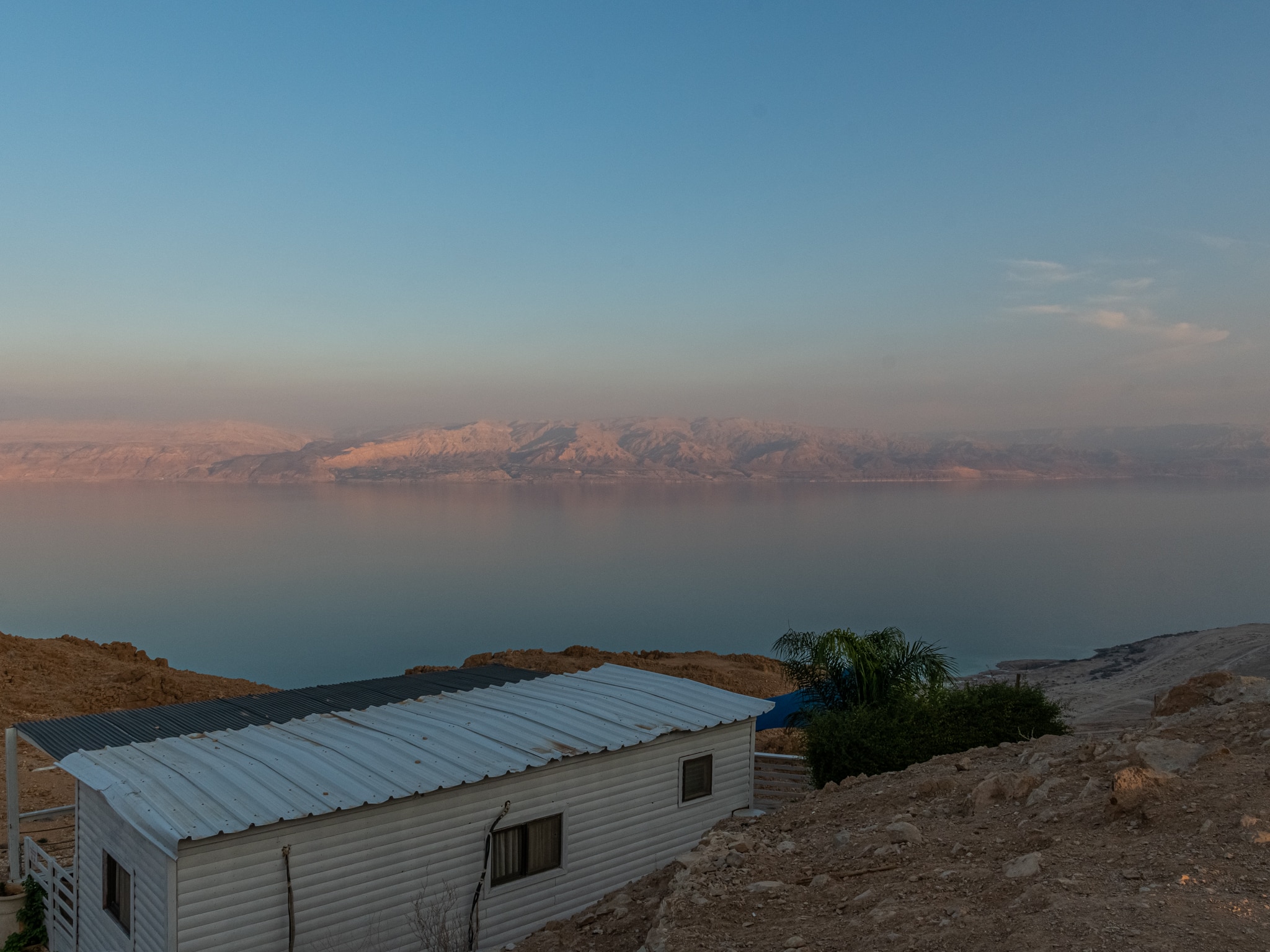
The Dead Sea is officially the lowest place on earth (that isn't underwater) at 431 meters below sea level. It's also one of the saltiest bodies of water in the world. Magically, you can kick back your legs, and you will float. It's impossible not to.
This will be one of the most surreal moments of the trip, floating around in the dead sea with Jordan to the east and the stunning rocky terrain of the West Bank to the west. After, treat yourself by covering your body in clay-like mud and relax in a hot spring to leave your skin clean and soft.
Yet, there is more to this area than salty water, sublime restaurants don cliff tops, abandoned Jordanian army camps turned into art galleries, and some of the best views in Israel await.
For our complete guide to backpacking the Dead Sea, click here.

Bethlehem
The birthplace of Jesus, and... they play on that a lot.
Nevertheless, there is far more to see in this hilly, intriguing and often spicy city.
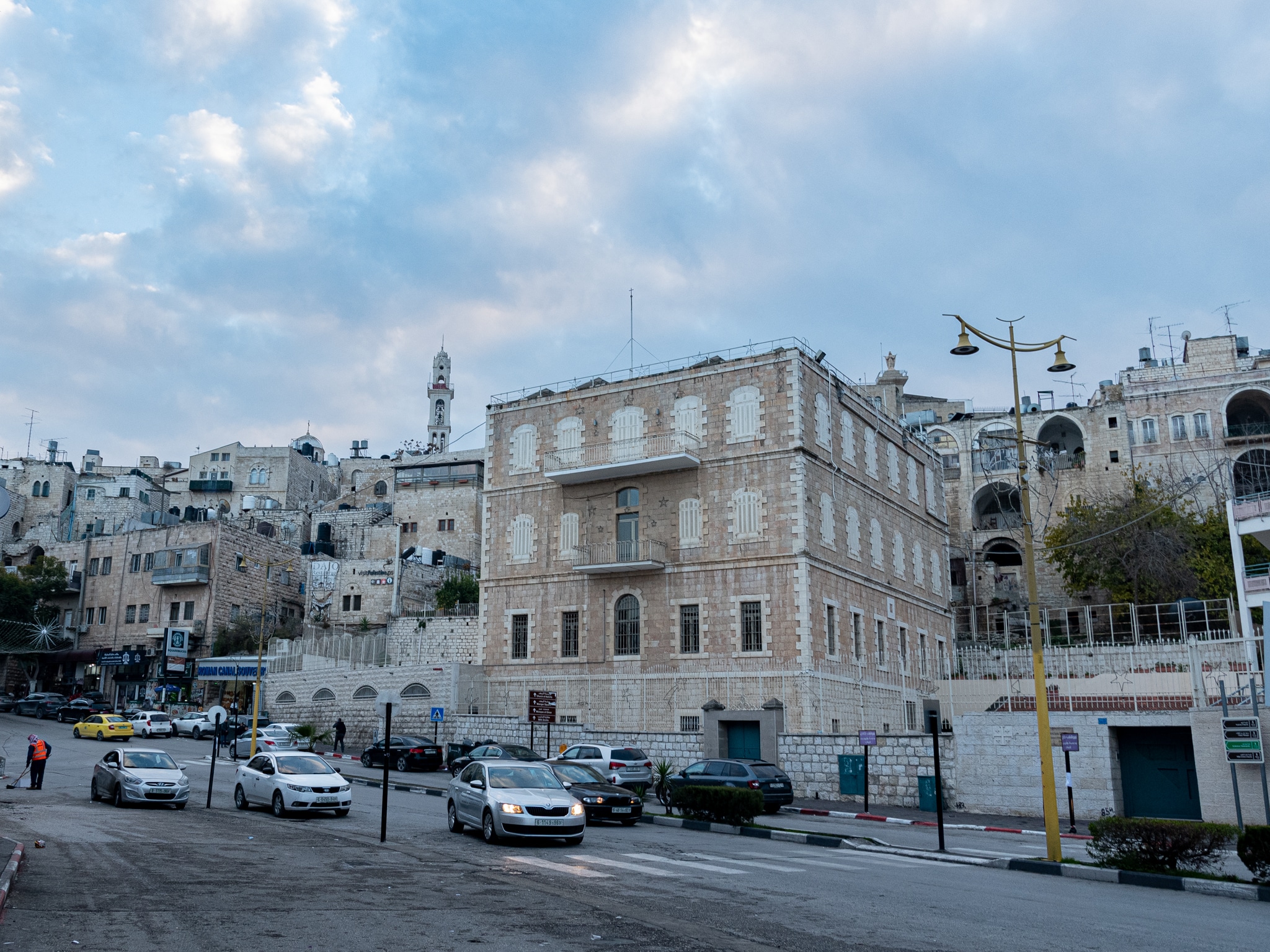
Bethlehem offers a glimpse at the good, the bad and the ugly within Palestine. Here you can explore bustling markets, visit the Shepherds' Fields and meet the friendliest people, the deadliest of walls, propaganda, artwork, sadness and impressive design and architecture.
Likewise, you can also shop at the likes of Pandora, stay in a four-star hotel and drink in a fancy cocktail bar...
After all, the city has many meanings to many different people.
Everywhere you go in Bethlehem, there is a story. What will yours be?
For our complete guide to backpacking Bethlehem, click here.

Hebron
Lying in the valleys of the Hebron Hills, this large and widespread city can be easily identified by its white-washed, almost desolate-looking buildings rolling in from the ridges above.
Hebron may not have the tourist appeal that other cities nearby may have, but it does have history and a real sense of what it is like to live within the West Bank, and often, a conflicted area of it.
However, within the city, there is life, and often it can be chaotic. Markets bring what they naturally do to any city, colour, sounds and smells. People fill the narrow cobbled streets, and it isn't unusual to see active patrols. It's intense, but if you can stomach it, head down for a day trip from Jerusalem or Bethlehem to discover more.
Jericho
Surrounded by barren brown land, the city of Jericho is the oldest in the world. Not that you would know that from its surroundings or its population.
Furthermore, you could be forgiven for thinking you were in the middle of a desert. However, you're only fifty minutes from Jerusalem and fifteen from the northern tip of the Dead Sea.
Therefore, whilst there may not be enough to keep you here for long periods, the city is worth visiting on a day trip from Jerusalem. That said, there are some highlights in the city, the Mount of Temptation and its impressive cliff-side, gravity-defying monastery, the Holy Spring and Qasr al Yahud, the very site where Jesus was baptised.
What's It Like Backpacking Israel and Palestine?
Ok, so there is a tonne of information I could throw at you here, most of which you wouldn't believe until you arrive and experience for yourself.
However, if you haven't done any research, here are five things you should know before you go.
Firstly, backpacking Israel is expensive. We are talking London and New York prices for anything from food and drink to rent on apartments. Even a hostel bunk bed could cost you £30 a night if you haven't pre-booked.
Secondly, it's insanely hilly. I felt like I'd climbed Everest every day during the trip, bar the wonderfully flat city of Tel Aviv. If you plan to see Haifa, which you should, get hill training. Israel is like an optical illusion, every road, path or alley goes up, and you only ever seem to come down to go further up. Mad, hey?
Thirdly, it is nothing like what the media in the UK perceive the country to be like, especially in the West Bank. The people of Israel and Palestine, whilst having remarkable differences and atmospheres, are incredibly friendly, kind, fun and helpful. Yes, there are tensions, and in parts, you can see it - you can taste it, but whatever happens, the locals, no matter which side of the wall you're on, will do everything they can for you.
Fourthly, Israel is a small country. A lot smaller than I first thought. You can get a train from Tel Aviv to Haifa in under an hour and a half and from Tel Aviv to Jerusalem in under an hour.
Finally, you must know about Shabbat.
Shabbat
Shabbat is a Jewish day of rest in Israel and lasts from sundown on Friday to Sunset on Saturday. Depending on what time of year you visit, timings for sundown and sunset change.
Why is this important? Because public transport across the country comes to a halt during these times and if you have to be somewhere, say an airport or another city, you will pay way over the odds for a taxi. Plus, public transport on a Friday morning is hellish.
Whilst a growing number of Israelis do not abide by Shabbat, a large percentage do. Those who do are not allowed to use electricity, cook, use a car, use a telephone, and almost everywhere, including shops, shut down.
There are exceptions. Some shops remain open, and in some areas, such as Jaffa in Tel Aviv, there is a banging nightlife scene.
For more on the culture of Israel and Palestine, click here.

The Accommodation
Firstly, as I have pointed out above, the accommodation whilst backpacking Israel is not cheap, and other than hostels can often be basic.
After using a variety of accommodation types throughout the trip, including Airbnb, hotels and hostels, I am perfectly placed to give you the low down. So let's start with one of my favourites, the hostels.
You will find numerous hostels throughout Israel, particularly in the tourist cities of Tel Aviv and Jerusalem.
Having stayed in the Abraham hostels, I have to recommend them. They are amazing. Comfy bedrooms, large bars, cosey lounging corners, incredible breakfasts, friendly staff and rooftop terraces are just some of the highlights, as well as great locations. Prices vary, but I think they're great value for money.
However, if you're travelling as a couple or in small groups, it may not be cost-effective. In this case, you may want to consider my second or third choices.
Hotel rooms via Booking.com and other intermediary agents can find you great prices, even in smaller cities and towns, which often don't have hostels. I stayed in the Haifa Tower Hotel and got a great deal for two nights. It was clean, comfy and cosy, with helpful and knowledgeable desk staff.
Finally Airbnb!
Well, I try to keep to a low budget when travelling, which means looking for cheaper places on the Airbnb App. Here in Israel, that's around £60 -£70 a night for two if you book early. Not bad! But, I was always left disappointed as they were basic, lifeless and not entirely as the pictures made out. If you want to use Airbnb, you may need to spend extra cash to get the standard of accommodation you require.
Check our detailed accommodation guides for:

The Food

I think travelling is about flavours, and food is a large part of that. Those who followed my backpacking Israel adventure on Instagram will know I ate just about everything I could, and I'm not even sorry.
In truth, Israeli food is a hybrid of African meets European meets Middle Eastern, and it's a delicious combination. Flavours are essential in authentic Israeli foods, and they must be fresh. Generally, that means a blend of Zaatar, ginger, saffron, cinnamon, sage, rosemary and olive oil, all of which can be smelt out at the numerous daily markets across the country.
Fresh fruits are another delicious success story in Israel, with Jaffa oranges, pomegranates, dates and olives taking centre stage. All four are a must-try whilst exploring Israel.
With such a selection of influences, those with dietary requirements or lifestyle choices will find Israel and Palestine great destinations. Yes, there are a lot of meat dishes, but with an ever-increasing movement for vegan-friendly restaurants, you will find just what you're looking for. Likewise, gluten-free, nut-free and dairy-free foods are also available. Although, you will miss out on some of the classic dishes, talking of which...
The Dishes
Knafeh - A sweet dessert made of kataifi pastry and cheese drizzled in syrup. Try it with a dollop of ice cream on top.
Falafel - Deep fried balls typically made of ground chickpeas, broad beans or a combination of the two.
Hummus - Hummus is essentially a dip served with incredible flatbreads. However, in Israel, it's often creamier than in other parts of the world, in part, due to the increased levels of tahini. Nevertheless, the remaining ingredients change depending on the dish but generally include chickpeas and olive oil, topped with a sprinkling of paprika.
Shakshuka - Poached eggs served in a deep red harissa sauce complete with tomatoes, olive oil, papers and onions.
Shawarma - Thin slices of meat, often lamb or chicken, wrapped in a thick pitta bread served to taste with salads and sauces. On the whole, it's a kebab, but way bigger and better.

The Culture
Where to start?
Firstly, Religion.
Israel, as a whole, is around 75% Jewish. However, in the Palestinian-occupied Gaza Strip and the West Bank, the demographic changes to approximately 98% Sunni Muslim.
In Israel and Palestine, religion plays a massive role in day-to-day life. You cannot walk more than five minutes without coming across a synagogue, church or mosque.
Jewish men wear a Kippah, a small round cloth hat on their heads, and you too will have to wear one if you want to visit particular religious sites such as the Western Wall.
In Jerusalem, more so than anywhere else in the country, you will see orthodox Jews, ultra-orthodox, Haredi and Hasidic Jews. These groups are easily identified via their religious dress and hairstyle. Firstly, they will wear either a gigantic black fur hat or an oversized black-rimmed hat. They also cover their whole torso in a thin black jacket called a bekishe, often with a tzitzit as an undergarment. And finally, the men usually have thick beards and curly hair on either side of their face by their ears.
Outside of Palestine, the Jewish faith is the most prevalent, and as a tourist, the most important thing you need to know revolves around Shabbat, a Jewish day of rest, which I have explained above. If there is only one thing you learn from this today, make sure it's Shabbat.
Law and Movement
The Palestinian West Bank and Gaza Strip are further split into three areas. Area A, area B and area C.
Area A is under Palestinian administrative control and marshalled by Palestinian police. There is no Israeli input.
Area B is under Palestinian administrative control. However, all security and policing issues are shared between Palestinians and Israelis.
Area C is under total administrative and security control of Israel.
Whilst Palestinians can travel throughout Israel, it is illegal for Israelis to enter area A, and they are advised against entering area B.
As a tourist, you have freedom of movement between any area. Although, check with your local government website for advice on travelling to some parts of Palestine, including the Gaza Strip.
Family and Values
When backpacking Israel and Palestine, you'll notice how kind people are. Everyone wants to help and will go out of their way to make your day better. If you put in the effort, you will be rewarded with immense kindness.
For example, we were invited to one Palestinian man's family home and have dinner with them after chatting for twenty minutes. On another occasion, we stopped for coffee and couldn't pay as we didn't have cash, only card. The cafe owner said, "don't worry, pay next time". Luckily we did find the correct change in the bottom of our bags.
There is a real sense of karma and what comes around goes around. It's a great way of living.
These values are built within the family environment from a young age. Families can consist of extended family members all under one roof and sharing everything that comes with that, including meal times, child care and shopping.

The Transport
Once again, first things first, Shabbat!
During Shabbat, public transport in Israel comes to a complete halt, and frankly, it causes a few issues for tourists. Similarly, having scrambled onto a bus from Haifa to Tel Aviv on a Friday morning, I can tell you it will be busy and not much fun.
However, if you avoid travelling on Fridays until sunset on Saturday, you shouldn't face any problems.
The only other thing you'll need is a Rav Kav travel card which you can pick up at the airport and train stations across Israel. You can then use them on buses, trams and trains. They are super easy to top up to. If you're a little more tech-savvy, there is always the Rav Kav app.

Roads
Overall the roads are very well maintained throughout Israel, and it's only when you cross over to Palestine that they become a little pothole'y. Likewise, public transport in Israel is fantastic. But, again, it's not great in Palestine, even if the bus's end destination is Israel. There is a stark difference in funding. Sadly, that doesn't just relate to the roads and public transport.
Having heard before the trip that you shouldn't take public buses when backpacking Israel because they aren't safe, I was surprised at just how good public transport was. Firstly, all buses had USB plug sockets. They're also remarkably well-priced (for Israel), clean, comfortable and spacious.
Occassionally they ran a couple of minutes late here and there, but nothing that disrupted my time in Israel.
I recommend using them unless you are brave enough to hire a car, which will be great for the countryside but terrifying in the cities.
Trains and Trams
Trains throughout Israel were again a surprise. They were large double-decker carriages with more space than we all needed, clean and super efficient. They also give you a heads-up on what station is next, and honestly - I was very impressed.
Likewise, the stations were immaculate, and all the ticket machines at the stations could be changed to English, which was a godsend, as my Hebrew is non-existent.
The trams were just as impressive. They ran on time and were clean and plentiful. There isn't much more I can say.
Planes
El Al is the national airline of Israel, and as of January 2023, they fly to fifty-one destinations in thirty countries across four continents. Nevertheless, if your backpacking Israel budget is tight, you may want to look at other airlines such as Wizz Air and Easy Jet.
In truth, due to Israel being a small country, I wouldn't recommend using internal flights. Eilat, on Israel's southernmost tip, does have an International Airport. But, when you factor in all the waiting around and security, a bus is just as quick.
Boats
Unless you plan to row around the Sea of Galilee or the Dead Sea, you won't need a boat for Israel.

The Budget
Ok, so here is the bad news.
If you want to stick to a reasonable budget whilst backpacking Israel and Palestine, you won't. You either have to accept that or skip Israel and stay in and around Palestine.
So without further ado, our three Far Out budgets are;
The 'Backpacker' Budget
Your only objective is to keep travelling. The secret? Keeping costs at an all-time low. This is the budget for you.
Accommodation - As you may have guessed, it's a hostel dorm for you, and more often than not, that means a large twelve-bed mixed dorm. Even if you booked it early and had a choice of where to stay, it'll cost around 75₪ per night per person.
Foods - Again, food is not the cheapest commodity out here. Sadly, that means you will miss out. If you are on a really tight budget, this is not somewhere you should consider. However, if you do, you will be shopping for the cheapest ingredients at the supermarkets and bartering hard at the local's markets. That way, you should be able to eat for around 100₪ a day.
Transportation - You will spend most of your time on foot unless journeying between cities, which you shouldn't do too often. That said, public transport is one of the cheaper things in Israel. Therefore, I will budget you an average daily transport budget of 15₪. Use this wisely!
Drinks - Just don't! Alcoholic beverages are mega expensive, and unless you're super lucky, you will not find anything worth drinking for under 35₪.
Overall - Your backpacker's daily budget for backpacking Israel, including three meals, will come to a grand total of 225₪ (£54.21p). Compared to Spain's £29 is nearly 50% more expensive.
The 'Travellers' Budget
You've saved for this trip, and you want the ultimate bang for your buck. Money is tight, but you want the best experience. We've got you covered.
Accommodation - You're probably thinking, 'bloody hell' if that's backpackers' budget for Israel, what's my budget? Ultimately, it's not too different. Nevertheless, I will upgrade you to a better hostel, like the Abraham, where a six-bed dorm will set you back about 124₪ a night.
Restaurants - Similarly, you will not be eating out in fancy restaurants, but you can enjoy lots of street food and smaller cafes. And, in my opinion, that's a win, as these places often give you the best and most authentic taste of Israel and Palestine anyway. I ate out in a posh restaurant and thought it was the worst meal in Israel. So I'll budget you for 150₪ a day.
Transportation - Whilst you may think you'll need more than the 15₪ a day I've budgeted for the backpackers, you don't. Save yourself some money, and budget yourself to 15₪ too.
Drinks - Treat yourself. Grab a few beers each night at the markets or lower-end bars. Avoid cocktails bars and upper-end restaurants. You will find plenty of choices in Jaffa and Carmel Market in Tel Aviv and the night markets of Jerusalem. Your budget will be 100₪ a day.
Overall - Your traveller's daily budget for backpacking Israel, including three meals, will come to a grand total of 389₪ (£93.73).
The 'Daddies Credit Card' Budget
Your trust fund is finally available, and your Instagram followers need to see where you are in the world this week. You farted the other day, and a private jet came out. We haven't forgotten you.
Hotels - If you can afford to stay here, you could take me, please...
The magical Six Senses in the Negev Desert is a peaceful and tranquil slice of heaven. Prices range depending on what time of the year you're backpacking Israel and Palestine. But expect to pay upwards of 3,365₪ for a room a night. If I had the money, I would have to try it just once, but I don't, so I'll carry on dreaming.
Restaurants - Sadly, your daddy's wealth will mean you'll miss out on the best foods. Instead, all your money will be spent on the chef's name and their food presentation skills. You will not be eating at authentic Israeli or Palestinian places. Although, you will have better photos for the gram.
I have found you a delightful little place called the OCD restaurant in Tel Aviv, where you can tease your friends back home with some of the best-looking foods. The meal will be beautifully presented and live up to your exquisite tastes and expected ambience, all for a measly 690₪ per person.
Transportation - As always, private transport companies don't like to put their prices on websites, that always scares me. Regardless, there are plenty of choices here in Israel and Palestine for private transport and tailor-made tours. Check out these guys, and let me know what you think. I'll guess a price of 200₪ a day per person based on four sharing.
Drinks - Head to some of Israel's most illustrious cocktail bars and hidden speakeasies, where standard cocktails range around the 55₪ mark. Obviously, prices rise sharply for a more specialised drink, but you go mad and spend big. Aim for 400-500₪ a night. Why not! You got this.
Overall - Your daddies credit card daily budget for backpacking Israel, including three meals, will come to a grand total of 4,655-4,755₪ (£1,113 - £1,137).

The Best Things To Do When Backpacking Israel and Palestine
Float in the Dead Sea
**Disclaimer** I went with locals to a small rocky outcrop of the Dead Sea. Therefore, my experience may differ somewhat from your venture if you go with a tour group. Plus, this experience had been on my bucket list for several years. So I am a little biased.
That said...
When else have you gone down to the water's edge, strolled in and firstly, not frozen your balls off, and secondly, upon reaching chest height, have your feet swept from underneath you and forced to float?
It's a mad experience and one that everyone should have whilst backpacking Israel and Palestine.
But the fun doesn't finish there. No! There's more.
The surrounding lands are ladened with soft, warm clay-like soil, which insulates small pools of water that gather within. Treat yourself to a mini hot tub. Meanwhile, scoop up the clay, cover yourself in it and then, once dry, peel it off, leaving baby soft, pore-free skin.
It's a complimentary spa day with every Dead Sea experience...
For a full rundown on the Dead Sea check out my Dead Sea Blog.

Take on a Walking Tour of Jerusalem
As part of your experience backpacking Israel and Palestine, you have to visit Jerusalem. In addition to visiting Jerusalem, I believe you should understand the city and its significance within Israel.
One of the best ways to understand the city is to be shown it by a local who can explain the importance of each street or building and answer any subsequence questions.
What I like about walking tours is you learn about places and the people and then choose which bits you go back to after for a more in-depth look, but with the extra knowledge.
I had a knowledgeable guide called Tania from Abraham Tours who met us at Jaffa Gate and walked us around the old town visiting all the key sites.
Whilst they are free tours, there is an expectation to tip, and the recommended tip is around 50 shekels (£12) per person.

Eating Delicious Local Foods in Both Israel and Palestine
You may have guessed by now I am addicted to good food, and, in reality, it is why I travel so much. But when food across the country is so good, how do you pick the best of the best?
Simple! Just ask me.
As I've covered most of what there's to say in the food section above, I won't bore you with it again. So, Instead, what I thought I'd do is use this section to tell you where my favourite foods were.
The best...
Knafeh - Dive into the streets of Jerusalem, the old town, to be more precise, and to Confectionery Jafar near Damascus Gate in the Muslim Quarter. The different knafeh's are enough to tingle all your senses, so get trying. The special is particularly good.
Hummus - With so many good choices, it's tricky to pick, but beating off Lina in Jerusalem's old town to the number one spot is the fast-paced and manic Hummus Abu Hassan in Jaffa, Tel Aviv.
Sit down... Food is thrown at you, and if you blink, you'll miss the crazy loud and mad experience in the home of hummus. You will be left stunned by the taste. Yet, wondering what's just happened. Try it, and you'll understand what I mean.
Shawarma - Head to Tiberias on the Sea of Galilee (not worth stopping unless it's summer) and go directly to a place I can't write as I don't have the right keyboard. But it's on HaGalil Street, in between two other takeaways. Their Instagram is @guy_bamisbaa.
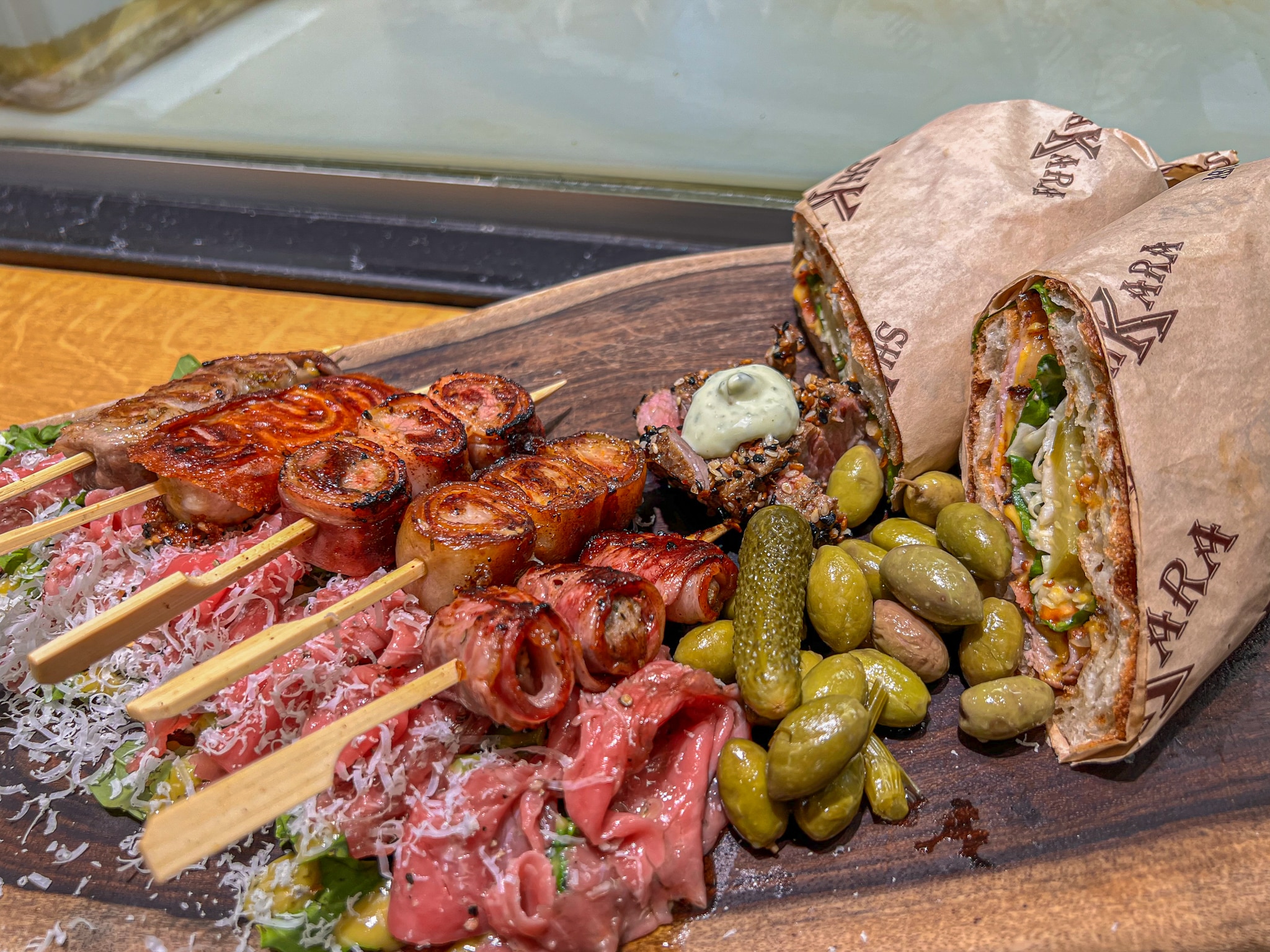
Best meal in the country (for meat eaters) - In the quiet and pleasant backstreets of Hafai in North Israel is a world of meat where a third-generation butcher has combined a butcher shop, a bar and a five-star dining experience.
Given shots upon entry and a laugh a minute, this quirky place could have been a dream, but it isn't. I have the pictures to prove it. Each platter of meat deserves a Michelin Star here at Abu Shkara.
Enjoy, and don't forget to let me know what you think in the comments below.

Exploring the artworks on the Wall in Palestine
In places, the wall separating Israel and Palestine dominates the horizon as it soars eight meters high and runs for four hundred and forty miles, effectively isolating Palestine to the north, west and south. It has become a symbol of the conflict in the Middle East, thanks, in part, to the artworks that don the Palestinian side of the wall.
These paintings by Palestinian people, tourists and famous artists such as Banksy have brought colourful propaganda, support, love and bright images from around the world to Palestine.
Walking parts of the wall can feel like a touristy gimmick. But when you look deeper into it, you realise that by doing so, you are spending money in Palestine and helping to build a profitable tourist industry for the Palestinian people. Furthermore, you're able to meet the local Palestinians and tell their story, and that's a small victory, as they are some of the friendliest and most fun people I've ever met.
Honestly, it's a mixed bag this one, as it is harrowing and surreal, but at the same time, it's interesting, intriguing and part of modern-day history.
You have to see it for yourself!

Preparing To Backpack Israel and Palestine
Suggested Itineraries
Believe it or not, this is always the most challenging part of the blog to write. Here in Israel, it's twice as hard because the country is so small. Plus, you'll find things you want to do that I haven't done.
Nevertheless, I have put a couple of feasible routes in for you.
Don't forget to add your comments at the bottom of the page if you followed them and, if you did, how you found them.
A Middle Eastern Affair
8 Days
Join us for a brief historical and religious look into Israel and Palestine.
Day 1 - Arrive in Tel Aviv, get your bearings and spend the evening watching the sunset over Jaffa before grabbing a well-earned beer. It has been a long day of travelling. Remember, it's your first night backpacking Israel and Palestine. Go easy - you have a busy day tomorrow.

Day 2 - Dive into the Carmel Markets, enjoy the smells and taste the freshest fruit before relaxing amid the sun and sand on Jerusalem Beach. After lunch at Hummus Abu Hassan, explore the busy flea market in Jaffa, visit the suspended orange tree and try an Arabic coffee in one of the cool bars in the centre of the old town. Head down to the old Jaffa Port for sunset and watch the ancient buildings light up orange as the sun sets over the Med.
Day 3 - Up and out early today as you head across the country to a completely different world, Jerusalem. Arriving around lunchtime means a visit to the Machaneh Yehudah Market, where food is the name of the game. Any of the little huts will taste like a win. Go local, and eat well. As the afternoon sets in, head into the old town where you'll experience the city lights turn on and be sure to visit the busy Western Wall.

Day 4 - Today, grab a walking tour with Abraham and learn all there is to know about the city. Then, once your quest for knowledge has been fully quenched, head to Lena for an epic amount of delicious hummus and accompanied flatbreads. Spend the afternoon shopping in the narrow streets and visiting the churches, synagogues and mosques that intrigued you during the tour. Then, before darkness falls, hike up to Mount of Olives and wait for the sun to set behind the magical city.
Day 5 - Head into the Palestinian territories and explore the city of Bethlehem. Visit the marvel that is the birthplace of Jesus, the Milk Grotto and Shepherd's hut. Try the local Arabic coffee, pomegranate juice and local cuisine. In the afternoon, explore the wall and the artwork that beautifies what is, a horrendous, monstrous eclipse of freedom and liberty. See how many Banksy artworks you can find. When you've seen all you wanted to see, grab the last bus back into Israel for a night of drinks and laughter at the Machaneh Yehudah Market.
Day 6 - Have a free day around the city or maybe even try a new town like Hebron/Jericho or even the Dead Sea experience. If that seems too much work, enjoy the old city walls, and all the great food and historic architecture one last time.

Day 7 - Relax back in the modern city of Tel Aviv, chill in the sun and let the sand do its thing around you. You will need a day off after a hectic few days in Jerusalem and Bethlehem. By now you'll know what you enjoy in the city. Head there and let your hair down for your last night in Israel.
Day 8 - Take in the fresh sea air on the promenade and the delights of Jaffa one last time before you make your way to the airport.
I hope you enjoy my little backpacking Israel tour. Get to the airport in plenty of time, as the security can be slow. Although, I found it very well organised.
The Three Seas
10 Days
Splash in the Med, float in the Dead and take in the views over Galilee.
Day 1 - Welcome to my ten-day backpacking Israel itinerary. Like the eight-day tour, your backpacking Israel and Palestine experience starts in Tel Aviv. Likewise, I advise you to spend the afternoon getting your bearings, walk along the beachfront, and spend your first evening soaking up the sunset in Jaffa.
Day 2 - Wake up and leisurely explore the Carmel Markets. Expect an assault on your senses, which, in truth, is the authentic welcome to Israel moment. Try the fresh fruits, pop into a cafe for breakfast and spend the day relaxing along Tel Aviv's stunning coast. As the evening sets in, walk down to Jaffa. Enjoy the numerous bars and cafes and see the sights, including the suspended orange tree. After, relax with a stunning sunset down in the port.
Day 3 - Take the train to Jerusalem and arrive just before lunch. That will give you time to dump your bags and head out to the fantastic streets of the Old Town. Grab a taste of hummus at Lina and take in the sights and sounds of the narrow streets. Explore the four quarters and then make your way up to Mount of Olives for a truly spectacular sunset over Jerusalem.

Day 4 - Today, you head off to the epic Dead Sea and find out what it's like to float without trying. But, forehead, make sure to stop off at the eerie abandoned Jordanian army camp that has been turned into a gallery for anyone who wants to spraypaint. It's called Minus 430 Gallery because it lies 430 meters below sea level.
Once you've seen all the art, it's time to enjoy one of the strangest experiences you'll ever have in water. Enjoy a mud bath, hot pools and everything the Dead Sea offers. A complimentary spa day in the middle of nowhere. What a win. Once your dry and clean, drive up to a restaurant called Metzoke Bar, where you'll have some of the best views in Israel with beautiful food before heading back into Jerusalem.
Day 5 - Another day trip into the West Bank today as you discover Bethlehem. Take time to try the delicious local delicacies, both food and drinks). Pomegranate juice, Arabic coffee and stunning dishes like knafeh. Must-visits in Bethlehem include the Milk Grotto, the Church of Nativity, the Shepherds Huts and, of course, the Wall that separates Israel and Palestine.

Day 6 -As it is your last morning in Jerusalem, join a free walking tour and learn about the area you've been exploring for the previous few days. Pick up a few trinkets, have your last lunch in the city and experience the Western Wall. As the late afternoon kicks in, it's time to get the train north, via Tel Aviv, to the hilly city of Haifa.
Now, it is time to enjoy what is, in my opinion, the best meal in all of Israel. The meat feast at Abu Shkara Butchery. Free shots and sublime food are what to expect, and be sure to mention Far Out Travel - if you dare. As the evening kicks in jump on the cocktails in the bizarre world of another restaurant I cannot type, as I don't have the right keyboard. However, it is here next to Breada.
Day 7 - Another day/half-day trip looms, but there is a catch. You should only do this if the weather is warm and dry. Take the bus from Haifa bus station to Tiberias on the west coast of the Sea of Galilee. Spend a few hours walking around, relaxing and taking in new scenery. If you can find somewhere to take get in, you might be able to take a cheeky dip. If the weather isn't spot on, the town isn't worth a visit. Although you will find, as mentioned in the highlights section, the best shawarma in Israel.
When you've had enough of the area, get back to Haifa and get your hiking boots on. Climb to the top of the Bahai Gardens and take in the panoramic views. At the top, there's a fantastic burger van called 80's burger and a delightful little coffee shop on the Louis Promenade.

Day 8 - Later today, you will head back to Tel Aviv. But, for now, have a relaxing morning exploring the Talpiot Market and the Wadi Salib area. After a spot of lunch, take the train back to Tel Aviv and settle into the last stop on tour.
This afternoon may be the perfect time to sit and enjoy a beach day and trust me, your legs will thank you for it after yesterday's climb. As your stomach starts to rumble, I'd suggest going to Carmel Market or the engaging King George Street. You will find plenty to keep you occupied, well-fed and watered.
Day 9 - Spend your last day in and around Jaffa. Treat yourself to the best hummus experience in Israel at Hummus Abu Hassan. By now you will know parts of the city that you want to see. Have a day away from my plan and do what you enjoy. Although, I would say it has to end with a sunset in Jaffa Port.
Day 10 - Depending on what time your flight is, enjoy the morning on the promenade and take in that fresh sea air for the last time. Stretch your legs as you have a tedious and potentially long flight ahead of you.
I hope you enjoy my thoughts on how best to spend ten days backpacking Israel and Palestine. Get to the airport in plenty of time, as the security can be slow. Although, I found it very well organised.
Speaking Hebrew and Palestinian Arabic
Ok, I can't even lie about this one. I cannot help you at all when it comes to speaking Hebrew or Palestinian Arabic.
Luckily, the amazing people in Israel and Palestine speak better English than I do, so I managed to get by.
However, below are a few words in Hebrew and Arabic for you, should you see them anywhere.
| English | Hebrew | Greg's Pronunciation Breakdown™ |
|---|---|---|
| hello | שלום | sha-lom |
| bye | ביי | by |
| my name is... | שמי | sh-mee |
| yes | כן | ken |
| no | לא | lo |
| ok | בסדר | b'se-der |
| please | בְּבַקָשָׁה | beh-va-ka-sha |
| thank you | תודה | toh-da |
| sorry | מצטער | mitz-ta-air or mitz-ta-air-ret (male and female) |
| how much? | כמה? | kah-ma |
| excuse me | סלח לי | s-lee-ha |
| what? | מה? | ma |
| English | Palestinian Arabic | Greg's Pronunciation Breakdown™ |
|---|---|---|
| hello | 'ahlan | aaah-lan |
| bye | alwadae | al-loo-wa-now |
| my name is... | asmi hu | as-mi-hore |
| yes | naeam | naaaan |
| no | la | laa |
| ok | muafiq | me-waf-acon |
| please | min fadlik | men-fook-lecar |
| thank you | shukran lak | shock-sun-laca |
| sorry | asf | as-if-o |
| how much? | kam thaman | kam-fem-anim |
| excuse me | eafwan | arf-when |
| what? | madha aw ma? | mada-o-wo-ma |
Visas and Borders
You may have heard that if you go to Israel and get an Israeli stamp on your passport, you will not be allowed to enter some, mainly Muslim, counties.
This is true!
However, the Israelis are aware that people want to explore all these different countries and have come up with an alternative. Instead of a stamp on your passport, they will issue you a little card, as pictured below.
Look after it, as this is the equivalent of a stamp. If you lose it, you may not be able to get back into the country if you visit Palestine. Similarly, you may find it tricky to leave the country for your next destination.
Nevertheless, they do reserve the right to stamp anyone's passport should they wish.
Visa
Firstly, everyone entering Israel will require a valid passport with at least six months of validity before the expiry date.
Then comes the visas. If you are a national of the following countries, you will not require a tourist visa to enter Israel for a stay of up to three months.
European Union members, Albania, Andorra, Argentina, Australia, Bahamas, Barbados, Belarus, Belize, Botswana, Brazil, Canada, Central African Republic, Chile, Colombia, Costa Rica, Dominica, Dominican Republic, Ecuador, El Salvador, Eswatini, Fiji, Georgia, Grenada, Guatemala, Haiti, Honduras, Hong Kong, Iceland, Jamaica, Japan, Lesotho, Liechtenstein, Macao, Malawi, Mauritius, Mexico, Federated States of Micronesia, Moldova (biometric passport holders only), Monaco, Mongolia, Montenegro, Nauru, New Zealand, North Macedonia, Norway, Palau, Panama, Papua New Guinea, Paraguay, Peru, Philippines, Russia (official passport holders require a visa and confirmation from the Israeli government), Saint Kitts and Nevis, Saint Lucia, Saint Vincent and the Grenadines, San Marino, Serbia, Singapore, Solomon Islands, South Africa, South Korea, Suriname, Switzerland, Taiwan, Tonga, Trinidad and Tobago, United Kingdom, Ukraine and the United States.
Egyptian nationals can stay in Israel for up to fourteen days visa-free if they enter through the Taba land border in the south of Israel. Even then, you're only permitted to travel up to and including Beersheba.

Borders
Here is the fun one. Not!
Let's start with the friendly ways in and out of Israel -
Israel's main airport is Ben Gurion Airport in the capital, Tel Aviv. Frankly, this is where the majority of you will be arriving, and it has great transport links with Tel Aviv, Haifa and Jerusalem.
To the west is the refreshing Mediterranean Sea. Haifa, in the north, has the largest port in Israel and handles around two million passengers each year alongside its millions of tonnes of cargo.
The other major passenger port on the western coast of Israel is the Port of Ashdod, just south of the capital Tel Aviv.
Now it starts to get tricky as Israel doesn't have many friends locally.
Starting with the obvious, Israel/Palestine. Tourists can cross between Palestine and Israel in numerous locations. Although, upon re-entry to Israel, expect a bit of questioning, a lot of guns and a serious amount of eye contact. One of the most popular crossing points is Bethlehem. You will need your passport and your entry card or you may get refused entry back into Israel.
To the north, Israel borders Lebanon, and it's fair to say the border, as they all are, is a little tense and is controlled by Israeli defence and the UN. In fact, so much so that you cannot cross, even as a tourist. You will have to fly out to another country and then into Lebanon. Although, be sure to ditch anything showing you've been to Israel. Technically, the nations are at war.
Then, to the northeast, there's Syria. Yay!
The border runs through the Golan Heights, the land to the northeast of Israel that borders Syria. The country lines have become bitterly contested, and numerous army personnel patrol these areas. Having not crossed the border, I only know there is one at Quneitra, but I am unsure if tourists can pass at this time. If you wish to visit Syria, go via Jordan.
Speaking of which - Next up is Jordan to the east. Finally, a bit of good news. In 1994 Jordan and Israel signed a peace treaty, and whilst they may not be best of friends, there is a diplomatic relationship. Therefore as a tourist, you can move freely between the two countries. Although, if you require a visa for Jordan, you will have to have this in place before arriving at the border.
There are three main crossings
- 1) Sheikh Hussein/ Jordan River Crossing, a few miles south of the Sea of Galilee.
- 2) King Hussein/ Allenby Bridge to the north of the Dead Sea.
- 3) Wadi Araba / Yitzhak Rabin Crossing near Eilat on the southern tip of Israel.
A now for Egypt. Another neighbouring country where diplomacy is winning through. Since the peace treaty was signed in the US in 1979, the two countries have become, in some ways allies. Although, not all residents of both countries are fully behind this.
Therefore, there is an open border for tourists. Taba Border Crossing, just outside Eilat on the southern tip of Israel is the only official tourist crossing between the two countries, and sadly, there is a fee, but only when crossing into Egypt.

What to Pack
What to pack when backpacking Israel and Palestine totally depends on the time of year.
In the depths of winter, it can be cold and rainy and trust me - you will get hit by storms. Whereas, if you visit in the summer, all you'll want to do is take a dip in the refreshing seas to cool off.
During the summer, packing for Israel is much easier and will be much lighter on the old luggage front.
For a complete guide on what to pack, don't forget to check out our separate What to Pack Blog.
Our Top Pick for Backpacking Israel and Palestine is...

Money Belt
Whilst I found backpacking Israel and Palestine extremely safe, I think a money belt is essential.
I wore mine out there every day. That way, I knew I had a safe place to store the room key, documents, passport, and Israel entry ticket with my Revolut card and cash.
Not once did I need a 'hidden' location to stash stuff. However, it meant I didn't need to carry a bag or risk dropping things out of my pockets. After all, there's a lot to see and do, and I didn't want to retrace my 30,000+ steps.
Best of the Rest
Clothing and Shoes ∼
Ok, this is the one section that can change depending on what time of year you're backpacking Israel and Palestine. If you visit during the colder, wetter winter months/early spring/late autumn, you will need jeans, warm jumpers, a waterproof and, ideally, a scarf and hat.
Yet, if you're visiting around mid to late spring, summer or the beginning of autumn, you will not need to pack those thick jumpers, waterproofs, hats and scarves.
However, I suggest you take pair of comfy walking boots or large warm boot-like shoes, such as timberlands, especially in the winter, and a light pair of worn-in trainers.
The one item that stays the same is you will need a pair of swimming trunks, speedos, bikinis, or whatever you want to call your swim gear. You cannot miss out on taking a dip somewhere.
Electronics ∼
Whilst I think there are more beautiful countries, you will want to bring your camera. There are moments of magic, and you should capture them. Similarly, you'll have your phone, and both will need charging. To confuse matters, Israel runs three separate plug systems, so whilst European plugs will work in places, they don't in others.
As always, I used the iBlockCube, which charges like a bullet, has three USB sockets, two USBC sockets and a multi-pronged plug which can cope with all Israeli electrical situations.
Toiletries ∼
Toiletries in Israel are super expensive. Therefore, I advise packing whatever you would naturally use. As for medication, if you need to carry syringes, needles or any bottled liquids, get a letter from your doctor. Other than that, any prescription drugs will be allowed.
During the summer months, make sure you have sunscreen with you. I like Niva as it's a brand I trust, and it doesn't leave my skin sticky or dirty my clothes.
Bags ∼
Having tried and tested many brands, there are only two I'd happily recommend, and that's either Osprey or Berghaus.
Ideally, if you're planning on doing a lot of exploring, you'll also need a day bag. Nothing flashy or fancy or too big, just comfortable and somewhere you can put a water bottle, a bite to eat and the essentials. Although, if you aren't going to carry food and bulky items, go with the money belt I've mentioned above.
Female Travellers ∼
In truth, I didn't see many, if any, solo female travellers backpacking Israel or Palestine. However, I travelled with a female friend and met a few ladies travelling in Israel. Having spoken with them, they couldn't think of anything specific to pack that they wouldn't usually have taken on any other trip.
Travel Insurance
As you may know from any of my blogs, I always advise getting travel insurance, even if it's just a couple of days somewhere safe and easy.
In truth, travel insurance is so cheap nowadays you'd be silly not to get it.
Furthermore, some of you, like me, may already have travel insurance, free with your bank account like Revolut or have paid for yearly worldwide or European travel cover. If this is the case, check your documents, as they may not cover Israel/Palestine.
Due to the ongoing issues and tensions in Israel and Palestine, your insurance may require you to take out extra cover. Likewise, Israel requires your insurance to cover covid. Although, no one even checked my insurance documents.
Whilst backpacking Israel and Palestine is presently relatively safe, I advise paying the extra, as you never know what may suddenly happen.
Backpacking Israel and Palestine Ethically
Again, there is a lot to mention here and the majority of what there is to say revolves around the tensions between Israel and Palestine and Israel and its northern neighbours. Within these discussions, we also need to mention cultural and religious respect.
Then, as I discovered, we need to forget everything we've ever learnt from western news crews such as the BBC.
However, let's start with some of the good news.
Israel is one of the leading authorities in the middle east on LGBTQ rights, environmental issues and climate change. In 2021 the current government set goals to reduce climate change by 27% by 2030 and by 85% by 2050. Over recent years due to water usage and where water is gathered, Israel has had a lot of droughts.
Although, thanks to a shift in water use and supply, things are moving in the right direction. You will also notice how impeccably clean the streets of Israel are. Sadly, when you cross to Palestine, things are not the same. Streets are often dirty and covered in rubbish, including plastics. It is like stepping back in time.
In my opinion, this is due to a lack of resources and funding in what is officially Israeli land (the West Bank). These funds are being held back by the Israeli government and put elsewhere, such as illegal settlements and horrendous wall building.
Simply by visiting Palestine and spending time with the Palestinian people, you are helping. They are some of the friendliest people I've ever met. Don't just spend time there, spend money too. That way, you are helping their economy, and in some small way, you are helping level up the tourism economy.
Then we have to look at religion. The likes of Jerusalem's old town has four religions living within its cramped area. This can only be achieved with mutual respect and is one that tourists should follow.
A little bit of learning and understanding before you start your backpacking Israel and Palestine trip goes a long way.

Safety

Brief History
Israels was first mentioned in 1209 BC when it was engraved on the Victory Stele of Merneptah., the son of Ramesses II and a pharaoh who ruled Egypt between 1213 and 1203 BC.
However, evidence of humans in Israel dates back much further. In fact, Israel has the earliest evidence of human life outside of Africa.
Early humans in Israel can be dated back to around 1.5 million years ago. Although, fossils of modern human existence only date back 120,000 years ago.
Since those times, Israel has been the focal point for many major events, none more so than the birth, death and resurrection of Jesus.
Jesus was born in Bethlehem around 4 BC, not year zero, which doesn't exist - who knew? The short story is here.
Whilst many empires have moved through Israel and Palestine, the Romans in 63 BC had one of the most significant effects on the country. They ruled the lands under different names until the Muslim conquest in 637 AD. The Romans were also in power during the death of Christ in 30AD and when Palestine was named the Holy land.
The Muslim conquest reigned in the area from 637 AD to 1099 AD. Churches and Temple Mount, one of the holiest Jewish sites, were destroyed or developed into Islamic temples.
Over the next seven-hundred years, different empires came and went. But in 1917, the British captured Palestine and set up the first Jewish-only settlement under the Balfour Declaration. Since then, Jewish people have relocated to the area, and after Hilter exterminated Jews in Europe, these numbers grew exponentially.
In 1947 the UN split the country into Arab and Jewish states, and in 1948, David Ben Gurion became the first president of Israel. Ever since this date, the Palestinians and Israelis have been fighting for land, religion and against perceived terrorism from each side.

Our Israeli Stories
How to do Tel Aviv Like a Local
From beach walks to the best hummus in Israel, it has to be Tel Aviv.
A Guide to Haifa, Israel: Foodies, Brace Yourself!
It’s so hilly here in Haifa that it makes leg day look like a toddler’s party!