Morocco
Last Updated: May 8, 2026
NEED THE ESSENTIALS FOR BACKPACKING MOROCCO NOW?
WHERE TO VISIT | BEST STUFF TO DO | SUGGESTED ITINERARIES | MOROCCO BLOGS

Heads up: We sometimes work with companies to provide affiliate links and reviews - here's what that means. If it's here, we use it. We don't plug shit for profit.
Backpacking Morocco In 2025
Backpacking Morocco is nothing new. The country has been calling travellers for decades with its easy access to (yet wild differences from) Europe, its variety of cities, and the culture within them.
Morocco is often referred to as the 'Gateway to Africa', and you see why when you set foot here. It feels like the start of a journey.
Having returned from Far Out's second visit to Morocco in September 2022, exploring the southern cities of Taghazout, Essaouira, Marrakesh and Taroudant, I can add new and exciting content to our previous experience backpacking the eastern fringes of Morocco.
During this trip, I visited hotspots such as Fes and Chefchaouen and headed out into the Sahara for some of the most relaxing days I've ever experienced on the road.
All this means that regardless of whether you're souvenir-hunting, culture-chasing, or merely want to lose yourself in the desert, this Morocco travel guide has your back!

Why Morocco?
Morocco is a melting pot in every sense. The land itself ranges from bohemian surf beaches to scorching desert, and even ski resorts. Its liberal Muslim culture mixes with European and Jewish influences to create unique food, cities, architecture, and people.
If you're from a Western country, particularly in Europe, backpacking Morocco is an extremely accessible way to experience a thoroughly different culture. Backpacking Morocco is miles away from anything you're used to back home, or from typical family holidays.
The smells of spices and the sounds of markets are new, intense, and intoxicating. Additionally, the pace can be utterly relentless, particularly in the cities. But the chilled, relaxed pace of life in places like Chefchaouen or Merzouga offers the perfect contrast to relax and recover.
Overall, backpacking Morocco has the potential to be either one of the most stimulating or relaxing experiences you can have. You choose which.

Quick Stats
Currency
Moroccan Dirham (MAD)
Religion
Muslim: 99%
Population
38.2 million
Language
Official: (Moroccan) Arabic
Also: French
When to Go
High Season: May - Sept
Low Season: Nov - Feb
Price of Beer
£2.00 a Pint
(Where available, alcohol is not permitted in Islam)
Our Moroccan Stories
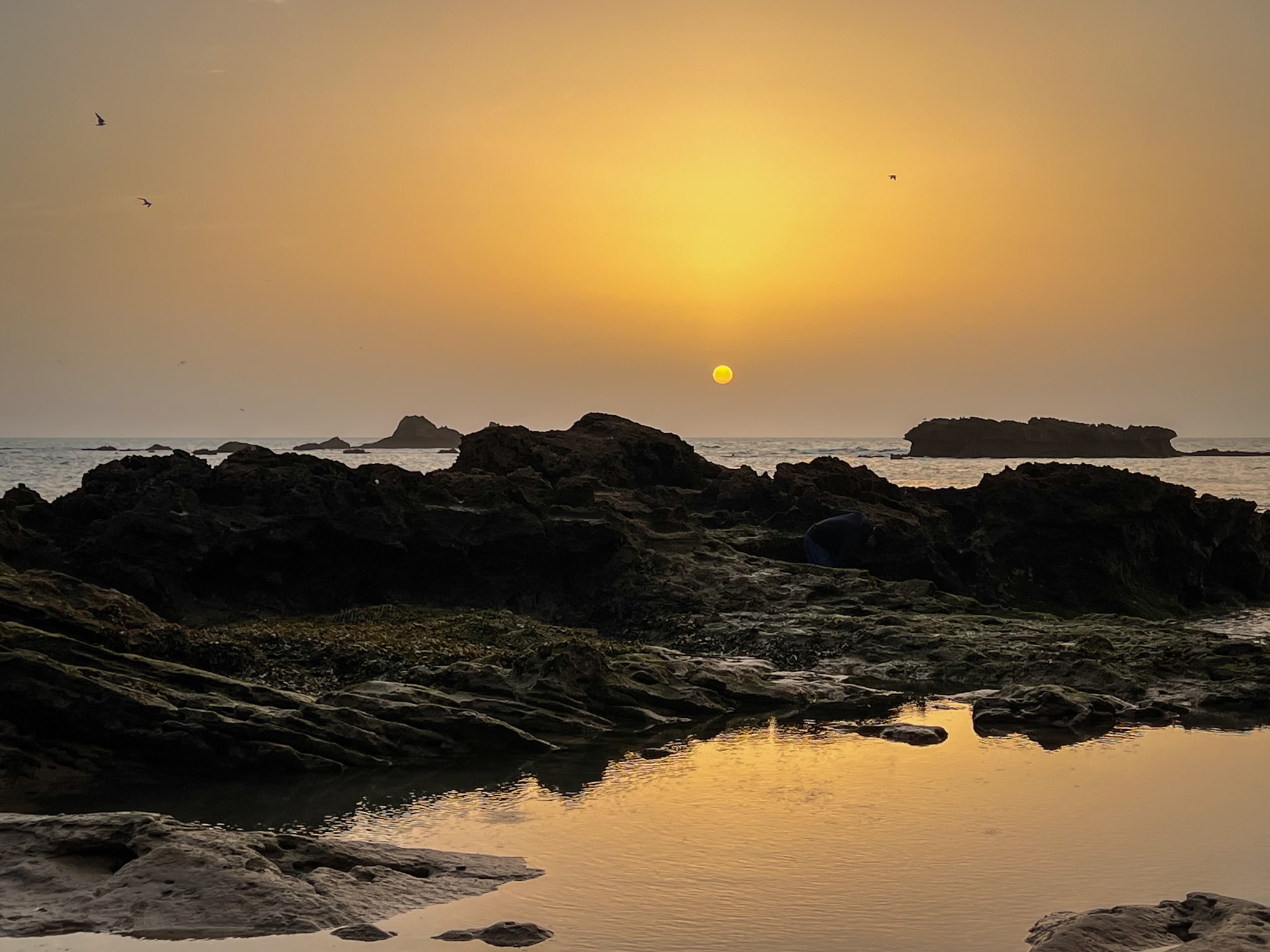
A Two week Morocco Road Trip: Surf to Souks
Tea and tagine anyone? It can only be a road trip around Morocco.
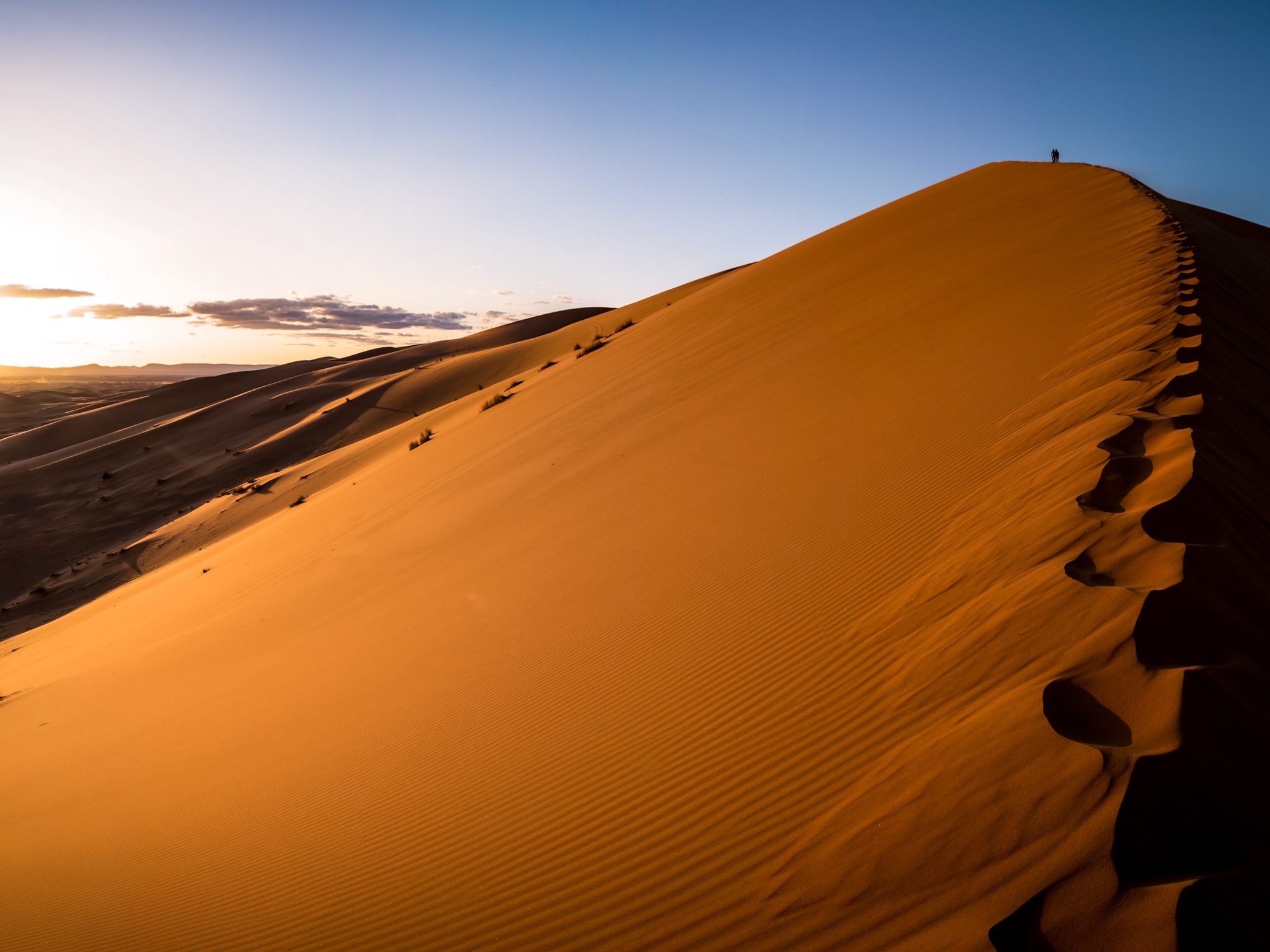
Backpacking Merzouga, Morocco – A Travel Guide
Get lost in the sands of one of my favourite places ever.
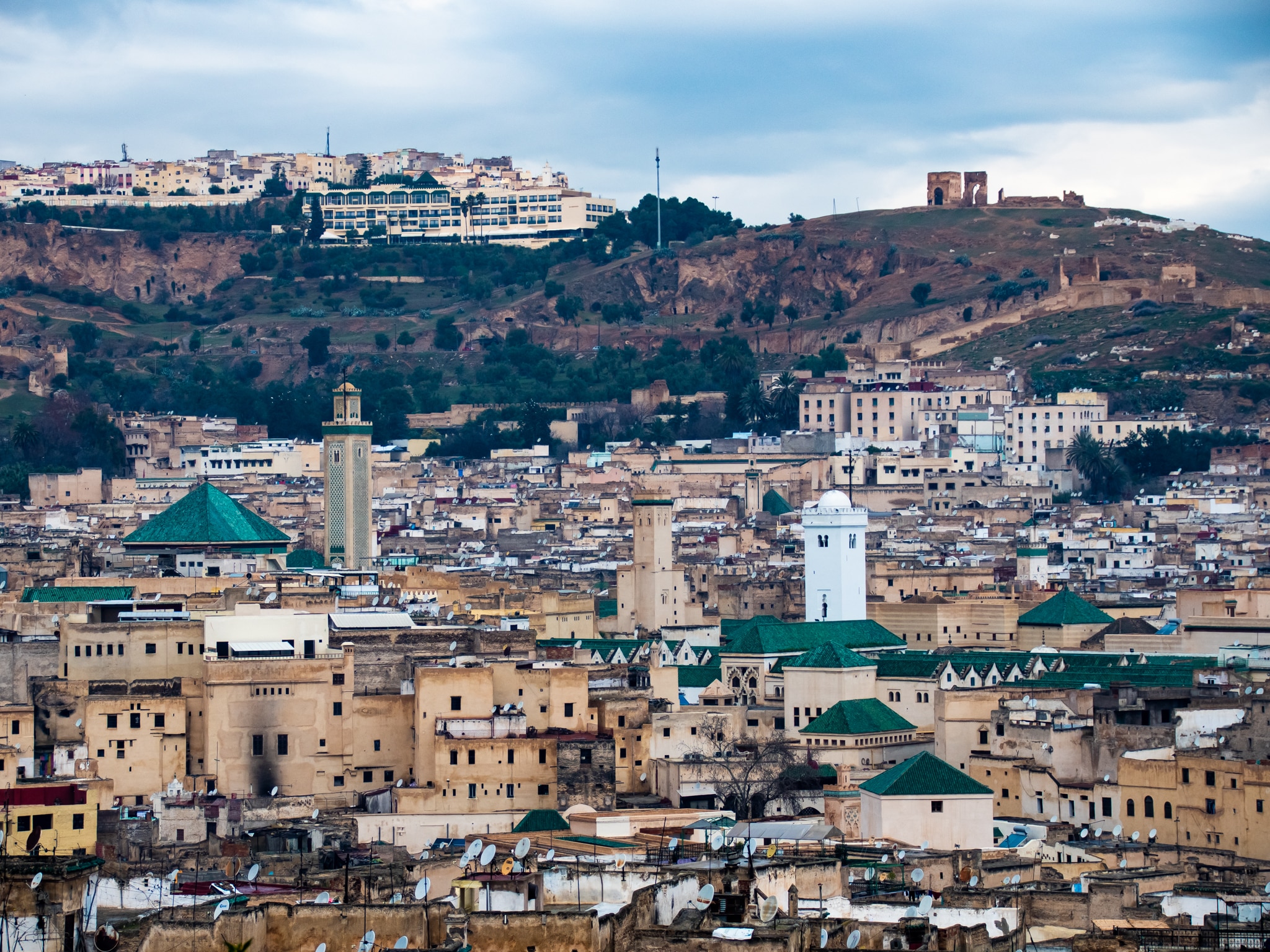
Backpacking Fes, Morocco – A Travel Guide
Morocco’s largest medina awaits you. Find out how to make the most.
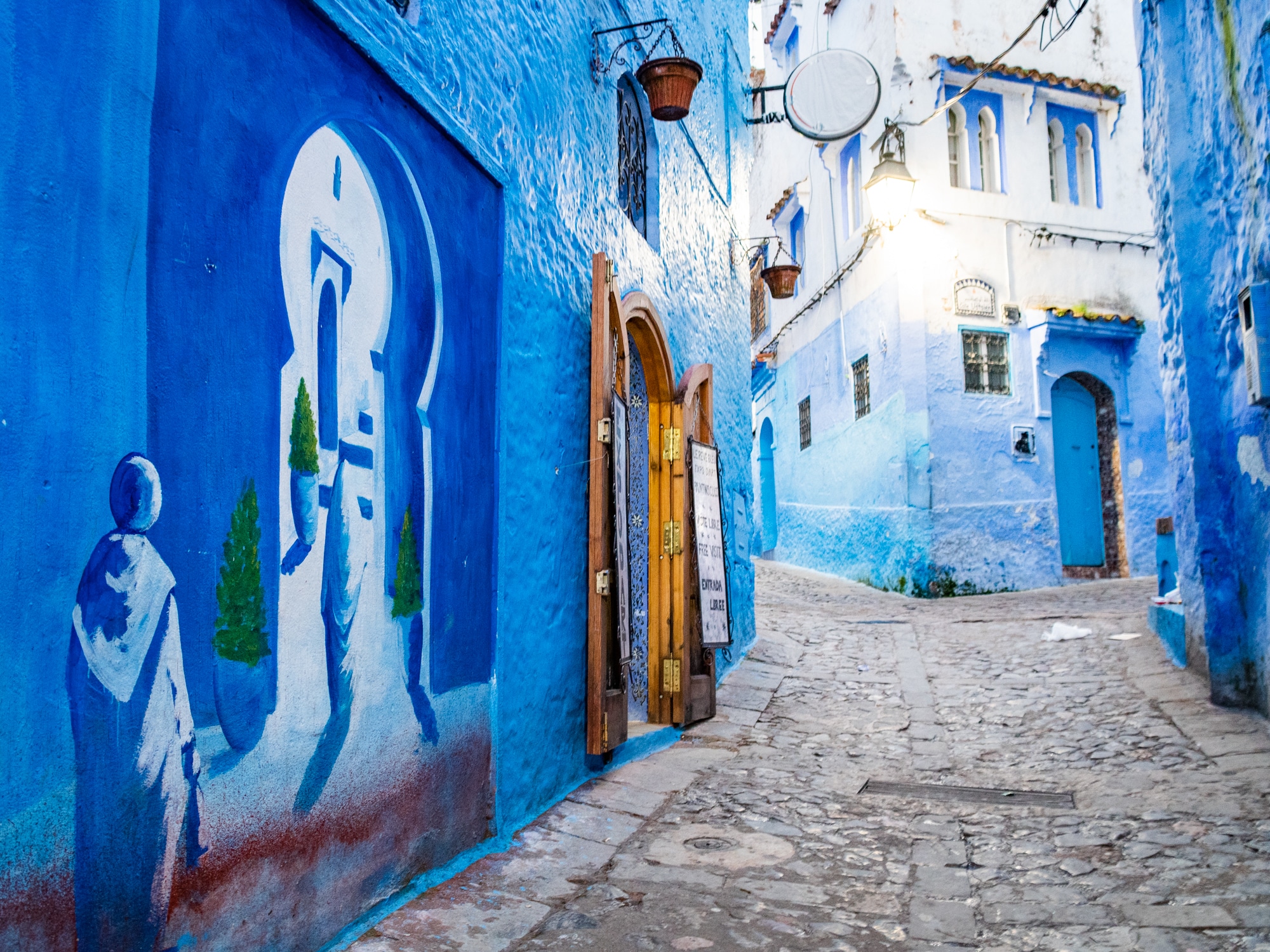
Backpacking Chefchaouen, Morocco – A Travel Guide
Morocco’s slow, blue mountain gem, and why it’s one of my favourites here.
Contents
Where To Visit
Chefchaouen
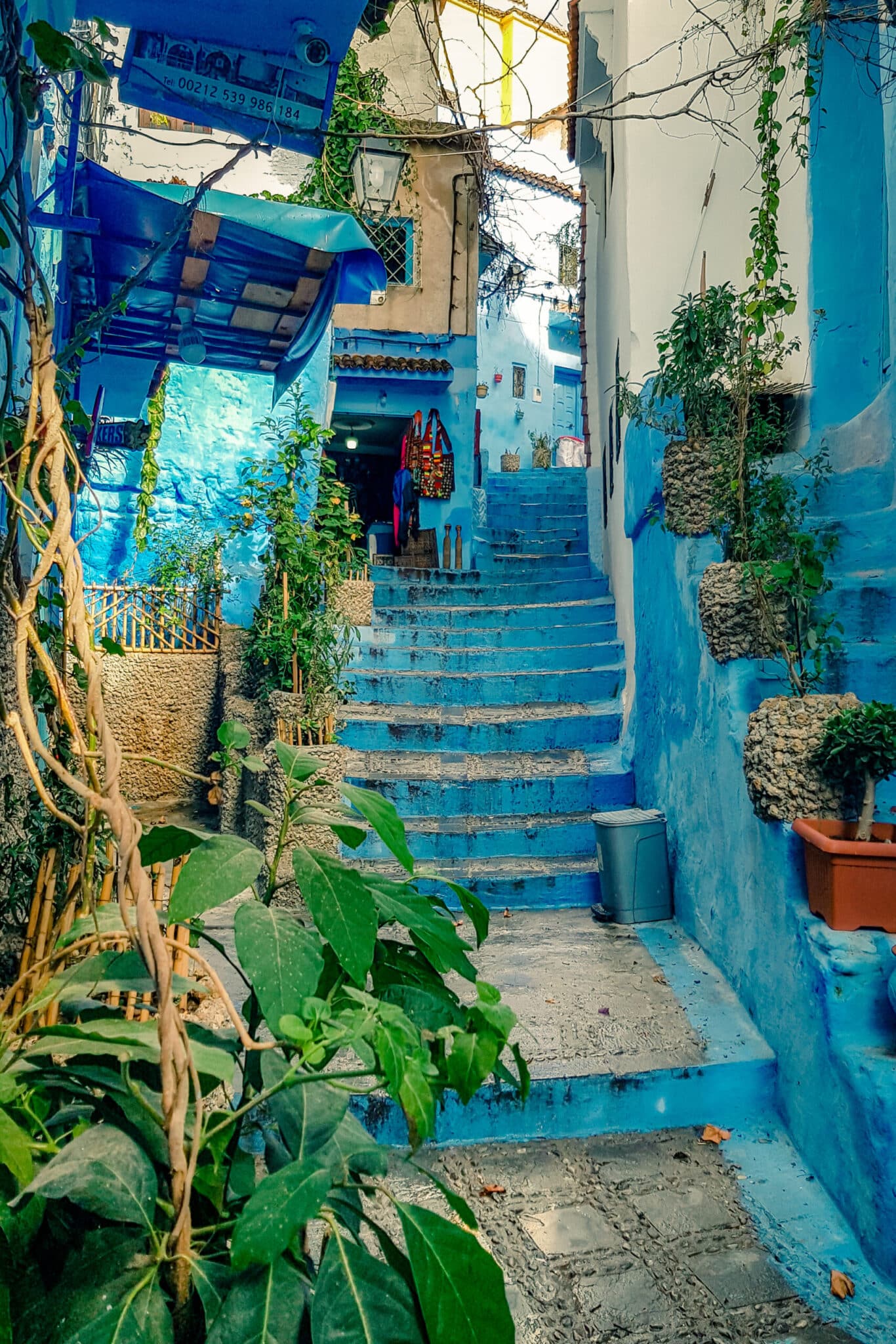
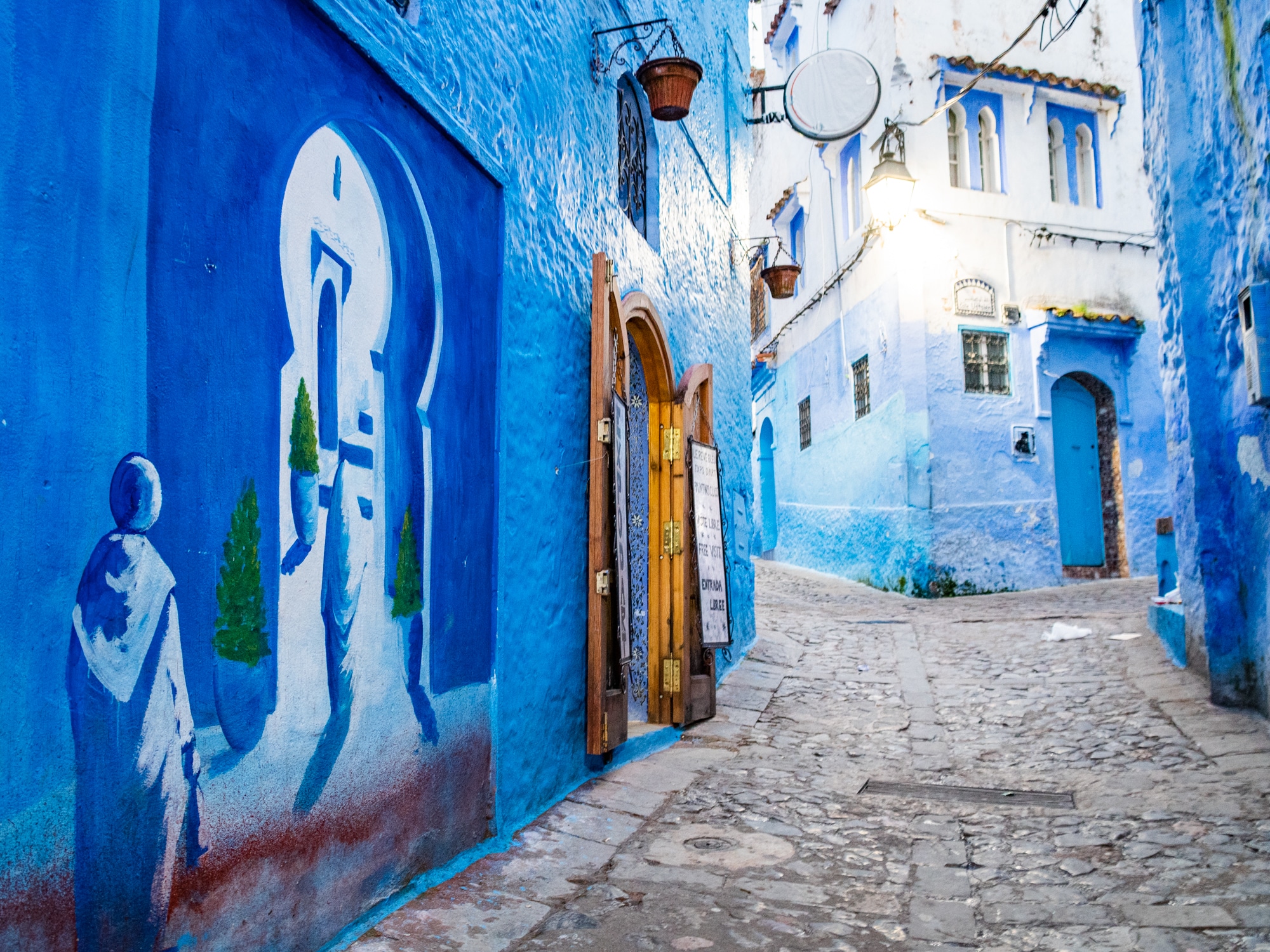
The Blue City. Nestled in the Rif Mountains, this is possibly the most Instagrammable place in the world. Fight that out with Santorini.
It's also one of my favourite places in Morocco, with a year-round, super chilled-out, bohemian vibes. An ideal spot to stop and unwind for a few days after the chaos of the medinas in the bigger cities. Expect less pushy shopkeepers and some genuine hospitality. I spent a good few days here after getting swept up in the pace of Tétouan and loved it.
Also famous for its cannabis production - Outside of Afghanistan, Morocco produces the world's highest supplies of cannabis. And most of it is grown right here in the mountains. You will be offered hash here regularly. A bit of searching will get you an unofficial day tour of the farms and your own hash-rolling experience... if that's your thing.
Please read our complete guide to backpacking Chefchaouen here.
Fes
Fès is chaos. Its absolutely massive medina is the world's largest, and a complete maze. You can (and will) get lost in the shops, stands, and stalls for hours, with people trying to get your attention every step of the way. Vibrant colours, sounds, and smells will follow you throughout.
Sound exhausting? It is - but in the best way.
You'll be doing a lot of walking here, and booking a walking tour is a perfect way to get your bearings. Otherwise, you'll miss some unique, fascinating stuff like the world's oldest university and ancient tanneries. Just remember to allocate a chunk of time to catch your breath! Fès belongs on any backpacking Morocco itinerary, but a few days here was all I could manage before I needed a break.
Please read our complete guide to backpacking Fes here.

Tetouan
A little off the beaten track, and more authentic for it. Tétouan feels like stepping into a time capsule.
The medina is old, rustic, and not in the slightest bit touristy. It's also nowhere near as intense as Fès or Marrakech yet retains those same smells, colours, and sights as its bigger brothers.
This was my first stop and a reasonably gentle way to ease into the Moroccan pace of life.
It's not the most breathtaking city you'll find, but particularly if you're coming from Tangier, it's a good confidence-builder before tackling the big cities!

Merzouga
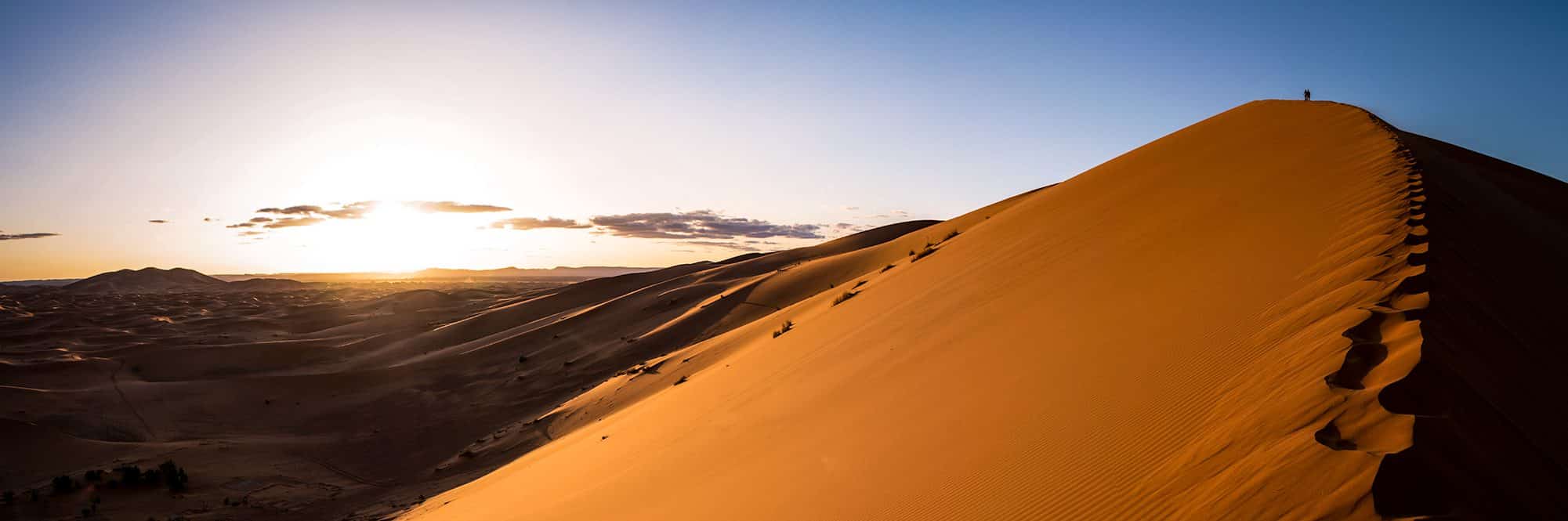
A small town a little way into the Sahara, this is one of the most relaxing places on Earth. Time seems to go slower out here.
Accommodation is dirt cheap, the hospitality is amazing, the food is outstanding, and the views... well, you're in the desert. Proper, picture-perfect desert. It's gorgeous.
It's also a great place to find souvenirs for your Shit Shelf at a sensible price - and who doesn't like a bargain?
More than anywhere else when you're backpacking Morocco, I suggest you take a few days out here in Merzouga. Do some sandboarding, take a multi-day camel trek into the dunes, and chat with some of the incredible people who call this desert town home.
Please read our complete guide to backpacking Merzouga here.
Essaouira
Chilled-out, beachy vibes are my kinda thing. Essaouira packs this in alongside culture and great seafood, plucked fresh from the Atlantic.
So, unsurprisingly, having regretted missing Essaouira from the first Far Out backpacking Morocco trip, it had to appear in the second.
Hence, why the return visit in September 2022 put Essaouria at its heart.
Backpackers gravitate towards this place, made famous as a hangout for Jimi Hendrix and Bob Marley back in the 60s. Apparently, the surf here is excellent, although it wasn't during my visit.
However, you don't always need to surf to pass the day. It's easy to lose a lot of time here just walking the medina, drinking tea and soaking in the atmosphere.
If relaxed vibes, hassle-free shopping, and fun and friendly people sound like your sort of thing, consider putting Essaouria at the heart of your trip too.
Please read our complete guide to backpacking Essaouira here.

Marrakech
This is the place everyone's heard of. The chaos of the souks, monkeys running free, and so on. It all seems like a scene from Aladdin.
Marrakech has become a tourist city, and the trouble with that is, if you are a tourist here, you're seen as an obstacle between Marrakech's salesmen and your wallet. Competition is fierce, so tactics get extreme.
Some backpackers told me tales of being physically grabbed and dragged towards shops and stalls. One particularly badass female backpacker I met in Merzouga said it was the only place in Morocco where she hadn't felt safe. All said it fell short of their expectations. It was no one's favourite place.
However, I had a very different experience and found it way more chill than I expected. The people were lovely, and the vibe was cracking.
If you're doing a full Morocco tour, Marrakech should undoubtedly be a stop along the way. It's also a great crossroads to venture out to the beach towns, into the mountains or disappear into the desert.
Please read our complete guide to backpacking Marrakech here.

Taghazout
Taghazout was probably my biggest disappointment in Morocco.
I loved chilled bohemian vibes and cafe times supping on a cold strawberry milkshake or a traditional Morrocan tea with beach scenes. And that was the Taghazout I'd heard about.
However, it wasn't what I got. I got an average beach, poor waves and dirty water. This town thrives on its surf scene, yet I couldn't see any.
Yes, I was here in August, and the best of the surf kicks in around October and November, but the town just didn't cut those vibes.
However, after sun-down, the town provides a small crack in its average existence, with stunning sunsets from the beach or the buzzing skate park. Drop in for a visit. Frankly, the tricks and views never disappoint up here.
Two days is enough in this surf town, where only cash is accepted, yet there are no cash machines.
Please read our complete guide to backpacking Taghazout here.

Taroudant
Think Marrakech without the tourists and a fair bit smaller.
Frankly, I preferred Marrakech.
Yet, here in Taroudant, there are glimpses of beauty, rugged traditions and the odd shot in the arm of madness.
The souks are crawling with excitement, vibrant loud noises and smells that could blow your head off. If you shut your eyes and let yourself go you could imagine you're in Marrakech.
However, despite not overly enjoying Taroudant, there is a seriously good reason to visit. That reason is, in fact, a Frenchman called Yve and his crazy mad world in Riad Dar Dzahra.
Please read our complete guide to backpacking Taroudant here.

Tangier
Tangier is a massive melting pot of old and new, with nearly a million people calling it home.
Tucked on the northern coast, Tangier is the connection between Africa and Europe, with ferries to and from Algeciras, Spain. It also boasts its own international airport. It's a good place to start backpacking Morocco.
To be honest, I used Tangier as a layover and can't really say much more than the old bus depot has been demolished and the new one is a 40-minute walk away. Yay.
Casablanca
It's a bit more modern than it looks in the film these days, but sitting on the Atlantic coast, Casablanca is the financial centre of Morocco. It looks a lot more western than the rest of the country, and is, by far, the most populated city in Morocco.
Casablanca doesn't have a great rep among the travellers I met backpacking Morocco, mostly for being a bit plain and business-focussed, which is fair enough as that's what it's for.
The exception to this is the Hassan II Mosque, which, if you've seen photos of Casablanca, is that socking huge building with huge tower jutting into the sea. Everyone I spoke to says this place is incredible.
Overall though, Casablanca simply is not a high priority when backpacking Morocco - this is part of the reason I explored the eastern edge and not the Atlantic coast.
Rabat
Rabat gets an honourable mention here for being the capital of Morocco.
If you're touring the coast, a short stop here will give you the authentic 'MCE' (that's 'Moroccan City Experience') of medinas, kasbah (old fortress), and some impressive palaces and architecture. Its big difference is that it's by the sea.
The thing is, no one we spoke to had been. It gets skipped by backpackers in favour of Casablanca, who then head onto either Tangier and Chefchaouen, or down to Essaouira.
So weirdly, this means that to get a less touristy city experience... head to Morocco's capital.
Ouarzazate
Ouarzazate is where Morocco meets the desert. It might also look familiar, as its the go-to place for filming desert scenes in TV and film.
The city of Yunkai in Game of Thrones, as well as most of Gladiator and Lawrence of Arabia, were shot in and around Ouarzazate. To visit the main set, you want to head a few miles out to Aït Ben Haddou, which can be done comfortably in a day. The rest can be found in the studios in Ouarzazate.
Beyond that, Ouarzazate is best used as a base for hikes into the surrounding Atlas mountains. No one we spoke to stayed here for very long before moving on. It also serves as a nice break between Merzouga and Marrakech.
What's It Like Backpacking Morocco?
First impressions were... it's surprisingly easy!
There's plenty of affordable public transport, most people are multilingual and happy to help (even if some do expect a tip for their services), and the street food is both abundant and delicious!
However, there is a lot wrong with many parts of this country. So, let's look at Morrocco in more detail.
The Accommodation
Accommodation when backpacking Morocco is both easy to come by and cheap. I booked everything online the night before or the same day (I've travelled in low-season and August), and never struggled to find somewhere both wallet-friendly and tidy.
There's a load of accommodation available on Airbnb, Hostelworld and Booking - the three platforms I've used to book both trips. These are the ideal places to start looking once you find some public WiFi that day.
It can sometimes be cheaper to pick up a private room in a 'riad' (a uniquely Moroccan guesthouse with a shared common area) than a hostel - particularly if you're travelling as a two. You'll pay for the room and the fantastic Moroccan hospitality by someone who knows their way around.
Speaking of, wherever you stay, making sure the owners are locals is absolutely the way to go when backpacking Morocco. The owners will show you massive kindness, and, in every place we stayed, would go out of their way to help you. They're the ideal person to ask if you want to know where to buy something. They'll also make you gallons of delicious Moroccan mint tea!
Bear in mind a little planning goes a long way. Taxi drivers and people loitering in bus and train stations have a sixth sense for finding travellers who look a little lost, and recommending a hotel or riad that is utterly perfect for you - with a tidy discount, of course - and taking you there.
Remember two things in Morocco:
- If someone recommends you go somewhere, it's because they know someone there who's giving them a cut of whatever you spend. This is fine if they have what you need, but be aware this is the deal in pretty much every city.
- The actual price in Morocco is always the price you end up paying, not what you're quoted. Particularly on the street, people will quote you whatever they think they can get away with. Be prepared to haggle. They won't sell to you at a loss, so - be bold!
And now, I have to take this opportunity to beg you to head down to Merzouga, way out in the Sahara, and spend a few days at the Gout Du Sahara Hostel with Hassan.
Hassan is a strong contender for the World's Nicest Man award. He woke up and let us in at 4am when our night bus arrived early, then fronted us some cash when Merzouga's only ATM was out of order.
In January 2020, I paid about £5 a night to stay with Hassan, and he'd give you his shirt if he thought it'd make your stay better. Furthermore, this includes breakfast and all within a gorgeous, sandy desert. It's my favourite hostel ever and needs mentioning here.
Check our detailed accommodation guides for:

The Food
The food here in Morocco will either fill your trip with truly incredible memories or cause you never to return.
Our first Far Out trip was full of flavour, taste, and those oh-so-incredible memories. Yet, the second trip caused a bout of the shits for some of the group, awful flavours and left us deflated with a bad taste in our mouths.
Similarly, despite only being a small group of three, we rarely got what we ordered. It got to the point where we just gave up fighting it.
There appears to be a vast difference between eating experiences in the north and east compared to the southwest. My advice is this;
Firstly, for the best foods, travel north or east.
Next, never eat somewhere without firstly confirming prices or seeing a menu with prices on, and again, never eat in the main square, like the night food market in Marrakesh. They are tourist traps, taste awful, and charge loads more than traditional street foods.
However, it's not all doom and gloom. If you eat as the locals do, street food is ridiculously cheap. In the desert, I was picking up a big bowl of harira soup, flatbread and olives for about 7 dirhams, which is about £0.60.
Buying street food from stalls in the cities is the way to go, particularly fruit (their oranges are amazing), nuts and hot food. I'd recommend hanging back and seeing how much locals are paying before you get carried away, just in case the vendor charges a mysterious 'Tourist Tax' out of nowhere. That said, I didn't have any issues with this, and paying 20 dirhams (around £1.80) for a big, tasty kebab in Tétouan seemed more than reasonable. It's also ridiculously cheap to get the ingredients to make your own trail mix for on the road.
If you're cooking for yourself, finding ingredients in the medinas should be no issue, and you should be able to feed yourself for around 10-15 dirhams a day on average.
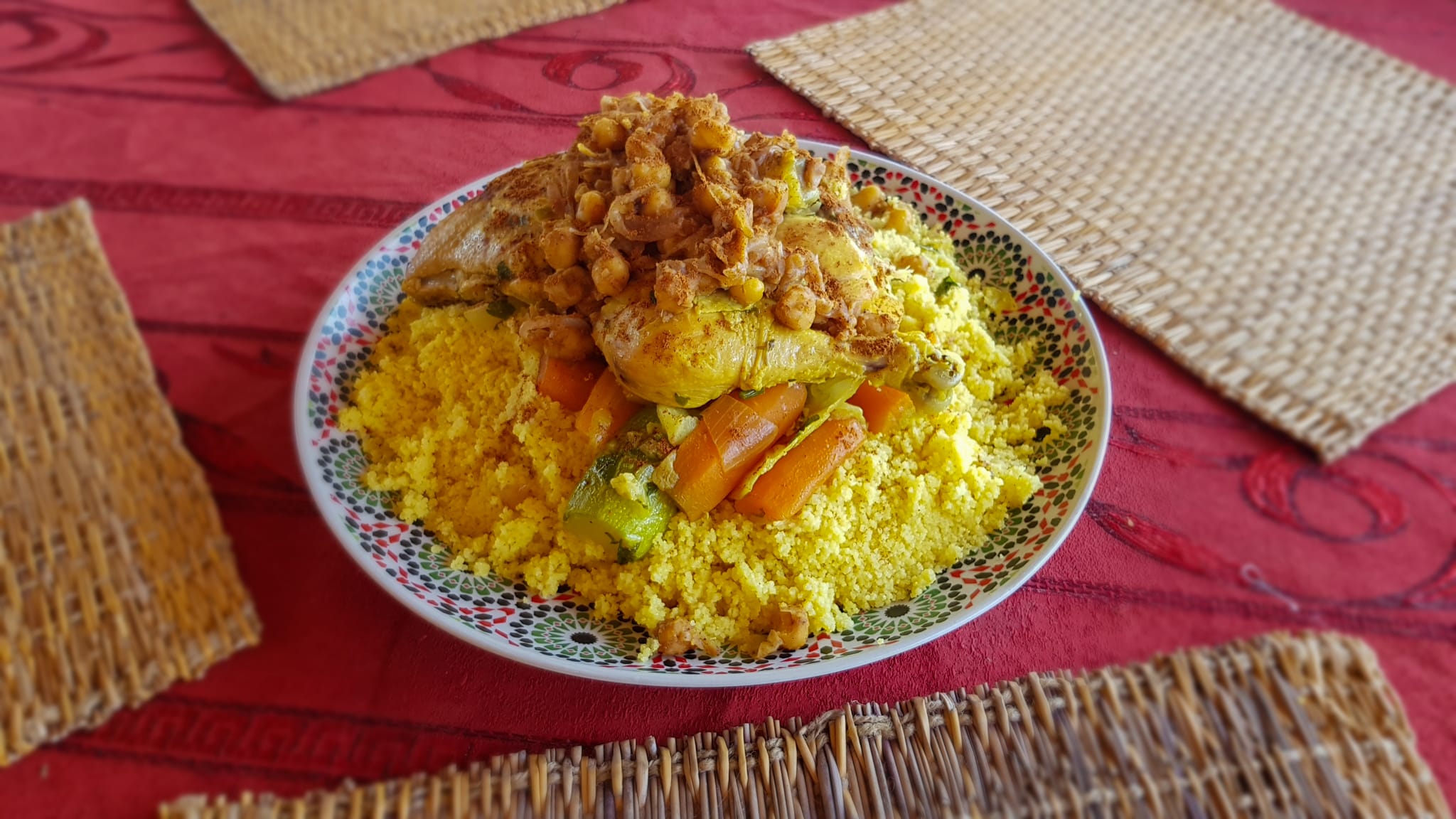
For a proper sit-down meal, Morocco is famous for its tagine and couscous. Both are delicious, usually beautifully presented, and an essential part of your Morocco experience.
The name tagine actually refers to the cone-shaped pot it's cooked in, but a tagine is a slow-cooked stew. This is usually prepared with meat, vegetables, fruit and spices, including saffron and ginger, and served with bread. Everyone's tagine recipe is a little different, so you'll never get the same thing twice.
Yet, in the south, at least, if you're veggie or vegan, I'm afraid they still often come with meat. As mentioned, people regularly serve you anything. During our second visit, most of the tagines were remarkably bland and tasteless.
Couscous is tiny semolina flour balls served in Morocco for 900 years. The couscous is steamed and then a stew is spooned on top, with the couscous soaking up all the delicious sauce.
The thing with couscous is that traditionally it's only served on Fridays. Anywhere dishing it up week round is likely a tourist-focussed restaurant, and will charge you accordingly. I ended up paying nearly £10 for an (admittedly huge) plate of the stuff for two people - which for Morocco is extortionate! Expect to pay about half of that in a local place.
So, with that in mind, heading to a 'locals' restaurant instead of a touristy one is likely to give you a better meal for a lot less money. The easy way to tell is if they have a menu outside the door in English. If you're struggling to find one, ask at your accommodation for recommendations.
Other recommendations for food: keep an eye out for the chance to try camel, which tastes like a lean, gamey beef. Also, try out the aforementioned harira soup, made with lentils and chickpeas and served with flatbreads. It also has the advantage of being very, very cheap.
The Culture
First thing to note is that Morocco is a Muslim country, and this means the usual stuff is going to crop up.
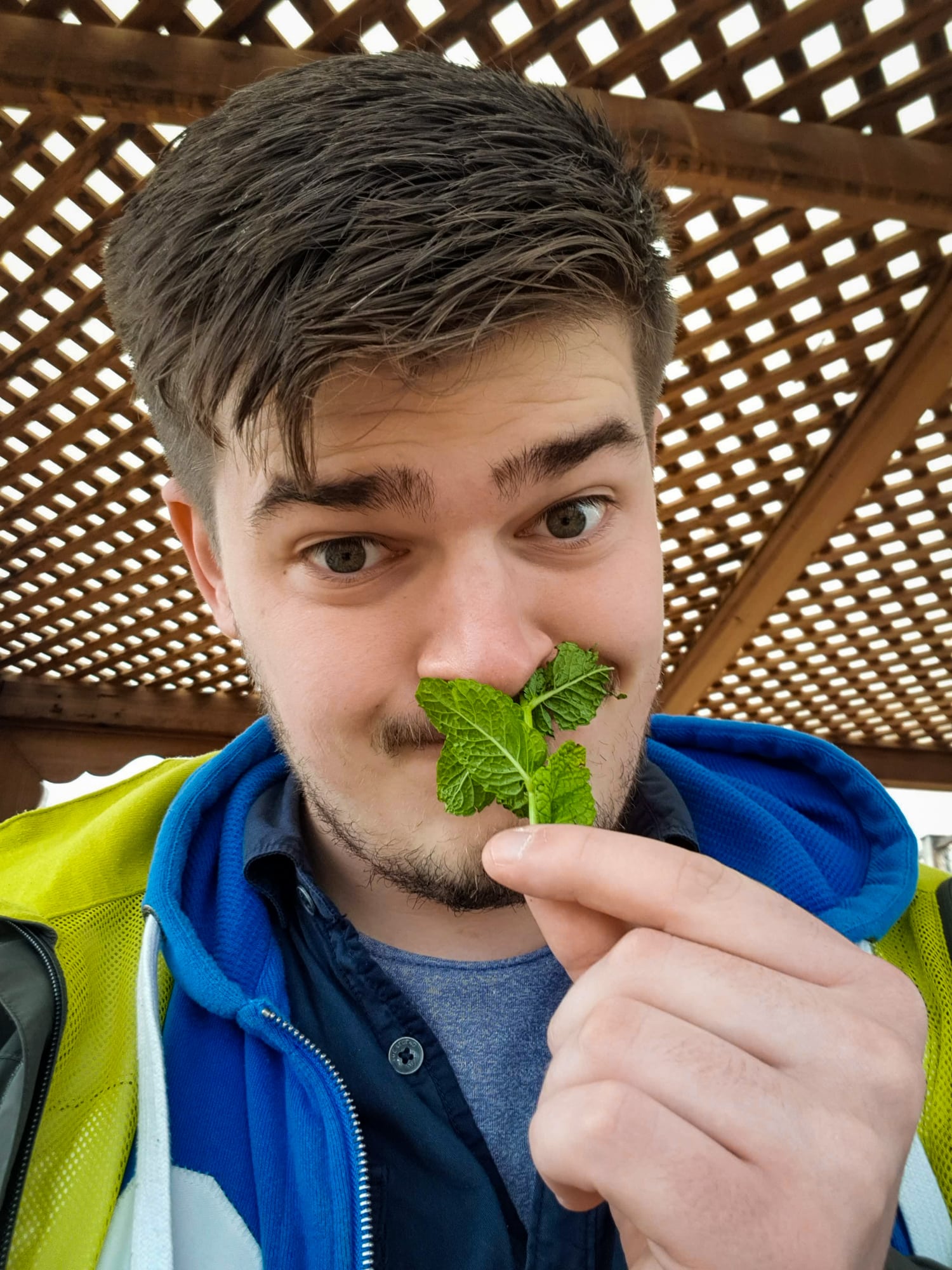
Hospitality is seen as pretty sacred in Morocco. You will be offered tea everywhere. This tea is usually mint-based and drunk with or without sugar. If a shopkeeper offers you tea, it'll be free, but it's used as a tactic to keep you in the shop whilst they show you what they have for sale. Taking the tea doesn't oblige you to buy anything, and a few firm 'no's will suffice to get you out of there if you're not interested.
You'll often see some cool trinkets in these places, and Morocco is one of the best places I've ever been for buying souvenirs. Amazing jewellery, cookware, Morocco's famous rugs and carpets, spices, and general handmade trinkets can all be found in the souks (a group of market stalls). Buying from these places does keep the local economy going, so get haggling for a bargain.
Particularly in the cities, everything kicks off at 5am with the call to prayer. This is a loud chant, calling all Muslims to their first of five daily prayer sessions, called salat. At first, this is a little disorienting, but you soon get used to it.
Next up, advice for women. Morocco is fairly liberal for a Muslim country. However, covering up skin is both respectful to the culture, and will avoid a lot of male attention. Sadly, this is the case, but if you're white - and particularly blonde - you're at greater risk of harassment. Covering up will help reduce this - but likely, won't stop it entirely. More on this in our safety section further down.
Next up, alcohol and shisha are prohibited, and whilst you can still find it, it's not that common. If you are planning on drinking, be a bit cautious about where you do it, and be respectful. Also, the further out of the cities you go, the less likely you are to find booze for sale.
On the topic of intoxication, Morocco is the world's leading producer of cannabis. Whilst this is prohibited in Islam (and is actually illegal in Morocco), more locals seem to smoke than drink.
You're likely to be offered hash - particularly in Chefchaouen - on your travels. If you're going to partake, don't do it openly in public. A lot of Moroccan buildings have terraces, and hostels, in particular, are accommodating of guests smoking. If in doubt, ask if there's somewhere to smoke.
The Transport
Camels were top-dog for getting around Morocco for centuries, but these days getting from city-to-city when backpacking Morocco can be done four ways - coach/Bus, taxi, train or flight.
Coaches/Buses
Coaches have by far the most coverage of the country. There are coach routes to and from most cities named in this blog and many more.
The main coach providers are the nationally-owned CTM and the privately run Supratours. CTM tends to be a little more expensive, but they have a website so you can see their timetable and book digital tickets online. This is a winner if you're in, say, Fès and your hostel is an hour's walk from the station.
Supratours run very similar routes to CTM, but on a different schedule. You'll find their counter at most bus stations, but you might need to have a bit of a hunt or ask for directions. The one in Chefchaouen was pretty much a table in the corner. Despite first impressions, they ran just as well and were just as comfortable as CTM coaches. In fact, their coaches are apparently all ex-CTM ones.
One thing to note with the coaches is they run when it suits them, not when would be ideal for you. Check your arrival times and plan accordingly. Don't do what I did and end up in the freezing Sahara at 3.30am with nowhere to go and nowhere open.
The coaches are also a cheap way to travel - a 9-hour overnight coach from Fès to Merzouga, whilst not a great place to sleep, cost 150 dirhams, or around £12. Not bad to cover nearly 500km, particularly when you don't need to pay for accommodation.
However, the local buses are even cheaper, run more regularly, but still experience the same issues of running when they run, rather than when you expect them to go as per the timetables. They are often just as comfy and very cheap. A three-hour journey from Agadir to Essaouria cost around 60 dirhams (less than £5). The other advantage is you can wave these down on the side of the motorways and hop on.
Taxis
Taxis run on two separate systems - the petit taxis are the 'normal' taxis. These are small cars that cover local trips, where you pay for the whole cab as normal. They have been painted a different colour for each city and can be found either at taxi ranks or just by flagging an empty one down.
For longer journeys, it's also common to get a grand taxi. Here you only pay for the seat, and you'll be sharing the cab with other people heading in a similar direction. This is a lot cheaper and is a good way of travelling 'common' routes, such as between cities or from airport to city centre. It's kind of like doing an Uber Pool, but being crammed into the back of a Dacia people carrier. It works well!
Nowadays, if the driver tries to charge you this mysterious tourist tax, all you have to do is tell them you are reporting them to the authorities, take a picture of the vehicle registration and their name badge. Instantly, they will either bring the price down to 35 dirhams for the hour or take you to your destination for free. They are scared of the authorities, as they can be fined or imprisoned for this.
Speaking of Uber, it's banned in Morocco, so you won't have any luck using the app.
When sorting a taxi fare, ALWAYS either agree on a price beforehand or get the driver to use the meter, to avoid being scammed.
Trains
Trains tend to run along commercial routes between major cities in the north of the country, and don't cover the most popular backpacking destinations of Merzouga, Chefchaouen or Essaouira.
All the trains are operated by everyone's favourite French train carrier, ONCF - who managed to be on strike for almost the entire 9 months I worked in the south of France. So my faith in them is low.
That said, my itinerary didn't cover any of the train routes, so I used coaches all the way. They likely provide a good service, and I haven't heard any complaints about the trains from any backpackers in Morocco along the way.
Fares seem reasonable, with a 3-hour journey from Fes to Rabat costing £5-9, depending on time and season.
Flights
Your third option is internal flights, with Royal Air Maroc being the national airline. Prices vary wildly and it's unlikely to be cost-effective compared to other options. I'd only consider this to get quickly from one side of the country to the other, and pay the premium to not spend 20+ hours on a bus.
For getting around locally, you can choose between buses, taxis or good ol' walking.
The medinas in Morocco are all traffic-free, and walking is the only way around. Given that medinas are likely where you spend most of your time in the cities, you're going to get your 10,000 steps in for the day.
This information should be plenty to get you around. If in doubt, ask at your accommodation for advice. Moroccans tend to be incredibly hospitable and will be happy to help.

The Budget
Travelling Morocco can be done on a tight budget. In fact, that's half the reason I first went there. I was armed with about £180 to see me through 10 days and managed to cover accommodation (sharing with a friend), food, transport, an overnight camel trek in the desert, plus a few souvenirs. By accepting some discomfort I made it work, and didn't miss out on anything.
But no matter how you travel, we have a budget guide for you!
But first, use your Revolut Card at the airport to get cash out upon arrival. Most, if not all of the south, including street vendors, restaurants, hostels and shops do not accept cards. It's cash only. That's cool and all, but a lot of places, such as Taghazout don't have any cash machines. Other towns have them, but they can just stop working at any point and no one knows when they're getting fixed.
Always have plenty of cash on you.
The 'Backpacker' Budget
Your only objective is to keep travelling. The secret? Keeping costs at an all-time low. This is the budget for you.
Hostels - This depends on the season and where you are, but even in high season you can find somewhere to get your head down and breakfast the next day for around 70dh (£5.70) on Hostelworld. In low season this can drop to around 40dh (£3.30). To really cut down on costs, head a little off the beaten track and the Moroccan hospitality may well come good - I spoke to a few people (particularly those backpacking Morocco solo) that were invited to stay at someone's house later that day. Couchsurfing is also a good shout here, as is the odd bit of wild camping.
Food - You ain't gonna be sitting down for a big meal in a restaurant here, but that doesn't mean you're missing out. Far from it, you'll be eating some of the best food in Morocco. Tuck into the breakfast included at the hostel if you're staying at one. Pick up pastries, maybe splurge on a cheapie kebab tucked into a flatbread, some harira soup, fruit and nuts, and just drink tap water, and you'll come in at around 20dh (£1.75).
Transportation - Ideally, you'd walk, so transportation around the city could be free. The medinas offer no choice when it comes to walking, so once you're in the cities it's basically free to get around. When moving between cities, you're either going to be hitchhiking or on the bus. Inter-city buses are cheap (expect to spend about 20dh/hour). If you travel slow (and travelling slow = travelling cheap), and stop to explore regularly, plus the odd hitchhike, we can budget 25dh on average.
Drinks - Booze is not permitted under Islam - although you'll find this is often seen as... more a guideline than actual rules. Outside of hotels in Fes and Marrakech, you'll find it hard to come by at all. Best bet is to look for the odd European supermarket, like Carrefour. Otherwise, you'll need to find a local hookup (and who could say how much that'll cost), or maybe for an evening unwind partake in a smoke of some fresh local produce. Your call. Let's call it 10dh a day on average for your non-sober needs.
Overall - That is a grand total of 95dh (£7.80) a day in low season (add 30dh for high season)
The 'Travellers' Budget
You've saved for this trip, and want the ultimate bang for your buck. Money is tight, but you want the best experience. We've got you covered.
Riads and Hostels - If you're in this category you've got a little more cash to throw at comfort, and won't be scanning Hostelworld for the cheapest room that night. Instead, we'll budget for a small dorm in a hostel or a private room in a riad. A small dorm in a nice hostel is gonna set you back around 90dh (£7.80), and a private room will be at least 120dh (£10).
Street Food and the Occasional Sit-Down Meal - You'd still be silly to not take advantage of the amazing street food, but spend a little more on shawarma, kebabs and so on, plus some fruit and nuts for on the run. Also, treat yourself to the occasional sit-down at a restaurant for some sweet, sweet tagine. We're looking at an average of around 100dh (£8.20) a day, as long as you don't go ordering at tourist restaurants.
Transportation - Transport is limited in Morocco, particularly between cities. There's not much more you're going to get than trains or buses - if you're travelling at the same slow space as the backpacker above, you'll spend around the same. Add a few dirhams for the odd petit taxi to and from the bus station and we'll call it 35dh (£2.90) a day.
Drinks - The exact same applies here as above - it's difficult to find, and wouldn't be that comfortable to be drinking in public. Bring some in with you if you're that determined to drink. We'll call it the same 10dh as above.
The Splurge - The obvious splurge when backpacking Morocco is the overnight camel tour into the desert. I bombed 350dh (£28 - and that's a low rate thanks to Hassan), and that included accommodation, and a big ol' tagine. All in all the whole experience is totally worth it.
Overall - With private rooms and not including the splurge, you're looking at a grand total of 265dh (£21.50) a day.
The 'Daddies Credit Card' Budget
Your trust fund is finally available, and your Instagram followers need to see where you are in the world this week. You farted the other day, and a private jet came out. We haven't forgotten you.
Hotels - Obviously, one does not expect to stay with the commoners and riff-raff. Travel without duck-down pillows and air conditioning isn't travel at all, is it? Luckily, the Royal Mansour in Marrakech has you covered, renowned for its achingly pretty spa. Their 'Privilege Riad' comes with 430 square metres of tastefully appointed luxury, and, naturally, a butler. Yours for around 29,000dh (£2,370) a night. The spa is extra, but at least there's free WiFi.
Restaurants - Don't bother leaving the hotel. Head to La Grand Table Marocaine downstairs, overseen by three-Michelin-starred chef Yannick Alléno (you know who that is, of course). Expect to pay 300dh (£25) for a bowl of traditional harira as a starter. Which is donkey-dick money for the exact same fucking thing you can buy outside for 3% of the price. Bon appétit!
Transportation - Don't leave the hotel. The outside is full of people who want to sell you stuff, and they're pushy as shit about it. Plus you have to walk. Expect airport transfers in luxury Mercedes vans to set you back 500dh (£40).
Drinks - A bottle of the locally-made Domaine de Baccari Premiere Rouge should do. The hotel sells it for 700dh (£57) a bottle.
Overall - For just 33000dh (£2700) a day, you can have the ultimate refined Moroccan experience, with the added extra of not having to actually go outdoors and meet people. Win-win.
The Best Things To Do When Backpacking Morocco
Get Lost in the Desert
Seeing as it sits on the edge of the Sahara desert, it'd really be rude not to come and see the dunes when backpacking Morocco.
Seriously, you owe it to yourself to watch the sunset light up the desert sands. It's breathtaking. Ideally, you'll take a tour out into the dunes, away from civilisation. If that's not in the budget, however, you can still head to Merzouga and enjoy it from one of the dunes around there.
There are a few places to do this, but the two most renowned are Erg Chebbi and Erg Chigaga. For reference, 'Erg' means 'dune', and these are the two most spectacular. Erg Chebbi is right next to Merzouga, and can be reached in a short drive, a few hour's camel trek, or a strenuous walk. Erg Chigaga is only reachable by a multi-day tour, but is apparently even more untouched, remote and spectacular.
Either way, the tranquility, and the way life feels slower and more relaxed here, is beautiful.

Haggle for Souvenirs in the Medinas
Even if you want to, you won't really be able to miss these on your adventures backpacking Morocco, so you may as well pick a few up for home! Every city has a walled-off, ancient area that has been the traditional market since... well, forever really. There are no signs, the shops and stalls often don't have names, and it's addictive mayhem.
You can buy pretty much anything you need for Moroccan life in the medinas. There are sections dedicated to meat, jewellery, leather, carpets and pretty much anything. Every street is different.
There are also no prices written on anything. This means it's time to haggle!
Haggling is an art unto itself, but the usual stuff applies - smile, don't let them grab your hand to shake on a deal before you want to, and, in Morocco, a good idea is to aim to get the item for 25-30% of the price they quote you to start.
This is a chance to pick up a few bargains, in particular spices, carpets and blankets, and 'trinkets' (I bought an engraved Fatima Hand for like £3).
At the end of the day, a fair price is what you think it is. Remember, they won't ever sell to you at a loss. You can push and be a bit cheeky, and if it's no-deal, they'll tell you.

Unwind in the Blue City
Ah, Chefchaouen. Blessed are you amongst Moroccan cities for being absolutely chill as shit.
If you're backpacking Morocco, 'Chaouen is a refuge on your trip. It's a little blue gem full of gentle hospitality, Insta-worthy alleys, and, let's be honest, stoners. All nestled in the mountains high (in every way) above the rest of Morocco.
The medinas are low pressure, the food is amazing, and it just has the rarest of things in Morocco: it's somewhere you want to stay, not just visit.
Head in, stay for a while (I suggest either Couchsurfing, or a stay at Hotel Souika), and just... soak up the chill. You'll need it for the big cities.
Throw Yourself into the Street Food
When backpacking Morocco, street food is a win-win scenario. In fact, it's a win-win-win-win...
First off, it's delicious. Merguez (that's a spicy sausage) kebabs, the aforementioned harira soup, shawarma, and several amazing sweet pastries are the orders of the day. Also, fresh fruit juices are cheap (and amazing, particularly the apple juice).
Don't forget to pick up some local delicacies that are dirt-cheap here, yet very expensive back home. Think handfuls of dates, citrus and nuts for a few dirhams.
This leads onto the next win: it's way cheaper than eating at restaurants. Your food budget can be £2 for the day and, if you're smart with what you buy and eat like the locals, you can go to bed full.
It's also quick, readily available, and a good way to have a few quick conversations with the people who know their town better than anyone.

Preparing To Backpack Morocco
Suggested Itineraries
There's a lot of potential routes when backpacking Morocco, but I can only recommend the one that I have done myself - and I do recommend it!
Eastern Chill
11-13 Days
Get the whole Morocco experience whilst avoiding the overly touristy Marrakech.
Day 1 - The ferry from Algeciras in Spain is a very cheap way to continent-hop and get into Morocco, specifically the port at Tangier Med. Head out, past the taxis and up to the little grey bus shelter at the top of the hill for the bus into Tangier. From here, you can connect to the free WiFi if needed, and sort out your night's accommodation (aim for the medina). Head north, and follow the beach along to the ancient medina. Check into your room, drop off your bags, and head out to get your first feel for narrow, winding medinas of Morocco.
Day 2 - Take a petit taxi or make the hour's walk to the CTM bus station, and get the next bus to Tétouan. I suggest staying with Nour at the Hôtel Africa Riad. Nour is a helpful, friendly host, makes a banging cup of tea, and his riad is right next to the medina gate. Drop off your stuff, head into the pleasingly simple medina, and just wander around.
Just be wary of people offering to show you around for free (it is almost never free). Although, they do know their way around and will show you some cool stuff if you let them. For dinner, I'd grab a kebab or shawarma from one of the many stands selling them. The medina isn't massive and you'll see a lot of it in one day. Stay for another night and make your next moves in the morning.
Day 3 - You could easily take an extra day here and head about 5 miles east for a beach day on the Mediterranean - ask your host for advice on the best beaches and transport. But from Tetouan, head back to the bus station and pick up a ticket for the Blue City: Chefchaouen. It's a few hour's drive and you're heading deeper into the mountains. Before you go, book in at Hotel Souika, a hostel smack in the centre of the medina in Chefchaouen.
When you arrive, there's a biiiig hill between the bus station and the medina, so if you're not fancying the walk, grab a petit taxi from outside the station. Just make sure you grab a photo of the timetables to Fes before you go. Whatever way up you pick, you will be offered weed before you get to the hostel. Drop off your stuff and enjoy the chilled vibes in this mountain town. Grab some little treats for dinner on your way round. Chill for the evening with some other backpackers back at the hostel.
Day 4 - Explore Chefchaouen properly. Take it slow, and enjoy the friendliness. You can trust people's hospitality here more than in the bigger cities. Maybe treat yourself to a restaurant meal, but ask around for the local places instead of the tourist traps. Find a terrace to watch the sunset with a cup of mint tea.
Day 5 - You have a few choices here. I took another day exploring with some backpackers I met at the hostel, and had a big ol' social. There's a beautiful mosque (the imaginatively named Mosquée) on the opposite mountain that gives you beautiful views back over 'Chaouen. Other options include taking a single- or multi-day hike up into the mountains and camping out. Alternatively, you can ask around a little bit for a (very unofficial) day's tour up to the massive cannabis grows tucked in the mountains, where you can apparently roll your own hash.
Day 6 - Make sure you have Maps.me installed on your phone, and head back down to the bus station to get either the CTM or Supratours (their counter is in the station to the left, and I walked past it twice before I saw it) bus to Fes. It's a long old drive, about 4 hours, and it takes you over some spectacular scenery, but ultimately it's just a long, slow bus journey. Head out of the station when you arrive, open maps.me (you did install it, didn't you?), and use it to navigate your way to the Funky Fes hostel, which is about a 40-minute walk straight through the world's largest medina.
Everything so far has been prepping you for this - the most intense part of backpacking Morocco. It's colourful chaos. Follow your sat-nav through, and ignore anyone saying a particular route is closed, because it isn't. When you arrive, grab a plate (or three) of the hostel's big Moroccan buffet dinner, and consider booking onto one of the walking tours that run from the hostel in the morning.
Day 7 - The medina is huge, so taking the walking tour will help you get your bearings. See the ancient tanneries, the world's oldest university, and some amazing panoramas over the city. Once it's over, get lost in there yourself and pick up some souvenirs. You can lose hours in here, and you'll come out knackered. Also, if you're like me and want to try some new food, you can make your way to the overpriced and very hipster Cafe Clock to try their camel burger. I shared this, because spending 100dh on one meal when backpacking Morocco on a tight budget is frankly taking the piss. Head back and sleep well.
Day 8 - Back into the medina to find the bits you missed yesterday. Take it a bit slower and, when it's time to recharge, head to The Ruined Garden. This peaceful outdoors cafe is honestly like finding an oasis in the world's most stressful desert. It's lovely, and makes some great fresh fruit juices.
Enjoy the freedom, because this evening you're taking the overnight bus to Merzouga. Book yourself onto the CTM night bus online, and into the Gout du Sahara hostel with Hassan (it's the number one Merzouga hostel on Hostelworld). Let him know you'll be arriving on the overnight bus, and when the time comes, head to the bus station. I'll be honest, it sucks. But at least you're not paying for accommodation that night. It'll be worth it.
Day 9 - I hope you slept well on the bus. You'll arrive in the early hours, and remember: the desert is cold at night. Use maps.me to find your way to Hassan's, get a few hours sleep on solid ground once you're in, and wake up in the dunes. Have an explore. Check some of the shops nearby. Head to Snack El Fassi over the road and have a bowl of harira and olives for 7dh, and soak up the sun. Arrange your overnight camel tour with Hassan for tomorrow. Take the snowboard out to a big dune and have a crack at sandboarding.
Day 10 - Chill out during the daytime, chat with Hassan and the other guests about their travels, and find out if anyone else is on your tour. Then it's time to go meet your camels, and trek into a camp tucked away from all the others, in the shadow of the biggest dune out here. Hike up to watch the sunset, then run/fall down the sand to camp, and tuck into some beautiful tagine.
Then it's campfire time, and you can relax with your incredibly chill hosts and reflect on how people have lived like this for centuries. Enjoy some of the most picturesque starscapes you'll ever see, before crashing into your traditional Berber tent for the night.
Day 11 - Wake up bright and early, and it's time for your camel ride back to town. Stop by back at the hostel to pick up your stuff, and then... it's up to you!
This is about where I ran out of time (and money), and had to head home. But Morocco continues if you want it to! I got the overnight bus back to Fes and then a flight back from Fes airport, but you can press onwards.
You can head on to do the full backpacking Morocco experience, travelling clockwise around the cities on the map until you end up back in Tangier or Casablanca. This is the 'Full Monty', and I'd budget a month for the whole thing.
If you want to maintain the chill vibes, drift your way west to Essaouira and soak in the bohemian seaside vibes, and the surf coming in from the Atlantic.
After this trip, it's fair to say I'm not done backpacking Morocco and will be back to see the rest of this amazing country.
Surf and Souks
12 -14 days
Dive into the sea with a board, or find a bargain amid the madness of Morocco's famous souks.
Day 1 - We are starting in Agadir for this two-week blitz of the chill bohemian surf towns and the madness of Marrakesh and its famous souks.
Firstly, grab a bus or taxi from outside the airport and head north to the surfer town of Taghazout. Check in to your hostel, get your bearings and make sure you book in for any hostel 'family meal' that might be going on. I stayed at and would recommend The Surf Hostel, with rooftop sea views, great vibes and mummas delicious couscous on a Friday.
Take a stroll around the small beach town and enjoy one of the most striking sunsets before returning to the rooftop for that delicious meal with a view.
Day 2 - Waking up in Taghazout isn't so bad. There isn't much to do, so have a word with the team at the hostel, hire a surfboard, hit the open water, and spend a day on the beach. When you're all beached out, relax amid the entwining narrow streets, pick up a bargain at the shops, sip down your first Moroccan mint tea or enjoy people watching with a fresh milkshake from a beachfront cafe such as Restaurant Elmadraba.
Before sunset, head up to the skate park and spend an hour watching the sun go down with banging tunes and watch the skaters pull off daring moves within Tazhatgout's skate bowl. As darkness falls, head down the hill, delve into the local street foods and soak up the atmosphere in the town.
Day 3 - Unless you're really into your surf and want to stay, we're grabbing a bus north to Essaouira.
Here it feels a bit more Moroccan, more cultured, and there's a lot more to see and do. Yet, there's still that bohemian, chilled vibes you'd expect from a seaside town. Backpacking Morocco doesn't have to be chaotic at all. Again, I stayed at Moga Hostel and found it very reasonable and incredibly well located. Get to know the souk, and weave your way around from tea stop to tea stop. Walk the city walls and spend the remainder of your day searching for a bargain, mouthwatering street food and people-watching. Its the best time I had during this backpacking Morocco trip.
Day 4 - Wake up and grab a delicious Moroccan breakfast and mint tea at Brunch & Co. After, head to the beach, soak up the rays and splash about with the crowds at Plage d'Essaouira. When you decide you've had enough beach time, head back into the medina and practice your haggling. Spend the evening watching the sunset just outside the city walls by the castle, followed by the best tagine you'll taste until the final night at a vegan joint called Le Corail.
Day 5 - Today is about relaxing and picking up the rest of the bargains, trying out the cafes, relaxing and spending some time on yourself. Enjoy the quiet buzz of Essaouria and another good lunch or dinner spot at Coin Typique. It's like walking into the dudes living room and sitting down for a meal. Super cool, super cheap, super authentic and super tasty.

Day 6 - Today, you are waking up for the last time in the beautiful maze that is Essaouira and taking the almost three-hour drive to the mayhem of Marrakech and a complete change in pace.
Arriving at the central bus station can be daunting, so walk out and into the medina bypassing the taxi ranks, all of whom will try and engage you in conversation. Of course, the aim is that you jump in with them. However, you don't need to. A short fifteen-minute walk and you will be in the middle of the souks and therefore at your accommodation. It's hot here, but you can do it. I stayed at the gorgeous Mosaic Hostel. I suggest you do too. It's magnificent and superbly located. Dive into the evening's entertainment in the main square, grab some traditional foods, and my best tip for Marrakesh is to get some fruit juice from the night market in the main square. You can't miss them.
Day 7 - Welcome to the calm before the storm. Mornings in Marrakesh are quiet, as they are elsewhere in Morocco. It's only after 10am that the noise and chaotic scenes ensue. Spend the day twirling through the different souks. Metalworks, materials, lights, jewellery, carpets, clothes and so on. It's all here and in abundance. Get your haggling up to speed and grab yourself a bargain.
Luckily, if it all gets too overwhelming, there are plenty of cosy, calm and tranquil areas to duck in. Hideaway, get yourself a cuppa, and all you'll hear are the murmurings of the outside world. It's just what you need after a morning in the souks.
Marakesh is fun, I loved it, but I understand why many don't. I didn't find any issues with pushy people or overbearing sales pitches. A friendly chat and then a firm no did the trick.
Day 8 - Take today off from my schedule. Do something you want to do. Explore the mosques, sit in the secret gardens, hell, drink tea all day in a cafe and watch the world go by. I didn't, but you could even visit the palace. I refuse to pay more than someone else based on where I'm from. It's not right. And frankly, the palace didn't look worth it.
Day 9 - Spend your last morning picking up those bits you've been eyeing up, and some snacks, and hit the road south to Taroudant. There are two ways, the bus or a taxi. You could be better off getting a taxi direct. Local buses go via Agadir and take ages, whilst CTM only goes once a day, arriving late in the day. However, when you arrive, you'll be met by the large city walls. Enter one of the monumental gates and embrace the less-touristy, more authentic part of your backpacking Morocco tour.
Day 9 continued - There are some fancy hotels here in Taroudant and very few cheap hostels. However, I have to suggest the place I stayed called Riad Dar Dzahra. Why? Because it's bonkers from the start.
Upon arrival, the owner, Yve, will take you on an unforgettable cycle ride around the town. I am not going into details. If you want to know why it's so memorable, you'll have to experience it yourself.
However, by the end of that day, you will be knackered. So, get your head down and get an early night.
Day 10 - Today, wake up at your leisure to the best breakfast on this tour. The team at Riad Dar Dzahra are just amazing. They have prepped perfection on a plate (and a teapot). Hang around the riad today, recoup after a massively busy few days. Treat yourself to this much-needed pool day. Pop out into the town if you please, but today is about doing nothing. After all, Taroudant isn't all that big, so you're not missing out. There is plenty of time.
Day 11 - Today could be your last full day backpacking Morocco. Therefore I suggest you make the most of it. Firstly, treat yourself to that incredible breakfast and mosey out into the streets. Head into the souks and lap up the atmosphere, sights, sounds and, more importantly, smells. Here in Taroudant, the souks are more compact, so the aromas are much more intense. Then, having picked up a bargain or two, it's time for one of the weirdest relaxation experiences of your life, an authentic Hammam spa. Ask at the riad, and they will sort it for you. It's, well, umm, different.
Once you've purified yourself, you'll be walking on clouds, so don't ruin that. Head back to the riad and relax around that pool. As the evening draws in, explore the city walls and experience the unreal vibes at 20 August Place. Still, today I don't know what the area's aiming to be other than a little gathering random-ass area with food joints.
Regardless of how crazy it is, what you're aiming for is the incredible restaurant of Café Tinzert. Grab the half kilo tagine and thank me later.
Day 12 - Today could be many things. However, I suggest a final breakfast around that pool before making any decisions. You have many options. You could head south (in a taxi) and get to Agadir around lunchtime or get yourself to the airport for your flight home. It could also be that you head northeast to the desert. It's up to you.
Although, if you have a couple more days, I'd suggest you stay in Agadir and spend them visiting Paradise Valley.
Speaking Moroccan Arabic
When backpacking Morocco, you'll find the language situation is a total mess.
The official language is Standard Arabic, with Amazigh serving as a backup.
In reality, the Arabic you'll hear whilst travelling is Moroccan Arabic - a dialect known as Darija.
In addition, in the north, you'll find many people speak Spanish. Head further south, and French becomes the most popular secondary language.
English will be spoken here and there, but it's only about 15% of the population that know it.
So all in, what tends to happen if you don't speak Darija is you cycle through English, French and Spanish until you find one you both know, and go from there.
This can all be avoided, however, with a bit of basic Moroccan Arabic! Greg has helped out with making a pronunciation chart that even Greg can't get wrong!
| English | Moroccan Arabic | Greg's Pronunciation Breakdown™ |
|---|---|---|
| hello | asalam | sah-lam |
| bye | bslama | buh-sle-ma |
| my name is... | aismi... | is-me... |
| yes | na‘am | nah-m |
| no | la | la (...obviously) |
| ok | wakha | wah-ha |
| please | 'afak | ah-fek |
| thank you | choukran | shook-ran |
| sorry | aasif | ah-sif |
| how much? | bich'hal | besh-al |
| excuse me | smeh liya | smell-ee-ya |
| what? | shno? | sh-no |
Visas and Borders
Morocco's visa policy is fairly relaxed, with western countries having no visa requirement to enter for up to 90 days. The full list can be found here. You'll have an immigration form to sign on board, so make sure you know your first night's accommodation address.
After 90 days, you'll need to sort a visa as normal, but it seems unlikely that most backpackers would stay here that long.
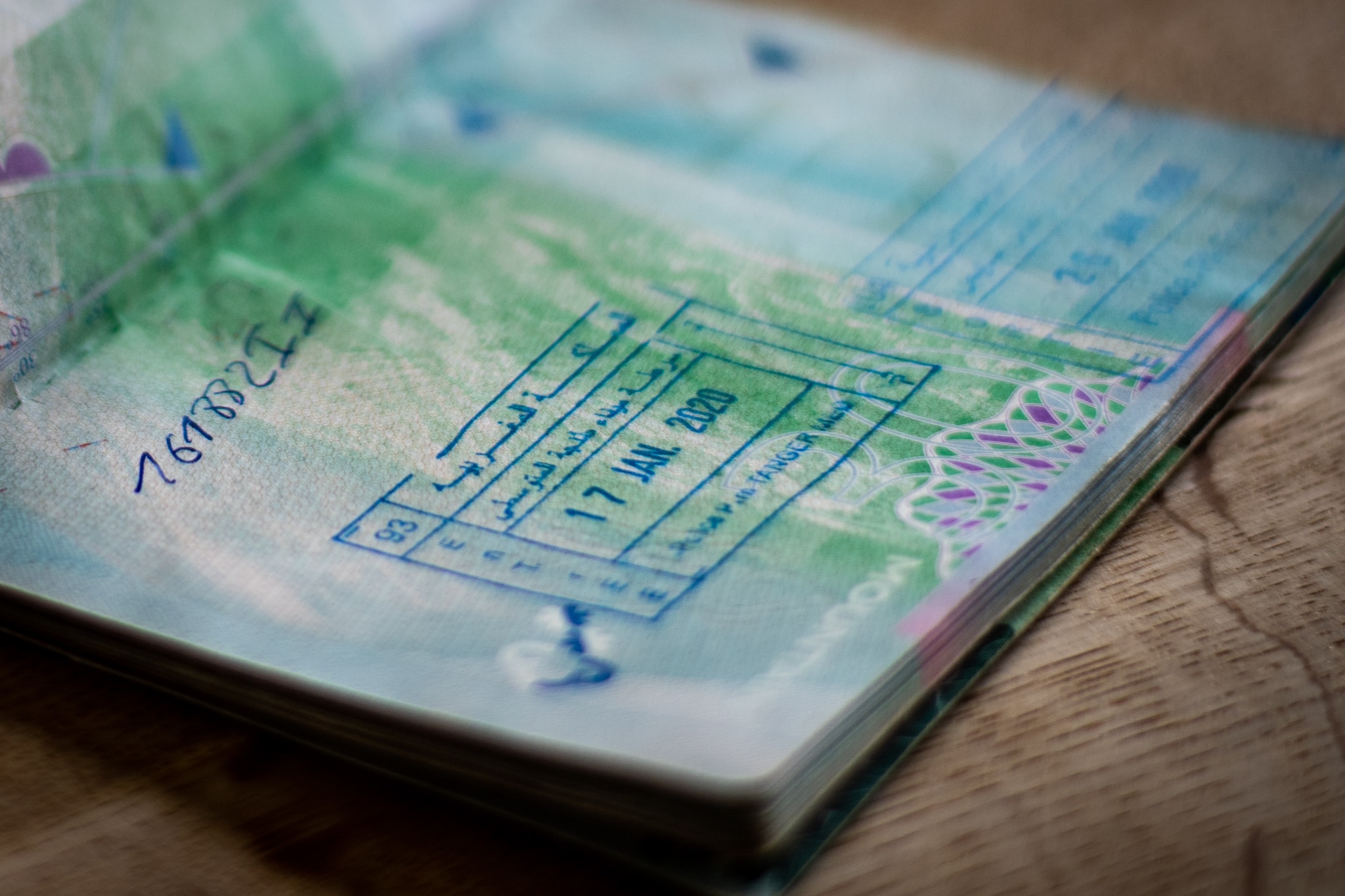
When entering Morocco, make sure you get your passport stamped, as the authorities will look for this when you leave, and make your life uncomfortable if you don't have it. In particular, if entering by ferry you'll need to make sure you get the stamp from the official onboard, as no one will be checking if you have or haven't.
Also, make sure your passport has at least 6 months left, or you may have some issues at the border with concerns of you overstaying.
As for borders, first know that the southernmost section of Morocco is Western Sahara, a disputed territory. It used to be under Spanish control until 1975, then they just left. There's not much known about this region as far as backpacking goes, but those of you who love heading off the beaten track might check it out.
Approximately 4/5 of Western Sahara is under Moroccan control, including the coast. If you head down here, expect police checkpoints on the roads. The situation has been peaceful since 2010. Do your research before going.
If heading in via air, the main airports (and likely cheapest flights) are Casablanca and Marrakech. Smaller airports cover the rest of the country, but with limited destinations and schedules. I had to fly from Fes via Spain to get home.
Getting into Morocco by boat is a cost-effective way from Europe, with regular ferries running from Algeciras in Spain to Tangier, Morocco's biggest port. Note that Tangier Med port is actually about 50 minutes drive from Tangier, so you'll need to get a bus (7 dirhams at the grey bus shelter outside), or a grands taxi seat.
Finally, be aware that as far as land borders go, the entire Morocco-Algeria border is closed, and has been for decades. If you want to head on to the rest of Africa, you'll have to go through the disputed Western Sahara and into Mauritania. Should be an adventure!
What to Pack
I'll be the first to admit I cocked up a bit here.
Firstly, I didn't check the weather. In my head, I was heading south from the UK and into a damn desert, and it must be hot. Deserts are hot, right? So I packed warm-weather clothes. In January.
I was cold. A lot.
So read this list, pack appropriately, and learn from my mistakes.
And That's Why My Top Pick for Backpacking Morocco is...
Layers
Morocco can be roasting in the day, and colder than a husky's nutsack at night. The drop at night can be up to 20°C, which is... noticeable.
So pack accordingly.
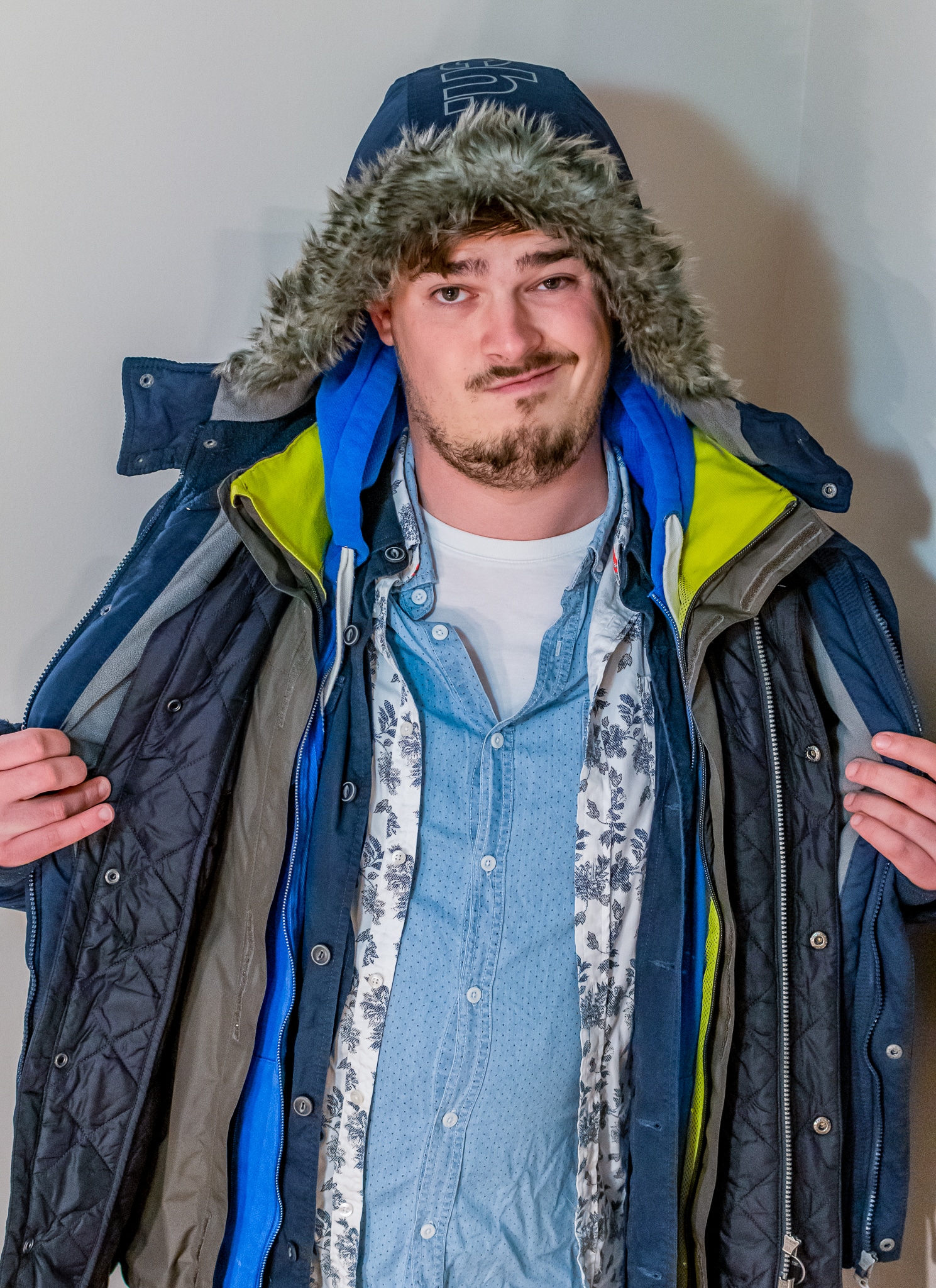
I usually had four or five layers going on in the evenings: a technical base layer, a button-up shirt, a hoody or jumper, and a coat - recommendations below. The trick is having lots of thin layers that you can add and remove, and keep ready in your daypack.
Clothing and Shoes
Morocco's temperature swings a lot, and so I suggest packing lots of (ideally breathable) layers you can add or remove to keep yourself comfy. Make sure that if you're going in winter, you have at least one thick, warm layer available.
Investing in some good gear before your travels is a good idea, and one of the best places to spend your money is a solid, waterproof top layer. Me and Greg both swear by North Face and Regatta jackets. My North Face Resolve came with me on this trip, and was perfect.
If you're heading off in colder months, a decent thermal base layer will work wonders. Merino wool is thermal, antimicrobial, sweat-wicking and quick-drying. I wore my long-sleeve Mountain Warehouse thermal every evening.
This is a Muslim country, so if you want to visit religious sites you'll need to ensure you're respectfully dressed (no shorts or legs on show, for men or women). This means wearing trousers or long skirts. Go lightweight - I take my Craghopper Kiwis on every trip, and they stay cool even in hot weather.
Otherwise, two or three tops or t-shirts and a couple of shorts/skirts are all you need, particularly in summer.
And finally, shoes. You'll be covering a lot of ground in the medinas, so a pair of lightweight sneakers is needed. A good set of walking shoes will be more versatile, and highly recommended if you go hiking. They need to keep you comfy on your feet for 12+ hours a day. I love my Merrell Moab hiking shoes.
For smaller towns and hot weather, some technical sandals would be ideal, although I got by with my trusty Aussie Kustom Footwear thongs, but they're stupid expensive to buy in the UK.
Electronics
First up, Moroccan electronics run on the European 220v socket, but the wiring in some places leaves a lot to be desired.
A good adapter with loads of USB ports will make keeping your tech charged up a breeze, but also should have a fuse or circuit breaker in, so if the electricity surges it takes out a £0.60 fuse and not your £600 laptop. I swear by my iBlockCube.
Bags
It's hard to be a backpacker without a backpack. I've used my trusty Osprey since I started travelling, and Greg swears by his Berghaus.
The key with a big backpack is to also bring a separate, sturdy day bag, something me and Greg both do. My Osprey has a separate daypack that attaches to the main backpack, and makes life as simple as possible. My Osprey Waypoint travels the world with me, and is ridiculously comfortable. It's been replaced with the new Osprey Farpoint, which is the same concept but is now even lighter, and still has a detachable daypack.
Whatever you go for, make sure it's comfy, has decent waterproofing, loads of pockets, some empty space for souvenirs, somewhere for your water bottle, and is secure enough to avoid light-fingered thieves in the medinas.
Female Travellers
In case you missed it, I'm not female. However, I did talk with several ladies who were backpacking Morocco solo about their experience, and we also reached out to some friends of Far Out who have toured Morocco.
The top advice that came back was to make sure you have something to hand to cover your shoulders, cleavage and legs if needs be, either to respectfully enter religious sites, or to avoid unwanted attention, particularly in the medinas.
A pashmina or shawl is a good shout for the top half, and, if you're not wearing something long on your lower half, having a lightweight, long skirt without a split to throw over whatever you have on will make sure you can get in everywhere and avoid unwanted hassle.
This isn't prescriptive, and Morocco is very liberal for an Islamic country. You likely could get away with wearing whatever you wanted (and I've seen a few female bloggers say this), but just because you can get away with something, doesn't make it right. You're a guest in a foreign country, and respecting their customs is the polite thing to do.
Other
Drinks and water are easy to come by when backpacking Morocco, but for the most part are sold in plastic bottles. Plastic is steadily killing our planet, so if we want to keep travelling a world that's not choking under a plastic coat, avoiding single-use plastics where possible is something everyone can do to help. Get a solid reusable water bottle. The stainless steel ones are great at keeping drinks cool, but if you want to make sure your water is always good to drink, you can't beat the Lifestraw Go, which you can fill up from any source and it purifies the water as you drink. Plus, reusable bottles end up cheaper than buying drinks on the go. That's a win-win for you and the planet.
On a side note, Moroccan tap water is safe to drink in the larger cities- I did it for the whole trip.
Next up, a First Aid Kit. A no-brainer on any trip, but particularly where language barriers may get in the way. Don't be the person who, in an emergency, is stood around waiting for someone else to save the day. Make sure it's properly equipped, and easily accessible.
Travel Insurance
We've talked about the importance of travel insurance before. If you just accept it as part of the cost of your trip, that's all you ever have to pay. If something goes wrong, who knows? Can you afford not to get insurance?
Yes, I know it doesn't feel particularly adventurous or 'Far Out', but it's a sensible decision. There are some good, reasonably-priced providers out there that won't restrict any activities you're likely to be doing whilst backpacking Morocco.
Backpacking Morocco Ethically
Life's golden rule of "don't be a dick" is a good one to follow at the best of times. But remember: when you're travelling, you don't only represent you, you're an ambassador for your country. So don't be a dick.
Morocco's streets are busy and full, but they're fairly tidy, so try not to litter them. I touched on this earlier, but plastic is one of the biggest polluters on our planet, and the problem isn't going away. What gets left on the street often ends up in waterways, and then the ocean. Don't do it. Use reusable bottles. Avoid single-use plastics. Buy food fresh from stalls, not pre-packed shit. Be conscious.
If you're set on doing a camel tour, be sensible with where you spend the money. Make sure the camels are well-treated and healthy. They are working animals and perfectly capable of carrying people, but check for any signs of poor treatment before you go.
Finally, I want to talk about haggling. Merchants will try to rip you off. But remember that, relative to them, you are likely in a better financial situation, and have more opportunities to make money back home. So haggle hard (and have fun doing it!), but don't gouge them out of every dirham of profit. There's a fair price for everyone involved.
Safety
Despite what you may have heard, Morocco is a very safe place to visit. People who say it isn't have usually not been. Their stories of it being dangerous come from a friend-of-a-friend, or some news article reporting on a worst-case scenario. People also regularly mistake not feeling comfortable for being in danger.
The fact of the matter is you're going to be about as safe from any real harm as you are at home, it might just not feel like it.
The biggest dangers when backpacking Morocco aren't being abducted or attacked. They're being ripped off by a charming salesman, or being told you need to pay extra for something. It can be a bit uncomfortable at first, but mastering the art of saying 'No' to people will sort most of this. Challenge everything. This applies mostly to transport and being in the bigger cities. Also, stay out of the medinas after dark in big cities.
One of the big scams is people will offer you directions or to help you find somewhere, and then expect payment. If you look like you know where you're going, they'll often tell you that way is closed, and offer to show you an alternative. They're lying. Politely but firmly saying you don't need any help should sort things.
Pickpockets are the other thing to keep an eye out for, particularly at spots likely to have a load of tourists. Think airports, stations, and the city centres. Keep valuables tucked out of the way and don't flash too much expensive gear. If you carry a camera around, I highly recommend a wrist strap.
I mentioned this earlier, but a sad fact of Moroccan life is the society is very patriarchal. Being a solo female backpacker is entirely possible here - I met a few along the way. Their advice is to be sensible, don't put yourself in risky situations, be polite, and avoid the medinas after dark. You're more likely to feel uncomfortable than at-risk. Dressing discreetly, particularly avoiding any cleavage and ideally shoulders on show reduces the chances of getting attention. If you don't have clothes for this, you'll find pashminas and lightweight scarves readily available (and cheap) in the medinas. You'll get more attention the more blonde and blue-eyed you are, so be aware of that as well.
Overall, it's really just a case of being sensible. Avoid dark narrow streets, don't have your phone hanging half-out of your pocket, act like you know what you're doing (even if you don't), and, again, be comfortable saying no to people.
Brief History
Humans have been known to have lived in this area since at least 90,000 BC, before the Sahara desert had formed, and the land was more like the savannahs found today in southern Africa.
The first territory resembling modern-day Morocco was established as the Berber Kingdom of Mauretania (not linked to the bordering country of Mauritania today) somewhere in the century 200 BC. Unsurprisingly, the Romans pitched up before too long, conquered the kingdom and brought it into the empire, where it remained until the collapse of Rome in the 3rd century.
Sections of Morocco then changed hands between the remains of Rome and the Berbers for the next few centuries until the rise of the first Muslim empire after the death of Muhammed in the year 632 AD. The Berbers soon adopted Islam as their religion, and the city of Fes was established as a centre for learning in the Muslim world. The world's first university was built here in 859 AD and has been running since.
From the 11th to 15th centuries, a series of Berber dynasties rose and fell, even expanding into southern Spain until the Christian Crusades drove them out again in the 15th century. This close link with Spain has remained since, and is why there are still strong links to Andalusian Spanish architecture throughout Morocco.
The current ruling lineage of Morocco is the Alaouite dynasty, who took over in the 17th century and have remained since. The Industrial Revolution in Europe triggered a coastal land-grab by the French and Spanish, because Morocco sits on the entry point to the Mediterranean, bringing with them traces of language and culture.
Chunks of territory were occupied by these forces, with the occasional rebellion, until Morocco gained its independence in 1957. It has remained as a monarchy since, with a parliament established to govern - the system is similar to that in the UK.
When the Spanish withdrew from Western Sahara in 1976, Morocco claimed the territory and has remained in dispute with the native Sahrawi Arab Democratic Republic since.
Our Moroccan Stories
A Two week Morocco Road Trip: Surf to Souks
Tea and tagine anyone? It can only be a road trip around Morocco.
Backpacking Merzouga, Morocco – A Travel Guide
Get lost in the sands of one of my favourite places ever.
Backpacking Fes, Morocco – A Travel Guide
Morocco’s largest medina awaits you. Find out how to make the most.
Backpacking Chefchaouen, Morocco – A Travel Guide
Morocco’s slow, blue mountain gem, and why it’s one of my favourites here.