Singapore
Last Updated: February 5, 2026
NEED THE ESSENTIALS FOR BACKPACKING SINGAPORE NOW?
WHY SINGAPORE | QUICK STATS | SINGAPORE BLOGS | PREPARING FOR YOUR TRIP

Heads up: We sometimes work with companies to provide affiliate links and reviews - here's what that means. If it's here, we use it. We don't plug shit for profit.
Backpacking Singapore In 2026
Backpacking Singapore is not something you hear very often. Or at all, really.
This city-state is not a backpacker haven, and it never will be. It's too expensive for that shit. Singapore is all about shopping or business trips, or more likely a short stopover. And that's how most backpackers will stumble upon it.
So, this guide is written with the idea of a few day's layover in mind. There is the occasional hostel to cater for us adventurous souls, and whilst you're here you'll find there is some truly awesome stuff to make the eye-watering (for Asia) prices worth a day or two here.
Furthermore, a lot of the really cool stuff is free. Whilst Singapore is widely regarded as a country for the high rollers, you can get by on a modest budget if you're sensible.
In reality though, whilst you might be on a backpacking trip, you couldn't really say you were 'backpacking Singapore'. It's too small, and too dense. You simply spend a few days here soaking up this amazing city, before moving on.
Why Singapore?
The number one reason you'd stop here, realistically, is because it's where your two flights connect.
So, the better question might be: should you even bother leaving the airport?
Yes.
Here's why:
There's a lot packed into this relatively small space. This includes its impressive array of shops, restaurants and hotels, all designed to cater to a city where fashion, money and image are key.
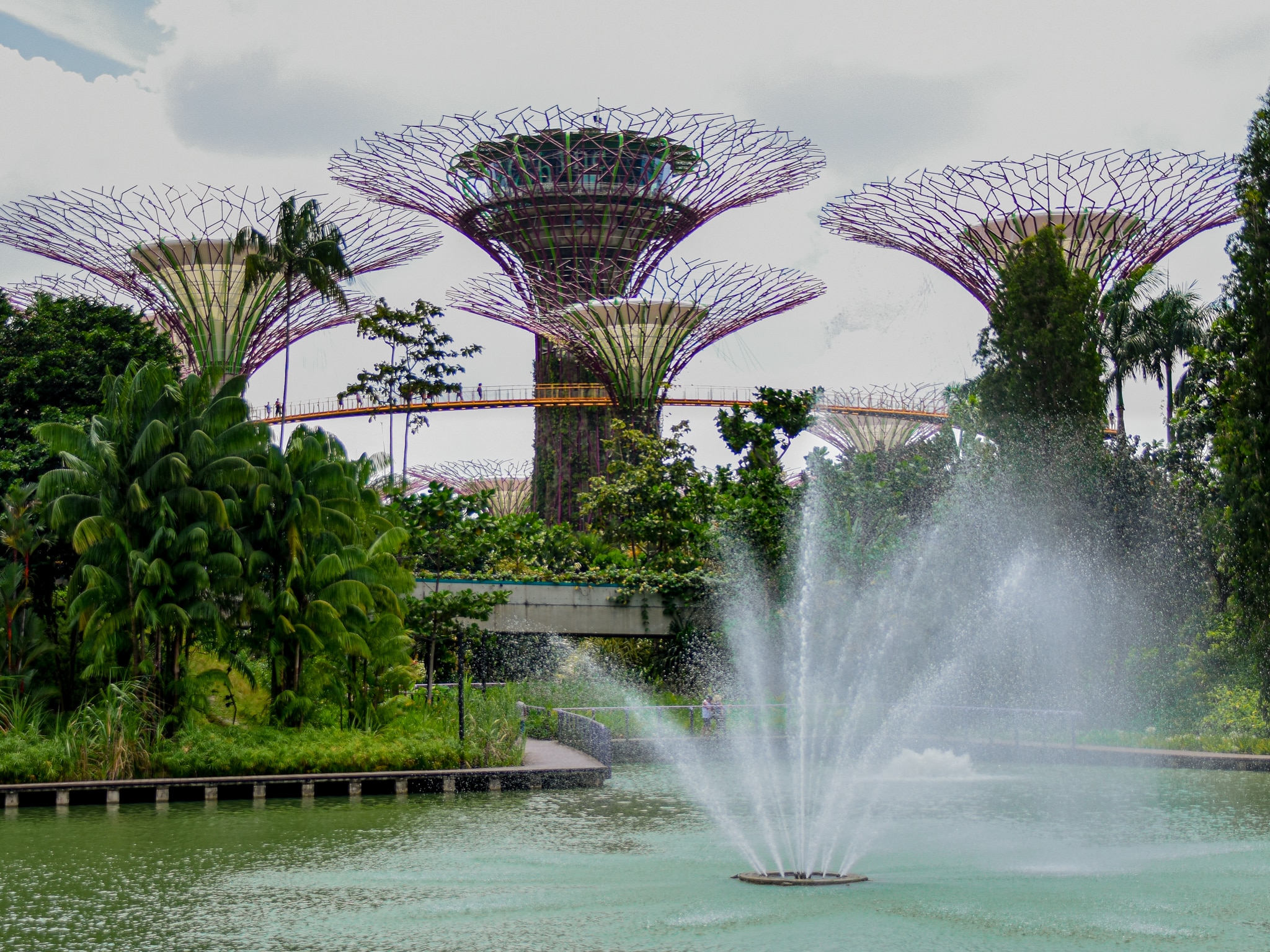
There are sparks of pure genius and beauty throughout this metropolis, particularly in how it blends humanity and nature. For example, the magical Gardens by the Bay and Marina Bay are both masterpieces of nature and architecture, spectacular enough to revive a dead newt. They both also take part in stunning twice-daily laser and light shows. For free. These are worth a stop on their own.
Singapore also has one of the highest rates of biodiversity of any city on Earth, and everything from monkeys to wild otters can be found roaming the city alongside its people.
The 'country' is one of the cleanest cities I've ever been to. It's a very well-oiled machine. Everything runs on time, and has a purpose to it, unlike most cities. As a result, Singapore is just... easy. Easy to see, easy to get around, and, most importantly, easy to enjoy.
So whilst the idea of 'backpacking Singapore' maybe a bit of a stretch, it's definitely worth more than just a scoot through the airport.

Quick Stats
Currency
Singapore Dollar (SGD)
Religion
Buddhist: 33.8%
Population
5.8 million
Language
Official: Malay
English
Tamil
Mandarin Chinese
When to Go
High Season: Nov - Jan & June -July
Low Season: Aug - Oct
Price of Beer
£9.40 a Pint (Yeah, me neither, thanks)
Our Singaporean Stories
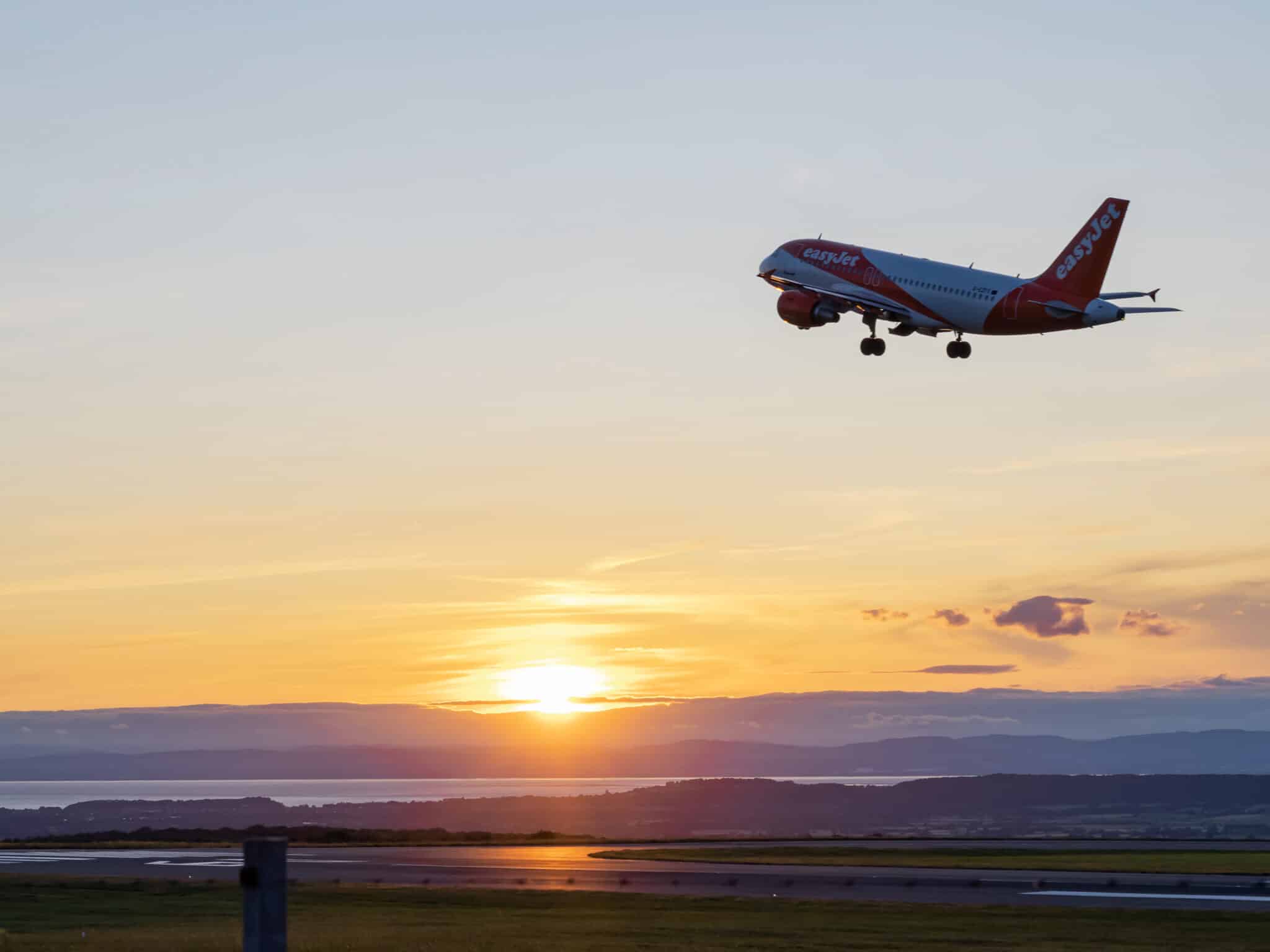
Long Haul Flights vs Our Favourite Stopover Locations
With long-haul flights getting, well, longer, is this the end of the stopover?
Preparing to Backpack Singapore
Where is Singapore?
Singapore is a tiny island on the southern tip of Malaysia, just here:
Speaking Malay
Those of you who can speak, or have knowledge of, the Indonesian language (Bahasa) should pick up Malay relatively quickly. There are a lot of similarities between the languages.
For those of you who aren't familiar with either, we have provided a few key phrases you may find useful. As always, use our idiot-proof pronunciation breakdown to get this spot on.
| English | Malay | Greg's Pronunciation Breakdown™ |
|---|---|---|
| hello | Hello | Hello |
| bye | Selamat tinggal | Cell-a-mat ting-gal |
| my name is... | Nama saya ialah | Na-ma-say-a iell-ah |
| yes | Iya | Ya |
| no | Tidak | Ti-dak |
| ok | Okey | Okey |
| please | Tolonglah | Two-long |
| thank you | Terima kasih | Terri-maka-see |
| sorry | Maaf | Ma-af |
| how much? | Berapa banyak? | Berr-appa? |
| excuse me | Maafkan saya | Maa-aff-kan saya |
| what? | Apa? | Ap-pa? |
Transport
As I keep banging on about, travelling around the city is easy. Every mode of transport is clean, efficient, and on time. It just works, and you likely won't need anything other than public transport to get around.
I found the best way to use public transport in Singapore was to get a Singapore Tourist Card, aka a Public Transport Card.
You can purchase them from several locations around the city, and it's nice and easy to do. You simply pick up a one, two or three-day pass, costing $20, $26, or $30 (£11, £14.50, or £17) respectively.
These contactless beauties will allow for unlimited rides on all the standard pubic transport, including buses, and, more importantly, the underground. It also gives a couple of small discounts at some attractions within the city. When you're done, simply hand the card back, and you'll get a refund of $10 SGD (£5.50).
If you have more money than sense, you could also get the 'Singapore Tourist Pass Charm'. Which is exactly the same as the card in every way, except it's a cute figurine on a keyring. It's non-refundable, costs a whopping $37 for a day (versus $20 for the card), and, at the time of writing, is totally sold out.
Go figure.
Visas and Borders
When it comes to entering Singapore, the visa requirements are somewhat slack.
Citizens from the following countries can enter Singapore for up to 90-days visa-free - Any EU country, New Zealand, Australia, United Kingdom, Norway, South Korea, Switzerland and the United States of America.
Citizens of the following countries can enter Singapore for up to 30-days visa-free - Canada, Mid and South American countries, African countries on or below the equator (except Somalia), European countries not mentioned above except Belarus and Ukraine, Sri Lanka, Nepal, Bhutan, Mongolia, Oman, UAE, Qatar, Bahrain, Kuwait, Israel, Indonesia, Thailand, Cambodia, Vietnam, Laos, Myanmar, Papua New Guinea, Taiwan and Japan.
If your country hasn't been mentioned, the chances are it will appear on one of the two assessment level groups below. This means you will have to apply for a visa before entering Singapore.
Assessment level one includes the following countries - Belarus, Moldova, Ukraine, Russia, Georgia, Armenia, Azerbaijan, Kazakhstan, Kyrgyzstan, Turkmenistan, Tajikistan, Uzbekistan, India, China and North Korea.
Assessment level two includes the following countries - Afghanistan, Algeria, Bangladesh, Egypt, Iran, Iraq, Jordan, Kosovo, Lebanon, Libya, Mali, Morocco, Nigeria, Pakistan, Palestine, Saudi Arabia, Somalia, Sudan, Syria, Tunisia and Yemen.
Having secured your entry, the majority of you will arrive via the enormous Singapore Changi Airport to the east of the country. There are numerous ways into the city from the airport, and unsurprisingly, they differ in price quite dramatically.
Taxis, which roughly take around 20 to 25 minutes, cost around $25 SGD (£13.50).
MRT Train, which takes roughly 30 minutes and costs around $2 SGD (£1.00).
Airport Shuttle Bus, which takes roughly 25 minutes and costs around $9 SGD (£5).
Other than that, those travelling from Malaysia may cross using the Johor Causeway Bridge to the north, which links Singapore to Malaysia.
The other way of entering Singapore is via the ports. A lot of cruise ships come and go from the city, and to be honest, I know little about them. You enter wherever your cruise is ordered to, and the staff will direct you further.

What to Pack
Being a city-state, Singapore is stupidly easy to pack for.
Essentially, Singapore is a large city with a couple of outlying rural islands. In general, pack for city life and the number of days you plan to be there.
Given that this is South-East Asia, pack for humid, hot temperatures and you'll be fine. Plus, the chances are that Singapore is just one of many destinations on your trip. Pack for them. Singapore will look after itself.
Our Top Pick for Backpacking Singapore is...

LifeStraw Go water bottle
Singapore is very hot and humid. Hence it is very important to keep hydrated. And in keeping with Singapore's clean ethos, without using single-use plastics. If you're after a lightweight bottle there are tons, just make sure it holds a sufficient amount. But we recommend the LifeStraw. Not only can it turn dirty puddle water into drinkable water, but it is a sustainable, ethical water bottle, and LifeStraw are working to provide clean water around the planet.
When it comes to the rest of what to pack for Singapore, I don't really have much to tell you.
Clothing and shoes
Other than the LifeStraw, the essential for backpacking Singapore is lightweight, breathable clothing. You will sweat, so pack sensibly. Ideally, you'll need a long pair of trousers and a pair of shorts, along with a t-shirt for each day you'll be there. If you plan on heading out for an evening, I highly recommend something smart, as certain bars will only allow you in if you look the part.
Pack and wear lightweight comfy shoes for a day on your feet, and a comfy, yet respectable pair for the night.
Bags
Being technically a city-break, expect to be on the go all day. You'll rarely have time to sit and relax at your hostel, meaning you'll have everything with you. A lightweight, comfy day bag is needed.
As always, I love my little Osprey. Its comfy, breathable straps help prevent those disgusting back-sweat patches, as well as spread the weight evenly around your torso.
Other than that, Singapore has you covered with numerous shopping malls throughout. If you cannot find what you're looking for here, it's not a thing.
Travel Insurance
This is a tricky one. Firstly, is Singapore a stopover, or somewhere you want to spend more than a few days?
Generally, backpacking Singapore is somewhat of an addition to a trip, not the destination. It's pretty safe here. The chances of you doing yourself some serious damage are slim. Also, you're probably one of the poorest people, here so the odds you getting your stuff nicked are tiny. But it's worth a couple of quid to get Singapore added to your insurance, even just as a stopover. You just never know.
Being what it is, the biggest issue you'll come across with insurance in Singapore is flight cancellations and delays. If you have it, your insurance should cover any delays or cancellations.

Backpacking Singapore Ethically
The first thing you will notice whilst travelling around the city is that it is clean.
I mean, spotless.
There is no graffiti, rubbish or waste. There are specific laws in regards to this, and laws I wish the rest of the world would catch up on.
In 2020 Singaporeans are, along with the majority of the world, looking more and more into sustainable fashion, transport and life choices. You can help this by disposing of your stuff properly (particularly plastics), and avoid polluting the environment.
Singapore has even been recommended by David Attenborough as a country others should strive to match when it comes to ethical and sustainable living, in harmony with and support of its environment. We think there can be no better praise.
What can I say? Be more Singaporean.

Safety
Historically, Singapore has always been a very safe city for tourists. All districts of the city are accessible day or night.
Similarly, from speaking with our female traveller mates, if you are a solo female traveller, Singapore is about as safe as it gets. Every female friend I've spoken about this to has said how safe they felt in the city.
Likewise, as a male, I can honestly say that at no point during my time in the city did I feel unsafe or worried. There is a really nice vibe to the city.
Even so, with any town or city, our advice is to keep your wits about you, especially if you've been drinking. If you don't take stupid risks, you're very unlikely to come unstuck.

Brief History
Singapore's history generally revolves around its location, and ability as a natural port to protect ships.
It is thought that the first known mention of Singapore comes in the 3rd century, named by the Chinese as Pu Luo Chung, meaning 'island at the end of a peninsula'.
Several centuries and several occupiers later, Rajendra Chola I of the Chola dynasty took control of an area known as Temasek (now Singapore) in around 1025AD, but didn't build here.
After a couple of centries in 1298AD, a small settlement was built, also called Temasek, meaning Sea Town.
The following year, an Indonesian prince called Sri Tri Buana was said to be on a hunting mission on a neighbouring island. Due to bad weather, he and his crew ended up having to dock in Temasek.
There he saw a beast, with a red body, black head, and white breast, which he thought was a lion. Which, for a reason known only to him, was a prosperous sign. He then did the obvious thing and started a new settlement, naming the area Singapura, meaning 'Lion City' in Sanskrit.
Singapore became a significant trading port under the Dutch empire, until the birth of modern Singapore as we know in 1819. It was then that Singapore fell under the jurisdiction of British India.
The island of Singapore became key during both World War I and II, changing hands several times, leading to significant deaths on both sides. However, things changed once again in 1963 when, under the Malaysia Agreement, Singapore merged with Malaya and became Malaysia.
However, this didn't last too long, as Singapore was granted independence in August 1965.

Our Singaporean Stories
Long Haul Flights vs Our Favourite Stopover Locations
With long-haul flights getting, well, longer, is this the end of the stopover?