Malaysia
Last Updated: June 14, 2026
NEED THE ESSENTIALS FOR BACKPACKING MALAYSIA NOW?
WHERE TO VISIT | BEST STUFF TO DO | SUGGESTED ITINERARIES | MALAYSIAN BLOGS

Heads up: We sometimes work with companies to provide affiliate links and reviews - here's what that means. If it's here, we use it. We don't plug shit for profit.
How To Backpack Malaysia In 2026
Ever considered backpacking Malaysia?
If you said no, you're not alone.
The idea isn't something you hear too often. The country doesn't get much love on the SE Asia backpacking circuit, losing out to icons like Thailand and Bali.
What this means for you, the adventurous backpacker, is a more authentic, less touristy experience!
When the topic of 'visiting Malaysia' comes up, it usually translates to 'stopover in Kuala Lumpur'. Which is what I did.
My time in Malaysia was confined to just four days in that spectacular city. Not enough time for me to talk in-depth about backpacking Malaysia, but enough to give you a primer.
Backpackers I met along the way told tales of hidden beaches, deep jungles, exotic wildlife, and delicious foods. All of which are reasons why we travel, right?
I picked up two key points on my trip:
1. Malaysia is underrated.
2. Malaysia should be more than just a touchstone. It should be somewhere you explore, you enjoy, you spend some serious time. Somewhere to say, "Yeah, I've backpacked Malaysia!"
Why Malaysia?
How many reasons would you like? There's a long list.
Jungles, orangutans, golden beaches, dive sites, towering mountains, food markets... need I go on?
When we talk of Malaysia, most of us jump straight to Kuala Lumpur. Yet there are chunks of Malaysia scattered across the South China Sea, including a third of the magical Borneo, home to the majestic orangutan.
Malaysia is one of those rare places where bucket lists receive a good thrashing, whilst keeping your wallet intact.
Jungle temples? Check.
Learn to scuba dive? Less than £300 for your PADI Open Water certificate.
Live like a king on a beautiful beach for a tenner a day? Head on over!
Having only spent a few days in the capital, I can't give you a full run-through of the country. I only had a taster myself. An aperitif, if you will. And like any good aperitif, it has left me wanting to jump into the main meal.
Would I return? Would I backpack Malaysia when there's so much else out there? You bet I would.

Quick Stats
Currency
Malaysian ringgit (MYR)
Religion
Islam: 63.3%
Population
34.6 million
Language
Official: Malay
Also: English, Mandarin and Tamil
When to Go
High Season: Dec - Jan & Jun to Aug
Low Season: Nov (school holidays - avoid)
Price of Beer
£2.10 a Pint
Our Malaysian Stories
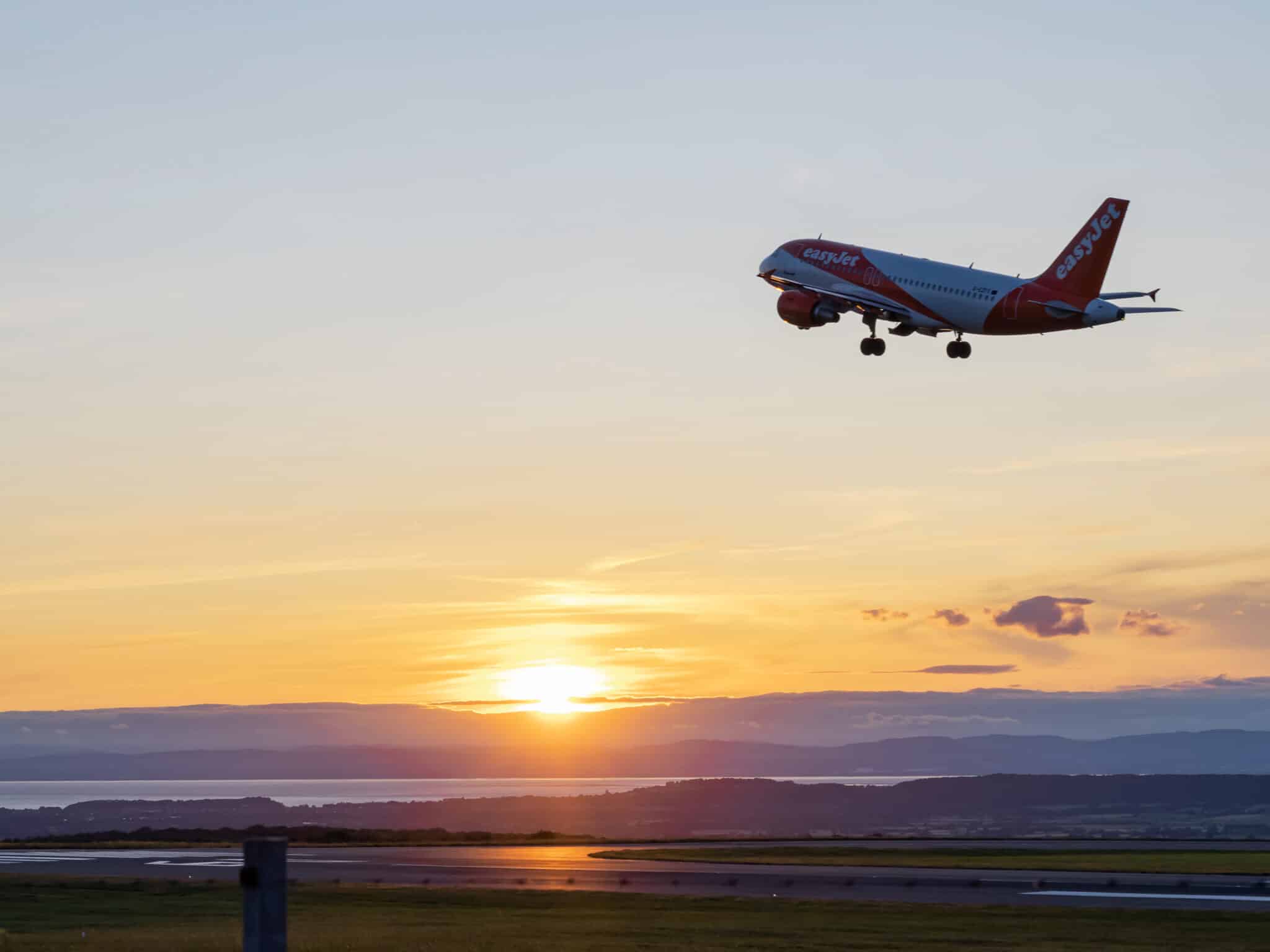
Long Haul Flights vs Our Favourite Stopover Locations
With long-haul flights getting, well, longer, is this the end of the stopover?

Kuala Lumpur, Malaysia – A Travel Guide
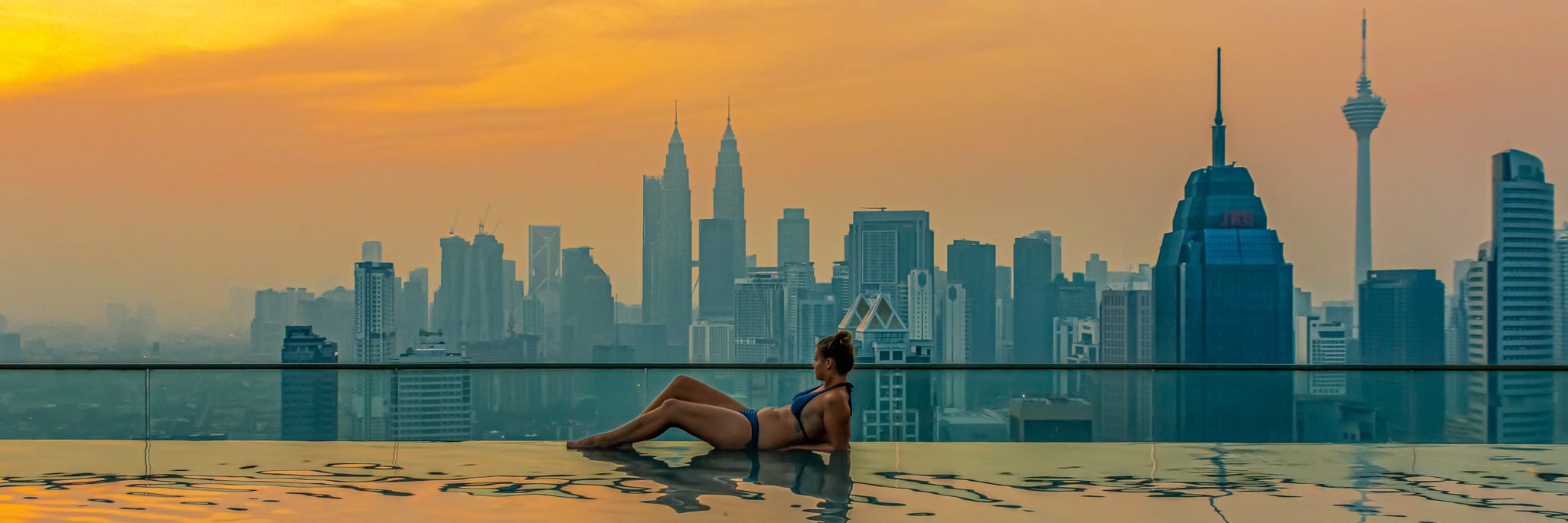
That pool, with views over the twin towers and a sunset, you must be in…
Contents
Where To Visit
Kuala Lumpur
Kuala Lumpur is, and always will be, Malaysia's stopover city.
But it's also much more than that. It's the gateway to Malaysia, and continuing your tour from here is the way to go.
As for the city itself?
Kuala Lumpur has something to offer any backpacker, traveller, or stopover extraordinaire. The streets are clean and welcoming, and there is some spectacular stuff to see. The Petronas Towers dominate the KL skyline, and the immense Batu caves are nearby. Although, the best experience has to be the sensational night food markets.
I am the first to admit there are better cities out there, and I was left wanting more. There's nothing wrong with it - it's just a bit... unremarkable.
Looking around, there are clear signs that you're in Asia, such as the unmistakable mix of noise, smells and activity. Yet, similarly, there is a very Westernised vibe to the city. Therefore, for anyone slightly nervous about travelling to Asia for the first time, this is for you, as you'll still get that familiar way of life.
For the more adventurous among us, you won't want to stay too long.
For our complete guide to backpacking Kuala Lumpur, click here.

Sarawak
Sarawak, on the island of Borneo, is a state rather than a city, and it's made our list due to its dense rainforests and wildlife.
The state capital of Kuching is flanked by rivers, national parks and nature reserves, and the story is similar for the rest of the cities here. All are bursting with culture, tradition and history. If you're here, Kuching is in easy reach of several orangutan sanctuaries.
It is, however, the surroundings that make this a backpacking must - jungle hikes are on on the menu!
Seberang Perai
Revered by travellers as a city built with nature in mind, Seberang Perai is a mass of reserves, rivers, greenery and mountains. Wildlife roams here, from the smallest fireflies hidden in the mangroves to the birds in the tallest treetops.
Nightlife in Seberang Perai leads you along untrodden paths as you delve into the hidden Malayan bars and the excitement of the night food markets. The city is a real mix of quaint industrial vibes, surprising beauty and a vibrant, hidden underworld, all waiting to be explored.
Perhentian Islands
Quick: picture a tropical paradise!
It looks like the Perhentian Islands.
Found just off the east coast of Malaysia in the South China Sea, five of the seven magnificent islands are uninhabited. This provides superb conditions for sea life to flourish, meaning snorkelling and diving are among some of the best Asia has to offer.
Expect tropical colour. Everywhere. Plus rays and turtles.
Furthermore, back on land, the picturesque islands are blessed with white sands, palms and turquoise waters, all shrouded within the glowing blue skies above. Want paradise? This is it.
The islands have become a popular stop when backpacking Malaysia, and are easily accessible. Check them out.
Malacca City
Malacca City is renowned on the Malaysian backpacking route for being full of colour, street art, religious artefacts and even theme parks to keep even the most overactive backpacker going.
Over the years, Malacca has been heavily influenced by various cultures, including Chinese, Indian and Portuguese, and signs of this influence are still prominent today. On the whole, the city is a real melting pot - the diversity from its people, architecture, religion and culture each brings something unusual and refreshing to the city.
What's It Like Backpacking Malaysia?
Backpacking Malaysia provides a mixture of western and eastern living, making it the perfect country for new and uncertain travellers.
Whilst there can be the occasional expensive moment, backpacking Malaysia is, in general, affordable and easy to do.
You'll discover exciting markets, events, and attractions across the cities, whilst the countryside and islands provide a calming, peaceful environment, full of beauty and wonder.
Nature and wildlife are key to vast parts of Malaysia, and they only enhance your experience. Every city, town and island differs from the last, and that means backpacking Malaysia will continue to entertain, inspire and stimulate you throughout your travels.
The Accommodation
You will notice that whilst backpacking Malaysia the accommodation differs dramatically from one island to the next. That doesn't necessarily mean a dip in quality, it simply means it's different.
In the concrete jungle that is Kuala Lumpur, I stayed in the magnificent Regalia Suites and Residence, a hotel block-come-hostel with epic rooftop pool views across the famous KL skyline.
Because I was backpacking Malaysia and not on a business trip, I ended up where I could afford, which was the hostel dorms. This was a one-bed apartment thrown together for 6 people, and it's rather cosy, but nice. I'm sure the apartments and hotel provide another level of comfort, which I wouldn't turn down if I had the money, but the dorms worked great and I recommend you stay here too.
Of course, Hostelworld, Airbnb and booking.com all showcase the spectacular Regalia Suites. They do offer different apartments and rooms so shop around between the three. Elsewhere in the country, it's truly a case of what style of accommodation are you looking for, and what's in your budget.
In the jungle cities of Borneo, you can bag yourself a comfy room in hostels and hotels for 42 MYR (£8) a night, where you'll have a great time. It might not be as luxurious as the 5-star resorts nearby, but then you're not spending a monthly wage per night.
The paradise Perhentian Islands are very much the same. You can find hostels and homestays for next to nothing, or swanky beach huts complete with beachfront pools, bars and great restaurants. It purely depends on how deep your pockets are.
As a rule of thumb when backpacking, the more 'off the beaten track' you are, the cheaper the accommodation. That most certainly applies rings true when backpacking Malaysia.
Check our detailed accommodation guides for:
The Food
Food, glorious food.
Trying different foods from around the world is one of the main ingredients (pun intended!) as to why I travel. Especially in Asia.
First up, I'm coming clean. During my time backpacking Malaysia, I never made it to a restaurant. That was because of the fantastic delights available elsewhere.
Street food rules in Malaysia, and there are plenty of examples of these tasty treats. Food trucks got me through lunchtimes, with unbelievable spicy bites on the go at great prices. In the evenings, the night markets of Bukit Bintang kept me full and very, very happy through the night and into the early hours.
The sheer variety of prep and cooking you'll find as you explore the markets is amazing. The familiar and unfamiliar mix beautifully, and once I loaded up a plate, sat down and started eating, I fell in love with Malaysian food. You will too.
I wouldn't waste time and money on restaurants. Eat cheap, eat local and enjoy every mouthful.
Some of the best foods I found come on skewers, all colour-coded to show how much each item costs. Once you have chosen, simply sit down and wait for a few minutes whilst the food is cooked fresh in front of you. Try it, it's awesome.

The Culture
As interesting as Kuala Lumpur is, it's very westernised. To discover the true nature of Malay culture, you will have to leave the city and explore further afield.
In KL, the Batu Caves felt forced and more of a tourist attraction than a sacred site. The most culture I felt in KL was the night food markets, where people from around the country gathered to present their local, beautiful dishes.
Outside the capital, festivals and celebrations reign supreme. The villages each have their own festivals, and life events and family rituals are also celebrated widely, in particular the Kenduri (a banquet of remembrance), which originated from the Indonesian island of Java.
Malaysia, like a lot of south-east Asia, is a vibrant melting pot of religion and culture. The influences from Malaysia's past are still remnant across the country, from previous conquerors and neighbouring countries alike. On your travels, you'll find the influences of Indonesia, China, Portugal and India written across Malaysia's story.
When it comes to religion, just over 61% of the population follow Islam. Most of the remaining 39% follow either Buddhism, Christianity and Hinduism, and they mostly exist harmoniously together. You'll find beautiful buildings dedicated to each of these faiths as you travel.
With the majority of the population following Islam, the traditional clothing of the Malayan people tends to be relatively orthodox, with most of the body remaining covered, especially for females.
Traditional clothing for women tends to be a Baju Kurung, a long dress covering the whole body, and a Selendang - a type of shawl - to cover the head. Men, on the other hand, wear a Baju Melayu, a type of shirt, with a Songkok for the head.

The Transport
As is generally the case in Asia, it's much cheaper getting around in Malaysia than you may first think.
In Kuala Lumpur, I tended to walk. However, there were times where I used taxis, public buses - which was deeply traumatic for me, but not because of the buses - as well as Grab (SE Asia's answer to Uber).
Roads
The roads around the capital do get extremely busy. And by 'busy', I mean 'gridlocked', especially the arterial routes in and out.
For example; I left my room at 6:25 pm on what should have been a short 45-minute journey to Kuala Lumpur International Airport. I arrived at 8 pm, a full 1 hour and 40 minutes later. Which is a crap way to travel 60km.
I will say to Malaysia's credit, however, it was for the first time in months that I had come across any driving standards at all. Belts were worn, people were driving within the correct lanes, and seemed to have some self-preservation instinct that skipped the rest of Asia. It took a while to get used to pavements being for the pedestrians.... mostly.
I think this adds to the air of westernisation that, rightly or wrongly, seeps through Malaysia.
Taxis
If you're heading to SE Asia and haven't heard of Grab, take a moment to download it now. It's basically Uber, but cheaper.
All you have to do is tell it where you're heading, choose the closest driver, and jump in! If your Malay isn't great, it helps eliminate the language barrier and helps stop you from getting screwed over with massive fares.
However, in 2020, a challenger to Grab has emerged. It's called Go-Jek, and they are massive in Indonesia, and looking to break into the Malaysian market. Between us, they are my favourite of the two - the motorbike taxis are quicker than cars, and, with Malaysia's decent driving standards, pretty safe.
Bus
I ended up using the public bus service in Kuala Lumpur after spectacularly underestimating the walk back to the city from the Batu Caves. As is the norm is SE Asia, the buses are cheap, no-frills, and very, very slow.
I paid a mighty 2.5 Ringgit (that's about 50p) for a dull and dismal 40-minute ride. The bus was dirty and crowded, and, being late to the party, I had to stand the whole way.
But, for 50p, it beat walking,
Now, I'll admit this might not be the norm, but I had an elderly gentleman standing next to me, thrusting his hips in my direction. He kept pointing at me, offering me both a massage and his phone number. I didn't accept, but each to their own. This might be a perk for some of you, but not me. No thanks crazy man, see you around.
Overall, buses in Malaysia are very much like buses in the UK, just cheaper.
Trains
Travelling by train seems to be the most efficient and effective form of travelling or backpacking Malaysia.
Run by KTM Berhad, the intercity lines are shaped like a giant Y across the country. The East Line serves the north east, and runs through the centre of the country from north to south. Meanwhile, the Westcoast Line runs from the - you guessed it - north west, heading south along the Straits of Malacca.
Both lines merge at a town called Gemas to the south, before combining and moving south to the Singaporean border.
A journey from the northern tip of Malaysia, to the Singapore border, will cost you 127 Ringgit (£24). That, to me, is like stealing. You simply have to take the train. It's super cheap, quicker and safer than driving.
Boats
Boats are a vital form of transportation in Malaysia, which isn't a surprise for an island nation sprawled across Southeast Asia.
Luckily, the services to these islands tend to be spot on.
The aforementioned Perhentian Islands have hourly ferries to both the inhabited islands, inside working hours, from Kuala Besut on the mainland. This will take roughly 40-45 minutes, with a return journey costing 70 Ringgit (£13).
Planes
Occasionally, the only way to get around is by air.
This is the case when it comes to travelling from the mainland to the outer Malaysian regions of Borneo. Flights from Kuala Lumpur will take roughly 45 minutes to reach the city of Kuching, and at a reasonable enough cost of 239RM (£45).
Would you pay that to arrive in the magnificent lands of the orangutan? I sure would.

The Budget
As previously mentioned, backpacking Malaysia is suited to all budgets, be it the high rollers, the gap-year gods and goddesses, or those hustling to raise enough cash for their next coach.
You can stay in great accommodation throughout the country and experience true Malaysian culture for next to no money at all.
However, you can also live life to the max, get your PADI licence, banana boat, live among the orangutans in treetop hotels, and more, depending on how deep your pockets are. Malaysia will adapt to you and your spending power.
So without further ado, our three Far Out budgets are:
The 'Backpacker' Budget
Your only objective is to keep travelling. The secret? Keeping costs at an all-time low. This is the budget for you.
Accommodation - Accommodation differs greatly depending on where you are within the country. Inside Kuala Lumpur, you will be looking at prices from 10RM (£2) a night. Not exactly extortionate.
Despite the differing styles of accommodation across Malaysia, the prices remain fairly consistent. That said, there are fantastic deals out there from as low as 5RM a night (£1).
Foods - Luckily when it comes to food in Malaysia, the best places are the cheapest. The backpacker budget means you'll be looking for those killer deals at night markets, and other forms of street foods. In my opinion, these just so happen to be the best, and the most cultural. You can enjoy 3 meals a day for around 35 Ringgit (£6.50).
Transportation - As you're on a backpackers budget, you will be using buses and trains, which are about as cheap as travel gets. As mentioned, a journey from the northernmost point of Malaysia to the southern border with Singapore will cost 127RM (£24). That's to cover the whole country, which obviously you won't be doing every day. Day to day, let's call it an average of 15 Ringgit (under £3) a day.
Drinks - Under Islamic law, alcohol is prohibited. That said, it is easy to come by in Kuala Lumpur. Beer should be the drink of choice for those on a backpacker budget as wine, gin, and cocktails cost a little more. You'll be able to buy a couple of beers at the markets and small shops for about 16 Ringgit (£3) a day.
Overall - Your backpacker daily budget for Malaysia, including three meals, will come to a grand total of 76 Ringgit (£14.20). Winner.
The 'Travellers' Budget
You've saved for this trip, and you want the ultimate bang for your buck. Money is tight, but you want the best experience. We've got you covered.
Accommodation - The accommodation is where you'll have the advantage over those on a backpackers budget. Whilst you can bunk in with the backpackers, your few extra pounds will go a long way whilst backpacking Malaysia. As little as 30 Ringgit (£5.50) a night will start to look like a comfy, private room with shared bathrooms.
If you can push yourself a little further, say 60 Ringgit (£11) a night, you can start to look into the Regalia Suites or the regalia hostel, complete with a rooftop pool.
Restaurants - Much like the backpackers, I'd still recommend eating at the night markets, as that is where the best tasting foods are. As a traveller and not a backpacker, you can afford to squeeze more on to your plate, but that's about the only change I'd make.
That said, if you wanted to dine at a sit-down restaurant you'll be able to splash out from time to time. Therefore, I'll average a cheeky 65 Ringgit (£12) a day.
Transportation - When moving around Malaysia, trains are the best way of getting to your next location. You won't need to worry yourself with buses. Whilst trains are ideal for longer journeys, you can also afford to get a Grab or Go-jek around the cities.
If you need to fly, it's Malaysia'sbudget airline, Air Asia, for you I'm afraid.
Unless you're heading off to Borneo, let's budget 35 Ringgit (£6.50) a day.
Drinks - Again, it's going to be beers for you, and there is nothing wrong with that. Maybe even three or four a night if you wish. On occasions, maybe indulge in a cheeky treat of a rooftop bar cocktail.
On average, let's say 40 Ringgit a day (£7).
Overall - Your travellers daily budget for Malaysia, including three meals, will come to a grand total of 182 Ringgit (£34).
The 'Daddies Credit Card' Budget
Your trust fund is finally available, and your Instagram followers need to see where you are in the world this week. You farted the other day, and a private jet came out. We haven't forgotten you.
Hotels - Good afternoon your lordships and ladies! Of course, its hotels all the way, and in the capital, you should be looking at hotels such as 3 Towers Executive Suite x KenHS @ KL City. With a private rooftop pool, you'll be forking out a gentle 6,940 Ringgit, £1,300 a night.
Restaurants - The only way to dine these days is 'apparently' with 6 courses, coupled with the additional wine pairing. I mean, it's time to show off, and where better than at dinner? This delightful indulgence comes in at a very reasonable 450 Ringgit (£85) per person. I'll call lunch half that price, and breakfast half again. That should total out at 787 Ringgit (£150) a day. Bargain, right?
Transportation - It's first-class all the way, just like you're used to. Although, when you can travel the entire length of the mainland for £24, it's going to be difficult to splash your cash here.
I'll assume you wouldn't want to ruin those Jimmy Choo's, so you'll be using private drivers and boats. The total price for this lavish luxury stands at 300 Ringgit (£56) a day.
Drinks - It's all about rooftop bars and cocktail nights for you high-end rollers. The Heli Lounge and Suzie Wong's are a couple of must-visits, where money can be thrown around like those sketchy Russian oligarchs your dad is mates with.
It wouldn't be unheard of to drop a further 300 Ringgit (£56) per person a night.
Overall - Your daddies credit card daily budget for Malaysia, including three meals, will come to a grand total of 7,990 Ringgit (£1,500) a day. I mean, you've spent more than that on a night out in Chelsea, right?
The Best Things To Do When Backpacking Malaysia
Grab some food at the night markets
Those of you who have followed my adventures through Asia will know just how much I love a night food market, and Malaysia is home to some of the best.
Spend an evening wandering around the Bukit Bintang area of Kuala Lumpur, and you'll end up finding the unmistakable sounds and smells of a night food market. You can sniff out the delights from a miles away, like a shark.
Moving closer, the unusual road of Jalan Alor in the Bukit Bintang district of Kuala Lumpur is like a Broadway show. The brightly lit road is the stage, and the cooking the performance.
The second you turn on to Jalan Alor you'll feel the buzz and excitement, as the hordes of people all jockey for position at the front. The vast amount of different foods on offer are incredible, each cooked in a style which has been handed down from generation to generation. Each skewer, spoonful, or sauce adds something special to the mix. Before you know it, you'll be craving more. Singly, each dish is magical, but when combined with other ingredients, well... words cannot describe that type of pleasure.
Whilst the food may be cheap, you can easily get distracted by the mouthwatering smells and eager crowds. Before you know it, you've spent as much as you would have in a restaurant. Not that you'll care. Every last chomp is a ringgit well spent.
No matter how long you're backpacking Malaysia, you owe yourself to try the food at a night market.

Take in the Kuala Lumpur skyline from the rooftop pool
If you've been travelling a while, you likely get suspicious when you hear the phrase 'rooftop pool'. People play it a bit fast and loose with that phrase, and it usually means having a cold bath with strangers, whilst staring at next door's TV aerial.
The rooftop at Regalia Suites has the best view I've ever had from a pool. How many swimming pools can boast a view of the KL skyline, which include, uninterrupted views of the Petronas Towers?
The beauty of the pool is it's positioning. Not only do you get the full KL skyline, but you get the everchanging colour of the sun whispering through the city haze. There is something ornately beautiful about the orange and yellow glow that hugs the base of the city.
The wonderful thing about this swimming pool is that it offers so much more than just a view. It offers relaxation. Sink into the warm waters and enjoy the heat of the sun until it sets to the west. Relaxation is hard to come by in cities, and this is heaven.
I don't know if there's another pool like it to be found backpacking Malaysia, or anywhere really. And for it to be backpacker-budget-friendly as well?
Can't say fairer than that.

Climb the Petronas Twin Towers
As far as twins go, the Petronas Towers are second only to Mary-Kate and Ashley Olsen when it comes to fortune.
The simple, staggering design has made them one of the most instantly recognisable buildings on earth.
When completed in 1998 they were the tallest building in the world, which is a title they held until 2004 after the completion of the Taipei Tower. Whilst they look immense from the outside, standing tall over the KLCC Park, they take on a whole new look from within.
One of the top attractions in the Malaysian capital has to be the tour of the 41st-floor sky bridge and the epic 86th-floor viewing deck of man-made mountains. I will say, whilst the tour is breathtaking, it is also 45 minutes long, which is longer than it needs to be, so plan accordingly.
A visit to the sky bridge produced a lot of sounds usually associated with a fireworks display - 'wow's and 'ooh's. That, however, was nothing compared to the staggering views you get from the 86th floor. You get a sense of perspective up here, as the city and clouds take on a whole new look.
There is more to see and do than just taking in the views, with the towers also playing host to art galleries and educational displays.
The vertigo-inducing tour ends, predictably, at the gift shop back down in the shopping centre, which is full of the usual stuff most of you will walk straight past.
Overall, it's well worth the 56 RInggit (£10) admission fee, even if it is just to watch a couple of the other guests lose their footing as they look down on the city.
As spectacular as the views are, I was reminded of Karl Pilkington standing inside the incredible caves of Petra, looking out at the views, and saying "You're better off living in the hole and looking at the palace, than living in the palace looking at the hole, aren't you?"
And he's right.
Since then, I haven't been able to enjoy a view from 'the palace' quite the same. I'd much rather look from the hole at the palace.

Preparing to Backpack Malaysia
Suggested Itineraries
Here at Far out, we only recommend and talk about activities, tours and itineraries that we have done ourselves. We don't want to put our name to anything that we cannot vouch for.
We are always honest with our travels, and everything you see on the Far Out website and Instagram comes from me and Charlie, be it the stories, blogs or photographs - unless we're both in them, obviously!
And so, because I only had a few days backpacking Malaysia, I can't give you an itinerary that we can hand-on-heart stand behind. Sorry. All I can say is to give this and our Kuala Lumpur guide a read, and use that as a beginning.
We'll be back in SE Asia soon, and when we spend some more time there we'll throw together a banging itinerary. If you beat us there, throw your highlights in the comments!
Speaking Malay
During my few days in Kuala Lumpur, I was amazed to discover that whilst listening to the radio in the taxi, I could understand everything.
For a minute, I thought I was back in Indonesia. But I wasn't.
Malay is very similar to Bahasa, the Indonesian language. Therefore, if you know Indonesian, you'll be able to converse with the locals in Malaysia. If not, the below guide will assist you in making your way around the country.
| English | Malay | Greg's Pronunciation Breakdown™ |
|---|---|---|
| hello | Hello | Hello |
| bye | Selamat tinggal | Cell-a-mat ting-gal |
| my name is... | Nama saya ialah | Na-ma-say-a iell-ah |
| yes | Iya | Ya |
| no | Tidak | Ti-dak |
| ok | Okey | Okey |
| please | Tolonglah | Two-long |
| thank you | Terima kasih | Terri-maka-see |
| sorry | Maaf | Ma-af |
| how much? | Berapa banyak? | Berr-appa? |
| excuse me | Maafkan saya | Maa-aff-kan saya |
| what? | Apa? | Ap-pa? |
Visas and Borders
For a large number of us looking to enjoy a spot of backpacking in Malaysia, entering the country is relatively simple.
Citizens of the following countries are granted a 90-day visa-free experience: All EU citizens, Iceland, Norway, UK, Switzerland, San Marino, Liechtenstein, Albania, Turkey, Bosnia and Herzegovina, United States, Canada, Cuba, Peru, Brazil, Argentina, Uruguay, South Africa, Egypt, Algeria, Tunisia, Morocco, Lebanon, Sudan, Kuwait, Jordan, Oman, Saudi Arabia, Yemen, UAE, Bahrain, Qatar, Turkmenistan, Kyrgyzstan, Maldives, South Korea, Australia, New Zealand and Japan.
The following countries citizens can enjoy a 30-day visa-free experience in Malaysia; Andorra, Vatican City (it’s you Mr Pope), Ukraine, Moldova, the Caribbean nations, Mexico, Chile, Paraguay, Russia, Philippines, Taiwan, Thailand, Vietnam and Indonesia.
The following countries will require a 30-day e-Visa; China, Indian, Sri Lanka, Bangladesh, Pakistan, Bhutan, Myanmar, Nepal, Serbia and Montenegro.
To apply for an e-visa, you must be outside of Malaysia or Singapore. The e-visa is valid for up to 3 months and grants a single entry. Indian nationals have the luxury of a multi-entry.
Those needing a visa before arrival are citizens from countries, generally, located around Central and West Africa, Colombia and Afghanistan.
If your country doesn't appear on the lists above, please check with your government website before flying. You are likely to be on the 30-day visa-free list. There are 97 countries on that list, and I couldn't list them all off.
Due to Malaysia’s location, the majority of the country is surrounded by water, thus there very few land crossings. Malaysia only shares a land border with Thailand, Singapore, Brunei and Indonesia, and even then the majority of the Indonesian border is dense jungle within the heartlands of Borneo.
The easiest, and by far the best way of entering Malaysia will be through one of its seven international airports. The chances are, the majority of us will be passing through Kuala Lumpur.
You are meant to carry proof of identity with you at all times, so have a photocopy to hand should your documentation be lost or stolen.

What to Pack
When it comes to what to pack for Malaysia, you have to answer one question: are you here for a stopover, or are you backpacking Malaysia itself?
If you're here on a stopover, pack for your main destination, but bear in mind the potential for heavy rain.
Those of you fortunate enough to be backpacking the country have more to think about. Are you going to the jungle, the islands, or staying on the mainland? Each destination will affect what you need to pack.
So whilst there is a lot to think about, we have you covered here.
Our Top Pick for Backpacking Malaysia is...

Umbrella and Rain Coat
When it comes to the weather, Malaysia loves its all, but it's favourite is rain. By the bucket-load.
The average global rainfall is 1000mm annually. In Malaysia, it's 2,500mm.
Therefore, umbrellas and rain jackets are as essential as your passport when it comes to what to pack for Malaysia. You never know when the next downpour will occur, and when they do they're both immense and sudden, and can cause flash floods in minutes.
Whilst nice to watch whilst nursing a beer from the comfort of a dry bar, they aren't something too entertaining to be caught up in unexpectedly. Therefore a portable umbrella is a total winner.
Having been in jungles and forests around the world, I can only imagine what it must be like in the undergrowth of some of Malaysia's dense jungles.
Me and Charlie both have collapsible umbrellas like this, but haven't got a favourite make or brand, so if you're in the market for one, shop around. However, when it comes to jackets, we're both North Face and Regatta all the way.
Clothes and Shoes
This is a tricky one. With Malaysia having all four seasons in one day, you really need to pack for all eventualities.
No matter the weather, you can guarantee that through large portions of the year, the humidity will be high. That means light, breathable, clothes are a must.
Whilst the major cities in Malaysia are fairly liberal, the rest of the country is more traditional in their approach to dress. With the main religion being Islam, it is expected that you cover your shoulders, waist, and legs. Please be mindful and respectful of this when packing for Malaysia.
Bikinis on beaches are disrespectful, and whilst not against the law, it is heavily frowned upon. Remember where you are.
Due to humidity, you will need to pack a couple of extras, t-shirts in particular. Without being too graphic, no one likes love puddles. Therefore, I suggest five or six t-shirts, three pairs of shorts, and two pairs of trousers - one for the bars and cooler city evenings, and one for the wet and wild countryside.
I would also pack a pair of light, waterproof trousers, should you be venturing further afield.
Electronics
For the same reasons as clothing, you will need light and durable tech with you when backpacking Malaysia. The damp air can ruin cheap or old technology, so bring waterproofing or some well-made gear. Nowhere in Malaysia does this apply more than in the jungles of Borneo.
You'll have the chance to capture some unreal, and likely endangered animals, and that will need the best camera. We both love and use our Nikon D500, and in terms of bang for the buck, it's immense. I will only upgrade if it dies or I win big on the lottery.
If you aren't looking to go big with the photos, then honestly a recent-model mobile should suffice instead of spending on a point-and-shoot. Smartphone cameras nowadays are phenomenal.
Due to dodgy wiring outside of the capital, there's real potential for a power surge or something to blow out, and you don't want that to be your expensive camera or laptop. Hence you'll need a decent travel adapter. Charlie, being our tech nerd, knows a thing or two about this, and after a good hard test, we only recommend one travel adapter: the iBlockCube.
It's hardcore, has a built-in fuse, and can, in fact, bounce off a forehead. I should also say it has tons of sockets, as there will be a time when you'll need to charge your camera, laptop and phone, and it's a case of more is better.
Bags
When it comes to backpacks, both Charlie and I always recommend either Berghaus or Osprey. You should aim to buy somewhere around 65 litres for your main bag, and something in the region of 15-20 litres for a day bag - these sizes do differ depending on height and strength. Whatever you choose, make sure its comfy, has decent waterproofing, contains areas for a reusable water bottle, camera, and a safe or hidden area for your valuables.
Other
Whilst getting drenched in the rain isn't ideal, my final suggestion relies on a good soaking.
Swimming is something you can do all over the world, but here in Malaysia, you have rooftop pools with epic city views, as well as world-class dive and snorkel sites off the Malaysian coast. So bring your swimwear. Just make sure you respect local customs.
Travel Insurance
Are you planning on using Kuala Lumpur as a 48/72 hour stopover?
If the answer is yes, don't forget to check that your insurance covers you to do so. I know it's only a short stay, but anything can happen at any time. My motto is that it's better to be safe than sorry.
Check the small print, as some insurance companies will allow a stopover as standard.
Those of you who intend to delve deeper into the country, and plan on backpacking Malaysia for longer, there are some things you'll need to consider.
Firstly, what are you planning to do in Malaysia?
Secondly, where within Malaysia will you be travelling?
If you intend to get your PADI licence, skydive, or go jungle trekking through Borneo, you should make sure these activities are covered within your insurance. These types of activities may not be covered under your standard cover.
Backpacking Malaysia Ethically
It is well documented that the dense, biodiverse jungles of Borneo, in both Malaysia and Indonesia are being destroyed at an alarming rate, often being replaced with palm oil fields.
Whilst the few who profit from palm oil are benefiting from the destruction of the forests, the loss of this rich and natural world is causing havoc for the wildlife, locals, and global ecosystem.
Borneo is losing species quicker than ever, with magnificent plants and animals being added to the endangered list daily. The clouded leopard and the pygmy elephants are just two of an evergrowing list of animals now being classed as endangered.
Whether you're backpacking Malaysia or sat in the comfort of your armchair planning your trip, you can help prevent deforestation. When buying products, especially foods and toiletries, check the label and do some research.
The RSPO (Roundtable on Sustainable Palm Oil) label is a step in the right direction, but is owned by the palm oil companies, and they are dragging their feet on enforcing their own rules on deforestation.
Education is the first step to recovery, and this Greenpeace article talks about the issues still plaguing the palm oil industry. Be aware of the problem, and help be part of the solution.
Those of you who are fortunate enough to be in the country, there is more you can do. Visit national parks, nature and conservational reserves. The entrance fee helps in combating deforestation and protecting Malaysia's endangered species of trees, plants and animals.
Furthermore, you should avoid zoos in Malaysia, these animals are here purely to entertain and wow the crowds, and not necessarily for their own good. Plus, you're in a country with amazing wildlife. Go to the national parks.
Other ways of travelling ethically through Malaysia involve spending your money in the right places, and this can be a difficult choice when you're travelling on a shoestring. All we ask is that you consider where your money goes once it leaves your hands, and be conscientious.
Outside the capital, the Malayan people are very poor. Treat them with the respect they deserve, spend your money wisely, and help where possible, whilst not flashing your cash. Be kind, and they'll be kind to you. And after all, locals are the most useful people to know when travelling.
Safety
In general, Malaysia is a safe country to travel.
As with any country, crime does occur, so be sensible, and don't do anything you wouldn't do back home. If you feel a particular area seems a 'bit off', leave. Trust your gut: it's based on thousands of years of evolution and your subconscious picks up on things you don't.
The most common crimes on tourists are bag snatches and scams. If you have valuables, keep them somewhere safe, and do not wear light strappy bags which can easily be ripped from the shoulder. Be careful where you use credit cards and check the machines before use.
The general rule I use when travelling in Asia is don't show off. If you act like you have money and are dripping in fancy jewellery, you will attract attention.
That said, at no point did I ever feel unsafe, in danger, or otherwise upset by anything. Ok, having an elderly gentleman on a bus gyrate at me whilst offering a massage was a little odd, but he was effectively harmless, and you get strange people everywhere.
As with much of Asia, female travellers, especially solo females, will attract extra attention. Even more so, if you are white, blond and blue-eyed. I'm afraid its a case of judge each situation on a case by case basis. The majority of people just want to have a photo with you, or will stare at you. The staring is a cultural thing across Asia and isn't malicious, just a bit weird if you're not used to it.
A female backpacker friend of mine was attacked by a local just outside Kuala Lumpur, along with a friend. Her advice is "Never leave the touristic routes by yourself". She added that once she did that, she felt safe, and both her and her friend were okay after the incident.
These kind of incidents are very rare in Malaysia in recent times, and Malaysia is, in general, is a safe country for all. Please know, I'm giving you worst-case situations
The one location where you'll have to pay extra attention to safety is the northeast of Malayan Borneo and the islands scattered across its beautiful shores. Piracy and armed skirmishes by (mostly) Filipino pirates do happen, albeit infrequently.
Armed forces now patrol the area, as well as the Malayan government implementing water curfews due to the heightened threat at night. If you are planning to visit the Sabah area, I suggest you check the local tourist page first.
The biggest no-no whilst backpacking Malaysia is drugs. Backpackers and drugs are a common combination, but don't chance it in Malaysia. They aren't worth the risk. There is a mandatory death sentence for carrying a particular amount (cannabis 200g, 40g cocaine, 15g of heroin). Anything less, well you won't be backpacking Malaysia anytime soon, or anywhere for that matter.
On that note, if you've dabbled in other countries before, check your bags and pockets for drugs before flying into Malaysia, unless you want to call your embassy and explain why you've been arrested as an international drug trafficker.
Malaysia does not fuck around with drugs, so neither should you.
Brief History
Malaysian history is, in a word, dynamic.
Just about everything has changed: the culture, religion, borders and people. Malaysia holds some of the earliest evidence of man, with stone tools dating back to around 1.8 million years. That said, the oldest known human bones in Malaysia only date back 40,000 years.
The rise of international travel and trade in the first century BC allowed Malaysia to grow rapidly, with Malayan people becoming some of the most powerful in the region. Trade with China, India, and Indonesia brought wealth and power, and it also brought religion.
Hinduism entered Malaysia around the 3rd century, followed a few years later by Buddhism after the 7th century. It wasn’t until the 13th century that Islam was introduced to the Malaysian people, again through trade with the Arab nations. The last of the major religions that are still practised today arrived with the Europeans in the 15th century; Christianity.
The Portuguese began an era of European rule, not just in Malaysia but in South East Asia as a whole. This occupation lasted until World War II, with small pockets of Malaysia remaining under British control until as late as 1957.
Independence followed, leading to running battles resulting in the independence of Singapore in 1963 as well as skirmishes with Indonesia over the borders. Today, political unrest still murmurs throughout the country, but in general, peace and safety reigns throughout Malaysia.
Our Malayian Stories
Long Haul Flights vs Our Favourite Stopover Locations
With long-haul flights getting, well, longer, is this the end of the stopover?
Kuala Lumpur, Malaysia – A Travel Guide
That pool, with views over the twin towers and a sunset, you must be in…
Mary Kate and Ashley Olsen? The 90s want their references back mate! 😉