India
Last Updated: August 19, 2026
NEED THE ESSENTIALS FOR BACKPACKING INDIA NOW?
WHERE TO VISIT | BEST STUFF TO DO | SUGGESTED ITINERARIES | INDIA BLOGS

Heads up: We sometimes work with companies to provide affiliate links and reviews - here's what that means. If it's here, we use it. We don't plug shit for profit.
Backpacking India In 2026
Backpacking India is somewhat of a dream for most. However, for those who have had the opportunity to visit India, it's a life-changing experience.
India spans over 1.2 million square miles and borders seven countries: Bangladesh, China, Nepal, Bhutan, China, Pakistan and Afghanistan. It is the seventh-largest country by area and the new most populous country in the world. The sheer size of this country will not hit you until you start to travel through its highways.
The word 'diversity' summarises India well, from its people and architecture to its landscape, incredible wildlife and climate. These differences mean there is something for everyone here, from safaris seeking wild tigers to the Varanasi ceremony, where bodies float across the surface of the Ganges during mass funerals.
It's this diverse and magical landscape, way of life and history that draws the world of the backpacker to its shores, and why you should start planning your backpacking India experience.
Nowhere else in the world will you find life, excitement and passion like it. Backpacking India is a must for anyone who considers themselves a backpacker, explorer or traveller.
Why India?
India is the spice of life and is unlike anywhere else on the planet.
Wherever you visit whilst backpacking India, the country provides a new experience, a new story and a new phenomenon. All your senses are greeted with fresh sounds, smells, feelings, and sights.
Backpacking India doesn't just show you a good time. It grabs you and drags you into a whole new world. A world that you'll find hard to leave behind. Yet, if you do leave India's clutches, it's most certainly somewhere your desires and dreams will make you want to return.
This vast expanse of land has a rich history and spectacular culture, making every day a school day. There is so much to see and even more to learn. Everything about the landscape, people, and lifestyle is fascinating, inspiring and downright beautiful.
Despite all this, there is one last item that makes backpacking India even more special and a front-runner for any traveller: the food. Never before have I had flavours, textures and sensations like it. Even the most basic meal deserves your full attention. I long for these tastes to fill me with pleasure once more, and I know I will be back.
For me, India ticks every box and is the holy grail of travelling locations.
Without stealing Nike's motto... Just do it.

Quick Stats
Currency
Indian Rupee (INR)
Religion
Hindu: 80%
Population
1.44 Billion
Language
Official: Hindi
Also: English
When to Go
High Season: Oct - March
Low Season: April - Sept
Price of Beer
£1.52 a Pint
Our Indian Stories
10 Must-See Attractions On India’s Golden Triangle
Why I skipped the sun and beaches and headed north, and suggest you do too.
Travelling India With My 87-year-old Great Uncle
Taking a middle-class pensioner on a tour of the Golden Triangle… What could go wrong?
Contents
Where To Visit
New Delhi
Delhi is the second most populated city in the world, and rapidly chasing down the top spot that currently belongs to Tokyo.
This fast-paced, ever-changing city is one of madness, mayhem and history. However, whilst I say fast-paced, do not expect to manoeuvre Delhi in a hurry. Traffic here is beyond anything I've experienced, and rush hour or hours gridlock the city.
Nevertheless, it has some unbelievable stories and beauty. All of which makes it worth the queues whilst backpacking India. Some of the city's highlights include the magical Raj Ghat, the vibrant and moving tribute to Gandhi. That's not forgetting the enchanting Qutub Minar, Humayun's Tomb and, of course, the more modern but no-less attractive Lotus Temple.
Please read our complete guide to backpacking New Delhi here.

Agra
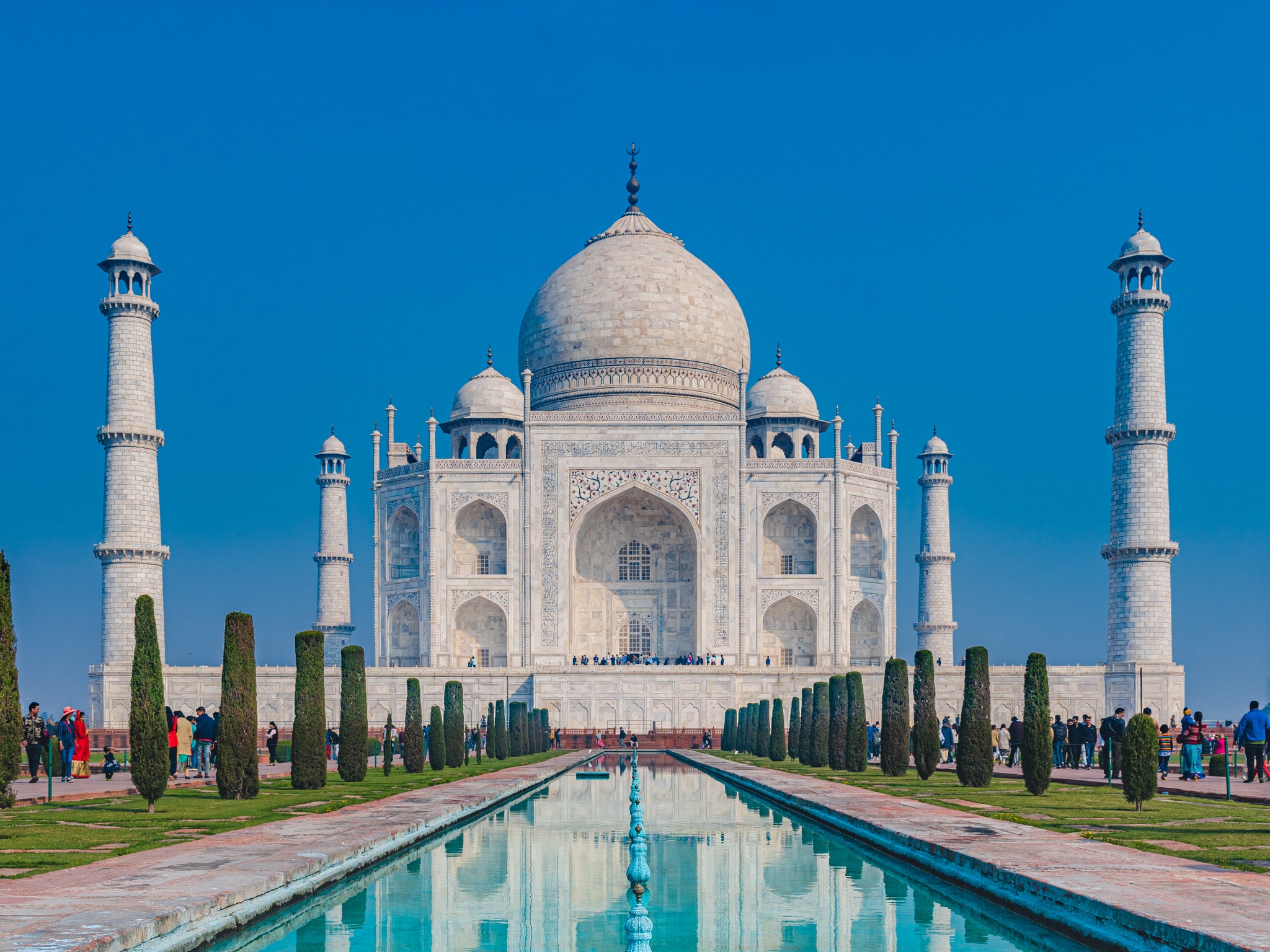
Home to one of the new Severn Wonders of the World: the Taj Mahal.
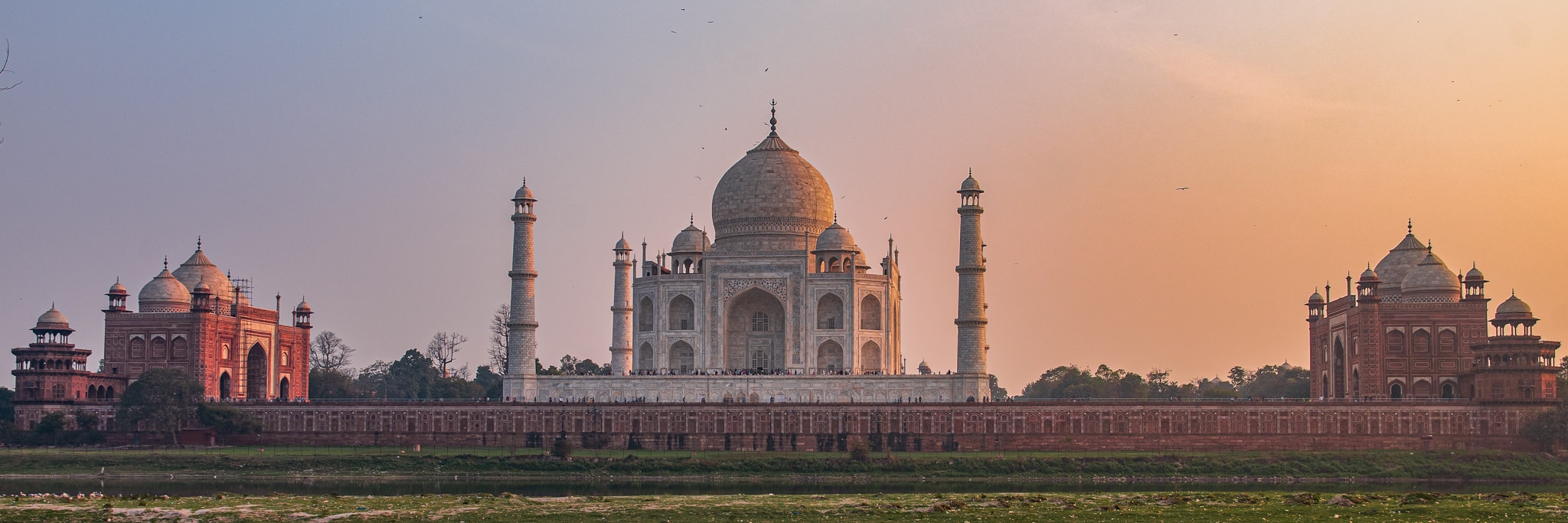
There is, however, far more to this magical city, as you'll discover whilst backpacking India. Agra is steeped in royalty, grandeur, and a culture of love, rivalry and war. There are numerous buildings worth visiting in Agra, which include the might of Agra Fort, The 'Baby Taj', and one of the best sunsets you'll ever experience at the peaceful Mehtab Bagh.
Agra is unmissable on any trip to India and is worthy of 3 whole days. Nevertheless, you will be met with pushy salespeople, souvenirs everywhere and crowds of tourists all in search of the bucket list items held within this magical city.
Please read our complete guide to backpacking Agra here.
Jaipur
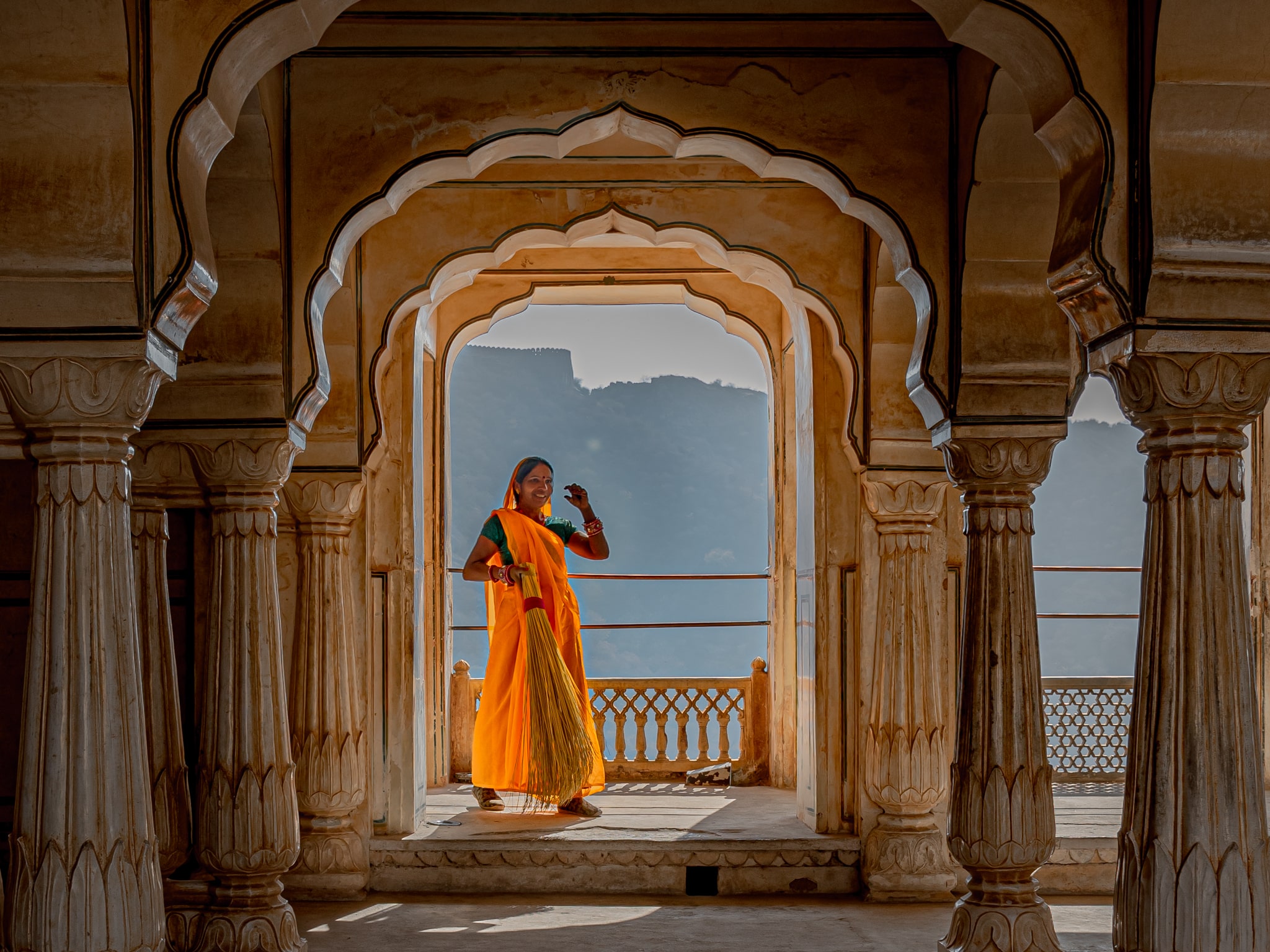
The Pink City is the capital of the Rajasthan region.
One of the first things you notice about Jaipur is the madness, mayhem and noise. Then, suddenly, the city's beauty kicks in. The pink that dresses the city's walls is a remarkable touch to already mesmerising buildings.
Jaipur is also home to one of the most respected and loved royal families in India. The Palace grounds are open to visitors, where you can delve into the life and history of this famous family.
Outside the Palace walls and the famed Hawa Mahal Palace front, there's more to see and experience than almost anywhere else. Jaipur is home to numerous markets. All of which are booming with eyewatering colours, smells and incredible handmade clothing and gifts.
There is an excitement in the city that others do not necessarily have, as well as multiple grand palaces, halls, forts and lake-house mansions.
There is an air of 'real India' here, which is what you should be pursuing when backpacking India, and not the fake facade you may feel in other tourist hotspots.
I would have loved a whole week in Jaipur. It's chaos - but in a good way.
Please read our complete guide to backpacking Jaipur here.

Shimla
Shimla is a small town in the outer Himalayas, which almost clings to the mountainside, holding on for dear life. Imagine those mountain goats who hang on to a sheer drop by a tiny hoof. That's Shimla, only instead of goats, it's buildings.
The narrow streets and markets make for a unique experience during your backpacking India experience. Additionally, the lie of the land makes for stunning views from The Ridge and other sublime viewpoints, such as the Shri Hanuman Mandir Jakhoo. Along with the magic of the colonial English buildings, the snow-capped Himalayas add to the beautiful backdrop.
Shimla is, however, most famed for its railway that brings much-needed tourists to its fair mountains. The Shimla railway was completed in 1903. This narrow track works its way up the cliffs, providing extraordinary views in places where the trees allow. It is a breathtaking, ass-aching experience, and one I will never forget, not necessarily all for the right reasons.
That said, as you're here backpacking India, the town is worth the ass-aching journey. However, if you've come this far north, I suggest you book a driver to explore further into the Himalayas, where the snow becomes ever-more impressive and the views even more gorgeous.
Please read our complete guide to backpacking Shimla here.

Ranthambore
Ranthambore is home to one of many national parks in India that boasts the graceful and elegant Indian tiger.
The beautiful leafy green national park is home to a fantastic array of wildlife, including crocs, deer, leopards, hyenas, bears, wild boar, monkeys and much more.
The settings are sublime, and nothing's more exciting than seeing these creatures in their natural habitat. The small town of Sawai Madhopur embraces the cusp of the national parks and provides several luxurious places to stay. The small town is again the 'real' India, with animals roaming the streets, rubbish on every curbside, and a dirty mist in the air.
The area is fantastic and one I highly recommend you visit whilst backpacking India, even if it's only in the hope of seeing the mysterious Indian tiger.
Unfortunately, I felt the park was let down by the park guides, who, in all honesty, paid more attention to chatting with each other than helping find the mystical tigers. Furthermore, when one was spotted, it was soon crowded out with trucks, 4x4's and other handcrafted buggies.
Please read our complete guide to backpacking Ranthambore here.

Varanasi
Described as the spiritual home of India, with the mighty Ganges River roaring through its heart. Varanasi is known for its numerous temples and its funerals, at which the dead are set out on to the Ganges and set alight.
The city is awash with mess, noise, colour and smells. Additionally, the streets are a maze full of excrement, urine, rubbish and animals, as well as crowds of locals going about their daily business.
Varanasi is often pictured from the mighty river, with the colourful, often shack-like, buildings stacked on top of each other above the ghats (steps into the Ganges, often where the ceremonies take place) that lead into the sacred river.
It is somewhere I'm desperate to explore for myself and is a hotspot for the majority of those backpacking India. It looks fascinating and full of culture and beauty.
Mumbai
Formerly known as Bombay, Mumbai was the largest city in India. Nowadays in 2020, it sits firmly behind Delhi, but still easily takes its spot amongst the top 10 largest cities in the world.
Mumbai is set amid numerous islands on the west coast of India, and is, to all intents and purposes, a modern-day metropolis. Skyscrapers fill the horizon interspersed with stunning old gothic and art deco temples, forts, statues and palaces.
During any visit to India, you will hear and see numerous shows, billboards and stories about Bollywood. If that is something you're keen to see and get involved in, then Mumbai is where you need to be during your experience backpacking India.
Kolkata
Formerly Calcutta, Kolkata can be found on the far east of the country just shy of the Bangladesh border.
Split by the fast-flowing Hooghly River, India's former capital (when under the British rule until 1911) is known for its stunning foods and Bengali way of life.
Nowadays, the city is the tech capital of India, with all the major tech firms boasting impressive, large offices in the city.
Goa
Goa is famed for long stretches of perfect beaches, relaxation, and great weather. As a whole, the area is considered one of India's most beautiful, and not just due to the miles of white sands and crystal clear 'blue-ass' waters. The biodiversity is second to none thanks to its location, surrounded by beaches to the west and the mountains to the east.
There is a heavy Portuguese influence on the area, which is still noticeable in several wonderful religious buildings.
Goa is somewhere you come to relax, party and soak up the sun. Peace and tranquillity flow across the paddy fields, spice plantations and fishing villages. Its a much slower pace of life compared to the majority of India.
What's It Like Backpacking India?
Firstly, backpacking India is immense, cheap and presents you with more travel stories than you can imagine.
It is, however, tiring, time-consuming, and vast. You are on the go no-stop, and there is nowhere that allows you to relax and rest. There is always something going on.
But don't let that put you off, its pure brilliance. As mentioned above, if you consider yourself a backpacker, explorer or traveller, then you must gather your gear and start backpacking India.
The Accommodation
Accommodation in India ranges immensely, from the downright unhospitable, dirty and dangerous, to the glorious, luxurious and peaceful. You, and only you, know your budget, and what you consider financially acceptable.
Due to the vast size of India, the price you pay for decent accommodation in one city may not get you a similar standard in another.
As you can imagine, the larger, more popular cities which draw in the tourists demand a higher price per night. That said, you can get a lot for your money when backpacking India, and you do not need to blow your budget on accommodation. Save it for the experiences and food.
Due to taking my 88-year-old great uncle, I needed to book a tour, in which the accommodation was prebooked for us. This was so I knew he'd have a certain level of comfort he'd become accustomed to over the years. This sort of luxury was new to me, yet one I would happily continue if I had the cash.
That said, I would normally have booked a hostel, or somewhere a lot cheaper, on the likes of Airbnb and Hostelworld. As long as it is safe and well located, I'm happy.
There is more than enough beds in the cities, so at no point would I have worried about not getting a room, and booking the night before arrival should be more than sufficient.
I will say that here in India, more than any other country I've been to, you get what you pay for. An extra couple of pounds per night can be the difference between safe, or comfortable as well as safe.
When it comes to accommodation, a little planning goes a long way. You'll find taxi drivers and people waiting in bus and train stations, hunting for travellers who look a little lost or new, and recommending the perfect hotel or B&B that they're suspiciously happy to take you to right now. They're on commission.
Remember two things in India:
- If someone is recommending you go somewhere, it's because they are getting a cut, as its more than likely a family member who owns it. This is fine if they have what you need, but be aware this is how it goes in pretty much every city.
- The prices in India are negotiable if you haven't pre-booked and paid online. You can make hefty savings compared to pre-booking as you can haggle there and then.
The one recommendation I will make, if you are in the Ranthambore area, is the exquisite Sawai Vilas. Never before have I been made to feel so welcome. Everyone we met, including the owner, was beyond hospitable. The rooms were by far the most comfortable during the trip, and the food could easily be awarded the Michelin star.
It is by far my favourite hotel I've ever stayed.

The Food
Whilst travelling the world, some of the key experiences will revolve around food. So backpacking India, should there be very special, and is. When you speak to people about Indian foods, they automatically assume you mean blow-your-eyes-out hot curries. This isn't the case. Indian foods are easily among the best I've ever eaten, and that is saying something, especially because I've eaten in Italy, Thailand and Peru.
Whilst curries are a massive part of Indian cuisine and are eaten daily, the staple food of India is rice, lentils and beans.
You will find numerous curries on offer in every restaurant, and I urge you to try as many as you can. I found that whilst curries outside India and Sri Lanka tend to go all out for spice, Indian curries tend to be thicker and creamier. All in all, much tastier. Overall, I have to recommend the butter chicken. I had it a couple of nights, and once for lunch, and it was unlike anything I've ever tried. Whilst I ate a different form of curry almost every night, the days were filled with eating on the go. This meant street food and markets.
I know that some people are sceptical about street foods, especially in many parts of Asia. However, I highly recommend them and didn't get sick once. Not only were the street foods and markets some of the tastiest foods, but they were also by far the cheapest.
Something that surprised me the most was the accompaniments that came with a curry. Now, I've had naan and rotis before, but I have never had anything like these. Whilst the curries were by far the most flavoursome foods I've ever had, it's the breads I want to credit. Every restaurant hands them out like sweets with every main course, as if they're nothing. They're little drops of angel tears. They were indeed a highlight of my time backpacking India.

The Culture
Despite India's size and diversity, there are many similarities in how life is lived, treated and respected.
There are also several very noticeable differences from my upbringing in the UK, and don't come naturally if you're from the west. A couple that you may notice when backpacking India are;
Firstly, animals, especially cattle, are considered gods and are to be respected as such. Animals have right of way and are allowed to do as they please. This can be a little disconcerting, particularly when a large bull comes towards you in a narrow alleyway and expects you to move.
Secondly, men openly urinate in the street, in towns, motorways, countryside or where and whenever nature calls. They do not attempt to hide this act, and it is considered fairly normal.
Thirdly, staring is a big thing. Do not be concerned by this as it isn't meant as any form of threat, they're just curious. People stare at you no matter what you're doing or where you are.
Finally, on my shortlist of noticeable differences, men who consider themselves friendly walk arm in arm or hand in hand, even out of a relationship. This wasn't as noticeable for women.
Other useful hints and tips on culture in India
The majority of Indian's are Hindi, and this comes with certain expectations.
Women's clothing is often colourful silk saris, whereas traditional male clothing is called dhoti, which is tied around the waist. Both men and women have ceremonial clothing for special occasions.
There are a number of large celebrations in India. My favourite has to be the Festival of Holi, also known as the festival of colour. This is the one you've likely seen, where the streets are packed with people all throwing coloured paint powder at each other. It looks epic fun.
The most important festival is Diwali. This festival lasts for five days and celebrates human's inner light and ability to fight off the bad spirits.
When it comes to temples and religious sites, it is, as with most Asian countries, expected that everyone should cover both shoulders and knees. You may be turned away if you do not respect this.

The Transport
Interesting.
That is by far the most appropriate word I can think of when it comes to transport in India. Life on the roads is scary, horrific and full of shut your eyes and pray moments.
That said, depending on where you want to spend your money, all forms of transport can be described in a similar manner. It's not luxurious.
You will, however, be pleased to know that risking death and wildly cramped conditions comes at next to no cost when backpacking India.
As I said, interesting.
Roads
As you get within half an hour of a major city, the roads become super congested, and soon grind to a complete halt as you get within the city boundaries.
The major cities are a no-go zone during rush hour, and I mean 'no-go' in more ways than one. You just don't move. People in all forms of transport imaginable take to the pavements, which, unless your driver decides it's you, is hilarious to watch.
Taxis
Taxis are in general easy to identify, with each state having a colour code for their taxis. This should help tourists easily identify legit services, keeping you safe. They are not, however, cheap.
When it comes to prices, they differ depending on the number of passengers, location, time, and so on. Roughly speaking, you can get a taxi between ₹70 and ₹100 rupees, plus 30 per kilometre thereafter. On average, a 10km (6.2 miles) journey should cost in the region of ₹400 (£4).
Any form of transport out of a city is likely to be a long-ass journey, and therefore taxis just wouldn't cut it. You need to be looking for a cheaper option, this is where the buses and trains come into play.
I'm going to use a journey from Delhi to Agra as a rough price guide and time frame. Roughly we are looking at a distance of around 210km (130 miles)
Bus
Prices start around ₹300 (£3.10) and take roughly 3 hours.
Train
Prices differ depending on the class of carriage. Sleeper class can be picked up for as little as ₹290, (£3) up to first-class which comes in around ₹1,370 (£14) and takes around 2 hours 30 minutes.
The beauty of the train is that you can travel huge distances, and I'm talking hundreds of miles for a couple of pounds. However, you will be hurting, sweating and in a bit of a state when you arrive at your location.
Train classes make a big difference to your levels of comfort, and to your poor ass cheeks. Seriously, the difference is crazy. Sleeper/3rd class is a bone tingling experience. You bounce off the hard wooden seats and beds, whilst getting suspiciously close to the crowds around you. On the other hand, first class is luxurious. Aircon, space and cushions rule the roost.
General Travel Advice
For any traveller backpacking India who considers themselves not on a shoestring, or in need of comfort, I would highly suggest looking at a first or second class ticket when travelling any reasonable distance. It is still super cheap, and you will thank yourself for upgrading, or at least your ass will. When travelling India, you very much get what you pay for.
Despite this gulf in comfort and the low costs, public transport is very much on-time. Which, when you consider some trains have been rolling for 34 hours, is phenomenal.
All in all, travel around this stunning country is cheap, easy and at times very entertaining. I loved being at the train stations watching the world go by. People were jumping off and on trains before the train had even thought about stopping.
Again, interesting!

The Budget
Again, having been on a tour, which was a little more pricey and comfortable than I am used to, most things were paid for.
Nevertheless, I did eat and drink out, use public transport, and checked out a lot of attractions not on the tour route as well. Therefore I should be able to push you in a relatively good direction when it comes to budgeting and cost-saving tips.
As always, we've split the budget into 3 sections. You should fit into one.
The 'Backpacker' Budget
Your only objective is to keep travelling. The secret? Keeping costs at an all-time low. This is the budget for you.
Hostels - It's not all doom and gloom, you have a couple of options here in India. Firstly, the cheapest option Couchsurfing. If, however, you don't feel comfortable with the idea, I have found the next cheapest option, and I think it would be hard to beat, even in your back garden. It's called the Shanti Hostel and costs ₹80 (£0.82) a night. Although, you really should be looking at a rough guide of between ₹293 -₹685 (£3 - £7) a night. Winning.
Street Foods and Markets- These are about the only places you'll want to look at eating on a shoestring budget. Whilst it may sound like a raw deal, it is, in fact, a complete result. Indian markets produce some of the best meals out there. They are full of flavour and in general, I find the atmosphere better than a sit-down restaurant. Prices depend on how hungry you feel, but you can budget ₹100 (£1) a meal. For reference, a McDonald's meal is roughly ₹150-200 (£1.50).
Transportation - Ideally you'd walk, so transportation around the city could be free. You also have the option of hitchhiking, again a great free option. However, if you can't get down with either of those options, it's buses for you unless you are moving between cities. In that case, you are on a sleeper carriage with the locals. On average, let's look at ₹100 (£1). I'm basing that on some days travelling between cities, and other days walking around on your own two feet, with the odd hitchhike thrown in for good measure.
Drinks - Strangely bars and pubs are a little tricky to find. That said, when you do find a locals bar, you can pick up a large beer for around ₹60, and I'll allow you, on average, two a day. You pisshead. ₹120 (£1.20).
Overall - Your backpacker daily budget for India, including three meals, will come to a grand total of between ₹753 - ₹1,205 (£7.70 -£12.30) a day.
The 'Travellers' Budget
You've saved for this trip, and you want the ultimate bang for your buck. Money is tight, but you want the best experience. We've got you covered.
Hostels - I should imagine you could be in with the backpacker budgets here if you wanted. For slightly more privacy, I've given you the private hostel dorm at the higher end of the backpackers budget. Brace yourselves, it's a grand ₹1,750 (£18) a night.
Street Food and Small Restaurants - Allowing for a nice meal in a small restaurant, or just something slightly classier than a McDonalds, expect to fork out (get it?) ₹490 (£5) a meal. Again, street food will help you keep those costs down. Call it ₹980 (£10) a day.
Transportation - This, along with the hotels, are where travellers have the advantage over the backpackers. There is a likelihood of wanting to splash the extra cash in this department. It really would make a difference to your overall impression of travelling India. Allowing for a 2nd class style of transport throughout, your budget should average out at ₹490 (£5) a day.
Drinks - Again, you're likely to be finding the good bars and drinking at the hotels, but not going all-out. However, there may be the odd occasion where you go wild, and end up drinking somewhere a little more pricey from time to time. Thus I've budgeted a grand ₹300 (£3) a day on drink. You dirty dogs...
The Splurge - Sadly, tourist attractions don't differentiate when it comes to western tourists. We all pay the same. In general, these are manageable, even without Daddies' credit card. If we start with the most famous, the Taj Mahal rocks in at ₹1,400 (£14).
Overall - Ignoring the splurge, your traveller daily budget for India comes to a grand total of ₹3,520 (£36) a day.
The 'Daddies Credit Card' Budget
Your trust fund is finally available, and your Instagram followers need to see where you are in the world this week. You farted the other day, and a private jet came out. We haven't forgotten you.
Hotels - You need to be looking at the names Oberoi, Ananda Himalayas and the Taj Falaknuma - Average cost ₹43,000 (£440) a night. Unless you want to add a butler.
Restaurants - In general, the more expensive restaurants tend to be located within the grand hotels. Prices can easily rise to ₹8,000 - ₹9,800 (£80 -£100+) for two.
Transportation - As is expected, one would have a private chauffeur which comes in at a very reasonable ₹5,000 (£51) a day. We also thought that was cheap.
Drinks - Of course, a bottle of the finest, Insignia 2015, a sweet ₹5,000 (£51) a bottle.
Overall - Your daddies credit card daily budget for India, including three meals, will come to a grand total of ₹77,000 (£789).
The Best Things To Do When Backpacking India
Visiting the majestic Taj Mahal
The Taj Mahal was, for me, a bucket list item, as I'm sure it is for many of you who have got this far into the blog. Often, I have ticked bucket list items in the past, and its been rather underwhelming. I was nervous: I didn't want this to be one of those cases.
I am, however, pleased to say, it wasn't! Not only was this bucket-list-worthy, but it was also beyond my wildest dreams.
Despite the large crowds, the Taj Mahal felt empty, peaceful and graceful. I'd describe it as one of the most magical moments of my life. It was breathtaking and even brought a tear to my eye. Genuinely.
The marvel that is the main mausoleum is on such a vast scale. The design was beyond beautiful, the marble shimmered in the glorious sun, and that's before you add in the intricate gemstones lacing the walls.
In summary, this is a once in a lifetime moment, and my feelings are that if you visit India without seeing the Taj Mahal, you've missed out.
For more on the Taj Mahal click here.

Seeing the Indian tiger in its natural habitat
Again, I'm talking about bucket lists, and that should tell you how good this experience was. I'm a massive fan of wildlife and in particular, the big cats, so when Ranthambore called, I packed my bag and headed down.
I don't know if it's the excitement of the safari, or watching the big cats play. Whatever it is, it's a thrill unlike any other. There's just something about being on safari. The wildlife is beautiful on a level that is only matched by that of the stunning landscape around you.
You'll be entering the park early on the back of 4x4s, and watching as the night sky turns to the light of day. Your excitement turns to awe as the sun rises over the mountains, and the cries of the animals awakening from a night's sleep fill the air.
The anticipation of seeing a wild tiger was driving me crazy all day. Finally, we caught a glimpse and pulled in close to this mysterious, divine and elegant killer. She looked up, and stared me straight in the eye. That feeling will stay with me to the end.
In all honestly, I didn't think much of the guides within Ranthambore compared to other safaris I've been on. However, this is the only safari in which I have come face to face with a wild tiger. Therefore, It's worth every penny, no matter the National Park or country. It's a must.
For me, it was on a par with seeing the Taj Mahal, and that, from me, is about as high praise as you'll get.

Haggling for souvenirs at the markets
Something both Charlie and I enjoy is a good market, and even more so, haggling. Haggling is something I enjoy in any country, and whilst the general gist is the same, each country has its little quirks. Once you've discovered these quirks, the fun begins.
Now, I am first to admit, markets often sell a lot of shit. That said, every town or city I visit I like to pick up a little memento, something that instantly reminds me of the place. No two items can be the same, and I keep them all on what I call my 'shit shelf'.
Markets provide a feeling you just don't get at 'normal' shops. There is always a buzz and excitement in the air, not to mention several cracking smells wafting through the stalls.
It is, however, when you come to making a purchase that things get going. Here in India, sellers tend to be very in your face and hands-on. It is not unusual for them to put an arm around you, and guide you into their stalls. No is not taken as an answer easily, and whilst it can get frustrating, the general rule is, as long as you're smiling, you're doing well.
Just remember that the stall next door will be selling the same items. In general, you should be looking at haggling down to about 20% of the seller's starting price. If you're not happy, walk away and buy it elsewhere.

Trying all the amazing foods
As mentioned above, the food in India is level with the best in the world, and I could rave about it all day. Flavours swash around your mouth like clothes in a washing machine. Every dish and side is bursting with character, and it is something I still crave for today.
Never, before or since, have I eaten anything like the foods in India. They are a reflection of India: colourful, vibrant, loud, and leave you wanting more. No matter how full you are, there is always room for more.
Obviously, curries, chicken, rice, lentils and breads rule the roost. Therefore, I suggest you give them a go. At the end of the day, they are a speciality for a reason. As well as these country-wide favourites, each region has its unique style of cooking, and a 'masterpiece dish'. Be it a starter, main, side, or dessert, hunt them out.
The food is something I cherish from India more than anything. It is the biggest thing drawing me back. This should tell you just how amazing it is, as there's a lot of other significant reasons for returning to India.

Preparing To Backpack India
Suggested Itineraries
India is a vast country, and it's not unusual to have train journeys lasting over 30 hours. Even then, you may have only travelled half the country. Therefore planning itineraries can be tricky. Unless you have a good 6 months exploring India you have to concede defeat. You will not see it all, or even cover half what you want to do. Even with six months, there will still be more out there. The longer you spend in India, the more you find to explore, experience and enjoy.
The best advice I can give is to look at what it is you want to see and work around that. I have put together a blog on why I chose the Golden Triangle, which could be a helpful starting point.
Golden Triangle with extensions
9-11 days
The perfect way to experience the crown jewels of India including the inspiring Taj Mahal.
Day 1 - Arriving in New Delhi is the perfect introduction to this 10-day Golden Triangle tour of northern India. Having landed amid the mayhem, I'd suggest the number one priority is to find your hotel, relax and recover from your flight. Get yourself sorted before heading out into the city. Firstly, keep day 1 short and relaxing. Enjoy the grand Jama Masjid before taking a trip to the tranquillity of the Raj Ghat. This should be followed up by a well-deserved meal and glass of wine.
Day 2 - Wake up to your first morning in India with a delicious Indian breakfast before further exploring the gems hidden within Delhi. I suggest an early morning arrival at the peaceful Qutub Minar before moving on to the precursor of the Taj Mahal: Humayun's Tomb.
Day 3 - Today you can wake up and explore the ruins of the old fort before a lunchtime departure to Agra, where you'll arrive with plenty of time to settle in for a delicious meal and a decent night's sleep.
Day 4 - Tour Highlight - Wake up nice and early before departing to the wonderful Taj Mahal. This bucket list item is sensational in every form of the word. The story of love is clear to see as you mingle among the excited crowds. Take your time exploring this wonderful building before leaving for its little brother, the Baby Taj. If you have time, enjoy the markets and relax in the city's vibrant centre for the evening.

Day 5 - Enjoy the wonderful Agra Fort at your leisure. With its astonishing designs and gardens, it is easy to lose yourself, or at least track of the time. You'll be amazed at its stories as well as its beauty. As dusk settles you're in for a treat at the Mehtab Bagh, which are the northern gardens of the Taj Mahal. These peaceful gardens provide the most elegant sunset views over the Taj Mahal.
Day 6 - An early start is advisable as there is a lot of travelling to do. Jaipur beckons. However, I suggest a couple of stops along the way. Firstly, the abandoned 16th-century Mughul city of Fatehpur Sikri, with its grand designs and mystical surroundings. Lunchtime will be looming, and Laxmi Vilas Palace has a delicious buffet to keep you going. This should give you extra vigour to push on to the next stop, the impressive Chand Baori Step Well. This is a brilliant piece of engineering from the 8th century and is still a marvel today. As darkness falls you'll arrive in the sumptuous Pink City: Jaipur. Settle in for a good night's sleep, you'll need it. You have a lot to explore over the next couple of days.
Day 7 - After a relaxing morning, its time to explore the hustle and bustle of the markets within the walls of the old town. Enjoy the delightful smells, sounds and colours of as many of the cities markets as you wish. By the end of the day, you'll be an expert in the art of haggling. On your way back to the hotel enjoy the intriguing famed facade of Hawa Mahal, illuminated against the night's sky.

Day 8 - Yet another early start, and we're heading back to the famed Hawa Mahal to see it in a new light, as the sun beats down on the pink walls. The morning provides a very different view to last night, but it's just as special. Just around the corner, you'll find the City Palace, where you can delve into the royal family's past. The palace is full to the brim of exciting facts, stories and artefacts. It's a pleasure to behold. Again, right next door is possibly the most interesting 18th-century astronomical site ever. There are many interesting timepieces and instruments from the time, all of which still work perfectly today. If this wasn't enough for one day, you have the added options of more markets or maybe a visit to the Albert Hall museum.
Day 9 - Today is another fantastic experience with a relaxed climb to the Amber Palace. The vast grounds supply some of the best interior design, as well as stunning views of the mountains the fort once protected. The Amber Palace is an excellent way to enjoy a few hours with some of the last Mughul architecture within the trip. Lap it all up, it's one hell of a great day before jumping on the bus north to New Delhi. Ideally, the journey can be broken up with a lunch stop in the narrow streets of Shahpura, and, if you have time, I highly recommend exploring the area. As darkness falls again you'll arrive back in the mayhem of Delhi before your flight out the following day.
Add ons
If you're in charge of your own schedule, I'd highly suggest spending a couple of extra days after arriving back in Delhi to visit the mountain town of Shimla.
Also, consider making the Golden Triangle the Golden Diamond by heading south between Agra and Jaipur to Ranthambore National Park, and seeing the beautiful wild tigers.

Speaking Hindi
I don't claim to be an expert in any language, including my own. However, I have, as we like to do, put a little table together to help you through some of the simple phrases as you backpack India. I hope you find it helpful. For all the native Hindi speakers, I'm so sorry if my pronunciations aren't on point. I'm trying.
| English | Hindi | Greg's Pronunciation Breakdown™ |
|---|---|---|
| hello | हैलो | Hay-lo |
| bye | अलविदा | Al-vid-aa |
| my name is... | मेरा नाम है | Mira-nam-hay |
| yes | हाँ | Haar |
| no | नहीं | Na-hin |
| ok | ठीक है | Tee-kay |
| please | कृप्या | Krip-ya |
| thank you | धन्यवाद | Tanya-vard |
| sorry | माफ़ करना | Marf-Ghana |
| how much? | कितना? | Kit-naa |
| excuse me | मुझे माफ करें | Muji-Marf-goodie |
| what? | क्या? | k-yaa |
Visas and Borders
If you plan to backpack India, you will require a visa unless you're from either Nepal or Bhutan, and even that comes with conditions.
Japanese and South Koreans can obtain a visa on arrival, which gives you up to 30 days of free movement here in India.
For the rest of us, you can obtain a 60 day e-visa. This option, along with a 30 day e-visa or a business visa, is for those Japanese and South Korean's wanting to stay longer, and for North and South Americans, European nationals, nationals of any Oceanian country, Russia, China, and several countries to the south of Africa, including South Africa itself.
Heads up, the 30-day e-visa must be applied for within 30 days before your entry date. You can't apply for the visa before that time, which I think this adds to the stress.
Costs are relatively cheap, I paid around ₹1,585 (£20. $25) for my visa. That said, the Indian authorities are notoriously picky about the photos and documents. If you have the money and want a stress free visa application, I highly recommend using Visa Genie. They are experts at getting your application through the process, and in a quick time frame. This though does come at a rather large cost. Prices for your visa through Visa Genie will just over double to around ₹5,400 (£55, $72).
When it comes to ports and borders, India is a mass of land borders, international airports, ports and many other entry points. There are more ways into India than I've had hot dinners. Most of these entry points are simply accessed, and as long as you have the required documents, shouldn't be any problem whatsoever.
That said, India wouldn't necessarily pop over to some of its neighbours to borrow some sugar. It's well documented that India's relationships with Pakistan and China are not overly neighbourly. There have been skirmishes from both sides, with continual battles leading to numerous deaths.
Thus, if possible, I would avoid land borders with both China and in north Pakistan, especially in the Kashmir region. Flying between these countries shouldn't cause any issues to 'foreign nationals'.
I'm not going to try and name all the international ports, as I would be here all day, as would you. We both have better things to be doing, like booking that dream tiger safari, or Taj Mahal tour.

What to Pack
Knowing what to pack is often the hardest part of travelling. When it comes to a county the size of India, this issue increases ten-fold. Mountains, desert, jungle and beaches await, as do monsoons, storms, sun and snow.
So, below are a few essentials that we found useful, or stupidly forgot, or thought would have been helpful. There are also a few ideas that have been thrown in by some travelling female friends of Far Out.
Our Top Pick for Backpacking India is...

Toilet Roll
Normally, I wouldn't worry about toilet paper. However, in India, you never know if, when, or why a toilet emergency may arise. I highly suggest you pack a couple of rolls, one in your main bag, and one in a day pack. It could help an awful lot, and is best purchased at home and taken with you, as Indian toilet paper is like sandpaper unless you're in a nice hotel.
Clothing and Shoes
Clothing is the biggest issue when it comes to what to pack for India. As mentioned, you'll need everything from warm and cosy to light and airy. Which, I know, is not ideal for any backpacker.
The varying terrains in India make for a footwear crisis. Firstly, you must have a pair of solid walking boots. Cobbled streets, mountains, grasslands and jungles cover India, and sadly a lot of these terrains are covered in sewage and rubbish. When it comes to these places, you don't want to be walking bout in a pair of shoes that could seep, if you get my drift.
That said, you will need a decent pair of flip flops (thongs to you girls and guys Downunder), as they are light, breathable and comfy, just how it should be.
When it comes to what to wear on your legs, you'll need to pack a mix of shorts and trousers. Yes, India can be hot, but it can also be chuffing freezing. A pair of jeans, a pair of waterproof trousers, and a pair of comfy trousers will do. That should have you covered for religious sites, cosy evenings and jungle treks. However, when it comes to shorts, three or four will be required, as you'll spend most of the day in them, and there is a real chance they will end up getting dirty.
Personally, whilst travelling Asia, I've always found vests, (aka singlets, aka 'wife-beaters') are best. They're light, easy to dry and are perfect for the humidity. India is no different.
You can pick them up in the markets cheaply, and when you head home, you can leave them in the hostel 'hand-on box' for the next person. Other than that, I suggest you bring around five T-shirts. You will often be hot, sticky and sweaty, not to mention dirty, so having a couple of back-ups will help. Similarly to the trousers, t-shirts will cover your shoulders, allowing you access to religious sites without having to rent a sarong.
In the mountains, and during those colder early mornings or late evenings, it's always nice to layer up. A warm hoody or cosy jumper is vital to surviving these conditions.
When it comes to coats and jackets, for me there are only two options, both of which I love and use when travelling: Regatta and North Face. Like a good backpack, they're pricey, but well worth the money.
I use my Regatta for wet warm conditions thanks to its lightweight feel and excellent waterproofing. Whereas the North Face comes with me for those drier, colder conditions, such as the Himalayas. Both are light, warm, and comfortable.
Electronics
India is full of precious moments, and there is nothing worse than not having the right kit to capture them. Worse still is having the kit, but running out of power. Due to India's vast size, you will often have to travel overnight, sometimes longer. Whilst some trains and coaches have electricity points, they aren't always working. Better still, some simply don't have electricity at all.
Consequently, my first recommendation is a portable charger. There's no point in backpacking India with all the gear, but not being able to use it. Charlie is our in-house tech nerd and recommends Anker portable batteries. You should be looking for something with a quick charge time, a minimum of 3 USB ports for charging multiple products at once, as well as something that would survive a drop or two.
If you have access to a power supply you're in luck. However, you will need a trusty travel adapter, ideally with as many USB ports as possible. We recommend this iBlockCube, because it's got tons of sockets, as there will be a time when you'll need to charge your camera, laptop and phone, and it's a case of more is better. As for its durability, we can vouch for that. Charlie is one clumsy son of a bitch, and his is still going strong.
Now that we have your gear charged, what else are you going to need?
As always, both Charlie and I use a Nikon D500 and would recommend them to anyone. This might be overkill for a lot of people, but if you're getting serious about photography, this and some decent lenses are top quality. Pretty much all the photos on this site are taken with that camera. Grab yourself a decent lightweight lens, such as the Sigma 17-50 F2.8 and a couple of memory cards with lots of space, ideally 128GB or more.
Alternatively, two small memory cards with a lightweight portable hard drive. Mine is a Seagate 2TB, and I haven't filled it yet. That way, you can empty your photos daily and keep your memory cards free.
Toiletries
So many times throughout my travels I've seen people injured or worse. Everyone just stands around and waits for a miracle. Be the person that can help: have a decent first aid kit with more than a plaster in. It could be used to save you too. When backpacking India, I would have to say don't skimp on the first aid.
Get yourself a small, compact, well-stocked pack, such as this little beaut from Amazon. What I like about this one is that you have a smaller, lighter case suitable for your day bag and hiking.
Bags
When it comes to backpacks, both Charlie and I always recommend either Berghaus or Osprey. You should aim to buy somewhere around 65 litres for your main bag, and something in the region of 15-20 litres for a day dag. These sizes do differ depending on height and strength. Whatever you choose, make sure it is comfy, has decent waterproofing, contains areas for a reusable water bottle, a camera, and has a safe or hidden area for your valuables.
Female Travellers
We understand that as two 'average guys' we cannot talk for you, and nor shall we. However, having spoken to a number of our female traveller friends about their thoughts on India, we can but pass on some advice from those who have been before
The main advice we've been given is about products containing whitening pigments such as moisturisers, and the occasional shampoos & shower gels. If working on that tan is something you want to do, bring moisturiser with you.
In general, if you have certain cosmetics that you're used to and like, bring them with you, because you may struggle to find them, or even a solid equivalent, whilst backpacking India.
Other
Again, due to India's size, and often the humidity and heat, you will always need a decent supply of water. However, as an ethical backpacker in India, you don't want to add to the already widescale environmental problems. So I urge you to buy a decent reusable bottle. My advice on bottles is to aim for sturdy, light, and close to hand. Charlie is the Far Out reusable bottles guru and as always recommends his Lifestraw. He even claims that it can turn puddle water into drinking water. Water that could save your life.
Travel Insurance
Travel insurance is a must when travelling to India. Health care in India is very hit and miss, and whilst those who can afford it have it, many are left to rot on the streets. The gap between the top 1% and the poverty-stricken is immense, and unfortunately is an overbearing memory of travelling the country.
Whilst I loved India, I'm not afraid to say there are many health hazards, from its lack of sanitary products to dangerous buildings, and dodgy electrical works throughout. All of these could kill you at a moments notice, as could the roads, which are a danger to anyone using them.
I would hate to think that anyone would travel to India without any form of travel insurance.
Injury and illness in India are relatively common for tourists, and for that reason, I have to say: GET TRAVEL INSURANCE!
Not only that, but check it covers India specifically, all possible risks, not just lost baggage or money.
Backpacking India Ethically
Whilst it may be cheap and easy to backpack in India, unfortunately, I can not say it's eco-travelling. India is the third-largest polluter, behind only China and the USA, and in 2019, 21 of the world's top 30 polluting cities were in India.
Transportation, industry and farming combine to produce a massive 95% of the pollution in India, of which 27% comes from vehicles. Due to the distance between each town, city or National Park, you will need to take this outdated and highly polluting transportation. There is no way around that, although that doesn't mean you can't offset some of your carbon footprint. Numerous projects for planting trees, wildlife protection, and cleaning the rivers are becoming more and more popular. E.F.I are just one such organisation, should you wish to check them out.
Sadly, as you backpack India, you will see for yourselves that rubbish and single-use plastics are discarded where the user sees fit.
It may seem terrible, but education on this matter is only just starting to reach a lot of the Indian population. It isn't too late for India, despite the terrible facts and figures. But, that said, it is now or never.
No travelling ethically throughout Asia section would be complete without a mention of the wildlife. There is no place in this world for taking advantage of animals, and it is not something you will ever see here at Far Out.
Photos with drugged-up tigers, lions or other 'wild' animals should not be done. It's a dick move. See them in their natural habitat, it's far more thrilling.
We do understand that some animals are work animals, and that includes moving heavy loads or even riding. Here in India, the favourite animal to ride is the elephant. Whilst yes, they are large and carrying a puny human is more than likely a doddle, it's not something you will see us do or recommend. The elephants are often beaten, occasionally drugged and marched around the same short route carrying loud and excitable tourists. It isn't good for the elephants, who are some of the most intelligent animals on earth. Don't be a dick.
Safety
Firstly, as mentioned, due to having my 87-year-old great uncle with me, I opted for a tour. Thus I stayed in safe areas, and always had help whenever needed. I also consider myself fairly unflappable and don't scare easily. So I have a slightly different outlook to many.
I have, however, heard of horror stories, and people being put in situations where they have felt on edge.
When it comes to lone travellers backpacking India, especially lone female travellers, you find that you'll be paid extra attention. White, blond, blue eye-ed females will gain a lot of attention from men. Whilst this attention is not necessarily meant in a dangerous way, it can be annoying and a little unnerving.
Markets are about as annoying as it got for me as someone who has a low tolerance for bullshit. I did notice my great uncle received a lot of attention until I stepped in. So keep your eyes on your belongings, don't be forced into a stall or shop, and make sure you stand up for yourself.
Overall, you'll find whilst backpacking India it is a safe country, but it really is about being sensible. Do not put yourself in any situation where you feel unsafe or surrounded by people you don't want to be, especially if you have had a drink.
Remember, in general, the population of India is not overly wealthy. Be respectful, do not wear ridiculously expensive jewellery, or flash silly amounts of cash at markets.
Brief History
Whilst it is well documented that humans have lived in India for over 50,000 years, the birth of India as you'd recognise it today is considered to have taken place during the Indus Vally Civilisation around 3,300BC.
Hinduism developed in India a few thousand years later around 1,500BC during the late bronze age. Since then, many other religions have graced the people of India, yet Hinduism has remained the number one religion in the country.
Over the years, India has been shaped by its religion as well as its rulers, especially in later years with the Mughal and British empires. The architecture during the Mughal empire includes some of India's most famous landmarks including the Taj Mahal, Agra Fort and the Hawa Mahal in Jaipur.
The European colonisers first claimed India during the 17th century, ending the magical Mughal empire. The Portuguese and the British then ruled over India until its independence in 1947, after World War II.
Since 1947 India's borders have moved numerous times due to numerous battles with both Pakistan and China.
In 2000 the population hit a billion and is today ever-growing, currently at 1.38 billion.
Our Indian Stories
10 Must-See Attractions On India’s Golden Triangle
Why I skipped the sun and beaches and headed north, and suggest you do too.
Travelling India With My 87-year-old Great Uncle
Taking a middle-class pensioner on a tour of the Golden Triangle… What could go wrong?
I love the design of your website. It’s clean, modern, and easy to navigate. Keep up the great work
I love the design of your website. It’s clean, modern, and easy to navigate. Keep up the great work