10 Must-See Attractions on India's Golden Triangle
Last Updated: October 1, 2026
WHERE YOU SHOULD AIM FOR ON INDIA'S GOLDEN TRIANGLE... PLUS ALL YOUR QUESTIONS ANSWERED!

Heads up: We sometimes work with companies to provide affiliate links and reviews - here's what that means. If it's here, we use it. We don't plug shit for profit.
So you're touring the Golden Triangle, hm?
Good choice!
There's few places in the world that have so much cool shit crammed in a relatively small space. You've picked well.
Before we get too stuck in, we do have a full 9-day Golden Triangle Itinerary, including accommodation, routes, extensions, and all the other trimmings. We've done all the planning for you.
But if you're simply here for the key attractions India's Golden Triangle has to offer: we'll cut to the chase.
Here are the 10 best things to do on India's Golden Triangle:
Agra
Jaipur
Delhi
We'll also be answering a load of key questions, so you arrive fully prepped to get the most out of your trip.
So let's dive in at the deep end...
The Taj Mahal, Agra

C'mon, where else could we start?
It's iconic. The Taj Mahal is one of the seven modern wonders of the world. Everyone recognises it, and it gets millions of visitors a year.
It's an architectural masterpiece, constructed from white marble and inlaid throughout with semi-precious gemstones, glistening glorious colours in the arching sun.
Did you know many consider the Taj Mahal to be the ultimate expression of love? Here's why.
First off, a quick history lesson: why was the Taj Mahal built?
The Taj Mahal was commissioned in 1631 by the grief-stricken Mughal emperor, Shah Jahan. It's actually a mausoleum for his seventh (and favourite) wife, Mumtaz Mahal, who died giving birth to their 14th child... aged 38.
Good effort.
Starting in early 1632, the Taj Mahal took around 20,000 skilled artisans 16 years to build, and was completed in 1648. The gardens and gatehouses took another five years.
Ultimately, Shah Jahan fell ill in 1657, and lost power to his third son, who imprisoned him in Agra Fort for his troubles. He spent the rest of his days there, looking over his beloved wife in the Taj Mahal, but unable to reach her. Families, eh?
However, when he died, he was allowed to be buried alongside her, where they remain today.


So where is the Taj Mahal?
It's dead in the heart of Agra, on the south bank of the Yamuna river. Here's a map. The thing is 73 metres tall, so you're not gonna miss it.
What's inside the Taj Mahal?
Well, it's a mausoleum, so... dead people.
Specifically, it contains the tombs of Shah Jahan, the 17th-century Mughal emperor, and his seventh wife Mumtaz Mahal.
Ew, dead people? Really?
Yeah. Sorry.
Can I go inside the Taj Mahal then?
Yes, you can!
Do I have to pay to go in, though?
Yes, you do. It's an extra Rs.200 (£2) on your ticket price, though - and you have to buy the right ticket at the gate.


Is it worth it?
For 200 rupees, definitely.
It's not the best part of the visit by any stretch. But you're there, and not a lot of people can say they've been inside a world wonder, so... why not?
It is dark inside, and the path you have to follow is short and usually crowded. You do get to see the tombs, but they're behind a fence. The best views are just inside the entrance.
Usually crowded? Is the Taj Mahal busy then?
Yes. Very.
It gets around 8 million visitors per year. That's a whopping 25 thousand a day.
But outside, it doesn't feel crowded. There's just so much space! The gardens are vast.
What's the best time to visit the Taj Mahal?
A lot of people say the Taj looks best at sunset, and I'd agree.
However, the best place to see the Taj Mahal at sunset is Mehtab Bagh, which are the gardens on the other side of the river. So you don't need to visit the Taj itself in the evening.
A lot of people also suggest seeing the Taj Mahal at sunrise, and fair play, it is pretty. You get the morning mist coming off the river, and that hazy glow in the air.
But don't think you'll 'beat the crowds' by getting there at 6am, because everyone else has the same idea.
It turns out the quietest time to see the Taj Mahal is actually at lunchtime. You miss the first wave of people in the morning, as they've gone to get lunch, and you're before the afternoon wave that starts around 2pm and builds from there. I'd suggest you do this, and then head to Mehtab Bagh to see it in the evening.


Speaking of, what are the Taj Mahal Opening Times?
They're not fixed. Opening times for the Taj Mahal are based on sunrise and sunset times. However, the Taj Mahal is closed on Fridays.
Gates open an hour before sunrise, and last entry is 45 minutes before sunset. Here's the sunrise and sunset times for Agra.
How long should I spend in the Taj Mahal?
Spend at least two hours. Don't rush it. You're at the heart of India's Golden Triangle, and one of the most recognisable spots on the planet. Enjoy it.
How much is the Taj Mahal entry fee?
If you're not South Asian, Rs.1300 (£14).
But this is a weird one.
For most attractions on India's Golden Triangle, 'foreigners' must queue in a separate lane, which is clearly and unmistakably marked as such. This is so you can be charged more.
In this case, 22x more.
Opinions and morality aside, this is just how it is. If you want to see the sights, you need to pay the foreigner tax.
There's also a blanket Rs.200 charge for the mausoleum entry, so assuming you would like to visit this - which you do - prices are as follows (correct as of 2021):
- Indian Nationals - Rs.250 (£2.80)
- SAARC & BIMSTEC (basically South Asian) nationals - Rs.740 (£7.90)
- Foreigners - Rs.1,300 (£14)

Can I take a bag in the Taj Mahal?
Kinda.
You can take a small bag or daypack with essentials only, such as medicines, phones, water and wallets in, but you can't bring anything bigger.
Can I take a camera in the Taj Mahal?
Yes and no.
Strictly speaking, you need to pay an Rs.25 (£0.25) fee to take a video camera in, and even then, you can only film just inside the main gate anyway.
However, everyone has a smartphone these days, and you won't be charged for bringing that in. Nor will they try and charge you for a DSLR.
If you have a GoPro, though, this is a 'video camera', and they'll try and have you.
However, they don't pat you down, only search your bag... Do with that what you will.
Also, no photography is permitted inside the mausoleum itself. Not to worry though, everywhere else is still fair game.
Similarly, there is a strict no tripod policy anywhere onsite.
Where should I stay when visiting the Taj Mahal?
Well... not where I stayed, that's for sure. It was shite!
As we cannot personally recommend a particular place near the Taj we've thrown you the link to Hostelworld.
Mehtab Bagh, Agra

As if the Taj wasn’t mouth-watering enough.
Mehtab Bagh is the fabled 'Moonlight Gardens' of the Taj Mahal, chosen by the Emperor Shah Jahan as the perfect place to appreciate his creation. It sits dead opposite the Taj Mahal on the other side of the Yamuna River.
And the views are unrivalled.
The whole garden is aligned with the Taj, so you still get those beautiful, tree-lined symmetrical views... just with a load less people.
Despite being opposite one of the world's most famous monuments, the Mehtab Bagh lay slowly decaying under a mound of sand and weeds until the 1990s (that's not a typo), where it was 'rediscovered', and restorations began.
How, at a site with hundreds of thousands of visitors a year even back then, no-one looked at the otherwise perfectly symmetrical design of the Taj and wondered if there was something marking where the 4th gate should be, I'll never know.
You'd think it would've at least turned up in the search for the Black Taj, the Taj's legendary missing twin.
The gardens have been beautifully restored, and now you can wander the gardens as they were in their glory days, through shrubs, trees and fountains, listening to the birds singing.
While only a stone’s throw from the Taj, the Mehtab Bagh is a truly different experience: more peaceful, more serene, but still with those incredible views. It's easy to see why Shah Jahan picked this spot.


What are the opening times for Mehtab Bagh?
The Mehtab Bagh opens at sunrise and closes at sunset (here's those times again), much like the Taj Mahal.
However, unlike the Taj, the Mehtab Bagh is open seven days a week.
Ok, so, when is the best time to visit the Mehtab Bagh?
The best times to visit are sunrise and sunset.
This is when you get the pink glow of the sky bouncing off of the brilliant marble of the Taj Mahal, bathing everything in pastel colour.
However, these are also the most popular times (particularly sunset), so be prepared for more people!
If you are trying to decide when to go, here's a few pointers:
- The mist and fog can linger early in the morning, so if you want misty ambience, that's your moment
- If you want the gardens to yourself, you're after lunchtime (or sunrise, for the best of both worlds).
- If you want the striking clarity of every inch of marble, followed by the glow of sundown, aim for late afternoon/evening.
If you were to hold a gun to my head, I'd go with the sunset.
What's the entry fee for Mehtab Bagh?
Well, it wouldn't be India's Golden Triangle without a bit of unfair pricing, would it?
Therefore, if you're classed as a 'foreigner' expect to fork out a bit more.
Prices, again correct as of 2021:
- Indian, SAARC & BIMSTEC - Rs.15 (£0.20)
- Foreigners - ₹200 (£2)

How do I get to Mehtab Bagh from the Taj Mahal?
Unless you're fortunate enough to have a boat, it's going to be a short 15-minute drive up over the Strachey Bridge crossing the Yamuna River.
Along the way, you will pass our next two suggestions, Agra Fort and Itmad-ud Daulah, both of which are amongst the best things to do in Agra.
Is this the site of the Black Taj?
Nah.
Sorry to disappoint, the Black Taj is a myth. It has never actually been built.
The whole thing came about from a French adventurer in the 17th century, who claimed that Shah Jahan planned to build his own mausoleum opposite his wife's, of identical design, but made of black marble. The tale goes that Jahan was sadly unable to start construction before he was deposed by his son, so ended up next to his Mrs instead. It's a cool story.
But it's also bollocks.
There's no evidence of any plans for the Black Taj, and the whole thing was made up by a French guy on his gap year.
Can I take a Camera into the Mehtab Bagh?
Yes, you can!
And if you've been paying attention, you'll know you need one. The Mehtab Bagh is spectacular!
You can expect to pay an extra Rs.25 (£0.25) for the privilege of using a dedicated camera, and not your phone, so heads up.
Agra Fort, Agra

Immense.
That's the word that sprung to my mind approaching Agra Fort.
It spent decades as the residence of one of the wealthiest empires the world has ever seen - the Mughals - so it's no surprise it's a bit... show-off-y.
It's a huge, 94-acre fortress of bastard-big red walls, built to keep out any army in the world. It's actually the combination of about 6 emperor's visions, each adding their own stylistic twists, and between them...
Top job. Seriously, it's a beast.
If I was ordered to attack it back in the day, I'd be calling in sick.
"Hey boss, I'm not really up to it today. Good luck and I'll see you and the guys when I'm better. Or never. Keep me updated!"
Who built Agra Fort?
Which bit?
Those immense walls were the design of Akbar the Great, the third Mughal Emperor to reign, and he decreed the imposing fort walls to be built in 1565.
A hop, skip, and 4000 flat-out workers later, it was finished in 1573.
Since then, various additions have been made, but the most obvious are those by our mate Shah Jahan, who you may remember from such projects as the 'Taj Mahal', and 'getting locked up by my son'.
Jahal was obviously the flamboyant designer of the family, and jazzed up the interior with a few suspiciously familiar white marble buildings. Which would've probably pissed off the General Akbar, had he ever seen it.
Why is the Agra Fort Red?
It's built from red sandstone.
Next!
Why was the Agra Fort built here?
Like most forts, it's in a tactical location.
We know that the fort existed in some form before the year 1000AD, but it likely was just in a strategic position against the Yamuna River.
We also know there was a palace here, housing the Lodi dynasty at the time the Mughals came in 1526.
However, it wasn't until the Mughals chose Agra as their capital that expansion began on Agra Fort, and it became the home of the Mughals for 200 years, standing over the city as a symbol of power, strength and resilience.
So why is there a huge fort here now?
Well, because there was a small fort here when the Mughals arrived.


Who Lived in Agra Fort?
As mentioned, Agra Fort was the main residence of the Mughal emperors until 1638, when they relocated to Delhi. They kept it on as a kind of fancy holiday home until 1785, but it hasn't been a permanent residence since.
One of the most famous residents was Shah Jahan, Akbar the Great's grandson and designer of the Taj Mahal.
Nowadays, it's a military training facility. Which explains...
Why Can't I Explore All of Agra Fort?
Unfortunately, the majority of Agra Fort is inaccessible, as the Indian army uses it as a training facility.
The good news is that the several acres still on public display are the prettiest, with spectacular sub-buildings and panoramic views over the Yamuna River, the Taj Mahal, and beyond.
How do I reach Agra Fort?
I would advise grabbing a tuk-tuk or taxi.
Agra is a hive of activity, and the bustling, busy streets are so interesting that it's hard to cover ground quickly, so just get some wheels. It's dirt cheap, all the drivers know the Fort well, and will get you there a lot quicker.
Agra Airport is also a 25-minute drive from Agra Fort, so if you're on a flying visit (excuse the pun), you'll be up against the brash red walls in a jiffy!
If you're on a day tour of Agra...
How to Reach Agra Fort from the Taj Mahal?
There are two real options:
- a brisk 20-minute walk, or
- a tuk-tuk.
Your call.


Is Agra Fort the same as the Red Fort?
It sure is, my little detectives. At least in Agra.
Just don't get it mixed up with the Red Fort of Delhi, which, funnily enough, also happens to be a Mughal-designed red fort.
How original.
When is Agra Fort Open?
Once again, we're looking between Agra's sunrise and sunset.
Therefore, the times change slightly every day, but a decent ballpark is 6am to 6pm.
Agra Fort is open seven days a week, so, unless you're a vampire, you're not gonna miss it.


Sounds Good, but what's the Entry Fee for Agra Fort?
Ok, so this one takes the biscuit.
Not only are there separate queues for 'foreigners', but men and women are segregated too.
As of 2021, the cost of tickets to Agra Fort are:
- Indian - Rs.40 (£0.40p)
- Foreigners - Rs.650 (£6.50)
Why can't we have anything nice?
As you may have noticed, people tend to ruin things.
Here in Agra Fort, there is a noticeable amount of vandalism throughout the rooms and courtyards alike. Gemstones are missing, and gold leaf has been peeled from the walls, which has dented the overall aesthetics of the Fort.
Considering the fact that gold leaf is worth pennies, you have to wonder what kind of assbucket does something like that? It's gonna have cost you more to get in than you can scrape off the walls, and there's an entire army next door.
Unfortunately, this isn't a one-off. Much of India's Golden Triangle bears scars of vandalism to some degree.
If you're after a souvenir... get one properly. Don't be a dick.
Itmad-ud-Daulah - Agra

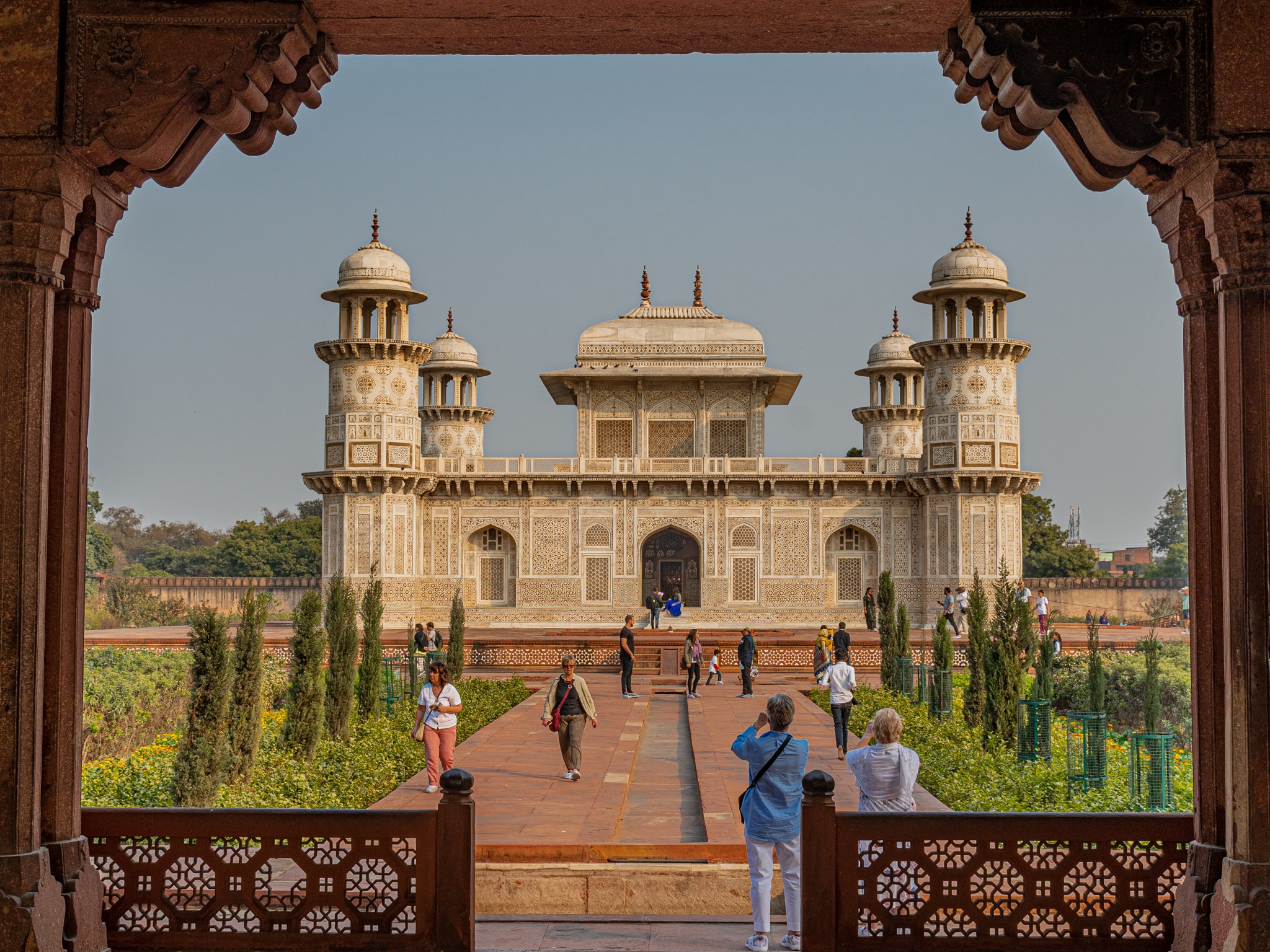
Next up, we have the tomb of Itmad-Ud-Daulah, another masterpiece in white marble.
This is considered a kind of first-draft of the Taj Mahal, and the design cues are pretty obvious to see.
And, once again, you'll find it on the banks of the Yamuna River!
Seriously Greg, is all the good shit in Agra on this one river?
Well... kinda. Certainly all the big landmarks.
So its gotta be worth considering a boat tour down the river, right?
Turns out you can!
Wish I'd known about that before visiting India's Golden Triangle. By the time I found out, it was too late. You can do better!
Enough about the Yamuna River, what is Itmad-Ud-Daulah?
It's a mausoleum - just like the Taj Mahal.
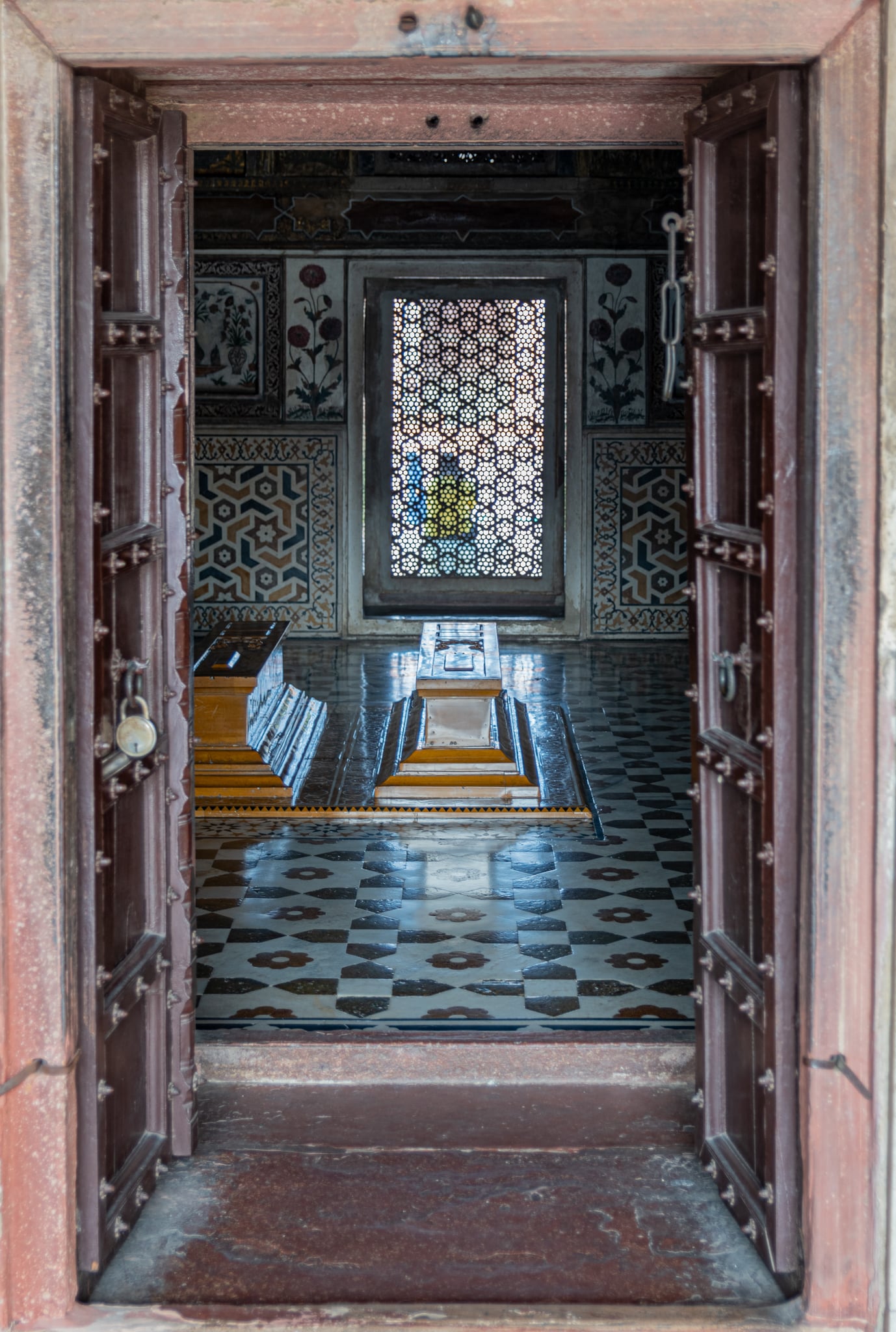
What's inside Itmad-Ud-Daulah?
A literal shit-ton of marble, semi-precious stones, and gold.
It's also the tomb of Mirza Ghiyas Beg. He was officially titled I'timad-Ud-Daulah, meaning 'the Lord Treasurer', and was the grandfather of Mumtaz Mahal, of 'buried in the Taj Mahal' fame. He and his wife Asmat Begum lie under the imposing main dome.
The tomb is a turning point in architecture, and honestly, one of the most beautiful buildings I've ever seen.
Is Itmad-Ud-Daulah also known as the Baby Taj?
Yep. Ten points to Gryffindor.
It has many other nicknames too, including the 'Jewel Box' and the 'Bachcha Taj'.
When was the Baby Taj Built?
The Baby Taj was built in 1622. It took six years to build and was finished in 1628.
The Baby Taj marks the transition from red sandstone (looking at you, Agra Fort) to white marble in Mughal architecture. It's a complete historical first.
Is the Baby Taj worth visiting?
Despite the gulf in levels of fame, the Baby Taj isn't any less impressive than the 'Big Taj'.
This small, jewel-encrusted box is perfectly geometrical from all angles. Considering it was designed and created without modern technology, it is beyond remarkable.
Admittedly, it's not as regal, but it is more intricate. It's the same amount of detail, distilled into a smaller space. I think the Baby Taj is actually more impressive, and not to mention less crowded.
It's one of the best things to do in Agra.
Can I take photos inside the Baby Taj?
Unlike the Taj Mahal, you can take photos, and even touch the tombs, if you're into that. It's a more fulfilling experience.
Heads up: you'll need a flash, it's dark inside.
What's the Entry Fee for the Baby Taj?
By now, you are more than aware of the two-toned price system that Indian tourist sites incur.
Well, it's no different here!
Ticket prices at the Baby Taj, as of 2021, are:
- Indian, SAARC and BIMSTEC residents - Rs.20 (£0.20)
- Foreigners - Rs.310 (£3.10)
The Next Stop of India's Golden Triangle: Jaipur
I hope you enjoyed our suggestions on the best things to do in Agra.
However, it's now time to delve into Jaipur's top attractions. And trust me, there's plenty that will impress, delight and dazzle you as we continue our tour of the best things to see and do on India's Golden Triangle.
If you only have 2 days in Jaipur, you must visit the below suggestions, starting with...
Amer Fort, Amer, Jaipur

Amer Fort History and Facts
The Amer 'Amber' Fort or Amer Palace is a typical Mughal designed, grand fortress.
The sprawling fort complex dates from 1592, built by Man Singh I, one of Akbar the Great's most trusted generals. Man Singh I established Amer Fort on a pre-existing settlement, which dated to around the 10th century.
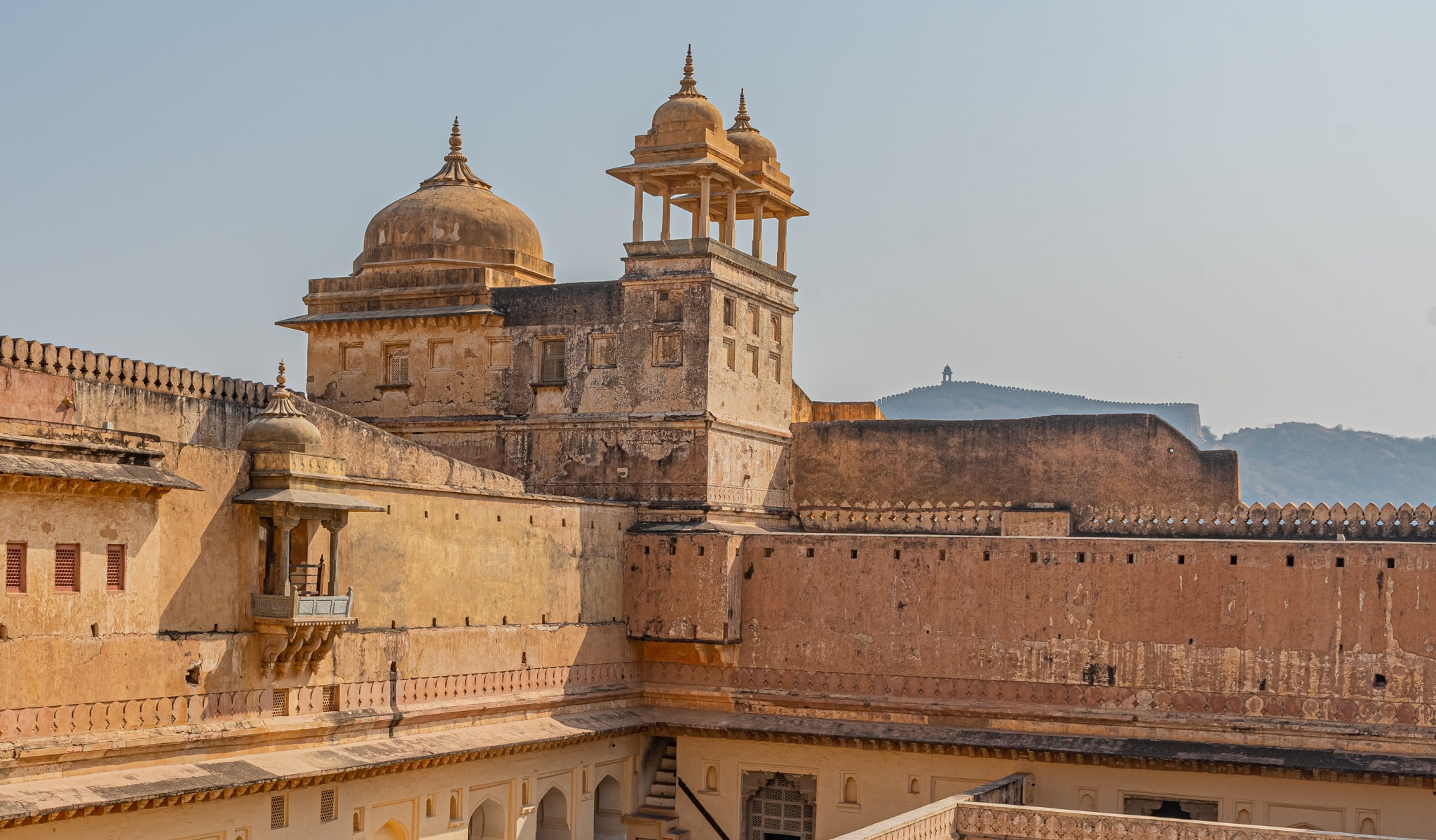
The stunning red sandstone exterior stands proud over Maota Lake. From these walls, there are far-reaching views out over the dry, hilly, red landscape.
The interior is split into several sections, constructed over the next couple of hundred years by the differing rulers. All of whom looked to leave their mark on this gigantic show of wealth and power.
Where is Amer Fort located in comparison to Jaipur?
It's located 7miles (11km) north of Jaipur in the town of Amer, overlooking Maota Lake.
How do I reach Amer Fort from Jaipur?
There are many ways of getting from Jaipur to Amer Fort;
- There is a bus from Jaipur city which stops just outside the Hawa Mahal
- Rickshaw
- Open-top jeeps
- Taxi
- Finally, there are elephants. Although, for obvious reasons, I don't recommend using them. In my eyes, elephants are wild animals, and that is where they belong. I am nearly telling you this as I want to provide you with all the facts.
If you take the bus or a taxi, you'll likely be dropped off at the foot of the hill, where the above photo was taken. Do not fear, that's where the open-top jeeps, rickshaws and other options take over. Or, of course, you could walk it.
What's inside Amer Fort?
You enter the grand fortress by passing under one of two massive gates, either the sun or moon gate. Which one will depend on the mode of transport you've used to get here.
Either way, you are greeted by a rather busy and loud courtyard. Large tour groups congregate around the imposing and exceptionally designed moon gate and the small toilet area.
Assuming you have entered via the Moon gate, you'll find it hard to miss the elephants on your left. They roam the same looped paths in the name of entertainment.
Needless to say, I didn't participate.
Our guide made it abundantly clear that the elephants didn't have the best lives despite their appearance. Obviously, here at Far Out, we are not about animals for sports or profit. I'm only telling you what to expect when you visit, what you choose to do is up to you.
Once you've absorbed the enchanting gates and soaked up the atmosphere, head straight up the small staircase. You cannot miss it as it passes under the impressive and imposing Lion Gate.
Make sure you look up as you pass underneath.
Now the real beauty kicks in
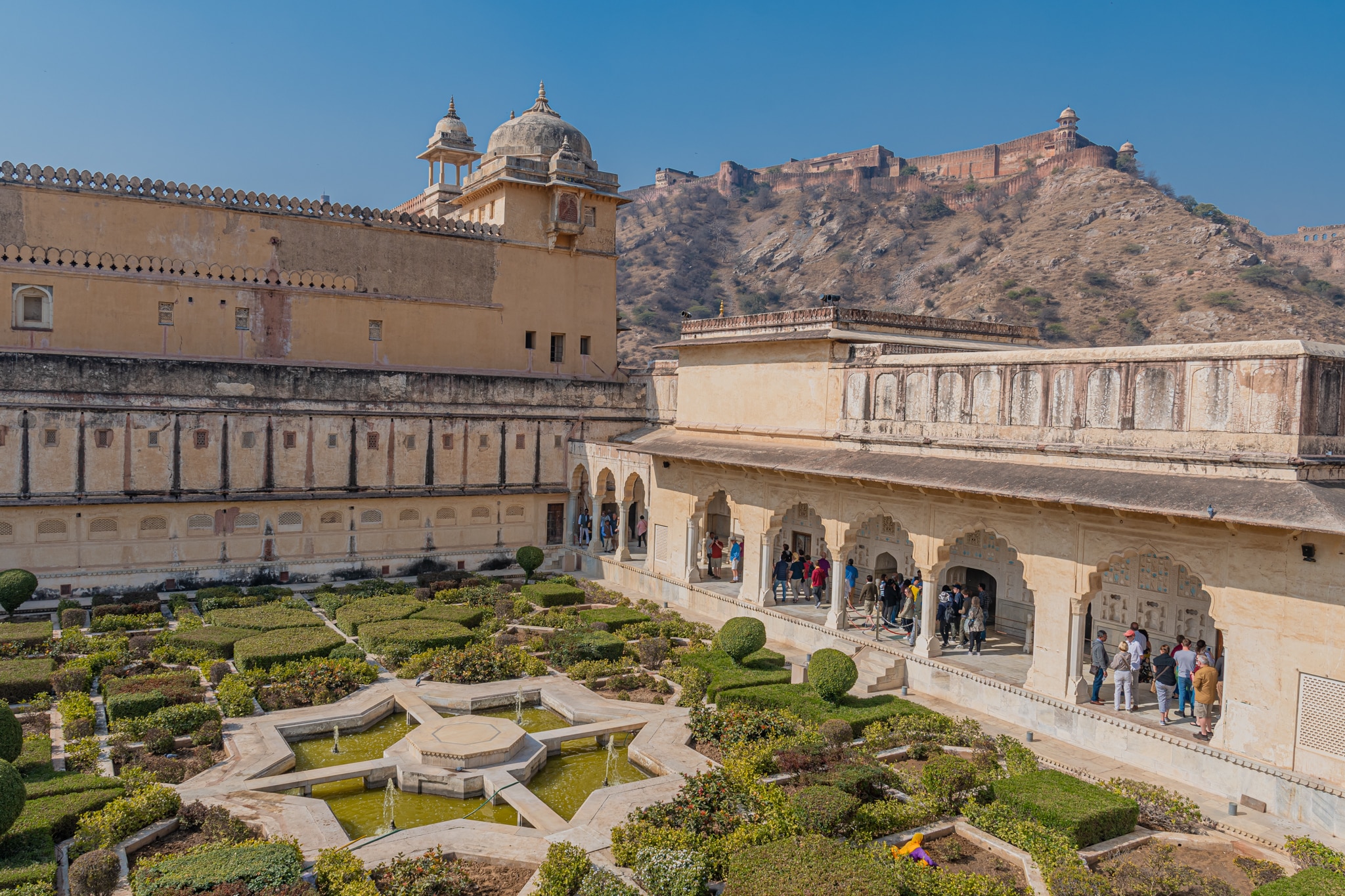
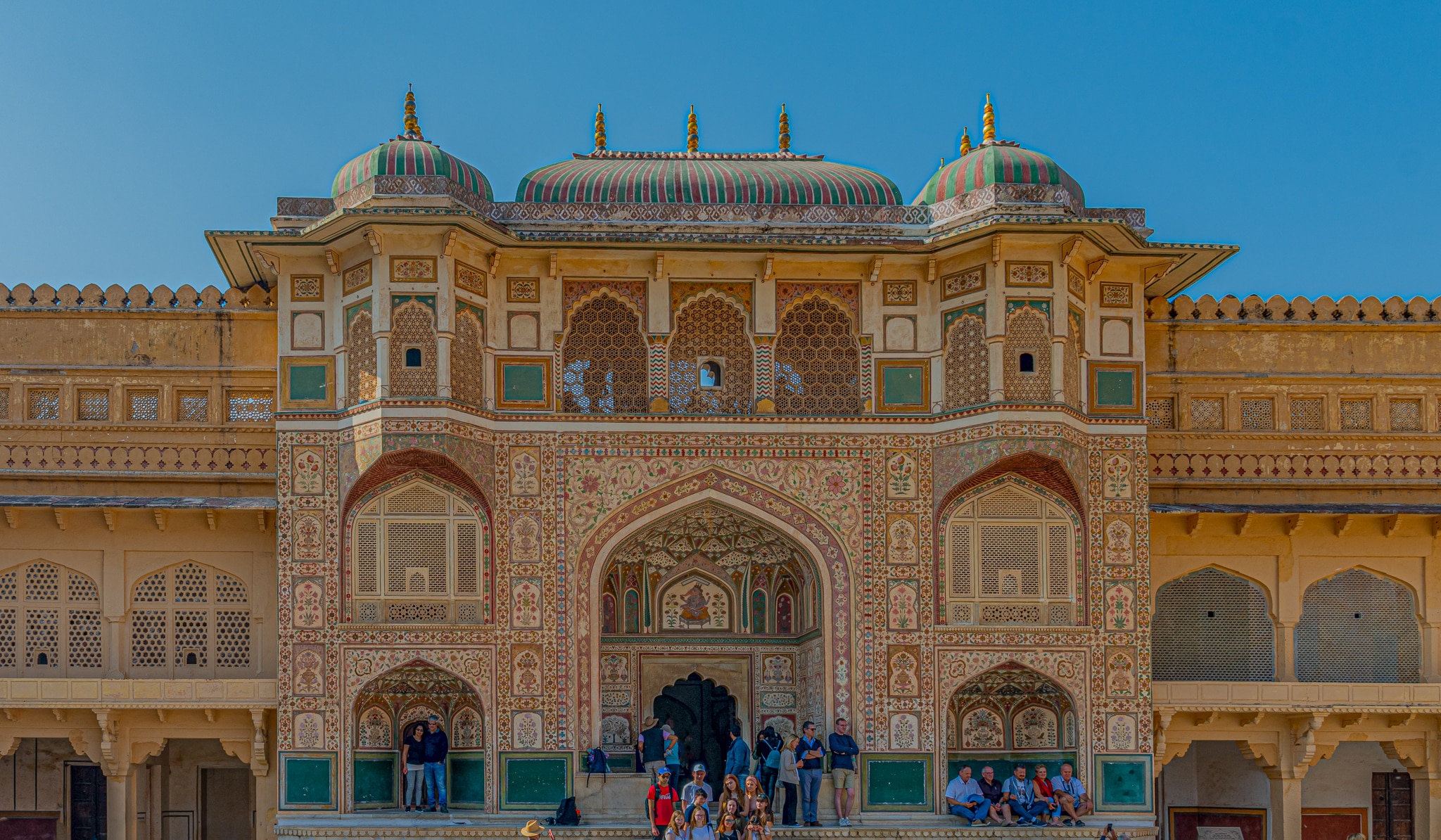
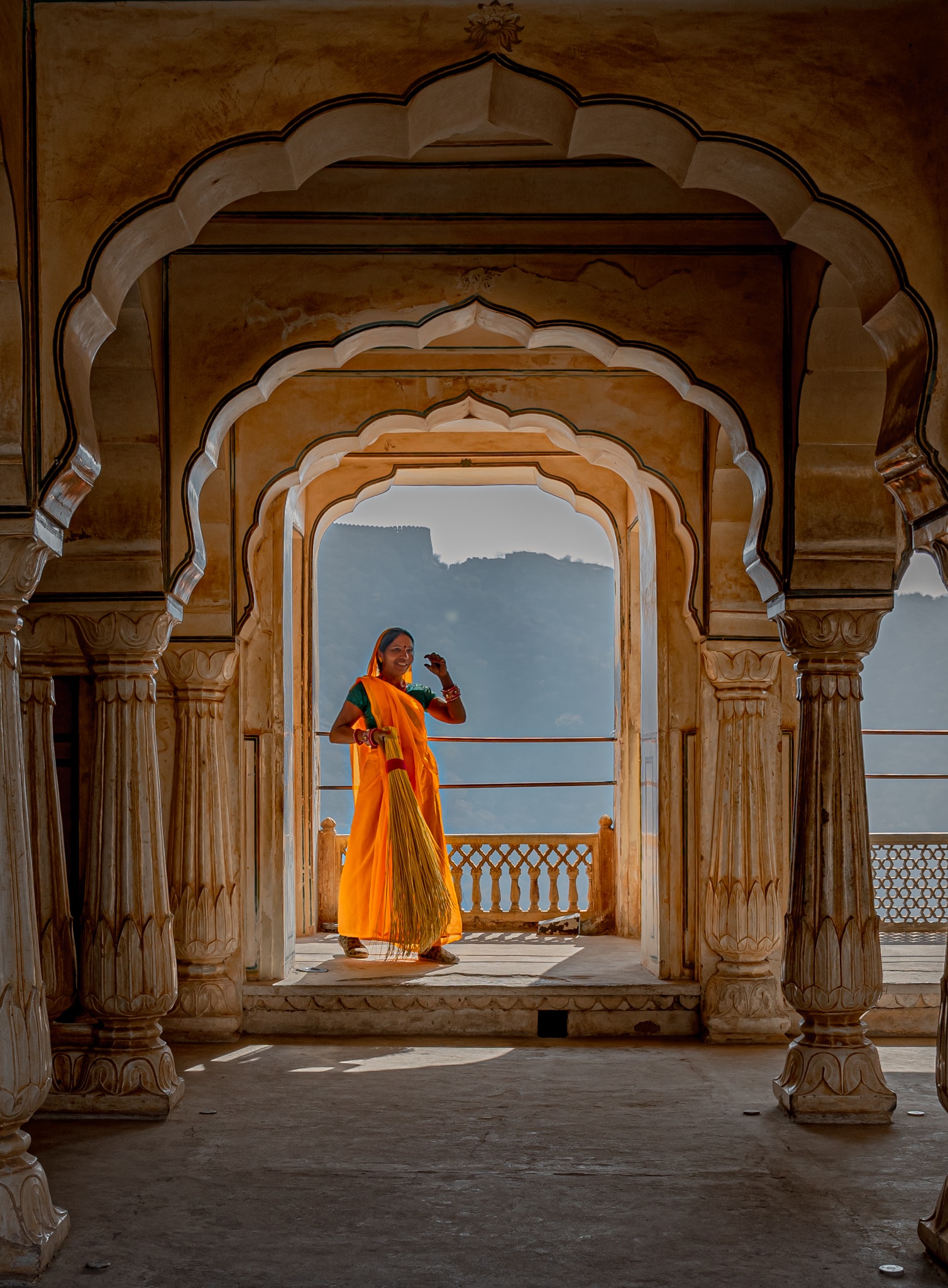
As you pass through the lion gate, the beauty of the interior starts to unfold. Next, the irresistible views of the surrounding lands hit you as you enter the courtyard. The magnificent Ganesh Pol and the intricate Mughal designed artworks that don the walls are sublime.
From this point, each area of the grand fort consists of a courtyard, gardens halls and palaces. For what its worth, I think each new segment becomes more enchanting. Every doorway, gate or arch you pass through brings further gasps of amazement as the buildings just keep on giving.
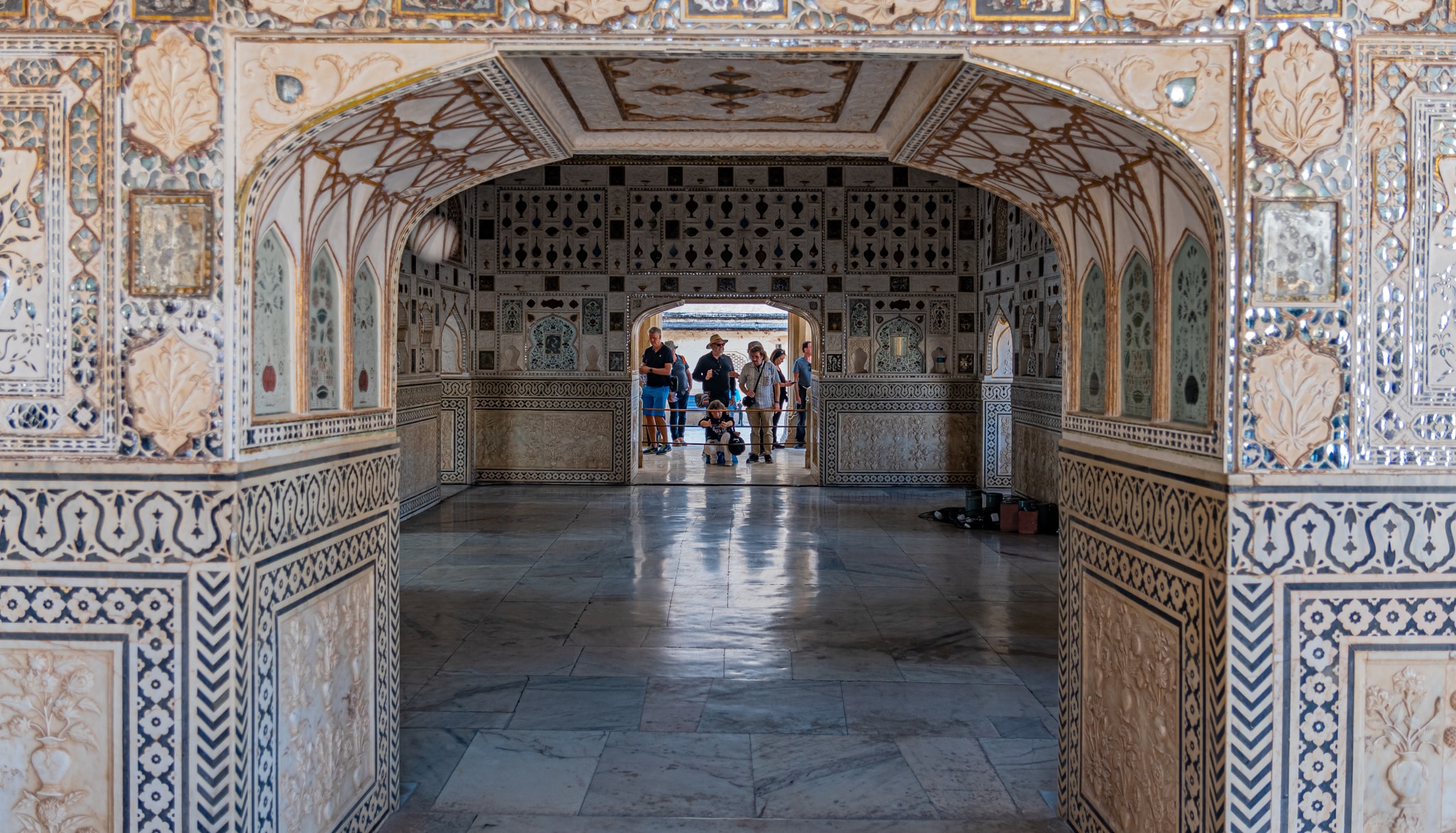
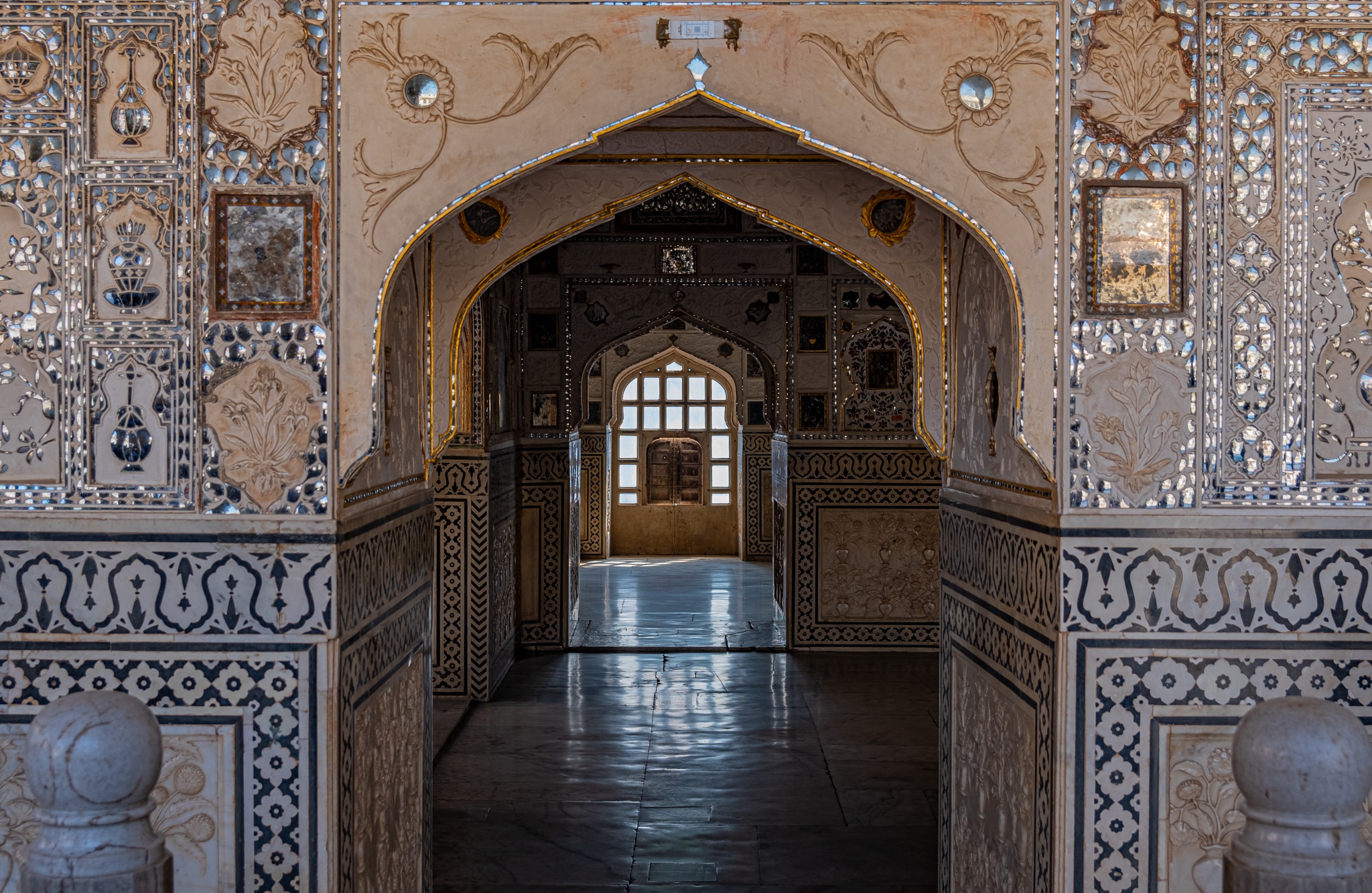
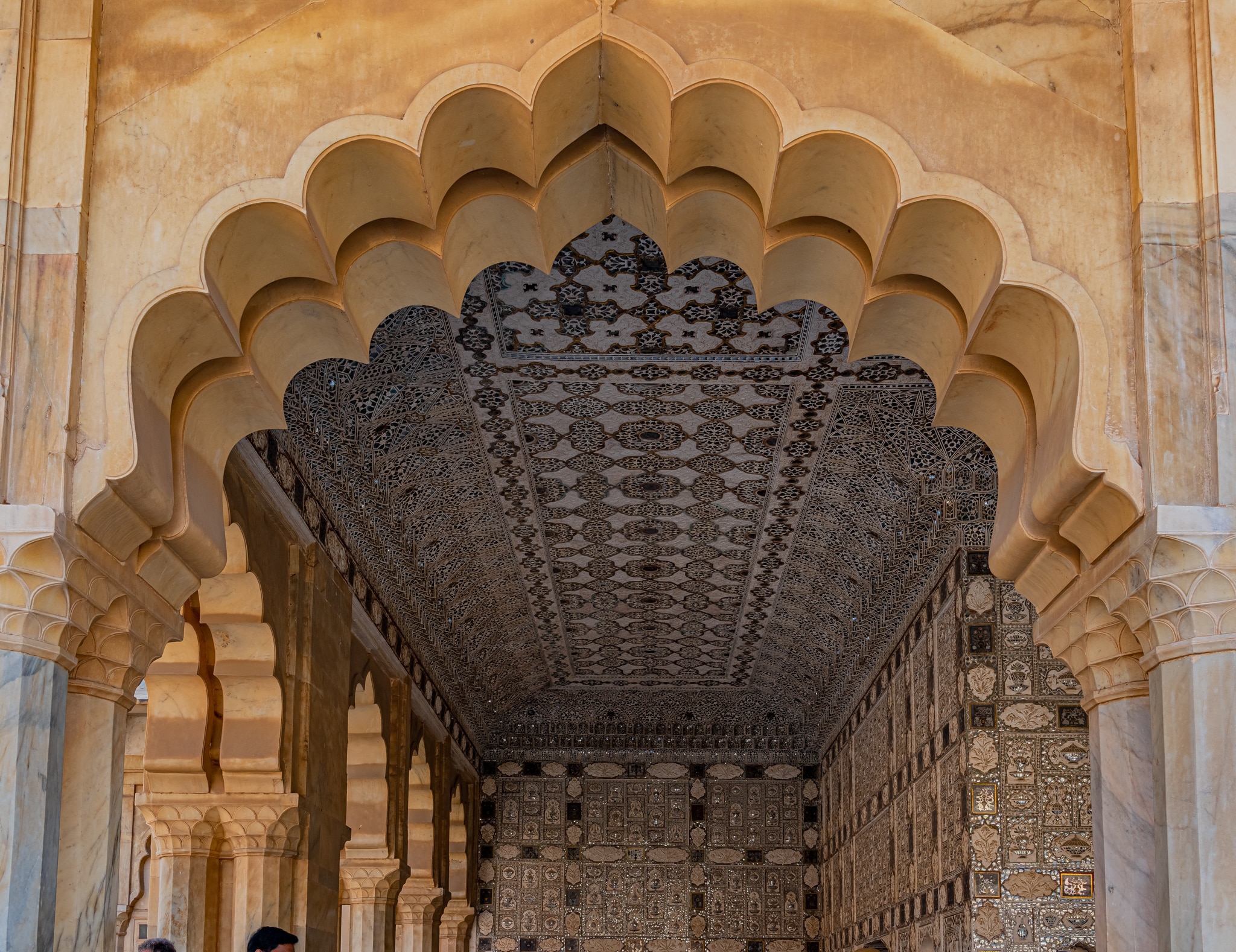
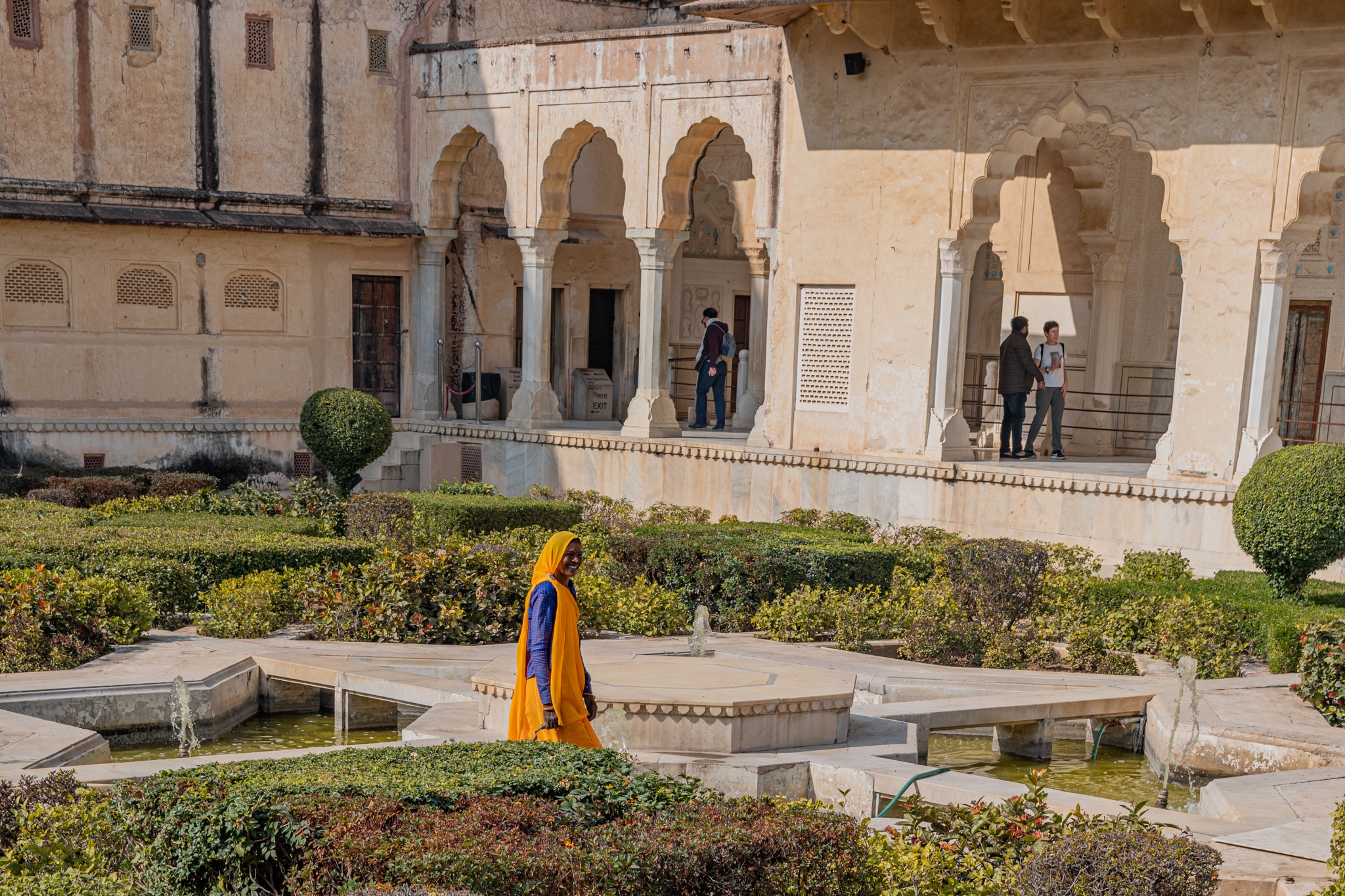
Nevertheless, the most subtly striking building within the fort has to be the hall of mirrors, aka the Sheesh Mahal. Surrounding the hall of mirrors the garden courtyard amazes and astonishes every visitor. The intricate layout of the gardens with perfectly pruned shrubs is the perfect location for a quick snap.
Additionally, the fort comes complete with shops, museums and cafes for those visitors looking to spend longer than a couple of hours here.
Consequently, I couldn't blame anyone for wanting to spend a full day here. It's a unique labyrinth of everything you expect in a Mughal fort. It shows strength and power combined with delicate design and colourful gardens.
So I take it Amer Fort is Worth Visiting?
It sure is...
Whilst the Taj Mahal is the main attraction of Agra, Amer Fort can claim to be the best thing to do in Jaipur.
The forts architecture, design and sheer size are unrivalled within Jaipur, or Rajasthan for that matter. Its elegance, charm and charisma leap from the very foundations and will thrill and excite every visitor.
How Long Should I spend at Amer Fort?
Amer Fort is one of those places you could easily spend half a day or more. There's so much to explore, discover and learn throughout I'd suggest you pencil in a minimum of 2 hours, plus travel time.
When is Amer Fort Open?
Amer Fort opens seven days a week from 8am to 6pm.
If you just can't get enough of this magnificent structure, there is a light show that kicks off in the fort at 7:30 pm, and whilst I didn't get to see it, I have heard it's worth the ₹200 (£2.20), or ₹100 if you're an Indian national.
How Much does it cost to enter Amer Fort?
With so much on offer, you'd expect to pay a high price for such an incredible day out.
But no, as of 2021, the prices are:
- Indian Tourists - ₹100 (£1.10)
- Foreigners - ₹500 (£5.40)
Hawa Mahal Palace - Jaipur

The remarkable Hawa Mahal in Jaipur has to be a contender for the second-most recognised building in India.
For some reason, the Hawa Mahal had never made it onto my bucket list. However, there was something magical that just cried out to me. There was no rhyme or reason for this other than I liked the way it looked, it just screamed India.
It's Time for the History of the Hawa Mahal
Built-in 1799 this graceful building oozes elegance, class and brilliance, even by modern standards. I would love to have seen it in its prime. I can picture the celebrations and parties it has held.
Nowadays, we can only imagine the sights this building must have seen, and the stories it could tell. Ohh so many scandals.
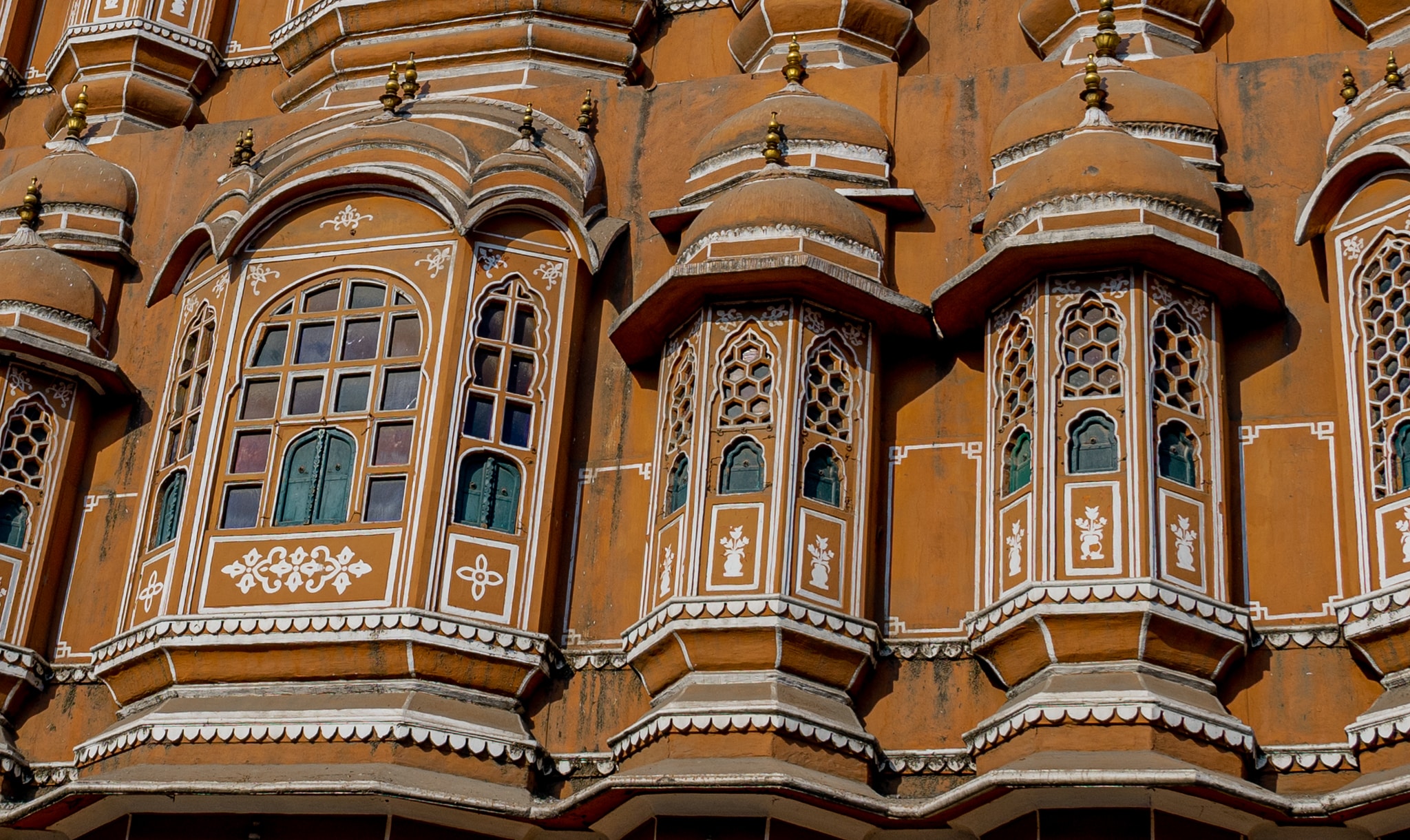
The Hawa Mahal is an extension to the grand City Palace, and not only is it an opulent design, but a practical one too. The windows are perfectly shaped for the royal ladies to view the street life, parties and festivals below, without being seen. Which, of course, was forbidden under the laws of purdah.
What is the Hawa Mahal made of?
There is a distinct difference between the Hawa Mahal, and other regal buildings of the era. Unlike most, the building was constructed from a wonderful mix of red and pink sandstone.
The bright coloured walls shimmer at their best first thing in the morning. For that is when the sun rises, glistening over the main face of the palace.
What are lesser know and asked facts about the Hawa Mahal
Ok, here you go my little budding quizzers:
- The Hawa Mahal Palace is moulded on Lord Krishna's crown.
- It's the tallest building in the world not have foundations. It remains upright due to its amazing design.
- Hawa Mahal means Palace of the Winds.
Where is the Hawa Mahal Located?
The Hawa Mahal is located in the city of Jaipur, the Pink City. More specifically, it's on the corner of Hawa Mahal Road on the Badi Chaupar Roundabout. The Badi Chaupar metro (underground) is a short 2 minutes walk from the Hawa Mahal, meaning it's readily accessible to all who wish to visit.

Is it true that there are no stairs in the Hawa Mahal?
Correct, even though there are five floors, there are no stairs in the Hawa Mahal, only ramps....
Strange hey?
How Many Windows are there in the Hawa Mahal?
953 - There are 953 windows in the Hawa Mahal.
I ain't cleaning them.
How do I enter the Hawa Mahal from the City Palace?
The entrance is to the rear of the Hawa Mahal and up some steps.
Or you can enter from within the grand City Palace itself.
Once inside the Palace, turn left, and you'll be lead into a courtyard. From there you can visit museums and the astonishing interior of the inspirational Hawa Mahal.
And...What are the opening times for the Hawa Mahal?
The Hawa Mahal is open daily between 9am and 4:30pm.
How much is the Hawa Mahal Entry Fee?
Prices, as always, are fresh from 2021, yet still include those famous two-tiered price lists.
- Indian Tourists - ₹10 (£0.10)
- Foreigners - ₹50 (£0.60)
City Palace, Jaipur

In 1727 Maharaja Sawai Jai Singh II commissioned the City Palace of Jaipur.
Cool story bro, but why did Jaipur's City Palace get built?
In the 1720s, there was a massive population increase in Amer, which in turn, led to numerous issues. The most pressing of which was a water shortage.
Sawai Jai Singh II knew that he had to move to survive.
Therefore he moved his capital from Amer, protected by the fort, to a new location. This location, we now call Jaipur.
Completed in 1732, the City Palace was the first building in the newly formed Jaipur. Quickly, the rest of the city grew steadily around the outer walls of the palace complex.
What's inside the City Palace?
Within the grand complex, you'll discover numerous courtyards, buildings, entrance gates, museums, shops, artefacts and much, much more.
Each room holding something unique and interesting.
Firstly, the impressive Sileh Khana displays a comprehensive collection of royal weapons, from guns to swords, and on to archery bows and armour, all of which were used throughout the centuries by the royals.
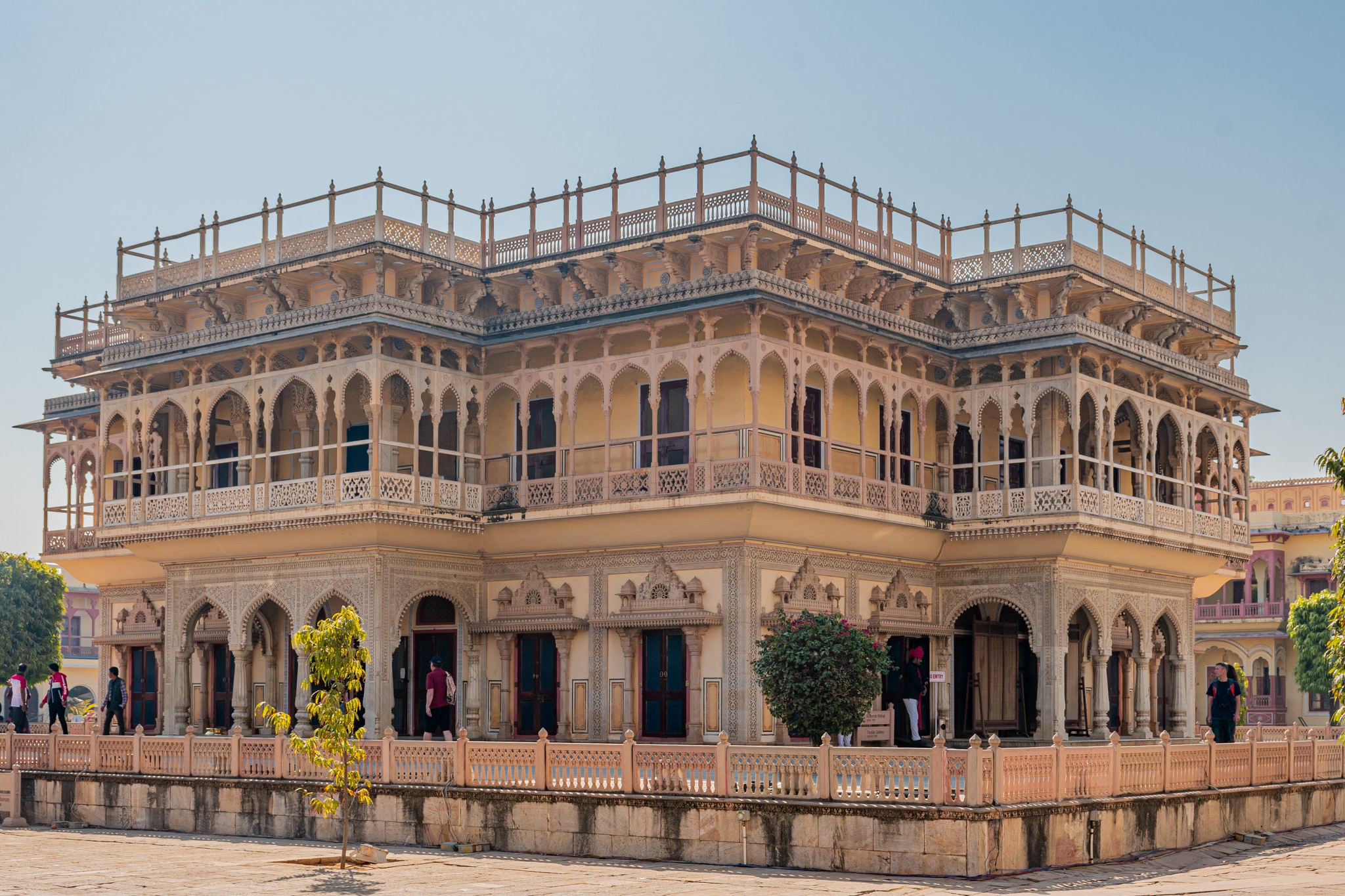
Secondly, the beautiful Mubarak Mahal building encases the Maharajas textiles, which mostly encompasses their worn clothing. It is truly is a treasure trove. The clothing includes sports uniforms, and a pair of, have-to-be-seen to be believed pyjamas, used by Maharaja Sawai Ram Singh II. The Pyjamas are as wide as they are long, they're hilarious.
Honestly, Jabba The Hutt comes to mind. This guy was fucking huge.
Thirdly, just off the incredible courtyard, you'll find the dramatic Sahba Niwas which showcases the impressive thrones, portraits, medals and a centrepiece chandelier that will blow your mind.
For those of you who know Only Fools and Horses, it's one of those moments.
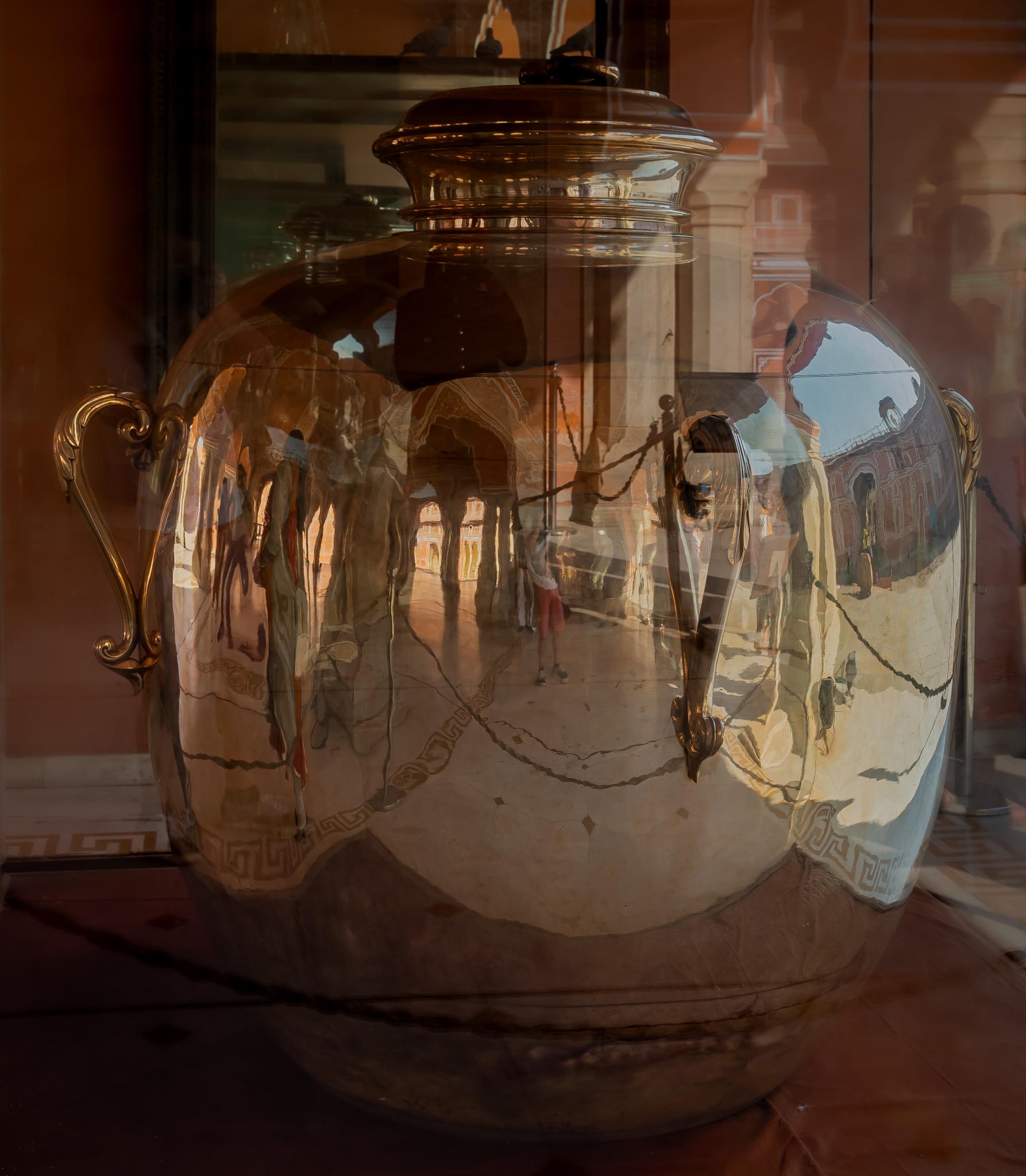
The record-breaking urns
My favourite area with the City Palace is the Sarvatobhadra Courtyard. At the centre of the courtyard, there is an unmissable building made of intricately designed arches. It is here you can hear the palaces most entertaining and exciting story.
Concealed within the arched building are two silver urns. Both, built in the 1890s from silver coins, the two urns hold 4000 litres of water each. The Urns are also in the Guinness World Records, listed as the largest sterling silver vessels ever. Maharaja Sawai Madho Singh II used the urns, known as the Gangajali's for a unique purpose.
Historians say, that Sawai Madho Singh II only ever bathed, drank, or used water from the Ganges. He refused any other forms of water, as it wasn't pure. In 1902 Sawai Madho Singh II was invited to the coronation of Edward VII in England.
England, by my reckoning, is a hell of a long way from the Ganges. I think he was going to struggle with his Ganges water supplies.
Que the Gangajali Urns.
Along with Sawai Madho Singh II, the urns set sail for England. They were the only items, of the time, to carry enough Ganges water to last him the trip. Other than an elephant, but come on, he wasn't building the bloody ark, he only wanted to go to a party.
I don't know if they did, I assume so, as there wasn't any extreme ending to the story like for example, he had to drink regular water.
Unfortunately, the rules do not permit the taking of photographs or film inside the buildings. Nonetheless, below are a few shots from the courtyards.
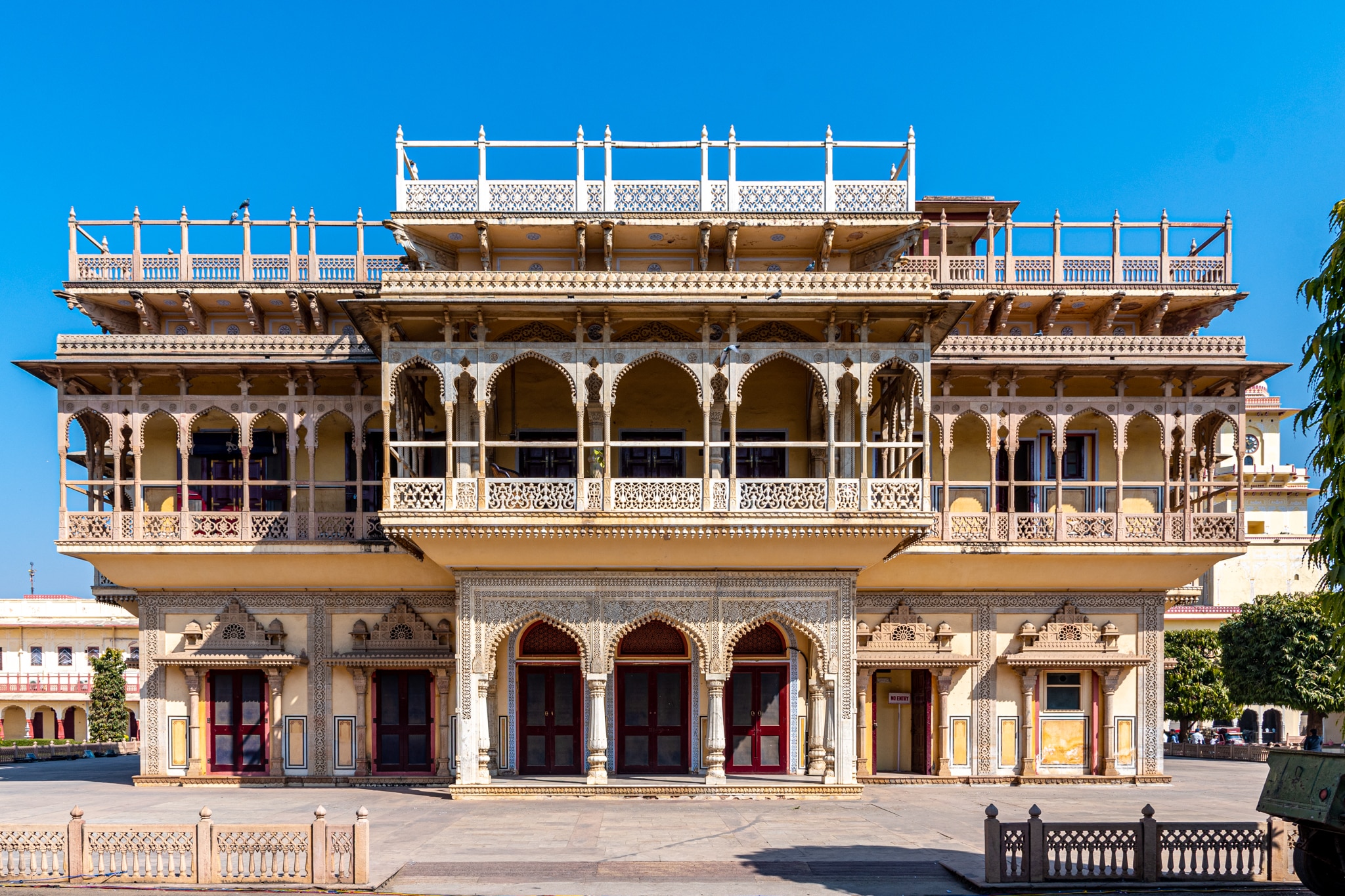
Can I stay at the City Palace in Jaipur?
Yes, if you're Jeff Bezos!
Whilst the royal family do have a private residence within the palace complex, they also, list a room on Airbnb. If you're interested, it will set you back nearly ₹800,000 (£9,000) a night, once you've paid the taxes.
Ouch... I'll stay for a beer, but thanks. On the plus side, all proceeds do go to charity.
How Much is the City Palace Entry Fee?
In contrast to the above, the entry fee is a little more friendly on the wallet for us mere mortals.
As of 2021, the City Palace of Jaipur entry fee is...
- Indian Tourists - ₹130 (£1.40)
- Foreigners ₹700 (£7.50)
Completing India's Golden Triangle in the Capital: Delhi
So far, we've been astonished in Agra and jubilant in Jaipur. But now, it's time to be dazzled, as Delhi throws in its heavyweight contenders for why India's Golden Triangle is the place to start your Indian adventures.
I will be the first to say, the sheer size and prowess of Delhi are, at times, breathtaking. There are more than a week's worth of things to do in Delhi, and this list merely scratches the surface.
After all, Delhi is one of the worlds most populated cities, and home to over 25 million people. It's predicted to be the most populated within the next 10 years.
Delhi was my first stop on the Golden Triangle as I suspect it will be for most of you.
Having grabbed my backpack I soon found out that 25 million people cause gridlock. The sheer volume of people, the madness, the noise, the smells, could have easily overwhelmed me.
It is chaos!
I had visions of long queues, hot and sweaty people in your face, and a sense of not being able to enjoy the attractions for what they were. Which, by the way, is spectacular.
How wrong was I?
So, without further ado, let's dive into my top things to do in Delhi...
Qutub Minar, Delhi

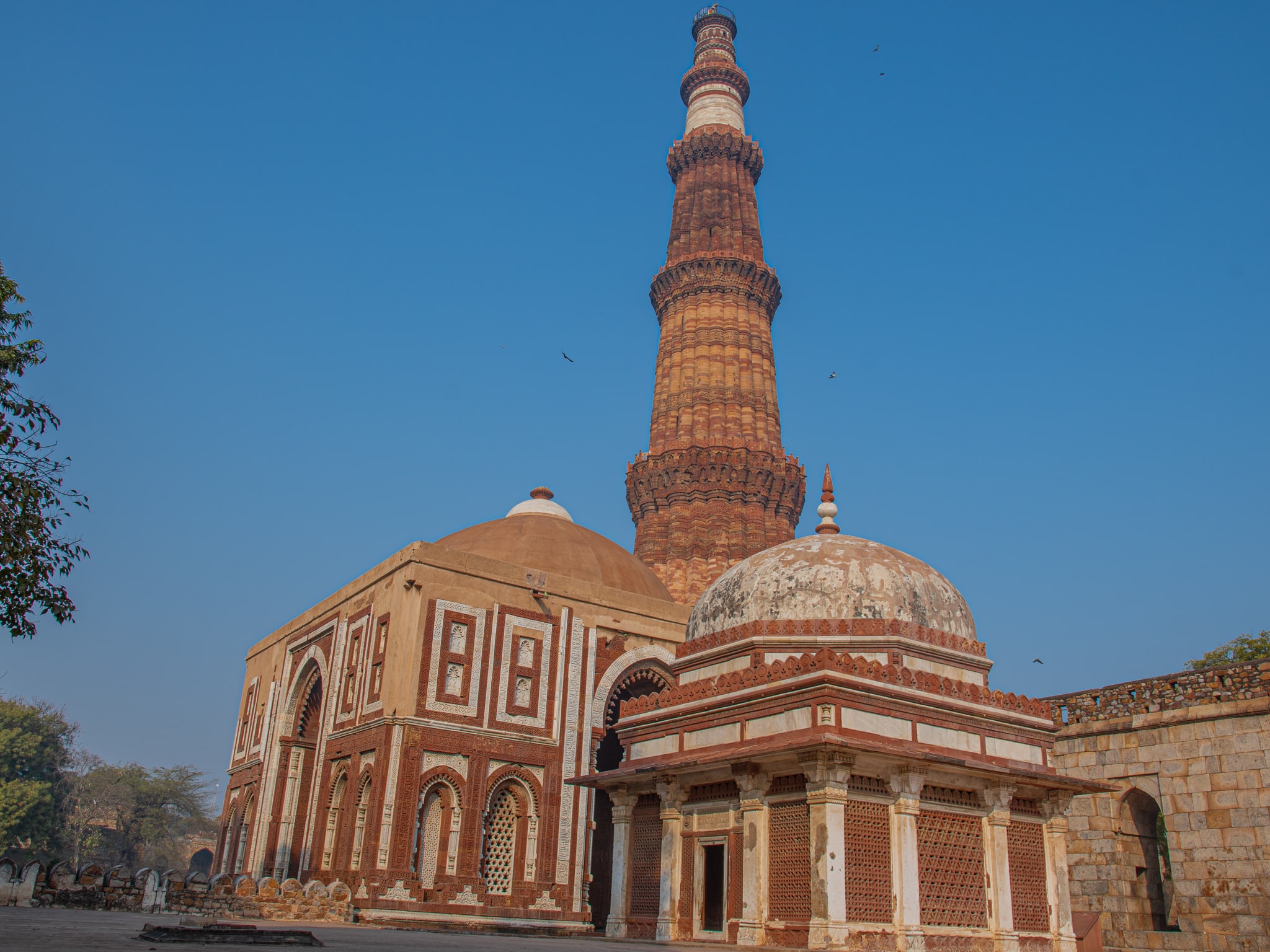
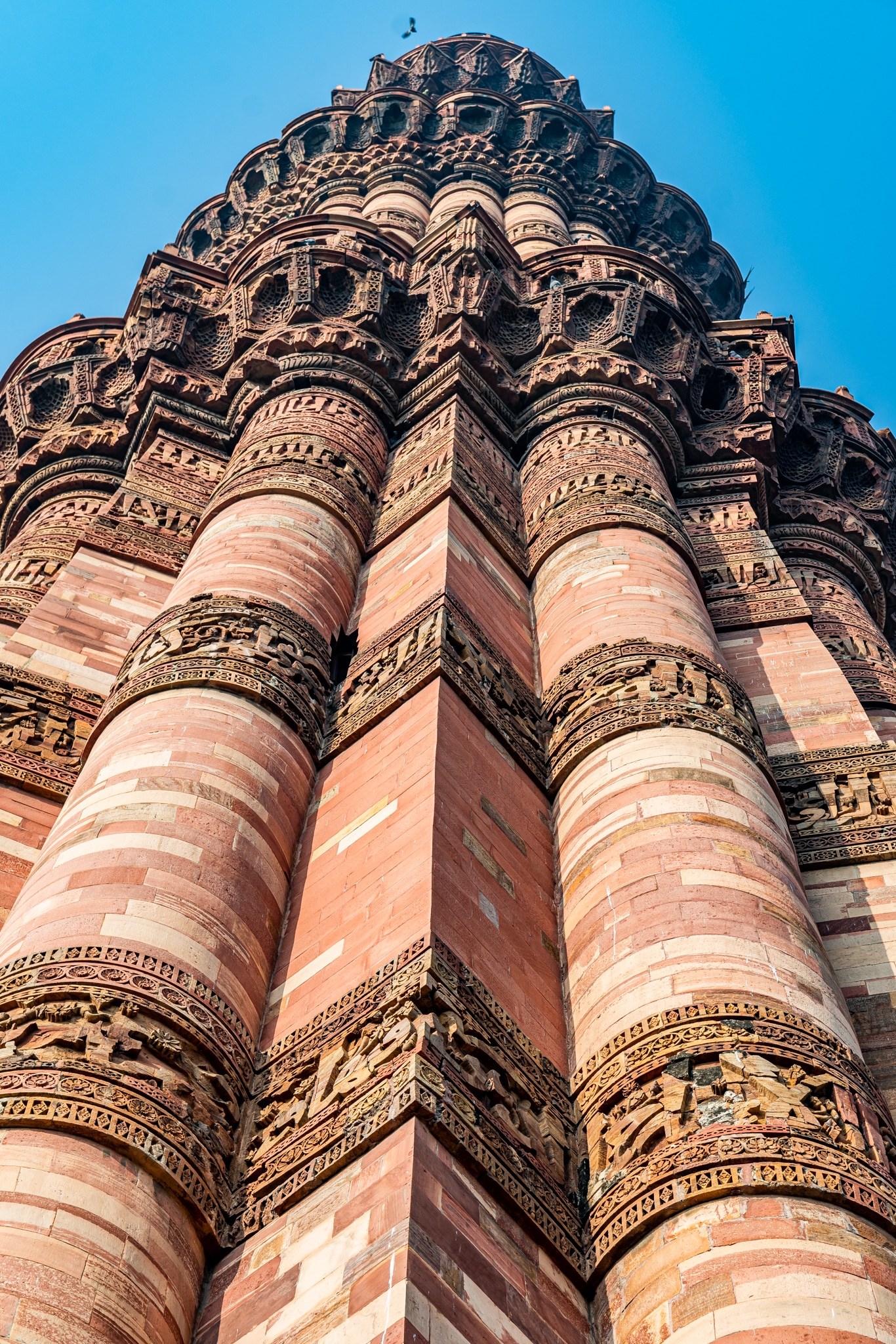
With all that said about Delhi, walking through some of its most idyllic and surreal sites such as the majestic Qutub Minar you wouldn't have believed there was another human for miles upon miles.
Upon entering Qutub Minar, you'll notice its peace and serenity. There's no noise, the smog lifts, and calmness reigns. For a split second, I thought I'd gone deaf - it's that quiet.
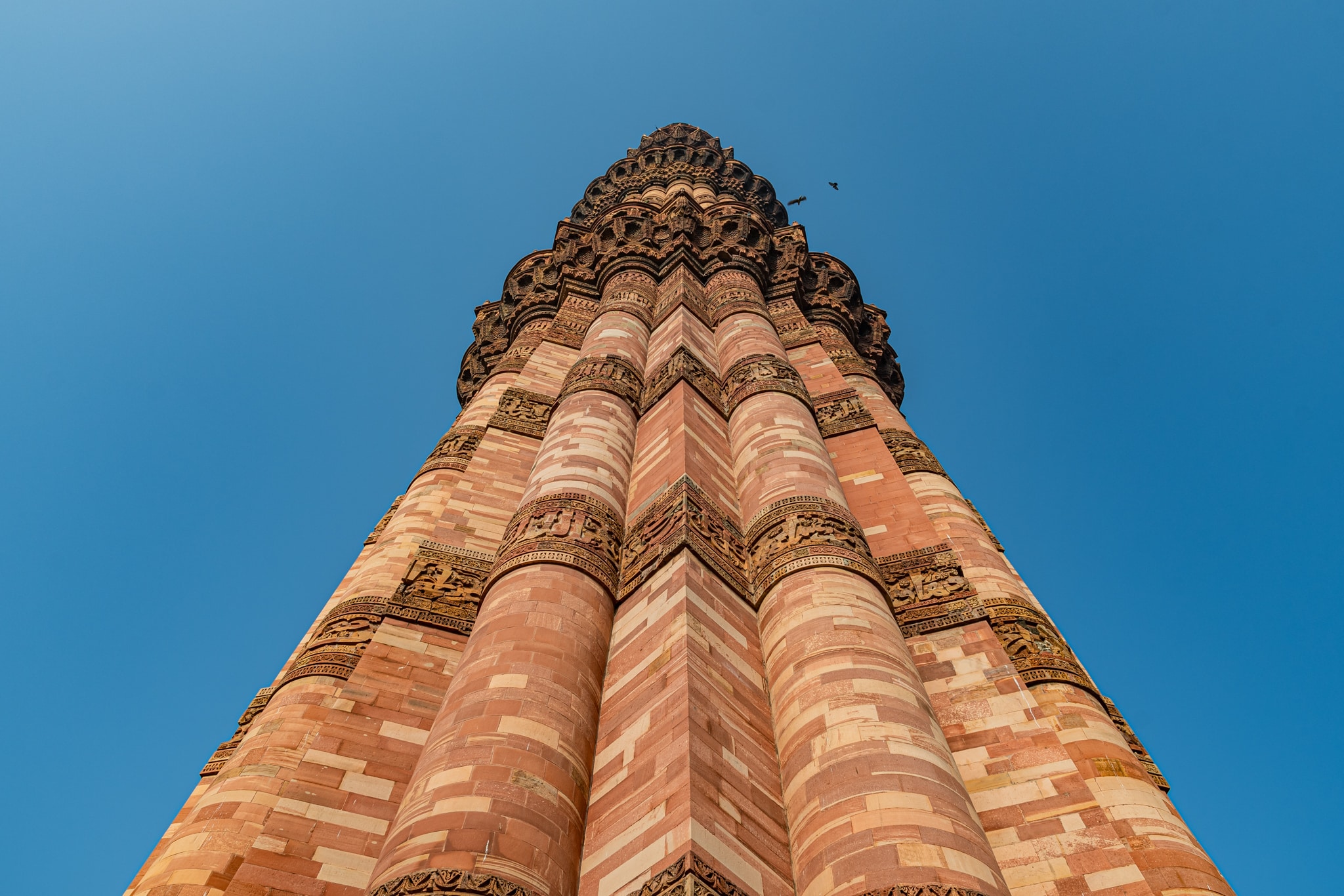
The site is one of pure beauty, and at its heart stands a controversial seventy-three-meter 'victory' tower built in 1193. It's thought that the tower represented the Muslim victory over Hindu rule. Others say it's merely a tower that calls those with faith to prayer.
What is Qutub Minar Made From?
The tower has five distinct levels with the base tapering to a point as you moved skywards. The construction material of choice for the first three levels was, you guessed it, red sandstone. The final two floors were a groovy mix of sandstone and marble.
Who Built Qutub Minar?
Initially, the tower started life under the command of the first ruler of Delhi - Qutb-ud-din Aibak. He managed to get the project off the ground, merely, completing the first layer. The next three floors came thanks to his successor, Iltutmush. Following that, the final, fifth-level was introduced by Firoz Shah Tughlak in 1368.
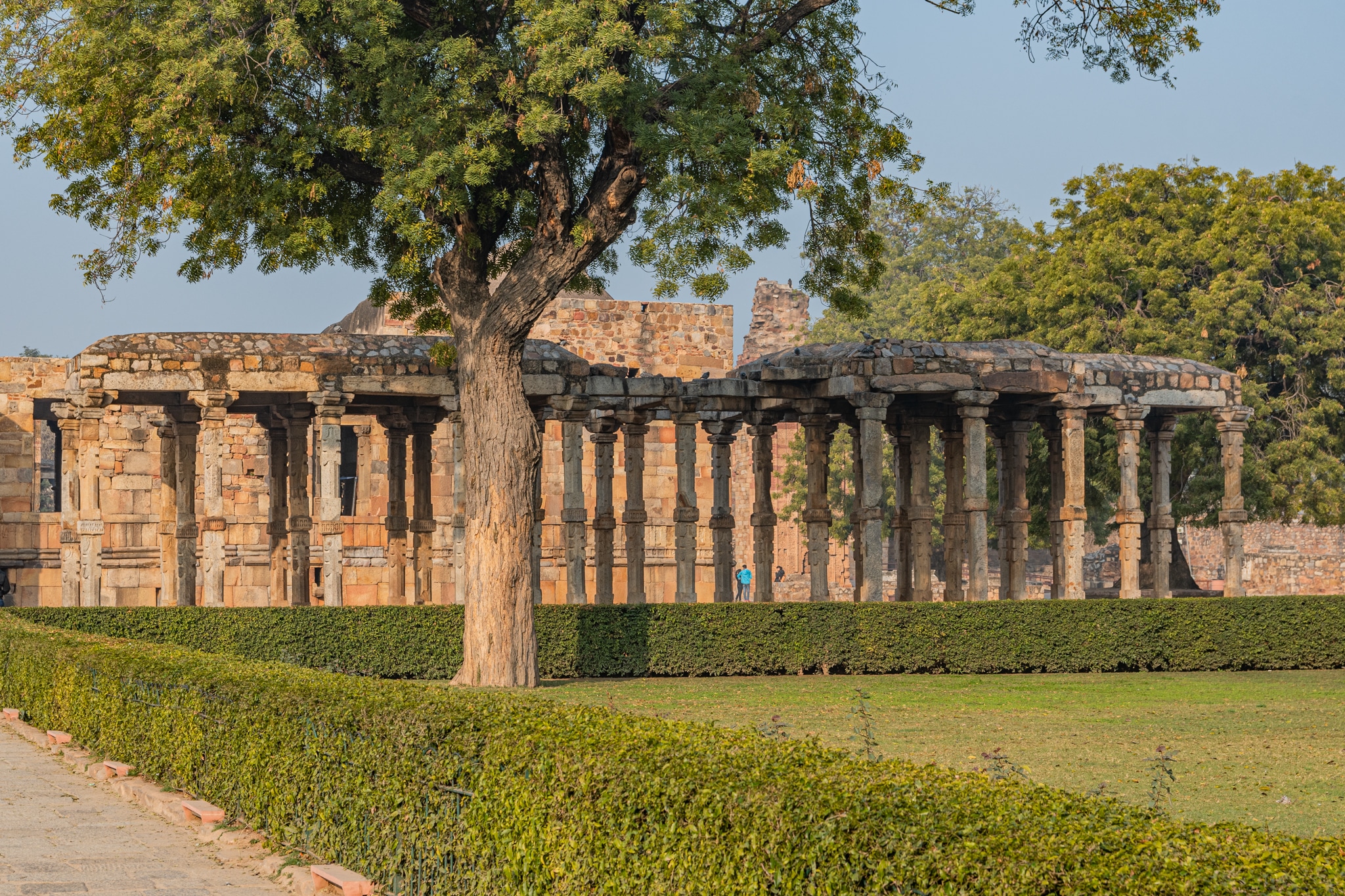
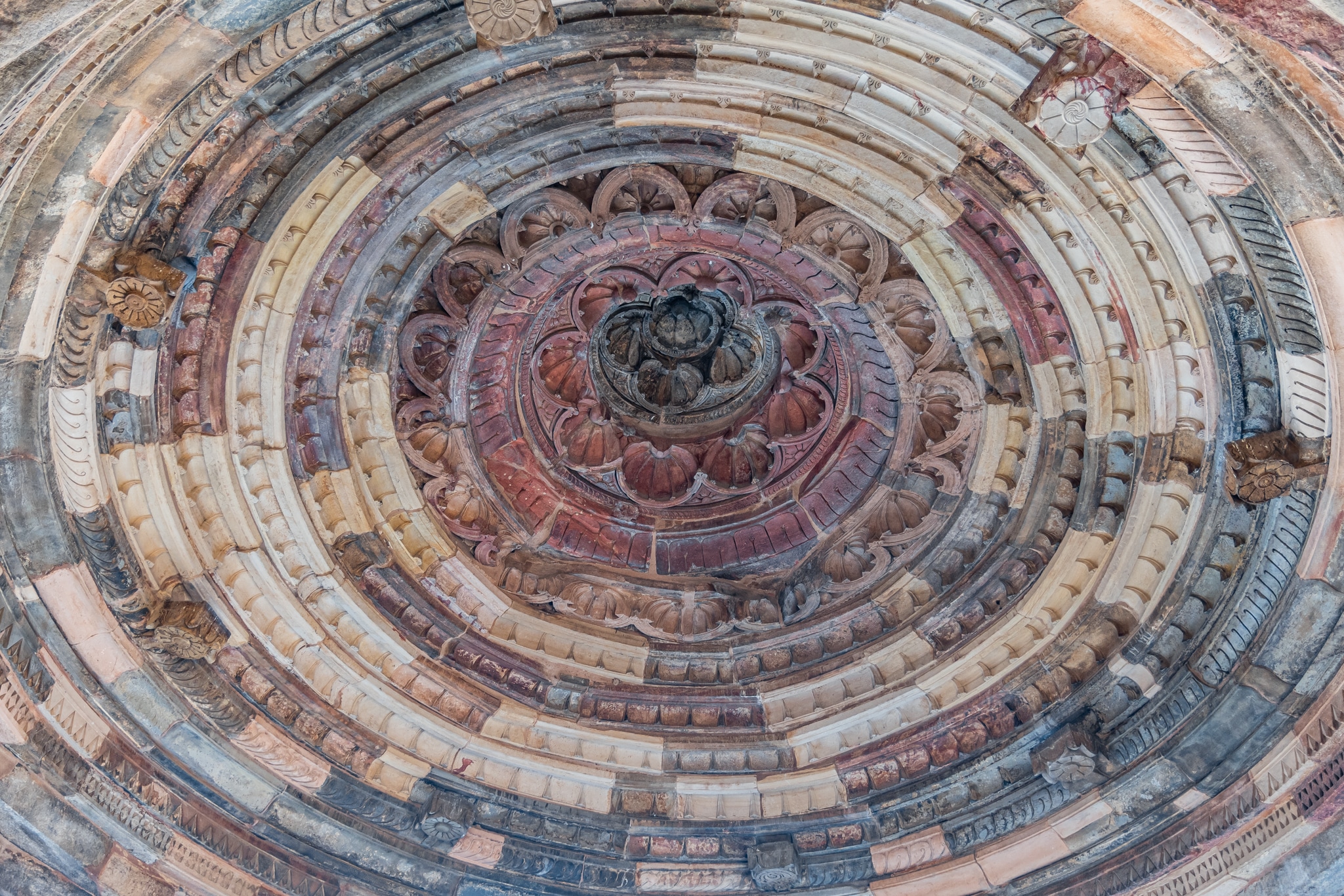
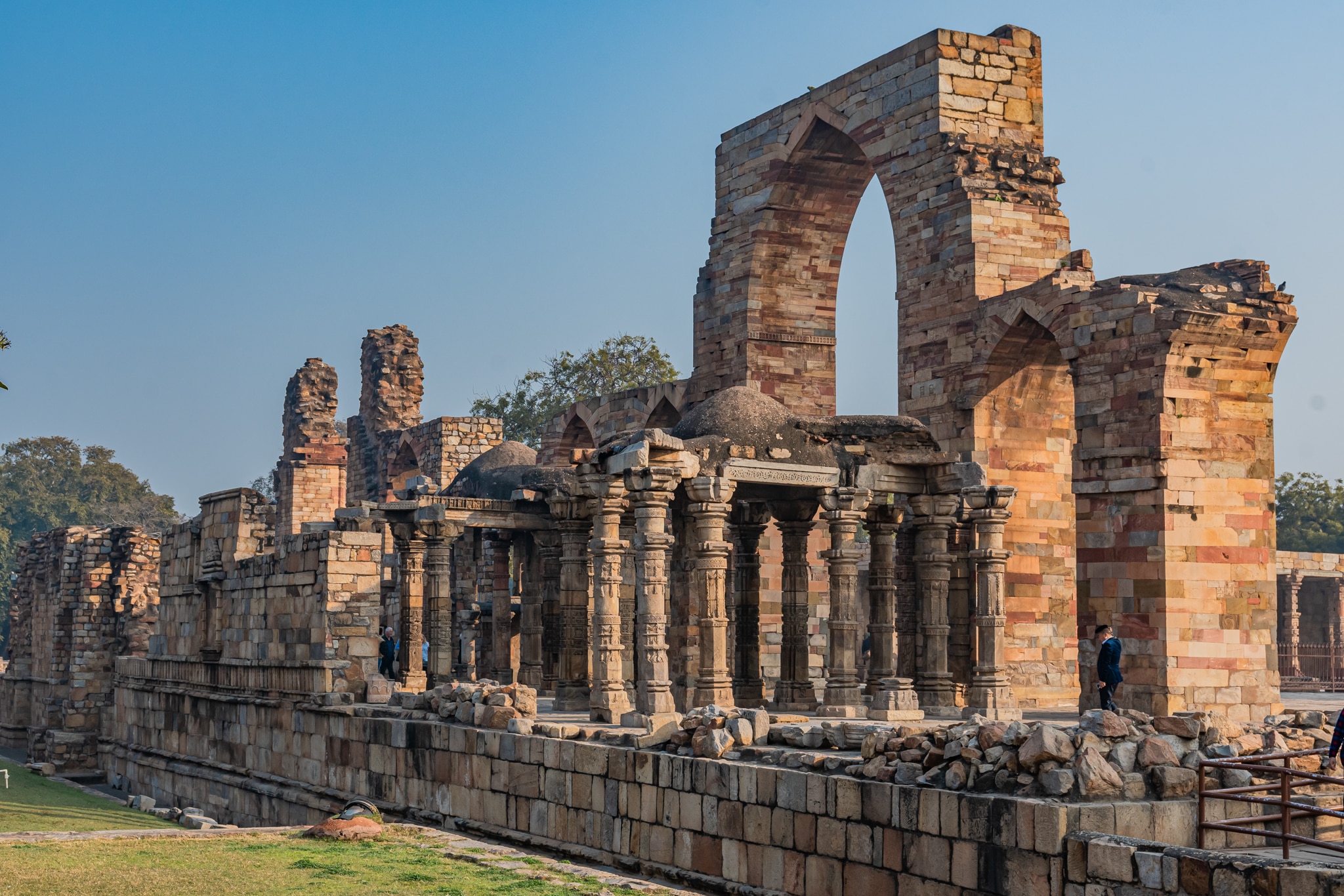
The site is far more than the intricately designed tower, peace and calmness. The sublime mosque is both unique and pleasing to the eye. There's also a hidden back story behind the site.
The ancient ruins of the Jain Temple still stand within the complex and are a dream to interrogate. The whole site is staggering and in my opinion, for what it's worth, Qutub Minar is a must-see whilst in Delhi.
Can You Go Inside Qutub Minar?
By this, I think most of you are referring to the tower, so the answer is no. That is in part due to a number of deaths from suicide to a stampede in 1981. However, the grounds are more than enough for any visitor to the site.
When is Qutub Minar Open?
Qutub Minar opens seven days a week from 7am to 5pm.
How Do You Reach Qutub Minar?
The best way is via taxi as the nearest metro station aptly named Minar Metro Station is a good 20- minute walk from the site, and it's a busy main road.
The main entrance to the site is at the junction of Crescent Road and Mehrauli-Badarpur Road. This is also where you'll find the ticket office.
How much Does it Cost to Enter Qutub Minar?
You may think that because we are in the capital city, prices will increase dramatically. Well, I didn't think they were inflated at all, and if they are, they remain very reasonable.
I most certainly would have paid the price just for the silence and feeling of relaxation. The astonishing architecture is an additional bonus.
Qutub Minar prices as of 2021 are;
- Indian Nationals - ₹35 (£0.35)
- Foreigners - ₹500 (£5.00)
Jama Masjid Mosque, Delhi

Jama Masjid is a typical Mughal designed mosque, built from red sandstone in 1650 by the then Mughal Emperor, Shah Jahan.
Characterised by three ginormous domes the mosque skyline is a marvel in its own right. Only the mosques two towers, known as minarets, could match the domes for size. Each minaret boundlessly reaches 40 meters into the sky. Its fabulous design and prowess are far-reaching across the skyline.
It looks stunning.
Is it all as good as it seems?
Well, once you enter the courtyard under one of the three large gates, things start to change. If anything, they become a little dull. The reason for this is that you lose the beauty of the roofline.
The courtyard can hold up to 25,000 worshipers, and quite frankly, 1000 people were enough for me. It was hectic, kids and teens were running around like headless chickens. Furthermore, some were even playing ball games. It wasn't relaxing at all and felt more like a park.
To escape the madness of the courtyard, I headed inside, thinking it would be a little more religious, gentle, maybe even respectful.
Once under the large arches that front the main building, nothing really improved. There was a vast and dull corridor that ran the length of the mosque.
On a positive note, the corridor does come with a vivid red carpet and tremendously classy chandeliers. That, for me, was the highlight of the mosque.
That, unfortunately, was about as good as it got.
It is fair to say I've been to many impressive buildings in my time. I've also been to many impressive Mosques, none more so, than the magical Sheikh Zayed Grand Mosque, which you can check out in our Abu Dhabi blog.
Sadly, I felt that the Jama Masjid Mosque was neither.
I hear you asking, so why is it in the blog? How is this making me want to backpack India, let alone visit India's Golden Triangle?
My answer is because it looks bloody fantastic. The roofline, the minarets and the mosques sheer size have to be respected.
After all, I may have missed something.
Yes, it was large, it was architecturally impressive, and without doubt, the rooftop was lavish. But it lacked soul and heart.
Price List
Today's price list (2020):
- Free, bar gratitude offering (luckily)
- Although there is a hefty ₹300 (£3) charge, per camera, even if you don't take any pictures, good luck to those carrying a Go-Pro and a camera.
Humayun's Tomb, Delhi

Like so many buildings we've visited within India's Golden Triangle, Humayun's Tomb is yet another perfect show of Mughal architecture. The symmetry and red sandstone are key design features of the time. Humayun's Tomb is one of the earliest, and arguably the best examples of this.
Humayun was the second Mughal leader, and father of Akbar the Great who we have previously mentioned within the blog. This mausoleum was the brainchild of one of Humayun's wives; Hamida Banu Begum. Yep, another dude with shit loads of wives.
There was, however, a nine-year period between Humayan's death, in January 1556, and the commissioning of the mausoleum in 1565. And a further seven years, to its completion in 1572.
The central mausoleum occupies a seven-meter high platform, which has near-perfect symmetry throughout. Humayun's cenotaph lies within this mausoleum, beneath the grand central dome. Overall, the stunning design, intricate detail and craftsmanship fall only behind the Taj Mahal and the Baby Taj.
The Mausoleum is home to more than the singular tomb of Humayun. There are numerous cenotaphs and burial places within the mausoleum, which hold Humayun's family members.
It's more than just a tomb
Views from the platform are of the lush green gardens, planted with perfection in mind. Moreover, the garden's design helps to reduce the noise and chaos from the encroaching city. That brings a real sense of tranquillity.
It was a godsend.
Something else that caught my eye was the gorgeous, large kites that soared through the skies, picking off any dead carcass they could find. When I say huge, I thought it was a fecking pterodactyl.
I nearly shit myself.
Despite being in one of the worlds busiest, loudest, most polluted cities, I could have shut my eyes and have been in the middle of the English countryside. It was silent. Not a beep of the horn, a shout from an unhappy street seller, nothing. Just the sounds of the cooling wind blowing through my hair.
In addition, the gardens have numerous, tombs where other prominent Mughal Emperors, their families, and beloved staff now rest. Each tomb is as impressive as the next.
Little fact for you. Humayun's tomb is the building that both, the Baby Taj and the more famed, Taj Mahal are based. Despite all three being completely different, they are very similar in many ways.
The phrase same same but different comes to mind.
In conclusion, I loved my visit to Humayun's Tomb. It was the first mausoleum of its kind that I have visited, and I hope there are many more to come.
Price List
Humayun's Tomb is a unique location and one that should command a special price. However, yet again, the prices are remarkably reasonable. As of 2020, they are:
- Indian Nationals – ₹30 (£0.30)
- Foreigners – ₹600 (£6.40)
A Sneaky Tax on India's Golden Triangle
All the above landmarks come with a unique quirk, which isn't limited to India's Golden Triangle, it's more widespread.
The quirk is this:
Firstly, you pay to enter the attraction, no biggy, that's normal. However, if you are carrying a camera, you'll pay for that too. The more cameras you have, the more you pay.
We are only talking ₹50 - ₹150 (£0.60 - £1.60), however, if you have a DSLR camera and a GoPro, you could end up paying an extra ₹100 - ₹300 (£1.20 - £3.20) per attraction.
That will soon add up.
It's crazy, but it is good business.
It Can Only Be India's Golden Triangle, Right?
Hopefully, I've reinforced your belief or convinced you that India's Golden Triangle is the only place to start your India tour. Not only that but, ideally I've provided you with a rough itinerary to set you on your way.
Subsequently, let us know what you think by leaving a comment below.
If, in addition to the above, you would like more information India, and our stories in this magnificent country, check out our full guide to backpacking India, or my epic travels with my 87-year-old Great-Uncle.
Hi there, when was this article written?
Hi, I took this trip in 2020, so it would have been created then.