Religion in Bali, Indonesia - Know Before You Go!
Last Updated: September 2, 2024
NEED TO KNOW ABOUT THE RELIGION IN BALI, INDONESIA NOW? WE'VE GOT YOU COVERED.

Heads up: We sometimes work with companies to provide affiliate links and reviews - here's what that means. If it's here, we use it. We don't plug shit for profit.
What's the Religion in Bali, Indonesia?
Bali is a highly religious island, yet numerous religions live side by side, peacefully and respectfully.
The breakdown of the Bali population by religion is:
The most predominant religion in Bali is Hinduism, which accounts for around 82% of the population.
Outside of Hinduism, a further 12% of the Balinese population class themselves as Muslim, and about 5% of Bali as Christian.
With a growing Chinese presence on the island, there's also a small but dedicated Buddhist following.
In contrast to those religious percentages in Bail, Indonesia sees these figures turned on their heads.
In Indonesia, 87% of the population is Muslim, with a further 10% following Christianity, and less than 2% following Hinduism.
I found that religion in Bali is more prominent than in most countries I've visited. To the Balinese, religion is more than a belief. It's a way of life. As someone who has lived in, and spent time backpacking Bali, I found it captivating.
Now, I'm here to spread my knowledge to you. Hopefully, giving you a heads up on the do's and don'ts of religion in Bali, Indonesia.

How often do the Balinese Pray?
The Hindi population of Bali pray at least three times a day.
Firstly, early in the morning. Secondly around lunchtime and finally in the evening.
Prayers take place in either, the family temple, a village temple, or the holiest of temples; Sad Kahyangan.
Each prayer will include making two offerings to the gods. The offerings come in the form of two, unique small baskets called a Canang Sari.
What is a Canang Sari?
Those who've spent time in Bali will have seen small baskets lining the streets. Often, they can be found on pavements, in doorways and walkways. These are called a Canang Sari.
There are three main components to a Canang Sari; bamboo, banana and coconut. Within the small basket is an array of colours and different ingredients. No two Canang Sari's are the same.
Firstly, you'll see bright, fresh, and fragrant flowers. The colour of the flowers represents the trinity gods, Bramha, Shiva and Vishnu. Other items you'd expect to find within the Canang Sari include, but are not limited to:
- cigarettes
- biscuits
- sweets
- money
- incense
These items are always carefully selected and show selflessness and gratitude to the gods.
Under the religion in Bali, women are in charge of the offerings. Women from traditional Balinese compound homes usually work together to create their Canang Sari. A single household regularly gets through 15 Canang Sari per day, often more. Which, having made a few, is no easy task.
During the prayer, the Canang Sari is placed in two locations. Firstly, on the floor, and one off the floor, usually around head height on the temples. The offerings give gratitude for peace, love and life, whilst asking for a balanced well-being.
Offerings are to both, good and bad gods.
As mentioned, you will come across Canang Sari in entranceways and pavements, where there's a high possibility of making contact with them. If you accidentally stand on one, don't worry, apologise and move on. However, if someone catches you kicking, stealing or disrespecting the offering, you could be in trouble, and rightly so.
A Canang Sari is a vital part of the prayer ritual and, therefore, is a large part of life and religion in Bali, respect them.

What Should I wear to the Temples in Bali?
Honestly, the rules on what to wear to temples in Bali are simple and easy to follow.
Think respect, and that should guide you in the right direction.
Do not wear anything containing any of the below:
- naked or semi-naked people
- offensive language
- drugs
- clothing made from animal skin or fur
Secondly, and one you're already probably aware of, cover your knees and shoulders, this applies to both men and women.
Most temples will provide sarongs or sashes at the gate for a small fee. However, by being appropriately dressed and prepared, you're showing respect for their culture. That goes a long way in Balinese religion.
You will see numerous tourists at temples, such as Tanah Lot near Canggu, not adhering to these rules. Yes, they've been allowed in, and are probably enjoying themselves, but that doesn't make it right. Be better.
Of course, there are other rules to obey within the temples too. This leads me nicely to the next topic, photography and the use of drones.

Rules On Photography And Drones
Photography and the use of drones are permitted throughout Indonesia, thus including the island of Bali.
However, both, especially drone use, come with particular rules, laws and guidelines. For a quick rundown on the general laws across Indonesia, click here.
Drone Use
Clinking on the above link will tell you that flying a drone over a temple is prohibited. You may incur a fine, or worse, it's not worth the risk.
People do fly drones over temples, but, again, that doesn't make it right. After all, it's illegal. Don't be that traveller.
Camera Use
There are many ways to take pictures in 2024 - mobiles, Go-Pro, DSLR, Compact cameras, the list is endless. All of which are allowed across Indonesia.
The rules are generally the same in the temples. You can take pictures at any time unless told otherwise. Photography at the temples is a bit like the above (what to wear) paragraph. Basically, be respectful.
Do:
- Take pictures
- Ask individuals before taking a photo of them
- Expect some people to agree to a photograph, but expect payment
Don't:
- Use a flash when a priest is giving a prayer or sermon
- Interrupt a service to satisfy your Instagram followers
- Stand higher than the priest to get a good photo
These are just a few helpful guides I learnt about religion in Bali, from the locals.

Further Balinese Temple Etiquette
- Do not enter if you are menstruating or bleeding
- Never stand higher than the priest
- Do not point your feet at the alter
- Remove your shoes before entering the buildings within the grounds
- Donate (not a rule, but it's something to say thank you for letting you visit)
- Keep your voice down, and be respectful
What are the different temples in Bali?
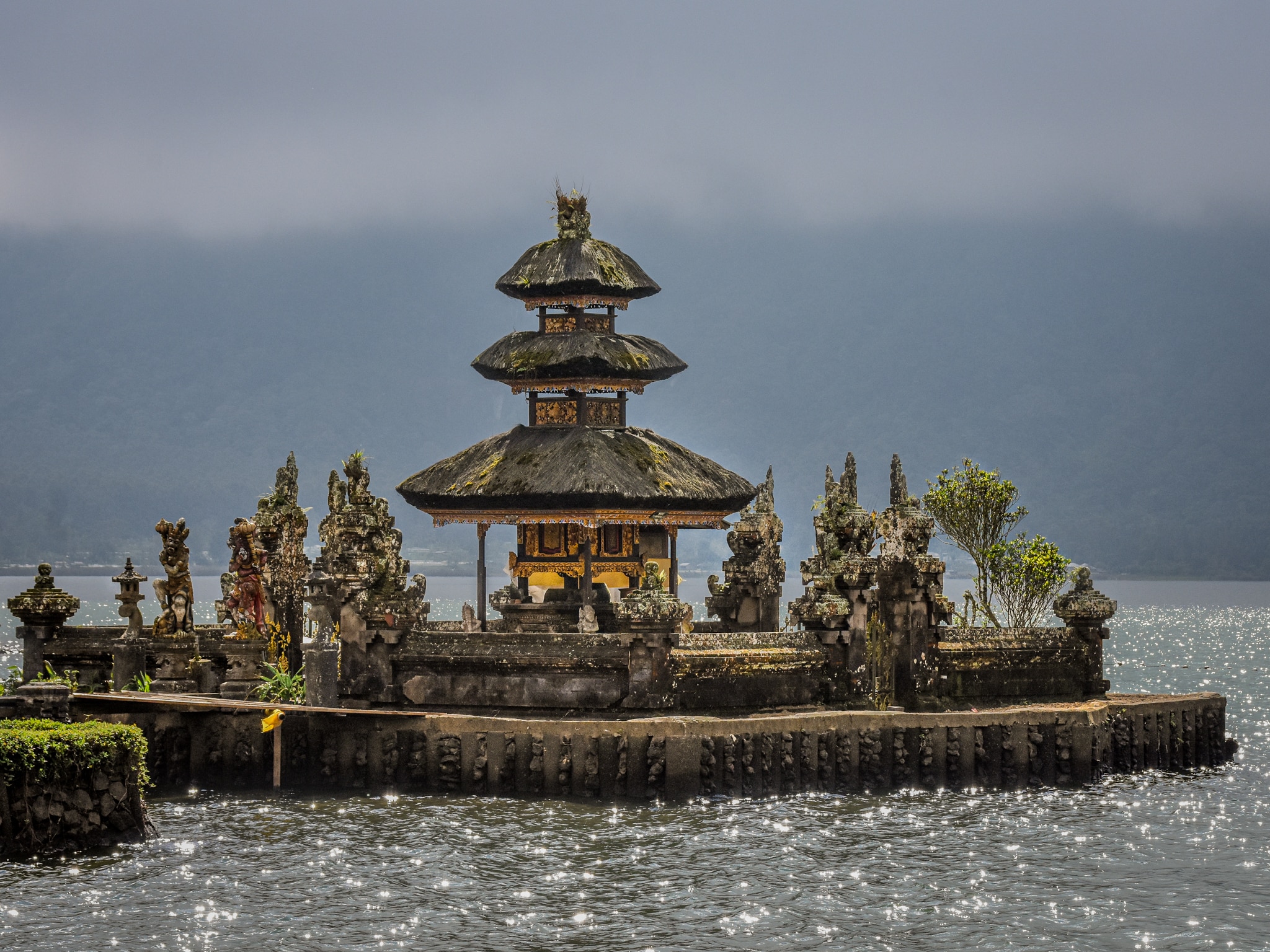
In Balinese, a Hindi temple is called a Pura.
Pura's are dedicated to different aspects of religion in Bali and come in all shapes, sizes and locations.
By far, the most common temple in Bali is the family (house) temple. Every traditional Balinese compound house has a temple. However, it doesn't have to be overpowering or lavish. The family temple will be in the corner of the property nearest the most sacred land in Bali. In this case, Mount Agung. The Hindi Balinese consider this land sacred, as it's closest to heaven.
Next comes the village temple. These temples are larger than family temples and hold local ceremonies. People will attempt to provide offerings at these temples at least once a day. Be it during the morning, lunchtime or evening prayers. If they cannot make it, for whatever reason, they will pray at the family temple.
Every village in Bali has at least one community temple. Although, the majority have three, one for each of the trinity Gods. Typically, these temples are the starting point for numerous festivals and celebrations throughout the year.
Finally, but by no means least, comes the Sad Kahyangan.
These are the holiest of temples in Bali. Ultimately, there are six in Bali, yet the list changes depending on the individuals. There is, however, one temple that appears on every list. Pura Besakih, the Mother Temple, is considered the holiest of all the temples in Bali. That is, in part, due to its location on the slopes of Mount Agung.
These temples hold some of the largest celebrations and festivals across the island, and I've been fortunate enough to visit three of them.
The six main temples are:
- Besakih Temple (The Mother Temple)
- Lempuyang Temple
- Uluwatu Temple
- Goa Lawah
- Lahur Batukaru
- Pusering Jagat
Leave a Comment
Thanks for reading my guide to religion in Bali, Indonesia.
Travelling ethically is something we at Far Out Travel hold close to our hearts. Part of overcoming boundaries and prepping for ethical adventures is understanding and respecting the religion, faith and religious practices of those who call the area home.
Bali is a religious island, and now that you've read this blog before you visit, you are one step ahead of most visitors.
Hopefully, you will avoid a minor mishap or potential insulting gesture you weren't aware you were doing. Similarly, you'll know the other religions within Bali.
Please let me know what you think of my religion in Bali blog in the comments below. I'd love to hear from you.
If you're discovering everything you need to know about religion in Bali, you may be interested in these nearby places...

Backpacking Lombok, Indonesia – Travel Guide
If you’re looking for Bali before it got popular, then…

Backpacking Uluwatu, Bali… In Two Days
Where traditional fire-dancers meet dude-bros with surfboards. You’ll love it.
Backpacking Ubud, Indonesia – The Ultimate Travel Guide
Join us as we show you the best of Bali’s cultural capital.
Your observations about Bali’s religious landscape are insightful and beautifully capture the essence of the island’s spiritual diversity. This unique blend of beliefs is a testament to the island’s rich cultural tapestry and the deep respect the Balinese people have for different faiths.